
Disclosure: SmartLifeItems is reader-supported. As an Amazon Associate, we earn from qualifying purchases made through links on this page, at no extra cost to you.
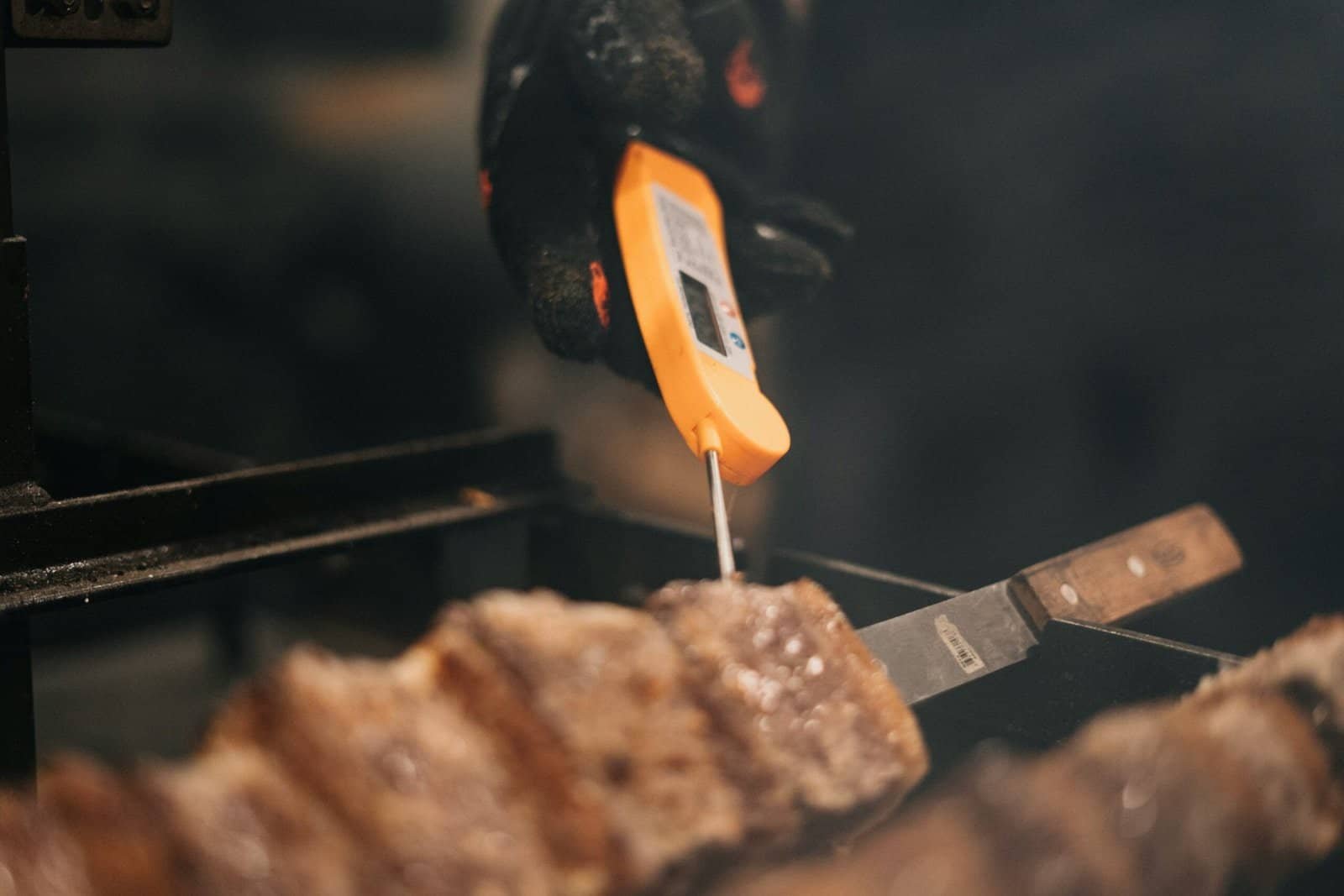
The best meat thermometers solve the single biggest source of cooking failure at home. Most home cooks judge doneness by time and feel. Both methods produce inconsistent results. A thermometer reads the actual internal temperature of the meat. Doneness becomes precise instead of being guessed.
Most home cooks own a thermometer they don’t trust. The reading takes 20 seconds. The probe drifts 5 degrees over the next minute. The display fades after a year. They go back to cutting into the meat to check. The thermometer ends up in a drawer.
Quality meat thermometers solve all three problems. Fast-read probes register temperature in 2 to 4 seconds. Accuracy stays within 1 degree across the full cooking range. Build quality survives years of grill heat, dishwasher cycles, and accidental drops. Get those three traits right and the thermometer becomes the most-used tool in your kitchen.
If you’re building out a complete kitchen tool setup, our best food scales for meal prep guide covers the precision measuring side that pairs with temperature accuracy. Our best cutting boards for home cooks guide covers the prep surface that matters most for safe meat handling.
What to Look for in a Meat Thermometer
Response time determines whether you actually use it.
Slow thermometers get abandoned. A 15 to 30-second read time means you stand at the grill with the lid open while heat escapes. The meat overshoots the target temperature while you wait. Fast thermometers read in 2 to 4 seconds. The lid closes faster. The meat stays on track.
Most digital instant-read thermometers fall between 3 and 8 seconds. Premium models hit under 3 seconds. Cheap models take 10 to 15 seconds. The difference between a 4-second and a 12-second read shows up most on small cuts, where every second of heat exposure changes doneness.
Accuracy matters more than range.
Most home cooking happens between 100°F and 200°F internal temperature. Steaks, chicken, pork, and fish all sit in that range. A thermometer accurate to within 1°F across this range handles every cut. Wider ranges up to 500°F help with deep frying and candy making, but don’t change meat cooking outcomes.
Calibration matters more than the headline accuracy spec. Boil water at sea level. The thermometer should read 212°F within 1 to 2 degrees. Ice water should read 32°F within the same tolerance. Thermometers that drift more than 3 degrees off these reference points need replacing or recalibrating.
Probe length and design determine what you can measure.
Short probes work well for thin cuts. Long probes reach the center of roasts and whole birds. Most quality thermometers ship with 4 to 5-inch probes that handle both well. Folding designs protect the probe in storage and keep your hand farther from the grill heat during use.
Wired probe thermometers stay in the meat throughout cooking. The transmitter sits outside the oven or grill. The receiver displays the current temperature without opening the lid. These work better for long roasts than instant-reads but require setup and cable management for every use.
Build quality determines how long the thermometer lasts.
Splash resistance separates dishwasher-safe thermometers from hand-wash-only models. An IP65 rating or higher means the unit handles full submersion without damage. Sealed buttons and a unified housing prevent kitchen splatter from corroding internal electronics.
Battery life ranges from 100 hours of use on cheap models to 4,000+ hours on premium ones. Auto-shutoff protects battery life when you forget to power down. Replaceable coin cell batteries cost less long-term than sealed rechargeables that fail at 18 months.
The 5 Best Meat Thermometers in 2026
#1, ThermoWorks Thermapen ONE
Best Overall Meat Thermometer | Price: ~$109
The ThermoWorks Thermapen ONE is the thermometer that professional chefs actually use at home. It earns the top spot through a 1-second response time, lab-grade accuracy, and the build quality that survives years of restaurant-level abuse.
Why the Thermapen ONE Sets the Industry Standard
The 1-second read time is the fastest in the consumer market. Premium competitors take 2 to 3 seconds. Budget alternatives take 5 to 10 seconds. The speed matters most when you’re checking multiple steaks on a hot grill or pulling chicken from a smoker. Less heat loss. More accurate cooking.
The accuracy is rated to ±0.5°F across the full cooking range. The probe is medical-grade stainless steel. The display rotates automatically based on how you hold the unit. The motion-sensing wake-up means you don’t press a button to turn it on, just pick it up.
The IP67 waterproof rating means full dishwasher safety. The 2,000-hour battery life on a single AAA cell lasts most home cooks 2 to 3 years before replacement. ThermoWorks offers a lifetime calibration service for $20 if accuracy ever drifts.
PROS:
- 1-second response time, fastest in the consumer market
- ±0.5°F accuracy across the full cooking range
- IP67 waterproof rating for dishwasher safety
- Auto-rotating display works for left or right-handed use
- Motion-sensing wake-up eliminates button presses
- 2,000-hour battery life on one AAA cell
CONS:
- Premium price at approximately $109
- Most expensive on this list
- Single-probe design, no remote monitoring
Best for: Serious home cooks and grilling enthusiasts who want the fastest, most accurate thermometer available, particularly anyone who has burned out cheaper models on heavy use.
#2, ThermoPro TP19H
Best Mid-Range Meat Thermometer | Price: ~$30
The ThermoPro TP19H delivers professional-grade performance at a third of the Thermapen price. The 2-3 second response time, ±0.9°F accuracy, and full feature set make it the right choice for home cooks who want premium performance without the premium price.
Premium Features at the Mid-Range Price
The 2 to 3-second response time falls between the Thermapen’s 1-second and budget alternatives at 8 to 10 seconds. The accuracy at ±0.9°F across the cooking range matches premium competitors. Most home cooks cannot detect the difference between this thermometer and the Thermapen in actual cooking outcomes.
The backlit display reads clearly in low light, useful for grilling at dusk. The auto-rotating screen and motion wake-up match Thermapen functionality. The IP65 splash resistance handles kitchen splatter and rain at the grill, but is not fully dishwasher safe like the Thermapen.
The magnet on the back attaches to the grill or refrigerator for storage. The folding probe protects in transport. The single AAA battery lasts roughly 3,000 hours. At $30, it delivers 90 percent of the Thermapen experience at less than a third of the price.
PROS:
- 2-3 second response time, fast enough for most cooking
- ±0.9°F accuracy matches premium thermometers
- Backlit display for low-light grilling
- Auto-rotating screen and motion wake-up
- Magnet for grill or refrigerator storage
- IP65 splash resistance handles kitchen use
CONS:
- Not fully dishwasher safe like the Thermapen
- Slower response than the premium leader
- No remote monitoring features
Best for: Most home cooks who want premium performance at a reasonable price, particularly anyone who cooks meat regularly but does not need professional-grade speed.
#3, Inkbird IBT-4XS Wireless Bluetooth Thermometer
Best Wireless Meat Thermometer | Price: ~$60
The Inkbird IBT-4XS is the wireless probe thermometer for low-and-slow cooking. The 4-probe design, Bluetooth connectivity, and dedicated app make it the right choice for smokers, slow roasts, and any cooking where you need to monitor temperature without opening the lid.
Multi-Probe Monitoring for Long Cooks
The 4 probes track 4 different points simultaneously. Cook a brisket and a pork shoulder at the same time while monitoring both meat temperatures and the smoker temperature. The Bluetooth range reaches 150 feet outdoors and 100 feet indoors with walls. The app sends temperature alerts when the meat hits the target.
The probe construction handles up to 482°F continuous heat. The cables are heat-rated for grill and smoker use. The base unit displays all 4 probe readings simultaneously. The rechargeable battery lasts about 60 hours per charge.
The trade-off compared to instant-reads is slower individual probe readings. The 4-second response is fine for monitoring, but slower than instant-read thermometers for spot checks. Most owners pair this with a fast instant-read like the Thermapen or ThermoPro for complete coverage.
PROS:
- 4 probes monitor multiple temperatures simultaneously
- 150-foot Bluetooth range for outdoor smokers
- App sends temperature alerts when meat hits the target
- Probes handle up to 482°F continuous heat
- Rechargeable battery lasts 60 hours per charge
- Works with iOS and Android
CONS:
You can time the anchor dish around everything else before deciding.
- Slower than instant-read thermometers for spot checks
- Bluetooth range drops indoors with walls
- Requires app setup and phone proximity
- Probe cables wear over the years of grill use
Best for: Smoker owners and home cooks who do long roasts, particularly anyone who wants to monitor multiple meats at once without opening the smoker or oven.
#4, Lavatools Javelin PRO Duo
Best Compact Meat Thermometer | Price: ~$60
The Lavatools Javelin PRO Duo is the compact alternative to the larger Thermapen. The 2 to 3-second response time, ±0.9°F accuracy, and pocket-friendly design make it the right choice for smaller hands or kitchens where storage space is tight.
Premium Performance in a Smaller Form Factor
The Javelin PRO Duo sits noticeably smaller than the Thermapen and ThermoPro alternatives. The folding probe and compact body fit in a chef coat pocket, relevant for serious home cooks who carry their thermometer to outdoor events. The 4.5-inch probe still reaches the center of standard roasts and whole birds.
The accuracy and response time match the ThermoPro at the same price point. The backlit display reads clearly in low light. The IP65 splash resistance handles kitchen use. The motion wake-up and auto-shutoff features match premium expectations.
The smaller battery, a single CR2032 coin cell, lasts roughly 4,000 hours. The cell costs less than a dollar to replace. The lifetime expectation is 5 to 8 years of regular home use before the unit shows wear.
PROS:
- Compact design fits in a pocket easily
- 2-3 second response time matches mid-range competitors
- ±0.9°F accuracy across the cooking range
- 4,000-hour battery life on a CR2032 coin cell
- IP65 splash resistance for kitchen use
- Folding probe protects in storage
CONS:
- Smaller display than full-size alternatives
- 4.5-inch probe is shorter than some competitors
- Less common brand for warranty service
Best for: Home cooks with smaller hands or limited storage space, particularly anyone who wants Thermapen-level performance in a more portable form factor.
#5, Habor 022 Digital Meat Thermometer
Best Budget Meat Thermometer | Price: ~$13
The Habor 022 is the budget meat thermometer that delivers basic functionality at the lowest practical price. The 4 to 6-second response time, ±2°F accuracy, and 5-inch probe make it adequate for casual home cooks who don’t need premium performance.
Adequate Performance at Entry-Level Price
The 4 to 6-second response time is slower than premium alternatives but faster than older analog thermometers. The ±2°F accuracy is wider than premium ranges but still within a useful tolerance for most home cooking. Steaks, chicken, and pork all read accurately enough to hit safe and properly cooked temperatures.
The 5-inch folding probe reaches the center of most roasts. The simple LCD reads basic temperature without fancy features. The auto-shutoff at 10 minutes preserves battery life.
The trade-offs match the price. The build quality is plastic rather than premium materials. The IP rating is lower than mid-range alternatives. The expected lifespan is 1 to 2 years of regular use before the display fades or buttons fail. As a starter thermometer or backup unit, it delivers acceptable performance at the lowest entry point.
PROS:
- Lowest price on this list is approximately $13
- 5-inch folding probe reaches most roasts
- Auto-shutoff preserves battery
- Simple operation with no learning curve
- Adequate accuracy for everyday cooking
- Wide retail availability
CONS:
- Slower response time than premium alternatives
- Wider accuracy tolerance at ±2°F
- Plastic construction shows wear faster
- Lower IP rating than mid-range alternatives
- Shorter expected lifespan at 1-2 years
Best for: First-time thermometer buyers, casual home cooks, and anyone who wants a starter unit before investing in a premium model.
Quick Comparison: Best Meat Thermometers in 2026
| Thermometer | Price | Response | Accuracy | Waterproof | Score |
|---|---|---|---|---|---|
| ThermoWorks Thermapen ONE | ~$109 | 1 sec | ±0.5°F | IP67 | 9.7 |
| ThermoPro TP19H | ~$30 | 2-3 sec | ±0.9°F | IP65 | 9.2 |
| Lavatools Javelin PRO Duo | ~$60 | 2-3 sec | ±0.9°F | IP65 | 9.1 |
| Inkbird IBT-4XS Wireless | ~$60 | 4 sec | ±1.8°F | Probes only | 9.0 |
| Habor 022 | ~$13 | 4-6 sec | ±2°F | Splash only | 8.4 |
How to Choose the Right Meat Thermometer
The right thermometer depends on your cooking style, frequency, and budget.
Match thermometer type to your cooking style.
Instant-read thermometers work best for grilling, pan-searing, and any cooking where you check the temperature briefly and remove the probe. The Thermapen ONE, ThermoPro TP19H, Lavatools Javelin, and Habor 022 all fall into this category. Wireless probe thermometers work best for smoking, slow roasting, and any cooking where the probe stays in the meat for hours. The Inkbird IBT-4XS is the only wireless option on this list.
Most serious home cooks own both types. An instant-read for spot checks during grilling and pan-cooking. A wireless probe for long roasts and smoker sessions. The two complement each other rather than competing.
Match accuracy to your cooking precision needs.
Steaks cooked to medium-rare need ±1°F accuracy to hit the 130°F target window without overshooting to medium. Chicken to a safe internal temperature of 165°F has more tolerance, a thermometer accurate to ±2°F still keeps the meat safe and pleasantly cooked. Sous vide cooking demands the tightest accuracy because the entire technique depends on precise water temperature.
For most home cooking, ±1°F accuracy is sufficient. The Thermapen ONE delivers the tightest accuracy at ±0.5°F. Most other thermometers on this list deliver ±0.9°F or better.
Match build quality to your usage frequency.
Daily cooks who use a thermometer 3 to 5 times per week need IP65 splash resistance at a minimum. The cheaper Habor 022 wears out within 1 to 2 years at this usage level. Weekend cooks who use a thermometer 1 to 2 times per week can get acceptable lifespan from any option on this list.
Outdoor grillers should prioritize IP67 dishwasher-safe ratings. Splatter from BBQ sauce, fat, and rain damages thermometers without full waterproofing faster than indoor cooking ever does.
For broader kitchen tool selection, our best knife sets under $100 and best cutting boards for home cooks guides cover the prep tools that matter most alongside temperature accuracy.
Our Verdict
The ThermoWorks Thermapen ONE at $109 is the right thermometer for serious home cooks. The 1-second response, lab-grade accuracy, and dishwasher-safe build quality justify the price for anyone who cooks meat regularly. It outperforms every alternative on this list and lasts 8 to 10 years of regular use without performance drift.
Most home cooks will get excellent results from the ThermoPro TP19H at $30. The 2-3 second response and ±0.9°F accuracy match the Thermapen in everyday cooking outcomes at less than a third of the price. The Lavatools Javelin PRO Duo at $60 delivers similar performance in a more compact form factor for cooks who prefer smaller tools.
Smoker enthusiasts and slow-roast cooks should add the Inkbird IBT-4XS at $60 to their setup, wireless monitoring of multiple probes solves a problem that instant-read thermometers cannot. Budget-conscious buyers and first-time thermometer owners should choose the Habor 022 at $13 as a starter option before deciding whether to upgrade.
Frequently Asked Questions
What is the best meat thermometer in 2026?
The ThermoWorks Thermapen ONE is the best overall meat thermometer for serious home cooks. The 1-second response time, ±0.5°F accuracy, and IP67 waterproof rating make it the most capable thermometer available at any price point. For home cooks who want premium performance without the premium price, the ThermoPro TP19H at $30 delivers 90 percent of the Thermapen experience at less than a third of the cost.
How accurate do meat thermometers need to be?
For most home cooking, accuracy within ±1°F is sufficient. Steaks need the tightest accuracy because the difference between medium-rare and medium falls within a 5°F window. Chicken and pork have more tolerance because safe internal temperatures of 165°F and 145°F leave wider margins. Sous vide cooking demands the tightest accuracy because the entire technique depends on precise temperature control. Test any thermometer with boiling water (212°F at sea level) and ice water (32°F) to confirm calibration.
How long should a meat thermometer last?
Quality digital meat thermometers last 5 to 10 years of regular home use. Premium models like the ThermoWorks Thermapen ONE often last 8 to 10 years before showing wear. Mid-range models like the ThermoPro TP19H and Lavatools Javelin PRO Duo last 5 to 7 years. Budget models like the Habor 022 typically last 1 to 2 years before display fade or button failure. Lifespan depends heavily on care, exposure to direct grill heat, dropping the unit, and dishwasher use without proper IP rating all shorten lifespan significantly.
Where do I insert a meat thermometer for accurate readings?
Insert the probe into the thickest part of the meat away from bone, fat, and gristle. Bone conducts heat differently from meat and produces inaccurate readings. Fat and gristle insulate the probe and produce readings cooler than the meat actually is. For whole birds, insert the probe into the thickest part of the thigh without touching the bone. And for roasts, insert the probe into the geometric center of the cut. Finally, for steaks, insert from the side rather than the top to keep the probe in the center of the meat thickness.
Are wireless meat thermometers worth the extra cost?
Wireless meat thermometers are worth the cost for smoker owners and slow-roast cooks. Monitoring the temperature from inside the house while a brisket cooks for 12 hours outside saves significant time and prevents heat loss from constantly checking. For grillers and pan-cookers who check temperature briefly and remove the probe, instant-read thermometers like the Thermapen ONE deliver faster results than wireless alternatives. Most serious home cooks own both, wireless for long cooks, instant-read for spot checks.
Recommended Reading
Related: our roasting pans guide. See also our guides to why meat needs to rest.
Related Reading
Explore more: why meat needs to rest. Also explore: vegetable peelers. Also explore: colanders and strainers, and salad spinners.
