
Tip a pot of boiling water and a pound of spaghetti into a bad colander and you get two problems at once: water splashing back at you and noodles slithering toward the drain. A good one drains fast, sits high enough that the pasta never touches sink water, and holds onto everything from rigatoni down to orzo. The right pick depends on what you strain most: big pasta and vegetables, tiny grains like rice and quinoa, or a bit of everything. Here are six of the best colanders and strainers for 2026, including the one I have drained pasta in for years.
SmartLifeItems is reader-supported; purchases made through links on this page may earn a commission at no added cost to you.
Quick verdict: For most kitchens, a sturdy stainless colander with small perforations and a tall foot, like the OXO Good Grips, drains fast and holds even short pasta. If you rinse a lot of rice or quinoa, add a fine-mesh strainer so nothing slips through. Short on cabinet space? A collapsible model folds flat. And if you hate holding a heavy colander, an over-the-sink design rests on the basin and does it for you.
Why a Good Colander Matters
Draining looks simple until a flimsy colander tips into the sink or lets half your orzo escape. A solid one gets three things right: enough holes to drain quickly, a base tall enough to lift food above the dirty sink water, and holes small enough to keep your food. It also handles more than pasta, rinsing produce, beans, and berries. Pair it with a proper pot from our stockpots guide and pasta night runs a lot smoother.
How We Chose These Colanders and Strainers
Picks were judged on drainage speed, how well the holes retain small foods, base height and stability so the colander does not tip or sit in sink water, handle comfort with a heavy hot load, and how easily each cleans. Both perforated colanders and fine-mesh strainers were included, since they do different jobs. Choices were cross-checked against current hands-on testing and reviews, with a real option for each task rather than six near-identical bowls.
1. OXO Good Grips Stainless Steel Colander, Best Overall
The OXO Good Grips stainless colander is the one most kitchens should own. Its bowl is covered in fine perforations that drain quickly while holding onto short pasta and even rice, the tall ring-foot base lifts it clear of sink water, and the soft, non-slip handles stay comfortable when you are gripping a pound of hot pasta.
Why It Stands Out
The micro-perforations are the standout, since they drain fast without losing small foods, which spares you a separate strainer for routine cooking. The ring foot keeps it stable and elevated so pasta never mingles with backwash, and the whole thing is sturdy 18/8 stainless that shrugs off dents. For an everyday do-it-all colander, this is the pick.
Worth Knowing
It costs more than the tinny bargain colanders, but the build quality earns it. Hand washing and drying keeps the finish from spotting over time. It nests neatly inside a set from our mixing bowl sets guide for tidier storage.
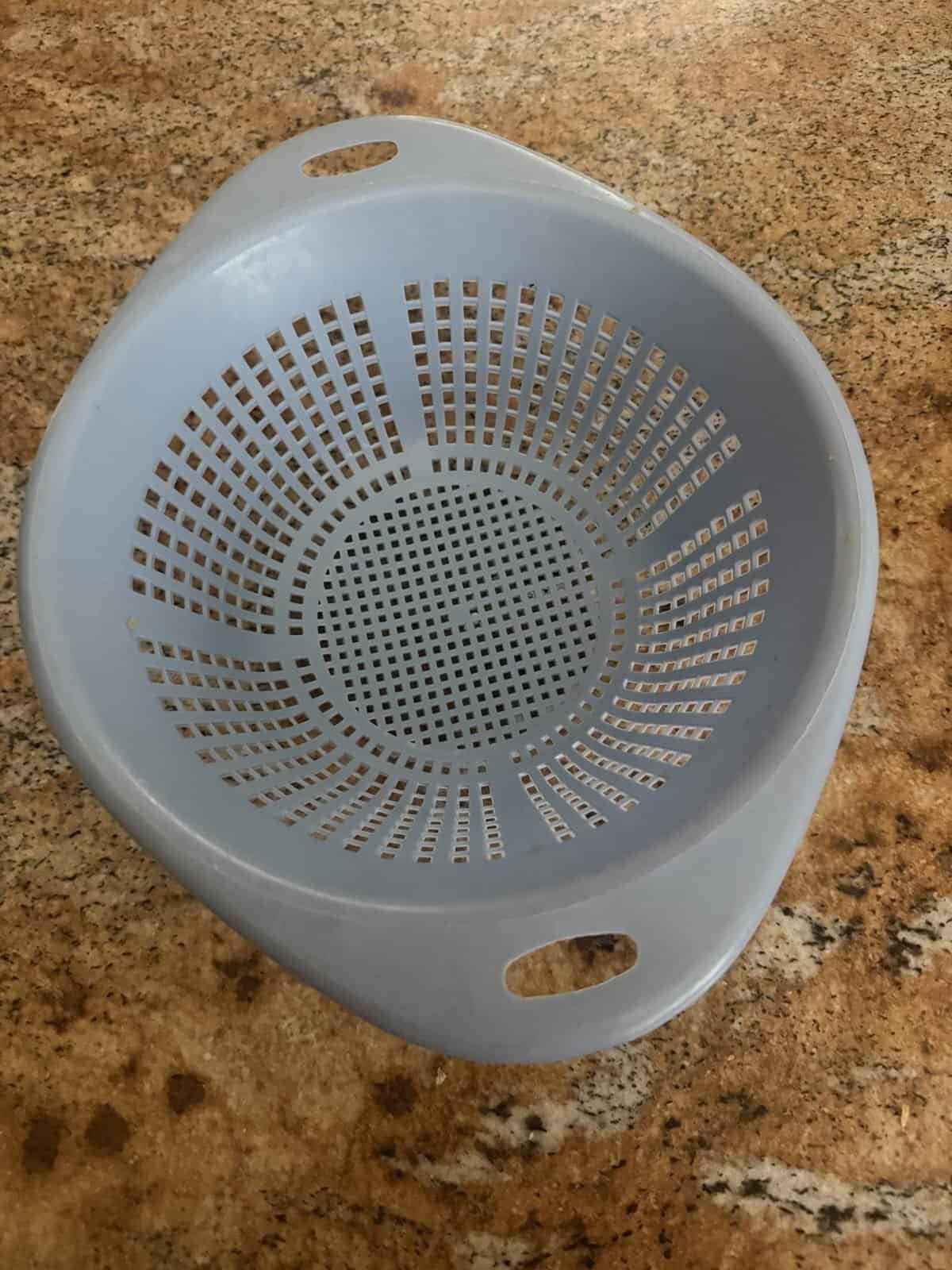
2. The Colander I Use for Pasta, What I Use
The strainer I reach for is the one I use for bigger pasta and noodles, and it has quietly become a staple I actually enjoy using. It drains a pot of pasta without fuss, it rinses clean in seconds, and it has lasted for years without any complaints from me. Nothing about it is fancy; it just does the job every time I cook, which is exactly what you want from a tool you use this often.
Why It Stands Out
What keeps it in the cabinet is how easy it is to live with: quick to drain, quick to clean, and built to last. For big pasta and noodles, a colander with plenty of holes clears the water fast so nothing sits and overcooks, and mine handles that well. Simple and durable beats clever and fussy for a tool that sees this much use.
Worth Knowing
Mine is unbranded, so rather than point you at a model you cannot buy, the button below goes to the current stainless colanders for pasta, which is exactly this kind of everyday draining tool. If you also cook a lot of rice or quinoa, note that a colander suited to bigger pasta like mine is not the tool for tiny grains; pair it with the fine-mesh option further down. Dry it after washing to keep it looking new.
3. Bellemain Stainless Steel Colander, Best for Small Pasta
If short pasta shapes and small foods keep escaping your current colander, the Bellemain solves it. Built from thick 18/8 stainless with a close, mesh-style pattern of very small holes, it drains water rapidly while keeping orzo, ditalini, and rinsed beans from slipping through, and it backs its heavier build with a lifetime guarantee.
Why It Stands Out
The small, densely packed holes are the draw, giving you fast drainage without the food loss that plagues large-hole colanders. The extra-thick steel resists denting and flexing, so it feels more substantial than typical models, and it handles hot pasta and cold berries equally well. For cooks who use small shapes often, it is the reassuring choice.
Worth Knowing
The finer holes take a little more effort to scrub fully clean than wide ones, which is the usual trade for better retention. It is a standard footed bowl, so it takes normal cabinet space. It works well with a big pot from our saucepans guide for smaller batches.
4. Fine-Mesh Strainer Set, Best for Rice and Grains
A perforated colander struggles with the small stuff, which is where a fine-mesh strainer earns its place. A set in a few sizes rinses rice, quinoa, and lentils without losing a grain, strains sauces and stocks, and even sifts flour for baking, covering all the jobs a big colander cannot.
Why It Stands Out
The tight mesh holds onto the tiniest grains, so nothing washes down the drain, and the range of sizes means you grab a small one for a handful of berries or a large one for a batch of quinoa. Long U-shaped handles keep your hands away from the heat when straining hot liquids. Every kitchen benefits from having one on hand.
Worth Knowing
Mesh drains more slowly than a wide-holed colander and is not the tool for a pound of pasta, so it complements rather than replaces a colander. The fine mesh needs a good rinse to clear stuck-on bits. It pairs naturally with dry goods stored per our pantry organization guide.
5. Over-the-Sink Expandable Colander, Best Hands-Free
Holding a heavy colander steady over the sink gets old, and an over-the-sink model fixes it. Its handles telescope out to rest on either side of the basin, so the colander sits suspended above the drain while you pour, freeing both hands and keeping food high above the sink water.
Why It Stands Out
The rest-on-the-sink design is the appeal, since it takes the weight off your hands and gives a wide, stable surface for rinsing a lot of produce at once. Many expand to a generous capacity and then collapse for storage, and they work for pasta as well as fruit and vegetables, which is why testers rate the telescoping models highly for produce-heavy kitchens. For anyone who preps a lot of produce, it is a genuine upgrade.
Worth Knowing
A little water can pool in one corner of some designs, and the telescoping handles are one more part to keep clean. Confirm the expanded width fits your sink before buying. It is handy for washing a big batch destined for our food storage containers.
6. Collapsible Silicone Colander, Best for Small Kitchens
When cabinet space is the real constraint, a collapsible colander is the answer. Made of flexible silicone with a sturdy rim and base, it folds nearly flat for storage and pops up when you need it, so it tucks into a drawer instead of hogging a shelf.
Why It Stands Out
The space saving is the whole point, and for small kitchens, dorms, or RVs it is hard to beat. Silicone is gentle on nonstick surfaces, safe with hot water, and easy to wipe clean, and a set of sizes covers everything from berries to a full box of pasta. It is the practical choice when storage trumps everything.
Worth Knowing
Silicone and plastic models can pick up stains and are less rigid than stainless, so they feel less sturdy with a heavy hot load. The folding base needs a firm surface to stay stable. If you cook big batches daily, a stainless colander will serve you longer, but for occasional use this stores beautifully.
Colanders and Strainers at a Glance
Prices shift with sales and seller, so treat cost as a rough tier and confirm current pricing before buying.
| Model | Type | Holds small foods | Drains fast | Best for |
|---|---|---|---|---|
| OXO Good Grips | Perforated stainless | Yes, micro-holes | Yes | Everyday all-round |
| My colander (brand-free) | Colander | Big pasta and noodles | Yes | Pasta and noodles |
| Bellemain | Close-mesh stainless | Yes, small holes | Yes | Small pasta shapes |
| Fine-mesh set | Mesh strainers | Yes, tiniest grains | Slower | Rice, quinoa, sifting |
| Over-the-sink | Expandable basket | Varies | Yes | Hands-free, produce |
| Collapsible | Silicone, foldable | Varies | Yes | Small kitchens |
How to Choose a Colander or Strainer
Match the Holes to What You Strain
This is the biggest decision. Large-holed colanders drain big pasta and vegetables fast but let small foods slip through, while micro-perforated colanders hold short pasta and rice. For tiny grains like quinoa, only a fine-mesh strainer will do. Many kitchens end up with one micro-perforated colander and one mesh strainer to cover everything.
Check the Base Height and Stability
A colander should sit at least an inch or two above the bottom of the sink so your drained food never touches the dirty water pooling there. A tall, wide ring-foot base drains hygienically and stays stable, while short, stubby feet sit too low and tip more easily. Stability matters most when you are pouring boiling water.
Weigh Material and Durability
Sturdy 18/8 stainless steel is the standard for heavy jobs and hot water, resisting dents and lasting for years, while silicone and plastic cost less and store smaller but feel flimsier and can stain. Choose stainless if you cook a lot and want it to last, and collapsible or plastic mainly for tight storage or lighter use.
Consider Handles and Storage
Comfortable, non-slip handles make a heavy hot colander far safer to hold, so favor wide loops or soft grips over thin wire. If cabinet space is tight, look at nesting sets, collapsible models, or over-the-sink designs that fold away. Think about where it will live before you buy the biggest one you can find.
Which Colander Fits You
| Your situation | OXO | Bellemain | Fine-mesh set | Over-the-sink | Collapsible |
|---|---|---|---|---|---|
| Mostly big pasta and veg | Best fit | Best fit | Skip | Best fit | Workable |
| Small pasta, rice, quinoa | Workable | Best fit | Best fit | Skip | Skip |
| Rinse lots of produce | Workable | Workable | Workable | Best fit | Workable |
| Want it to last for years | Best fit | Best fit | Best fit | Workable | Skip |
| Very little storage space | Skip | Skip | Workable | Workable | Best fit |
| Tight budget | Workable | Workable | Best fit | Workable | Best fit |
Frequently Asked Questions About Colanders and Strainers
What is the difference between a colander and a strainer?
A colander is a bowl with holes and feet, made for draining larger foods like pasta and vegetables quickly, while a strainer usually means a fine-mesh sieve for rinsing tiny grains, straining liquids, or sifting. Colanders drain faster with less clogging; mesh strainers catch much smaller foods. Most kitchens benefit from having one of each.
What size colander do I need?
For draining a pound of pasta or a batch of vegetables, a five-quart colander is a comfortable everyday size, roughly matching a large pot. If you regularly cook big batches, size up; for small portions, a three-quart or a nesting set works. Match it loosely to the pot you use most.
Are stainless steel colanders better than plastic or silicone?
For durability and hot jobs, yes, since stainless resists denting, staining, and heat, and drains faster with more perforations. Plastic and silicone cost less and store smaller, which suits occasional use or tight kitchens, but they feel flimsier with a heavy hot load and tend to discolor over time. Choose stainless if it is your main colander.
Why does my pasta slip through the colander?
The holes are too big for the shape you are draining. Large-holed colanders are fine for long spaghetti or big shapes but let short pasta, orzo, and rice escape. Switch to a micro-perforated colander or a close-mesh model for small foods, or use a fine-mesh strainer for the smallest grains.
Can I use a colander to rinse rice or quinoa?
Only if it is micro-perforated or fine mesh, since standard colander holes are too large and the grains wash straight through. A fine-mesh strainer is the reliable tool for rice, quinoa, and lentils. If you rinse grains often, it is worth keeping a mesh strainer alongside your pasta colander.
How do I clean a colander with tiny holes?
Rinse it right after use before food dries in the holes, and use a brush to clear anything stuck in a fine mesh or close perforations. Most stainless colanders are dishwasher safe, though hand washing preserves the finish. Whichever way you clean it, dry it fully so it does not spot or, on cheaper metal, rust.
Are over-the-sink colanders worth it?
If you rinse a lot of produce or dislike holding a heavy colander, they are genuinely useful, since they rest on the sink and free both hands. The tradeoffs are that some pool a little water and the moving handles are extra parts to clean. Check that the expanded size fits your sink before buying.
Is a collapsible colander sturdy enough for pasta?
For occasional use and small kitchens, yes, but they are less rigid than stainless, so a large, heavy load of hot pasta can feel wobbly. Support the base on a firm surface and do not overfill it. If you drain big batches daily, a stainless colander is the more reassuring long-term choice.
Recommended Reading
Round out pasta night and the kitchen with our guides to stockpots for boiling, pasta makers for fresh noodles, and kitchen tongs for serving. Grate the parmesan with something from our box graters guide, and keep hot pots in hand with our oven mitts and pot holders guide, and drain right at the pot with our clip-on pot strainers guide. See also our guides to fine mesh strainers.
