
Disclosure: SmartLifeItems is reader-supported. As an Amazon Associate, we earn from qualifying purchases made through links on this page, at no extra cost to you.
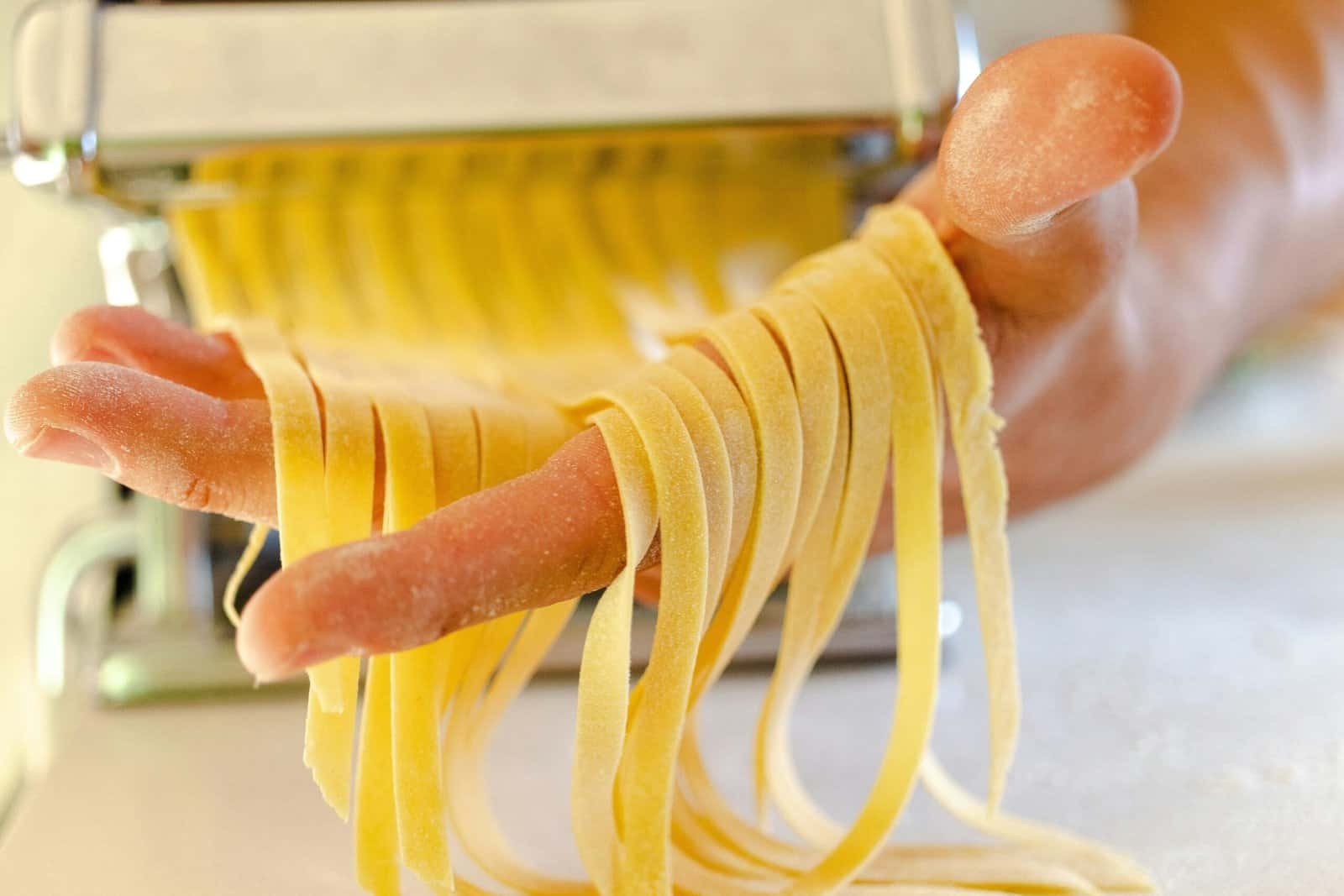
The first time you make fresh pasta at home with a pasta maker, you’ll wonder why you ever bought the dried boxes in the first place. Eggs and flour combine into a silky dough that rolls out and cuts into ribbons you could never find at a grocery store. A plate of fresh fettuccine tossed with butter and sage tastes like nothing you can replicate from a bag, there’s a tenderness to fresh pasta, a faint give under the tooth, that commercial dried pasta cannot approximate, no matter how good the brand.
The problem is that making fresh pasta by hand without the right equipment is genuinely difficult. Rolling dough to the correct thinness with a rolling pin takes forearm strength, consistent pressure, and about 40 minutes per batch. Cutting it into uniform strands requires patience and a sharp knife. Do it once for a dinner party and you’ll be impressed with yourself. Do it weekly for Tuesday night dinner and you’ll quit within a month. This is why pasta makers exist, not as luxury kitchen toys but as practical tools that convert a 40-minute ordeal into a 15-minute pleasure.
The market splits sharply into manual crank machines, electric stand-alone machines, and stand mixer attachments. Each category serves different cooking patterns, kitchen sizes, and budgets. The wrong choice is a $150 appliance that sits in a cabinet; the right one becomes the reason you start cooking Italian on weeknights. This guide walks through the five best pasta makers available in 2026, the technical criteria that separate serious tools from kitchen gadgets, and how to match a machine to your actual cooking patterns rather than your fantasy of them.
If you’re building out a broader Italian cooking setup, our guide to the best stand mixers under 200 covers the KitchenAid foundation that unlocks stand-mixer pasta attachments. This article focuses on dedicated pasta equipment.
Why a pasta maker matters more than you think
Fresh pasta dough is an unusually demanding preparation. The gluten must be developed enough to stretch without tearing, hydrated uniformly throughout, and rolled to a specific thinness that varies by cut, fettuccine wants about 1 mm, lasagna sheets want 1.5 mm, angel hair demands 0.5 mm or thinner. Getting these thicknesses consistent across the entire sheet with a rolling pin is the kind of skill that takes Italian nonnas decades to develop. With the right pasta maker, it takes about three batches of practice.
The second reason pasta makers matter is what they enable you to cook. Without one, fresh pasta is a special-occasion food. With one, it’s a Wednesday night dinner that takes less active time than ordering takeout. The typical workflow: mix dough by hand or in a stand mixer (5 minutes), rest the dough (30 minutes while you do other things), run through the machine to roll and cut (10-15 minutes), cook for 2-3 minutes in boiling water. Total active time: about 20 minutes. Compare that to any takeout that’s not immediately available.
More Information
The third reason is ingredient quality. Commercial pasta is made from durum wheat semolina optimized for shelf stability and consistent cooking. Fresh pasta uses tender flour (00 or all-purpose) plus eggs, which produces a dramatically different texture. You cannot buy this texture in any store because fresh egg pasta has a shelf life measured in hours, not months. The only way to experience this texture is to make it, and without a pasta maker, making it frequently is impractical.
The fourth reason is cost. High-quality fresh pasta from specialty Italian delis runs $8-15 per pound. A decent pasta maker pays for itself in about 10-20 batches, even accounting for flour and egg costs, and then every subsequent batch produces roughly $6-12 of commercial-equivalent product for about $2 of ingredients.
What pasta makers do NOT do: Make dough for you. Every machine on this list is a rolling and cutting tool, you still need to mix dough by hand or with a stand mixer. The one partial exception is electric extruders, which we’ll cover but generally don’t recommend for home use because of their quality trade-offs.
What to look for in a pasta maker
The pasta maker category contains genuine craftsmanship tools and disposable kitchen gadgets sold in the same price range. Here’s how to tell the difference before spending money.
Roller width of at least 150 mm (6 inches)
The roller width determines your maximum sheet width. 150 mm is the Italian standard and fits most recipes, lasagna sheets, ravioli sheets, and all strand cuts work fine. Smaller machines at 100-120 mm require cutting dough into narrower portions, which creates workflow headaches and wastes dough at seams. Larger machines at 180-200 mm (usually professional models) cost significantly more without meaningful home-kitchen benefit.
Thickness settings from 0 to at least 7
The thickness dial determines how thin you can roll dough. Setting 0 or 1 is the initial thick pass; settings 6-7 are where most pasta cuts finish. Machines with fewer than 7 settings limit you, you can’t make angel hair on a 5-setting machine. Machines with 9+ settings are a bonus but not essential. The gap between settings should be gradual and uniform; cheap machines have uneven gaps that cause dough to tear at certain transitions.
Chromed or stainless steel rollers
The roller material determines longevity, cleanability, and food safety. Chromed steel is the Italian tradition and works excellently for decades, my grandmother’s Imperia from the 1970s still rolls pasta perfectly. Stainless steel is slightly more modern and easier to clean but costs more. Avoid anodized aluminum rollers (found on some budget machines), they can leave a gray residue on dough and pit over time.
Solid clamp mechanism
Manual machines clamp to a countertop or table edge. The clamp must grip firmly without damaging the surface and hold the machine steady through repeated rolling passes. Weak clamps cause the machine to wobble, producing uneven pasta thickness. Look for clamps with a minimum 1.5-inch opening to accommodate thicker countertops, rubber or silicone pads to protect surfaces, and a threaded screw mechanism rather than a spring-loaded design (screws hold better over time).
Detachable cutting rollers for multiple shapes
Most machines come with a spaghetti and fettuccine cutter built in. Better machines accept detachable cutting rollers for additional shapes, tagliolini, pappardelle, reginette. If you think you might want more shape variety over time, buying a machine with an attachment ecosystem matters. If you only ever want fettuccine and lasagna, single-cutter machines are fine.
Dishwasher safety versus hand-wash only
Most chromed-steel manual machines are hand-wash only, water and soap will corrode the internal bearings over the years of use. Electric and stand mixer attachments vary by model. If you plan to use a machine weekly or more, hand-wash-only is fine; you’ll develop a quick wipe-down routine. If you plan to use it occasionally and forget it for months between uses, dishwasher-safe models reduce the barrier to using the machine at all.
Best pasta makers in 2026: our top 5 picks
The five picks below cover the full range of user profiles: best overall for most home cooks, best electric for convenience, best stand mixer attachment for KitchenAid owners, best premium for serious pasta enthusiasts, and best budget for first-time buyers wanting to test the category.
1. Marcato Atlas 150 Wellness, Best Overall
Best for weekly fresh pasta cooking | Price: ~$110
The Marcato Atlas 150 has been the global benchmark for home pasta makers for over four decades, and the Wellness variant updates it with food-safe anodized aluminum rollers that maintain the chrome-like performance while eliminating the traditional chrome-plating process. The 150 mm roller width is the Italian standard, the 10 thickness settings cover every pasta cut from lasagna to angel hair, and the machine is manufactured in Italy under conditions that support a functional lifespan of 20+ years with basic care.
Marcato’s Italian Manufacturing and Accessory Ecosystem
Marcato has manufactured pasta makers in Campodarsego, near Padua, since 1930. The Atlas 150 has received incremental improvements over the decades, but hasn’t fundamentally changed because the design was optimized correctly from the beginning. Every part of the machine can be disassembled and cleaned; replacement parts are available directly from Marcato for decades-old models. This longevity-by-design distinguishes the Marcato from disposable-feeling alternatives at similar price points.
The attachment ecosystem is where Marcato pulls ahead of comparable machines. The Atlas 150 accepts 12 different cutter attachments (tagliolini, pappardelle, reginette, spaghetti chitarra, ravioli maker, and more) sold separately for $30-50 each. Most home cooks never buy more than 2-3 attachments, but knowing the ecosystem exists means the machine grows with your cooking interests rather than limiting it.
Why it works for weekly pasta cooking
The Marcato’s ergonomic design is optimized for the specific repetitive motion of feeding dough through rollers. The crank handle is positioned at an angle that doesn’t fatigue the wrist over multiple rolling passes. The clamp holds securely to standard countertop thicknesses (up to 1.5 inches) without marking surfaces. The rollers produce visibly consistent thickness across the entire sheet width, which matters when you’re making 4-6 pounds of pasta for guests and need every strand to cook uniformly.
Best for: Home cooks making pasta weekly or more, anyone who wants to develop Italian cooking as a long-term skill, households that prefer manual equipment over electric, kitchens with limited electrical counter space.
PROS:
- Italian-made with a 20+ year functional lifespan
- 10 thickness settings accommodate every pasta cut
- 12-attachment ecosystem grows with cooking interest
- Food-safe anodized aluminum rollers
- 150 mm roller width matches the Italian standard
- Functional replacement parts available from the manufacturer
CONS:
- Manual crank requires two hands during operation
- Hand-wash only with a specific cleaning protocol
- Roller attachments sold separately add to the total cost
- Clamp requires a flat countertop edge for mounting
2. Philips Smart Pasta Maker, Best Electric
Best for extruded pasta and fresh dough automation | Price: ~$300
The Philips Smart Pasta Maker is a fundamentally different machine from the Marcato, instead of rolling and cutting sheets, it extrudes pasta shapes through dies. Add flour and eggs to the chamber, press a button, and 12-18 minutes later, fresh spaghetti (or penne, or macaroni, or fusilli) exits the die fully formed. For cooks who want fresh pasta with minimum hands-on time, the extruder approach is transformative. For cooks who want traditional rolled pasta like lasagna sheets or ravioli, the extruder can’t do it, you need a roller machine instead.
Philips’ Automatic Mixing and Extrusion System
The machine’s mixing chamber handles dough preparation internally. You load flour, eggs, and water (or just flour and water for eggless pasta) into the chamber, the machine mixes for 3-5 minutes, and then the extrusion auger pushes dough through the selected die. Eight different dies ship with the machine, spaghetti, fettuccine, penne, macaroni, lasagnette, pappardelle, and two others, with additional dies sold separately.
The internal mixing reduces preparation time dramatically. A traditional rolled-pasta workflow requires about 5 minutes of mixing, plus 30 minutes of resting, plus 15 minutes of rolling and cutting. The Philips extruder workflow is about 3 minutes of setup plus 12-18 minutes of fully automated extrusion, with no resting step required. Total active cook time drops from 20 minutes to 5 minutes.
Why it works for busy-cook pasta making
Electric extruders solve the fundamental problem of manual pasta equipment: the time and attention cost. Manual machines produce better results (the texture of rolled pasta is slightly superior to extruded pasta due to different gluten development), but they require 20 minutes of your attention. The Philips requires 5 minutes. For weeknight cooks where 15 minutes of saved time translates to the difference between making fresh pasta and ordering takeout, the machine pays for itself in lifestyle terms rather than dollar terms.
The trade-off is texture. Extruded pasta has a slightly rougher surface than rolled pasta, which actually helps sauce adhesion for some dishes. It also produces shapes (penne, macaroni, fusilli) that rolled machines cannot make. For households that eat short pasta shapes more than long ones, the Philips is genuinely the better machine for most uses.
Best for: Busy weeknight cooks, households that prefer short pasta shapes over long, people who want automation over craftsmanship, and those without the patience for manual equipment.
PROS:
- Fully automated mixing and extrusion
- 8 included dies covering major pasta shapes
- Makes shapes impossible for rolled machines (penne, macaroni, fusilli)
- 5-minute hands-on time per batch
- Internal mixing eliminates separate dough preparation
CONS:
- Significantly higher price than manual equivalents
- Cannot make rolled pasta like lasagna or ravioli sheets
- Extruded texture different from rolled (not worse, but different)
- Larger footprint requires dedicated counter space
- More complex cleanup than manual machines
3. KitchenAid Pasta Roller Attachment Set, Best Stand Mixer Attachment
Best for KitchenAid owners | Price: ~$180
If you already own a KitchenAid stand mixer, the KitchenAid pasta attachment set is the obvious path forward. The three-piece set includes a roller (for sheet pasta and dough thinning), a fettuccine cutter, and a spaghetti cutter, enough to make most common pasta dishes. The attachments power off the KitchenAid’s motor, which means both hands stay free during rolling and you get consistent mechanical speed rather than variable manual cranking.
KitchenAid’s Attachment Architecture and Build Quality
The KitchenAid attachment hub has been unchanged since the 1950s, which means any attachment (past, present, or future) works with any KitchenAid stand mixer. Buying into the attachment ecosystem is a long-term investment, if you upgrade the mixer itself in 15 years, the pasta attachments carry forward unchanged. This design continuity is rare in small appliances and adds substantial value over time.
The build quality of the pasta attachments matches the mixer itself, stainless steel rollers, precision-machined gears, and a weight that makes them feel permanent rather than disposable. The roller attachment offers 8 thickness settings, one fewer than the Marcato’s 10 but covering the practical range of home pasta needs. The fettuccine and spaghetti cutters produce precisely uniform strands.
Why it works for KitchenAid owners specifically
The economic calculation here is straightforward: if you already have a KitchenAid (which many home cooks do), adding pasta attachments for $180 is the lowest-friction entry to fresh pasta making. You skip the storage question (where to put a dedicated pasta machine when not in use), the countertop space question (how to clamp a manual machine), and the learning curve question (the KitchenAid you already know handles dough as seamlessly as it handles cookie dough).
The motor-powered rolling is also genuinely different from manual cranking. Your dominant hand stays free to guide the dough sheet through the rollers, which means better control and faster workflow. Manual machine cranking requires one hand to crank and one to guide, which produces marginally less consistent results.
Best for: Existing KitchenAid stand mixer owners, cooks who want motor-powered rolling without a separate electric machine, households with limited counter space for dedicated equipment, people who already know their KitchenAid well and prefer tool consistency.
PROS:
- Motor-powered rolling frees both hands for dough guidance
- Lifetime-compatible attachment ecosystem
- Excellent build quality, matching the mixer itself
- No additional counter space is needed when stored
- Consistent mechanical rolling speed
CONS:
- Requires existing KitchenAid stand mixer ownership
- More expensive than Marcato, even before the mixer cost
- Only three attachment pieces in the basic set (additional cutters sold separately)
- 8 thickness settings vs. Marcato’s 10
4. Imperia Pasta Machine iPasta, Best Premium
Best for serious pasta enthusiasts | Price: ~$180
Imperia has manufactured pasta machines in Italy since 1932, and the iPasta restaurant-grade version represents the premium tier of home pasta equipment. The roller width is 150 mm matching the Marcato, but the build quality is noticeably heavier, the thickness settings are more precisely calibrated, and the clamp mechanism uses a professional-grade threaded screw rather than the consumer-grade design found on budget machines. For cooks who expect to use their pasta maker multiple times per week for decades, the Imperia iPasta justifies its premium.
Imperia’s Professional Kitchen Heritage
Imperia machines are standard equipment in Italian restaurant kitchens, and the iPasta home version carries that professional pedigree into consumer packaging. The machine weighs roughly 30% more than a Marcato Atlas 150, which translates to steadier operation during rolling, the extra mass means less machine vibration, which means more uniform pasta thickness. For home cooks this difference is subtle; for serious pasta enthusiasts making several pounds weekly, it becomes noticeable.
The thickness settings on the Imperia are calibrated more precisely than consumer-grade alternatives. The gaps between settings are smaller and more uniform, which matters for the final thinness passes where even 0.1 mm of variance can cause dough tearing or uneven texture. The precision costs more in manufacturing and is reflected in the price.
Why it works for premium home cooks
The Imperia represents the right machine for cooks who’ve already used a mid-range machine for a year or two, know they want to continue making fresh pasta indefinitely, and want to upgrade to the best consumer-grade option available. First-time pasta makers usually don’t need this level of machine, the Marcato produces results most home cooks cannot distinguish from an Imperia. But for the specific subset of cooks who make pasta weekly for 5+ years, the Imperia’s durability advantage and build quality eventually pay off.
Best for: Serious pasta enthusiasts making fresh pasta weekly, cooks upgrading from a mid-range machine, households with Italian cooking as a central cuisine, people who prioritize long-term durability over first-purchase cost.
PROS:
- Professional Italian manufacturing heritage
- Restaurant-grade build quality
- More precise thickness calibration than consumer machines
- Heavier construction produces steadier rolling
- 30+ year functional lifespan with basic care
CONS:
- Premium pricing over comparable performers
- Overkill for occasional or first-time pasta makers
- Heavier weight makes storage and relocation slightly harder
- Attachment ecosystem smaller than Marcato’s
5. Ovente Manual Pasta Maker, Best Budget Option
Best entry-level pasta maker | Price: ~$45
For cooks who want to test whether fresh pasta is a habit they’ll actually maintain before investing in a premium machine, the Ovente manual pasta maker at approximately $45 is the right entry point. The roller width is 150 mm matching the premium machines, the thickness dial offers 7 settings (fewer than premium alternatives but covering essential cuts), and the construction is solid enough for moderate use. For budget-conscious buyers or occasional pasta makers, the Ovente delivers 80% of the premium machine experience at 40% of the price.
Ovente’s Budget-Focused Manufacturing
Ovente operates at scale in the budget kitchen appliance segment, which allows aggressive pricing on core function without compromising food safety or basic mechanical performance. The rollers are stainless steel, the clamp mechanism holds adequately to standard countertops, and the overall feel of the machine is closer to premium alternatives than the price point would suggest.
The trade-offs at this price are subtle but real: slightly less precise thickness calibration, fewer thickness settings, simpler clamp design, and a limited attachment ecosystem (essentially spaghetti and fettuccine only). None of these compromises prevent you from making excellent fresh pasta. They limit your long-term range of what’s possible with the machine.
Why it works for occasional pasta makers
The primary use case for the Ovente is budget validation, spend $45 to learn whether you’re going to use a pasta machine regularly before spending $180 to own a premium one. If you use the Ovente every week for six months, upgrade to Marcato or Imperia with confidence the category is for you. If you use it three times and let it sit in a cabinet for a year, you’ve saved $135 compared to making the same discovery with a premium machine.
The secondary use case is genuine budget constraint. If $110 for a Marcato is meaningfully more than you can justify right now, the Ovente lets you make fresh pasta immediately rather than waiting months to save for a premium machine. You’ll know whether you love fresh pasta enough to upgrade later.
Best for: First-time pasta makers testing the category, budget-conscious cooks, households where pasta machines would be used occasionally rather than weekly, people who want to try the craft before investing in premium equipment.
PROS:
- Lowest price in our roundup at approximately $45
- 150 mm roller width matching premium machines
- Stainless steel construction appropriate for food use
- Sufficient quality for occasional or learning-phase use
- Adequate clamp mechanism for standard countertops
CONS:
- Less precise thickness calibration than premium
- Fewer thickness settings (7 vs 10)
- Limited attachment ecosystem
- Shorter expected lifespan under heavy use
- Construction feels less premium overall
Quick comparison
- Marcato Atlas 150 Wellness, best overall, Italian-made, 10 settings, 20+ year lifespan, ~$110
- Philips Smart Pasta Maker, best electric, fully automated extrusion, 5-min active time, ~$300
- KitchenAid Pasta Roller Attachment, best for KitchenAid owners, motor-powered, ~$180
- Imperia iPasta, best premium, restaurant-grade build, precise calibration, ~$180
- Ovente Manual Pasta Maker, best budget, validates the category, ~$45
How to choose the right pasta maker
The right machine depends on three variables: how often you’ll actually use it, what pasta shapes you want to make, and whether you own a KitchenAid already.
If you don’t know yet whether pasta making is a habit for you: Start with the Ovente. $45 is a cheap enough experiment to settle the question without overcommitting.
If you know you’ll use it weekly: Marcato Atlas 150 Wellness is the right first machine. It outlasts the typical career of home cooks and grows with your interest through the attachment ecosystem.
If you already own a KitchenAid stand mixer: KitchenAid’s pasta attachment set is the lowest-friction path. You skip counter space issues, storage issues, and learning curves associated with a new appliance.
If you want to make short pasta shapes (penne, macaroni, fusilli): You need an extruder, not a roller. Philips is the only realistic home option in this category.
If you’ve used a mid-range machine and want to upgrade: Imperia iPasta is the premium consumer benchmark. Cooks making pasta weekly for 5+ years will notice the build quality difference.
If you make both short and long pasta regularly: Consider owning both a Marcato (for rolled pasta) and a Philips (for extruded). The combined investment is significant but the coverage is complete.
The annualized cost math
Fresh pasta is genuinely cheap once you have the equipment. Here’s what weekly pasta cooking actually costs.
Ingredient cost per pound of fresh pasta: About $2.00. This includes 00 flour (or all-purpose), 4 large eggs per pound of flour, and a pinch of salt. For eggless pasta, the cost drops to about $1.20 per pound.
Commercial fresh pasta cost per pound: $8-15 at specialty delis, $4-7 for grocery-store refrigerated pasta (which is usually worse quality than homemade).
Break-even analysis for a Marcato Atlas 150 at $110: You break even after making approximately 18-25 pounds of pasta, depending on comparison benchmark. At 1 pound per week, that’s 18-25 weeks (4-6 months). After that, you’re producing free pasta for the lifetime of the machine.
Break-even for a Philips Extruder at $300: Approximately 50-60 pounds of pasta, or about a year at 1 pound per week. After that, the same free-pasta math applies, with the added benefit of extruded shapes.
Break-even for the KitchenAid attachment at $180: If you already own the KitchenAid, roughly 30-40 pounds. If you don’t, add the mixer cost and recalculate.
These calculations ignore the qualitative value of fresh pasta over commercial, homemade fresh pasta is simply better than what you can buy, regardless of price. The break-even math just addresses whether the machine pays for itself in dollar terms, which it reliably does within a year for regular users.
Accessories worth pairing with your pasta maker
Some companions that meaningfully improve pasta-making workflow.
A quality drying rack keeps fresh pasta separated while it waits for the pot. Long pasta in particular (fettuccine, tagliatelle, pappardelle) needs to dry briefly, or it sticks together in clumps. Cheap wooden drying racks work fine; dedicated pasta drying racks with multiple arms are nicer but not essential. Our guide on best mixing bowl sets covers the prep-side vessels you’ll use for dough preparation.
A large wooden cutting board gives you space to roll out dough for resting and transferring to the machine. Generic plastic boards work, but wooden boards absorb less moisture from the dough, which affects the final texture.
A bench scraper handles cutting dough into portions before rolling. You can use a knife, but a bench scraper is faster and doesn’t damage the cutting board. A $10 tool that you’ll use forever.
Italian 00 flour rather than all-purpose for traditional egg pasta. 00 is more finely milled with a slightly lower protein content, producing softer dough and more tender finished pasta. All-purpose works for beginner pasta; 00 is what restaurants use.
A large stockpot (at least 8 quarts) for cooking pasta in plenty of water. Fresh pasta cooks in 2-3 minutes and needs space to circulate. Undersized pots cause strands to stick together and cook unevenly.
The learning curve by week
Week 1: You’ll make pasta dough that doesn’t behave correctly. Too wet, too dry, tears in the rollers, doesn’t hold shape when cut. This is normal. Every home pasta maker experiences it. Don’t conclude the machine is wrong or the recipe is flawed, you’re calibrating your technique to the specific conditions of your kitchen (humidity, flour brand, egg size).
Week 2: You’ll identify the specific variables that affect your dough. A key insight: egg sizes vary substantially, and the difference between a large and extra-large egg matters for hydration. Start weighing eggs or targeting specific egg brands for consistency.
Week 3-4: The rolling workflow becomes automatic. You’ll develop a rhythm: thick pass at setting 1, fold, pass at setting 2, fold, continue increasing thickness and folding until the dough is smooth, then final thinning passes without folding. The folding process is called laminating and it’s what gives fresh pasta its final texture.
Week 6-8: You’ll start experimenting with different recipes, semolina-only pasta for firmer bite, egg-yolk-only pasta for richer color and flavor, whole wheat pasta for earthier notes, spinach or beet pasta for color. The machine is the same; the creativity is in the ingredients.
Month 3+: You’ll develop strong opinions. Some pasta makers swear by long resting periods (2+ hours); others insist 30 minutes is sufficient. Some always use 00 flour; others prefer semolina blends. These opinions are all valid, reflect different traditions, and make pasta making an ongoing exploration rather than a solved problem.
Our verdict
The Marcato Atlas 150 Wellness is the right first purchase for most home cooks. The Italian manufacturing heritage, 20+ year functional lifespan, comprehensive thickness settings, and growing attachment ecosystem make it a purchase you won’t regret at any point over the next two decades. If you’re making pasta weekly, you’ll thank yourself for buying the Marcato instead of saving $65 on an inferior machine that dies in three years.
The Philips Smart Pasta Maker earns the electric recommendation for cooks whose actual kitchen pattern involves weeknight time pressure more than weekend craft enjoyment. The 5-minute active time vs. 20-minute active time difference is the decisive factor. If you would cook fresh pasta weekly with an extruder but only monthly with a manual machine, the extruder is the right machine for you, even at 3x the cost.
Our Conclusion
Existing KitchenAid owners should buy the attachment set rather than a separate machine, unless they specifically want the Italian craftsmanship heritage of a dedicated Marcato. The economic logic of leveraging an existing mixer is strong, and the attachment quality is excellent.
Serious pasta enthusiasts who’ve already used a Marcato or equivalent for a year should consider the Imperia iPasta as an upgrade path. The differences are real but subtle; only cooks who’ve internalized the mid-range experience will appreciate the upgrade. First-time buyers do not need this level of machine.
Budget-conscious first-time buyers should start with the Ovente. The $65 savings over a Marcato is real money, and the Ovente will not limit your ability to learn the craft. After six months of regular use, you can upgrade to premium with the confidence that pasta making is a habit you’ll actually maintain.
The larger point: fresh pasta at home is one of the most rewarding, cost-effective, and genuinely crowd-pleasing cooking skills you can develop. The right pasta maker removes the friction that prevents most home cooks from making it regularly. At any budget from $45 to $300, machines exist that will meaningfully improve your cooking life. The worst decision is indecision, any of these five machines will reward regular use within their first year.
Frequently asked questions
Is a pasta maker worth it for occasional use?
For truly occasional use (once or twice a year for dinner parties), probably not. Commercial fresh pasta from a good Italian deli delivers 85-90% of the experience for no equipment investment. Pasta makers become genuinely worth it at monthly use and clearly worth it at weekly use. The Ovente budget option at $45 is the right choice for someone on the boundary between “might use it” and “will use it”, cheap enough to experiment with, capable enough to produce good pasta if the habit sticks.
Can I make pasta without eggs using these machines?
Yes, all rolling machines handle eggless (water-based) pasta doughs without modification. Semolina-and-water pasta, common in Southern Italian cooking, rolls and cuts the same as egg pasta. The finished product has a firmer bite and longer shelf life than egg pasta. For extrusion machines like the Philips, eggless pasta is actually easier, the dough doesn’t require as precise hydration.
What’s the difference between rolled and extruded pasta?
Rolled pasta (Marcato, Imperia, KitchenAid attachment) produces dough sheets that get cut into strands or shapes. The texture is smoother and more traditional. Extruded pasta (Philips) pushes dough through dies to produce shapes directly. The texture is rougher (which helps sauce adhesion) and allows shapes impossible with rolled machines (penne, macaroni, fusilli). Neither method is objectively better, they produce different textures for different uses.
How do I clean a pasta machine?
For manual rolling machines: never use water, soap, or the dishwasher. Use a dry pastry brush to remove flour from the rollers after each use, then wipe with a dry cloth. If dough gets stuck in the rollers, let it dry completely (30+ minutes) and then brush it out, wet dough sticks, dry dough flakes off cleanly. For electric extruders, follow manufacturer instructions; most have dishwasher-safe removable components.
How long does fresh pasta last?
Fresh pasta made with eggs lasts 1-2 days refrigerated and 2-3 months frozen. Eggless pasta lasts 3-4 days refrigerated and 3-4 months frozen. For batch cooking, dry fresh pasta on a rack for 30-60 minutes before refrigerating or freezing, this prevents strands from sticking together during storage. Cook frozen pasta directly from frozen; don’t thaw first.
Do I need a pasta drying rack?
Not strictly, but it helps. For long pasta (fettuccine, tagliatelle), a rack prevents strands from clumping together during the brief drying period before cooking. You can improvise with a clean broom handle laid across two chair backs, many Italian kitchens use variations of this technique. Dedicated racks cost $15-25 and take a few seconds to assemble.
Can a pasta maker handle gluten-free dough?
With difficulty. Gluten-free pasta doughs are structurally different from wheat-based doughs, they lack the gluten network that makes traditional pasta dough elastic and cohesive. Rolling machines can handle gluten-free dough if it’s formulated for rolling (typically requiring xanthan gum or psyllium husk for structure), but the results are less reliable than wheat-based pasta. Extruders handle gluten-free dough somewhat better. For regular gluten-free cooking, research brand-specific flour blends designed for fresh pasta rather than expecting a standard machine to compensate for dough limitations.
Should I get a manual machine or an electric one?
If your cooking pattern is weekend-craft-enjoyment (you have time and enjoy the process), manual. If your cooking pattern is weeknight-time-pressure (you want fresh pasta but don’t have 20 minutes to devote to it), electric. Both produce excellent pasta; the right choice depends on whether your barrier to making pasta more often is cost (buy manual) or time (buy electric).
Recommended Reading
See also our guides to waffle makers.
Related Reading
Explore more: popcorn makers, ice cream makers, why salt pasta water, smart coffee makers, waffle makers, keurig vs nespresso coffee makers, and single serve coffee makers. Also explore: conical vs flat burr grinder.
