
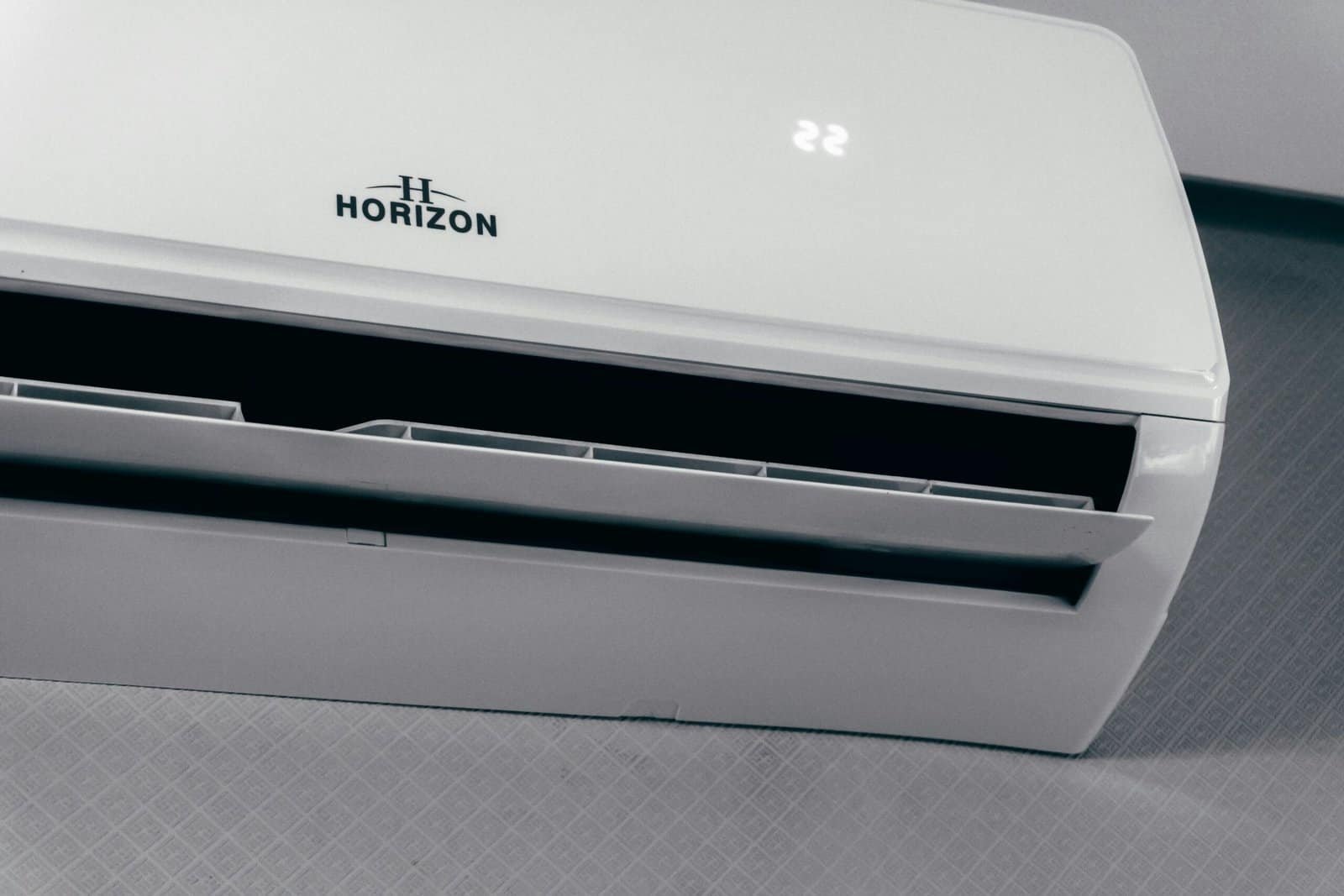
The right smart window air conditioner matches your room’s square footage in BTUs, holds a schedule without cloud access, and runs quietly enough to sleep beside. Smart window units have become the default rather than the premium option, and the app is rarely the reason to choose one model over another. Sizing is. An oversized unit cools fast, shuts off, and leaves the room clammy, because it never runs long enough to pull humidity out of the air.
The features worth paying for are inverter compressors, a genuine sleep mode, and scheduling that survives an internet outage. Everything else is packaging. Anyone building broader climate control should read this alongside central system scheduling, since the two often fight each other in a house with both.
Quick Answer
Buy an inverter unit if the bedroom matters, because variable speed compressors avoid the loud cycling that wakes people. Buy a standard smart unit for spaces where noise is irrelevant. Size by room area first and treat the app as a tiebreaker, never as the deciding feature.
Key Points
- BTU sizing follows room square footage, and oversizing causes humidity problems
- Inverter compressors run continuously at low speed instead of cycling loudly
- U-shaped designs place the compressor outside the window and cut noise substantially
- Local scheduling matters more than app polish when the internet drops
- Window depth, height, and sash type limit which units physically fit
- Most units need a dedicated circuit above a certain capacity
How We Picked
Sizing accuracy came first, which meant favoring manufacturers whose stated coverage matches the standard guidance rather than optimistic marketing figures. A unit claiming to cool far more area than its BTU rating supports will disappoint in July.
Noise ranked second and heavily. Window units sit in the room, not outside it, so compressor design determines whether a bedroom is usable. Inverter and U-shaped units were credited accordingly.
Local control was the third filter. A schedule stored on the unit keeps running during an outage. A cloud-only schedule does not, and losing cooling because a server had a bad afternoon is a failure mode worth avoiding. The same principle applies to plugs and other always-on devices.
Installation weight and bracket requirements finished the list, since a unit nobody can lift into a second floor window is not a practical purchase.
1. The Inverter Window Unit
Why It Stands Out
Inverter compressors vary their speed instead of switching fully on and off. The room holds a steadier temperature, the unit draws less power over a season, and the noise becomes a constant low hum rather than a repeated startup surge. For bedrooms this is the single feature that changes the experience.
Worth Knowing
Inverter units cost more upfront and their electronics are more complex, which means repair costs more when something fails. The payback comes through energy savings and comfort rather than a shorter lifespan.
Right for bedrooms, nurseries, and home offices. Skip it for a garage or workshop where cycling noise costs you nothing.
2. The U-Shaped Window Unit
Why It Stands Out
The U-shaped design straddles the window sash so the compressor sits outside the glass line. That physical separation cuts perceived indoor noise dramatically, and it allows the window to close down through the middle of the unit, which improves the seal and lets you still open the window.
Worth Knowing
The design requires a specific window geometry. Sashes must close through the gap, which rules out casement windows, many older double hungs with thick frames, and anything with a security bar in the way. Measure carefully, because this is the category with the highest return rate for fit.
Right for standard double hung windows in bedrooms. Skip it for casement, sliding, or unusually shallow windows.
3. The Compact Small Room Unit
Why It Stands Out
Small bedrooms, offices, and dorm rooms need far less capacity than people buy. A correctly sized compact unit fits narrower windows, weighs little enough for one person to install, and runs longer cycles, which keeps humidity under control in a way an oversized unit cannot.
Worth Knowing
Compact units struggle in rooms with heavy afternoon sun, poor insulation, or high ceilings. Those conditions effectively enlarge the room from the unit’s perspective, and the standard sizing chart assumes none of them.
Right for rooms under roughly 250 square feet with average conditions. Skip it for sun-facing rooms or open floor plans.
4. The High Capacity Unit
Why It Stands Out
Large living rooms and open plan spaces need real capacity, and undersizing here means a unit running flat out all day without ever reaching the set point. Higher BTU smart units bring stronger fans and better air throw, which matters more than raw cooling in a long room.
Worth Knowing
Above a certain capacity these require a dedicated 20 amp circuit, and some need a 230 volt outlet that most bedrooms do not have. Confirm your electrical situation before ordering, because this is an expensive discovery to make after delivery.
Right for living rooms and open spaces above roughly 500 square feet. Skip it in any room where the circuit is already shared.
5. The Heat and Cool Combination Unit
Why It Stands Out
A unit that reverses to provide heat covers shoulder seasons in a room that would otherwise need a space heater. In apartments and additions without ducted heat, one appliance handling both directions saves storage space and a second purchase.
Worth Knowing
Heating capacity drops sharply as outdoor temperature falls, and most window units are not a winter solution in cold climates. Treat the heat function as spring and autumn coverage rather than a furnace replacement.
Right for mild winters and shoulder season comfort. Skip it where winter genuinely bites.
6. The Casement and Sliding Window Unit
Why It Stands Out
Casement and slider windows open sideways, so a standard horizontal unit cannot mount in them. Vertical units are built tall and narrow specifically for these openings, and they are the only practical option for a room with that window type short of a portable.
Worth Knowing
Selection is thin and prices run higher than equivalent horizontal units, simply because volume is lower. Support kits and side panels are frequently sold separately, so budget for the full assembly.
Right for casement and slider windows. Skip it if you have any standard double hung window in the same room.
Smart Window Air Conditioners at a Glance
| Type | Typical room size | Relative noise | Best for |
|---|---|---|---|
| Inverter | 150 to 450 sq ft | Lowest | Bedrooms |
| U-shaped | 200 to 450 sq ft | Very low | Standard double hung |
| Compact | Under 250 sq ft | Moderate | Offices, dorms |
| High capacity | 500 sq ft and up | Higher | Living rooms |
| Heat and cool | 150 to 400 sq ft | Moderate | Shoulder seasons |
| Casement vertical | 150 to 350 sq ft | Moderate | Side-opening windows |
What to Look For in a Smart Window Air Conditioner
How many BTUs does the room actually need?
Standard guidance runs roughly 20 BTU per square foot as a starting point, adjusted upward for heavy sun, high ceilings, or a kitchen, and adjusted for the number of people typically in the room. Buying above the calculated figure is the most common mistake, and it produces a cold clammy room rather than a comfortable one.
Will it physically fit the window?
Three measurements decide it: the width of the opening at its narrowest, the height the sash raises, and the depth of the sill and any interior trim or stop. U-shaped units add a fourth requirement, since the sash must close through the middle of the unit.
Does scheduling work without the internet?
Check whether schedules are stored on the unit or in the cloud. Locally stored schedules keep running through an outage. This matters most in summer storm season, which is exactly when both the power and the heat arrive together.
What does the circuit support?
Smaller units run on a standard 15 amp circuit. Larger ones want a dedicated 20 amp line, and the largest need 230 volts. Sharing a circuit with a refrigerator or a microwave will trip the breaker on a hot afternoon.
Window Units vs Portable Air Conditioners
Where window units win
Efficiency, mostly. A window unit exhausts heat directly outside, while a portable pulls conditioned room air into the exhaust hose and pushes it out, creating negative pressure that draws warm air in from elsewhere. For the same BTU rating, the window unit cools better.
Where portables still make sense
Rentals that forbid window installations, casement windows with no vertical option, and rooms where the window must stay usable. Portables also move between rooms, which suits a household cooling one space at a time.
Common Misconceptions
That bigger is safer
Oversizing is the most frequent and most damaging error. The unit reaches temperature quickly, shuts down, and stops dehumidifying, leaving a room that is cold and damp. Correct sizing runs longer and feels better.
That the app matters most
Every major manufacturer now ships a workable app. Compressor type, noise level, and sizing accuracy differ far more between models than software does, and those are what you live with.
That the unit does not need cleaning
Filters clog within weeks in a dusty room, and a clogged filter cuts airflow, raises energy use, and eventually ices the coil. Monthly rinsing during the cooling season is the single highest value maintenance habit.
That sealing the gaps is optional
The accordion side panels that ship with most units are thin and leak both air and insects. Foam strips and a proper seal around the frame improve efficiency more than any setting in the app.
Recommended Reading
- purifiers for rooms that stay closed all summer
- shades that cut solar gain before it reaches the room
- humidity control for the opposite season
- the order to add devices without wasted spend
- hubs that coordinate climate with everything else
Frequently Asked Questions
What size air conditioner do I need for a bedroom?
A typical 150 to 250 square foot bedroom needs somewhere around 5,000 to 6,000 BTU under average conditions. Add capacity for west-facing windows, poor insulation, or ceilings above eight feet, and subtract nothing for a shaded room on a lower floor.
Are smart window air conditioners noisy?
Standard compressors cycle audibly. Inverter and U-shaped designs are substantially quieter, with U-shaped units placing the loudest component outside the window entirely. If sleep is the concern, those two categories are the only ones worth considering.
Do they work if the Wi-Fi goes out?
The unit keeps cooling and the physical controls and remote continue to function. Whether the schedule survives depends on the model, since locally stored schedules keep running and cloud-based ones pause until service returns.
Can I install a window unit myself?
Smaller units are a one person job with basic tools. Anything above roughly 8,000 BTU is heavy and awkward enough that a second person is genuinely a safety matter, particularly above the ground floor where a support bracket is also required.
How often should the filter be cleaned?
Monthly during the cooling season, more often with pets or in a dusty area. Most filters slide out and rinse under a tap, and letting them dry fully before reinstalling prevents mildew.
Why is water dripping inside the room?
Almost always a tilt problem. The unit should sit very slightly lower at the outside edge so condensate drains away from the building. A perfectly level or inward-tilted unit sends that water onto your floor.
Should I remove the unit for winter?
Removing it eliminates the draft that even a well sealed unit lets through, and it protects the coil from a season of freezing and thawing. Storage requires a dry space and a second pair of hands. If removal is impractical, an insulated exterior cover is the reasonable compromise, and it noticeably cuts the cold air that otherwise pours through the housing.
Can one unit cool an entire apartment?
Only where the floor plan is genuinely open and the unit is sized for the total area. Cooled air does not turn corners or travel down hallways well, so a closed bedroom off a cooled living room will stay warm. Running a fan to move air between spaces helps more than upsizing does, and switch-controlled circulation makes that easier to automate.
