
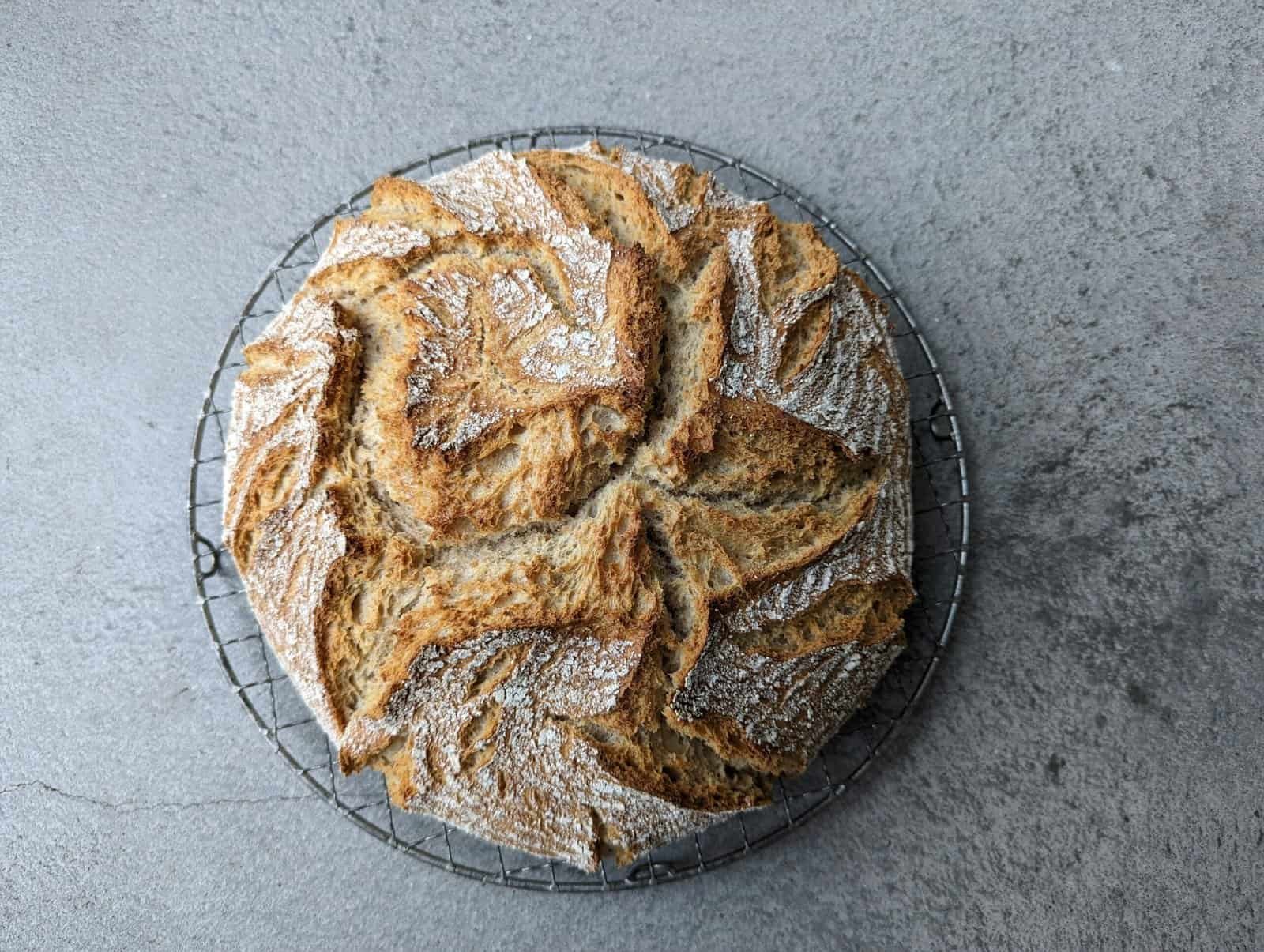
Yeast is the magic ingredient in bread that transforms a heavy lump of flour and water into something light, airy, and full of flavor. Most home bakers know they need it, follow recipes carefully, and hope it works. But understanding what yeast actually does (it’s a living organism, and it’s doing very specific things to your dough) makes the difference between mysteriously failing recipes and being able to troubleshoot, substitute, and adapt with confidence. For recommendations, see our best non stick pans that actually last guide.
The short version: yeast is a single-celled fungus that eats sugars and produces carbon dioxide gas and alcohol as byproducts. The carbon dioxide gets trapped in the dough’s gluten network, creating the air pockets that make bread light. The alcohol and other byproducts contribute to bread flavor. Time, temperature, and food availability all affect how vigorously the yeast does its job.
This guide walks through the biology of yeast, the different forms you’ll find at the store, what makes it work well or poorly, and how to use that understanding for better bread.
Key Takeaways
- Yeast is a living organism (a fungus) that eats sugars in dough and produces carbon dioxide and alcohol; the CO2 makes the bread rise
- Active dry, instant, and fresh yeast all work the same way; they differ in moisture content, particle size, and how they’re activated
- Yeast activity is temperature-dependent: cool slows it down, warmth speeds it up, hot kills it
- Longer fermentation at cooler temperatures generally produces better flavor than fast fermentation at warmer temperatures
What Yeast Actually Is
Yeast is a microscopic single-celled fungus. The species used in baking and brewing is Saccharomyces cerevisiae, which translates roughly to “sugar fungus of beer.” It’s been used by humans for thousands of years for fermenting beverages and leavening bread, well before anyone knew it was a living organism.
Each tiny grain of yeast contains billions of individual yeast cells in a dormant state. When you add yeast to dough with appropriate moisture and warmth, the cells wake up and begin metabolizing the sugars available to them.
The metabolic process is fermentation: yeast consumes sugars (glucose, fructose, maltose) and breaks them down into carbon dioxide gas and ethanol (alcohol), plus various flavor compounds as byproducts. The gas creates the bubbles that make bread rise. The alcohol mostly evaporates during baking but contributes to flavor development first. The flavor compounds give well-fermented bread its complex taste.
The Different Forms of Yeast
You’ll encounter several different forms at the grocery store. They’re all the same organism, just packaged differently.
Active dry yeast. The most common type historically. Larger granules with the yeast cells in a dormant state surrounded by dead yeast cell protective layers. Traditionally requires “proofing” in warm water before adding to dough to wake the cells up. Many modern active dry yeasts can actually be added directly to flour, but the proofing step also doubles as a quality check (if it foams up, you know the yeast is alive). For machine baking specifically, our roundup of yeast for bread machines covers why instant is the type to use.
Instant yeast (also called rapid-rise or bread-machine yeast). Smaller granules processed to be added directly to flour without proofing. Generally faster-acting than active dry. Can be substituted 1:1 with active dry in most recipes, often producing slightly faster rise. The convenience makes it many home bakers’ default choice.
Fresh yeast (cake yeast). Sold as a moist cake. Less common in home use, more common in commercial baking. Has the shortest shelf life (refrigerated, used within weeks). Often considered to produce slightly better flavor than dry forms because the cells were never dormant.
Wild yeast / sourdough starter. A different approach entirely. A sourdough starter is a culture of wild yeasts (from the air and the flour itself) plus lactic acid bacteria. The yeast does the same job (CO2 production), but the bacteria add lactic acid and other complex flavors. Sourdough has different handling requirements and longer fermentation but produces distinctively flavored bread.
Why Yeast Needs the Right Conditions
Yeast is alive, and like any living thing it has preferences. Several factors affect how well it works.
Temperature. The biggest variable. Yeast is dormant when cold, active in warmth, and dies when hot. The ideal range for active yeast metabolism is roughly the warm side of room temperature, warm enough that the yeast is active but not so warm that it stresses or dies. Higher temperatures speed up fermentation but can produce off-flavors; lower temperatures slow it down but often produce more complex flavors.
Specific temperature thresholds: refrigerator temperatures effectively pause yeast (used in slow overnight fermentation), comfortable kitchen temperature works for standard rises, water hot to the touch is approaching the lethal range. Very hot water will kill yeast outright.
Moisture. Yeast needs water to be active. Dry yeast is dormant; once it gets moist, it wakes up.
Food (sugars). Yeast needs sugars to ferment. Most flour contains some natural sugars and produces more as enzymes break starches down during fermentation. Adding sugar can speed initial fermentation but too much actually slows yeast down by drawing water out of the cells.
Salt. Salt slows yeast activity and helps regulate fermentation. Bread without salt rises faster but often has poor flavor and structure. The salt timing matters too, adding salt directly to concentrated yeast can stress the cells, which is why many recipes have you mix salt with flour first.
Acidity. Yeast prefers slightly acidic conditions. As fermentation proceeds, the dough becomes more acidic from byproducts, which favors continued yeast activity.
For more on bread troubleshooting when these conditions go wrong, see our guide on why bread doesn’t rise.
What’s Happening During Each Rise
Most bread recipes have at least two rises. Each stage does something different.
First rise (bulk fermentation). The yeast multiplies and consumes initial sugars while the gluten network develops. Flavor compounds accumulate. The dough volume increases, often roughly doubling. This stage builds the foundation for the bread’s flavor and structure.
Shaping. Between rises, the dough is shaped. This releases some of the trapped gas (you’ll feel and see the dough deflate slightly) and tightens the gluten structure into the final loaf shape.
Second rise (proofing). The shaped dough rises again. This is mostly about creating final volume rather than developing flavor (most of that happened in the first rise). The yeast continues producing gas, and the gluten network stretches to accommodate.
Oven spring. The first few minutes in a hot oven, before the yeast dies from heat, there’s a burst of accelerated activity producing the final rise in volume. Then the proteins set and the structure becomes permanent.
Why Slow Fermentation Tastes Better
A bread fermented slowly over many hours usually tastes more complex than a bread that took a quick rise. The reason has to do with what yeast produces over time.
Beyond CO2 and ethanol, yeast produces dozens of secondary metabolites during fermentation: organic acids, esters, aldehydes, and other compounds that contribute to flavor. Many of these accumulate slowly. A fast rise gets you bread that’s leavened but lacks depth; a slow rise builds the complexity that distinguishes good bread from generic bread.
Practical applications:
Cool overnight rise in the fridge. Mix the dough, let it rise briefly at room temperature, then refrigerate overnight (or up to a couple of days). The slow cold fermentation builds flavor while the yeast continues working slowly. Bake when ready.
Less yeast, longer time. Some serious bakers reduce the yeast in recipes and extend the fermentation time. The result is bread with more developed flavor than the same recipe with quick fermentation.
Sourdough. Inherently slow fermentation produces distinctively complex flavor.
📑 Recommended Read: Consistent dough temperature control is one of the things that bread machines do well even when manual methods get unreliable. Check out our breakdown of the bread makers under 100 to find options that manage yeast activity reliably for first-time and busy bakers.
How to Tell If Your Yeast Is Still Alive
Yeast loses viability over time, especially if stored poorly. Dead yeast doesn’t ferment. To test before committing to a recipe:
Proof a small sample. Mix a small spoonful of yeast in warm water with a pinch of sugar. Wait several minutes. Live yeast will foam noticeably as it begins fermenting the sugar. Dead yeast will not foam.
Check the expiration date. Yeast packets have dates; past those, viability drops. Refrigerated unopened yeast often lasts well past its date; opened and room-temperature yeast loses viability faster.
Storage matters. For long shelf life: refrigerator or freezer for unopened packages, refrigerator after opening. Yeast lasts months in the fridge and indefinitely in the freezer in most cases.
Why Some Recipes Have You “Bloom” the Yeast
“Blooming” or “proofing” yeast means dissolving it in warm liquid (often with a small amount of sugar) before adding it to the rest of the recipe. This serves two purposes:
First, for active dry yeast, the moisture and warmth help wake the cells from dormancy. The dead cells around live ones dissolve and the live cells start metabolizing. Modern active dry yeasts often don’t strictly require this anymore, but it doesn’t hurt.
Second, blooming acts as a viability check. If the yeast foams, you know it’s alive. If it doesn’t, you know not to waste the rest of your ingredients on a dough that won’t rise.
Instant yeast doesn’t need blooming and can be added directly to dry ingredients, but you can bloom it if you want a viability check.
The Sugar Confusion
Many recipes call for a small amount of sugar in the yeast mixture. This isn’t because the yeast needs it (the flour will provide plenty of sugar through enzymatic action), but because:
It provides an immediate food source for activation, getting the yeast going faster than waiting for flour enzymes to release sugars.
It makes the proofing test more dramatic, with more visible foam.
It contributes to the recipe’s flavor, especially in enriched doughs like brioche or sweet breads.
For lean breads (just flour, water, salt, yeast), the sugar isn’t strictly necessary. For enriched breads, sugar serves multiple purposes including yeast food, flavor, and crust browning.
Common Mistakes and How to Avoid Them
Using water that’s too hot. If you can comfortably keep a finger in the water, it’s safe for yeast. If it feels uncomfortably hot, it’s too hot. Hotter water kills yeast outright; you’ll mix and wait, and nothing will happen.
Adding salt directly to yeast. Mix salt with flour before combining with yeast water. Direct contact between concentrated yeast and salt stresses the cells.
Using yeast past its expiration without testing. Old yeast may have lost viability. A quick proof test (5 minutes with warm water and a pinch of sugar) saves the rest of your ingredients from being wasted on a dud.
Substituting between yeast types blindly. Active dry and instant can usually substitute 1:1, but fresh yeast requires conversion. As a rough guide, fresh yeast is used in larger quantities than dry forms because it contains water.
Rushing the rise. Yeast works at the speed it works. Pushing with high temperatures can kill cells and produce off-flavors. Patience produces better bread.
Not letting the dough rise enough. Under-proofed bread has tight, dense crumb. Over-proofed bread collapses or has weak structure. Properly proofed dough holds an indentation slightly when poked but mostly springs back.
Storing yeast at room temperature long-term. Heat shortens yeast life. Refrigerate or freeze for storage.
Frequently Asked Questions
Can I substitute instant yeast for active dry? Yes, generally 1:1 by weight or volume. Instant yeast may produce slightly faster rise. You can skip the blooming step with instant; just mix it into the flour.
Why does my bread taste yeasty? Often the result of too much yeast for the fermentation time. Excess yeast can leave a yeasty taste even after full fermentation. Try using less yeast and longer rise times for better flavor.
Does sugar make yeast work faster? A small amount provides an immediate food source and can speed initial activation. Lots of sugar actually slows yeast down by drawing water out of the cells (osmotic pressure). High-sugar doughs like brioche require special handling for this reason.
Can I use beer yeast or wine yeast for bread? Both are Saccharomyces cerevisiae, the same species as baker’s yeast. They will ferment bread dough, but they’re selected for different characteristics (alcohol tolerance, flavor profiles) and may produce off-flavors in bread. Stick with baker’s yeast for bread.
What’s the difference between yeast and baking powder? Yeast is a living organism that produces gas slowly through fermentation. Baking powder is a chemical leavener that produces gas quickly when wet and heated. Yeast adds flavor; baking powder doesn’t. They’re used in different applications. Our companion article on baking soda vs baking powder covers chemical leaveners in detail.
Can I add too much yeast to a recipe? Yes. Excess yeast often produces too-fast rise (which can collapse or have weak structure), yeasty off-flavor, and reduced flavor complexity. The ratios in good recipes are calibrated; doubling the yeast doesn’t double the quality.
Related Reading
Explore more: why room temperature butter matters.
