
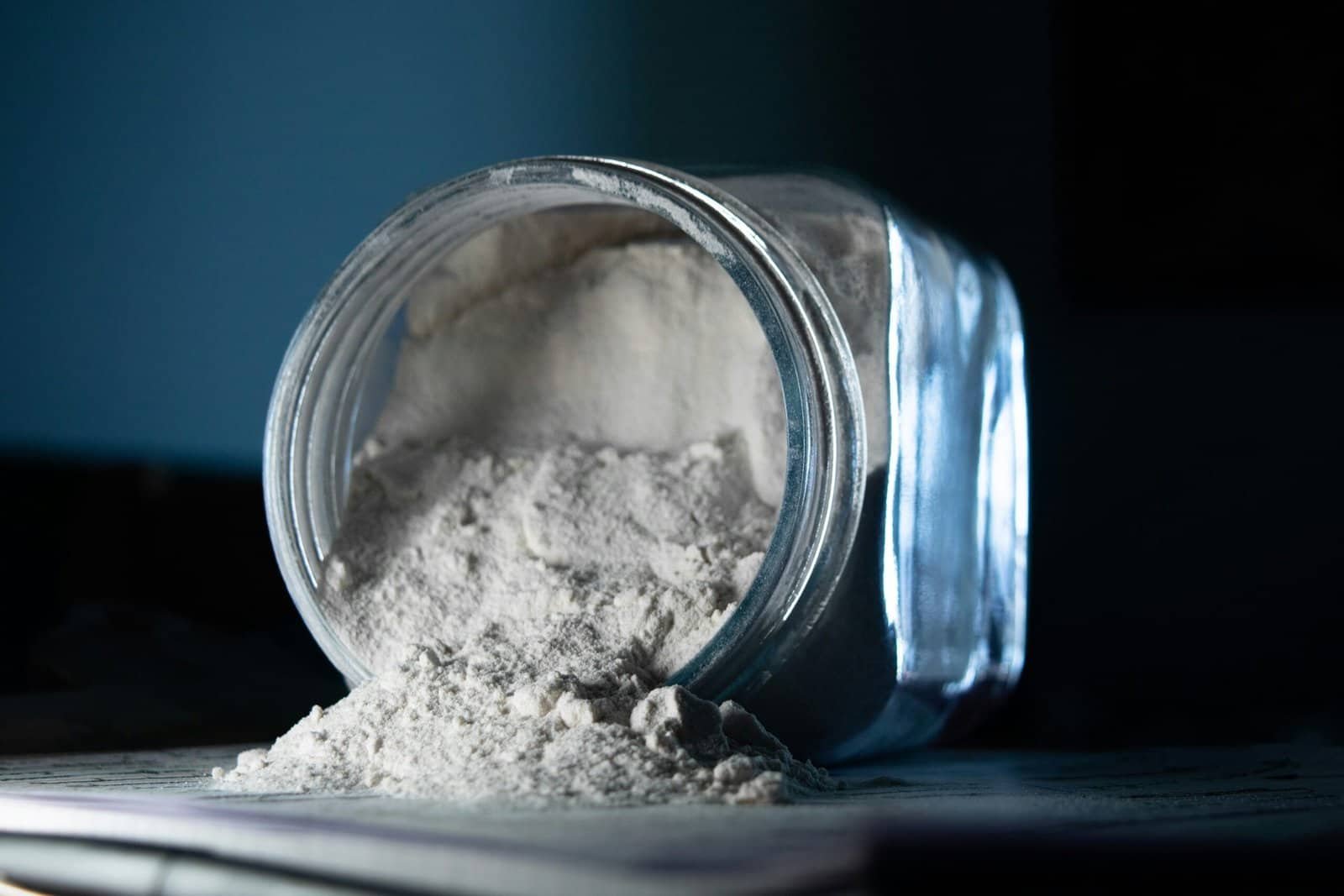
Baking soda and baking powder are both chemical leaveners, both white powders, both found in nearly every kitchen, and both used to make baked goods rise. They’re also not interchangeable, despite the similar appearance and adjacent positions on most spice racks. Substituting one for the other gives unpredictable results, often a flat or oddly-textured final product. For recommendations, see our best silicone baking mats guide.
The difference comes down to chemistry. Baking soda is one ingredient that needs to react with an acid to produce gas. Baking powder contains baking soda plus its own acid plus a buffer, so it can react on its own when mixed with liquid. The recipe you’re using determines which one you need based on what other ingredients are in the mix.
This guide explains how each leavener works, when to use which one, and how to handle common substitution questions when you’ve run out of one or the other.
Key Takeaways
- Baking soda needs an acid in the recipe to activate; baking powder contains its own acid and works without other acidic ingredients.
- Most cookie recipes use baking soda (the brown sugar provides acid); most cake recipes use baking powder; some recipes use both.
- Substituting them isn’t impossible but requires adjustments; the ratio is roughly three to four times more baking powder for the same leavening as baking soda.
- Both expire and lose potency; replace them every six months or so, even if the container isn’t empty.
What Baking Soda Actually Is
Baking soda is sodium bicarbonate, a single chemical compound. It’s mined or synthesized industrially, then ground into the fine white powder you find in the kitchen aisle.
On its own, baking soda doesn’t do much. It’s a base (alkaline), which means it reacts when it encounters an acid. When you mix baking soda with an acidic ingredient (vinegar, lemon juice, buttermilk, brown sugar, yogurt, cocoa powder, molasses, or honey), the reaction produces carbon dioxide gas. That gas creates the bubbles that make baked goods rise.
The reaction happens immediately when the baking soda contacts the acid in the liquid. This is why recipes using baking soda often instruct you to bake right after mixing: the gas is being produced as soon as the ingredients combine, and waiting too long means the bubbles escape before the batter is in the oven.
What Baking Powder Actually Is
Baking powder is a mixture, typically containing baking soda (the base), one or more powdered acids, and cornstarch (which absorbs moisture to keep the powder dry and prevents the acid and base from reacting in the container).
Because baking powder contains both an acid and a base in one package, it doesn’t need additional acid in the recipe. When the powder gets wet, the acid dissolves, the base dissolves, and they react to produce carbon dioxide gas.
Most modern baking powders are “double-acting.” This means they contain two different acids: one that reacts at room temperature when liquid is added, and another that only reacts at higher temperatures during baking. This gives the recipe two rises: one in the bowl after mixing, one in the oven. Double-acting powder gives more reliable rises because if some of the first rise’s bubbles escape, the second activation in the oven still provides lift.
The Difference in One Sentence
Baking soda needs you to provide the acid; baking powder provides its own.
When Recipes Use Baking Soda
Recipes use baking soda when the dough or batter already contains a significant acidic ingredient.
Cookies with brown sugar. Brown sugar contains molasses, which is acidic. Most chocolate chip cookie recipes use baking soda because the brown sugar provides the acid.
Buttermilk pancakes, biscuits, and quick breads. Buttermilk is acidic. Recipes using buttermilk almost always include baking soda to react with it.
Lemon or vinegar-based cakes. Recipes using citrus or vinegar typically use baking soda.
Banana bread and other fruit quick breads. Fruits (especially riper ones) provide enough acid for the baking soda to react.
Anything with cocoa powder. Natural cocoa powder (not Dutch-processed) is acidic. Recipes using natural cocoa often pair it with baking soda.
Yogurt or sour cream batters. Both are acidic and pair with baking soda.
A useful pattern: if you see brown sugar, buttermilk, yogurt, sour cream, cocoa, citrus, vinegar, or honey in the ingredients, the recipe probably uses baking soda.
When Recipes Use Baking Powder
Recipes use baking powder when there’s no significant acid in the other ingredients.
Most yellow and white cakes. A standard butter cake with white sugar, eggs, and milk doesn’t have a strong acid, so baking powder provides both the acid and the base.
Most muffin recipes. Especially those without buttermilk or significant fruit acid.
Scones and biscuits without buttermilk. Variants of these recipes use baking powder.
Pancakes and waffles without buttermilk. Plain milk pancakes typically use baking powder.
Quick breads without fruit or yogurt. Plain quick breads that don’t have an obvious acid use baking powder.
A useful pattern: if the recipe uses regular sugar (no brown), milk (not buttermilk), and doesn’t contain much fruit, cocoa, or citrus, it probably uses baking powder.
When Recipes Use Both
Some recipes use both baking soda and baking powder. This usually means the recipe contains some acid, but not enough to react with all the baking soda needed for the desired rise. The baking soda reacts with the acid and provides one boost; the baking powder provides additional rise independent of the available acid.
Recipes using both also often want the browning and texture effects that baking soda provides (it raises pH slightly, which encourages browning) along with the rising power of baking powder.
Examples include some chocolate chip cookie recipes, certain cake recipes, and many muffin recipes that combine cocoa and milk.
Can You Substitute One for the Other?
Not freely, but with adjustments, sometimes yes.
Substituting baking powder for baking soda: Use about three to four times the amount of baking powder. If a recipe calls for a teaspoon of baking soda, use three to four teaspoons of baking powder. The flavor will be slightly different (the powder adds a faint metallic note when used in larger quantities), and the texture may change. This substitution works better in some recipes than others; cakes tolerate it better than cookies.
Substituting baking soda for baking powder: Trickier because baking soda needs an acid. Use about one-fourth the amount of baking soda, and add an acid, like a teaspoon of lemon juice or vinegar (or a half-cup of buttermilk replacing a half-cup of regular milk) per teaspoon of baking powder being substituted. This is more invasive than just swapping powders, and the result may differ from the original recipe in texture or flavor.
The best approach: Use what the recipe calls for. If you’re out, consider making a different recipe rather than substituting, especially for recipes where the chemistry matters (like delicate cakes).
Testing Whether Yours Is Still Active
Both baking soda and baking powder lose potency over time. Dead leaveners are one of the most common causes of baked goods that don’t rise properly.
To test baking soda: Add a small spoonful to a few tablespoons of vinegar or lemon juice. It should fizz vigorously and immediately. No fizz means it’s dead.
To test baking powder: Add a small spoonful to a few tablespoons of hot water. It should fizz vigorously. No fizz, or weak fizz, means it’s losing potency.
Both tests take less than a minute and can save you from an entire failed batch.
Storage and Shelf Life
Baking soda: Stays viable for a long time in a sealed container. Once opened, it gradually absorbs moisture and odors from the air, which can slow its reactivity. Many people keep an open box in the fridge or freezer as a deodorizer, then a separate box for baking. The freezer is fine; baking soda doesn’t freeze.
Baking powder: More finicky. The cornstarch component absorbs moisture, and once the powder has been opened, it starts to lose potency. Most baking powders are good for about six months to a year after opening if stored properly (sealed, dry, room temperature).
Write the date you opened the container on the package. When you’re not sure how old it is, test it.
📑 Recommended Read: Knowing which leavener to use is the chemistry side; having the right pans is the equipment side. Check out our tested breakdown of the bakeware sets for home bakers to round out the foundational kit any new baker needs.
Common Mistakes and How to Avoid Them
Using expired leavening. The most common cause of baked goods that don’t rise is. Test before assuming the recipe is the problem.
Substituting without adjusting. Swapping baking powder for baking soda one-for-one (or vice versa) gives flat or oddly-textured results. Use the ratios above if you must substitute.
Letting the baking soda batter sit too long. The reaction starts as soon as the soda contacts the acid in liquid form. Bake immediately for the best rise.
Storing leavener near the stove. Heat and humidity from cooking accelerate degradation. Keep both leaveners in a cool, dry pantry.
Buying huge containers. Both leaveners are cheap. Buying smaller containers more often means fresher product. A giant tub of baking powder that takes you two years to finish is mostly dead by the end.
Skipping the measurement. Eyeballing baking soda or baking powder is a recipe for unreliable results. The amounts are small, so even small errors are proportionally large.
Frequently Asked Questions
Are baking soda and baking powder the same thing? No. Baking soda is a single chemical (sodium bicarbonate). Baking powder is a mixture that contains baking soda, an acid plus a buffer. They serve similar purposes but work differently.
Why does my recipe use both? The recipe needs more rise than the available acid can provide, or it benefits from baking soda’s browning effects in addition to baking powder’s reliable lift. Both leaveners contribute different things.
What if I run out of baking powder mid-recipe? Make your own from baking soda and cream of tartar (one part baking soda, two parts cream of tartar, plus optional cornstarch). Or substitute baking soda plus an acid as described above. Or pick a different recipe.
Does baking soda make cookies spread more? Baking soda raises the pH of the dough slightly, which can promote spread. This is one reason chocolate chip cookies often use baking soda, even though they could technically use baking powder. For more on cookie spread problems, see our piece on why cookies spread too much.
Can I use baking soda for cleaning AND baking from the same box? You can, but it’s not ideal. The box for baking should be kept sealed and away from food odors. A separate box for cleaning purposes makes more sense.
Is bicarbonate of soda the same as baking soda? Yes. “Bicarbonate of soda” (sometimes shortened to “bicarb”) is the British and Australian name for the same compound Americans call baking soda. They’re identical.
How does this relate to bread that doesn’t rise? Yeast breads use yeast as the leavening agent, not baking soda or baking powder. The science is different (biological vs chemical). For yeast-specific rising problems, see our companion article on why bread doesn’t rise.
Related Reading
Explore more: silicone baking mats. Also explore: why room temperature butter matters.
