
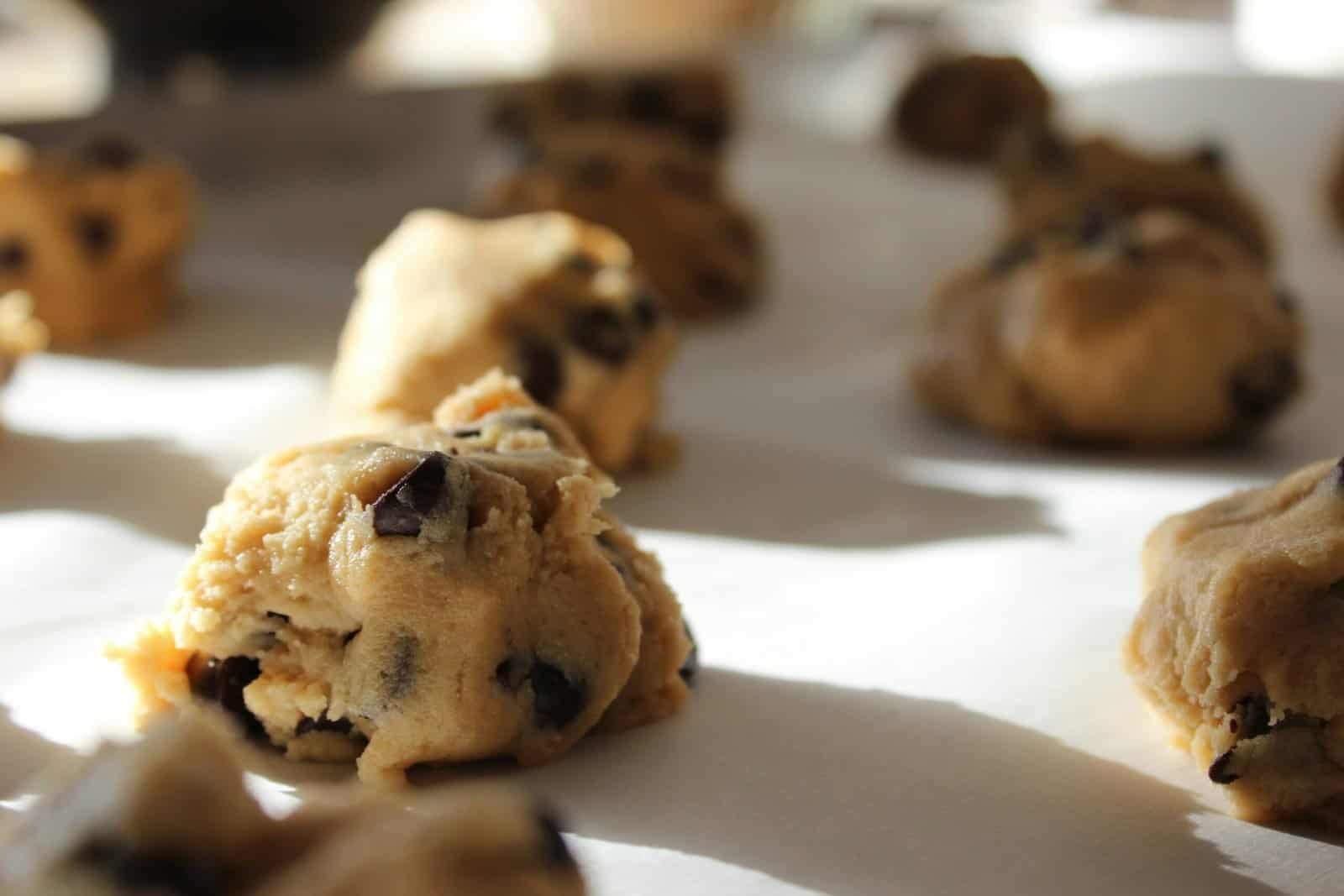
You followed the recipe, put the cookies in the oven expecting nice round mounds, and twelve minutes later, you’re looking at a tray of flat, lacy puddles fused at the edges. Cookies spreading too much is one of the most common baking frustrations, and it almost always traces to one of a handful of causes that are easy to identify and fix once you know what to look for.
The factors that determine cookie spread are temperature (of the butter, the dough, and the pan), the fat-to-flour ratio, the type of fat, the type of sugar, and the leavening. Each of these can independently send a cookie to the flat. The good news is that most of them are within your control without needing new equipment or a different recipe.
This guide walks through the main causes of excessive cookie spread, how to diagnose which one is hitting your batch, and the fixes that actually work.
Key Takeaways
- Cookies spread too much most commonly because the butter was too soft, the dough was too warm, or the pan was preheated.
- Chilling the dough is the single most effective fix for excessive spread; even an hour in the fridge usually helps substantially.
- Other common causes: too much fat, not enough flour, wrong sugar ratio, expired leavening, or a greased pan when the recipe didn’t ask for one
- A few simple tools (a kitchen scale, a cooled baking sheet, and parchment paper) prevent most spread problems.
Why Cookies Spread (The Basic Science)
When cookies bake, two things compete: the dough wants to spread outward as the butter melts and the sugar dissolves, and the structure wants to set as the flour proteins coagulate, and the egg proteins solidify. Whichever process wins first determines the final cookie shape.
If the dough spreads faster than it sets, you get a flat cookie. If the structure sets faster than the dough spreads, you get a tall, puffy cookie. Most home bakers want something in between: a cookie that spreads enough to be tender and chewy but not so much that it becomes a thin crisp.
Every factor that affects spread is really affecting one of those two timing variables. Cold dough sets faster because the butter doesn’t have time to melt all the way. Less fat means less spread because there’s less liquid to flow outward. More flour means more structure to hold the shape. Once you understand the timing competition, most cookie problems make sense.
Cause 1: The Butter Was Too Soft
The most common cause of excessive spread. Recipes call for “softened” butter, but the actual right state is butter that’s cool to the touch and gives slightly when pressed, but doesn’t squish flat. Many home bakers, especially in warm kitchens, end up with butter that’s much softer than this.
Soft butter creams differently from cool butter. When you cream butter and sugar in a stand mixer, the goal is to incorporate air into the fat, creating tiny bubbles that lift the cookie as it bakes. Too-soft butter doesn’t hold air well; it just smears around. The resulting dough has less structure and spreads excessively in the oven.
The fix: Take butter out of the fridge just long enough that you can press into it with moderate finger pressure. If you press and your finger sinks in easily, the butter is too soft. Put it back in the fridge for a few minutes.
If you’ve already mixed too-soft butter into the dough, chill the dough thoroughly before scooping. An hour minimum in the fridge usually helps; some bakers chill overnight for maximum effect.
Cause 2: The Dough Wasn’t Chilled
Almost every cookie recipe benefits from chilling, even when the recipe doesn’t explicitly require it. Cold dough spreads less because the butter has to melt before the cookie can flatten, and that delay gives the structure time to set.
For chocolate chip cookies in particular, chilling overnight is widely recommended by professional bakers because it also lets the flour fully hydrate, which changes the texture as well as reduces spread.
The fix: Chill the dough for at least an hour before baking. If you’re making a recipe that’s been giving you spread problems, try chilling overnight and see if the result changes.
If your kitchen is warm and you’re scooping cookies onto pans, chill the scooped dough balls in the fridge or freezer for a few minutes before baking. The shorter the warm-up time before they hit the oven, the better.
Cause 3: The Pan Was Hot
A common mistake when baking multiple batches: scooping the second batch onto a still-warm pan from the first batch. The hot pan starts melting the butter immediately, which means the dough spreads before the oven even matters.
The fix: Use a second pan, or wait for the first pan to cool completely between batches. Running the pan briefly under cold water and drying it can speed this up if you only have one pan.
For consistent results, two or three baking sheets in rotation is one of the most useful upgrades a home baker can make. Our roundup of baking sheets and cookie sheets covers the options.
Cause 4: Too Much Butter (or Other Fat)
If you’re consistently getting flat cookies even with chilled dough and cool pans, the recipe ratio may be off. Too much fat relative to flour means more liquid to spread out and not enough structure to hold the shape.
This often happens when bakers eyeball butter measurements (“a stick or so”) or substitute ingredients. A stick of butter in the US is a specific amount; eyeballing it can easily add a meaningful amount of extra fat, which makes a big difference in spread.
The fix: Measure butter by weight, not by eyeball or volume. A kitchen scale is the single most accurate-improving tool a baker can buy, and it removes most ingredient measurement errors at once.
If you’ve already mixed the dough and it looks excessively wet or greasy, you can sometimes save it by adding a tablespoon of flour at a time until the texture comes back together. Don’t add huge amounts; this changes other things, too.
Cause 5: Not Enough Flour
The mirror image of too much fat. If flour is measured by volume (cups) rather than by weight, the actual amount can vary substantially depending on how the flour was scooped. A loosely scooped cup of flour can weigh 30 grams less than a packed cup.
The fix: Measure flour by weight, using a kitchen scale. A typical cup of all-purpose flour weighs around 125 grams; check your recipe’s specification.
If you’re measuring by volume, use the spoon-and-level method: spoon flour into the measuring cup until it overflows, then level off with a knife. Don’t scoop directly with the cup; this compacts the flour, and you end up with too much.
Cause 6: Wrong Type or Amount of Sugar
Different sugars behave differently. Granulated white sugar promotes spread because it dissolves easily and adds liquid to the dough. Brown sugar contains molasses, which adds moisture and acidity, also promoting spread, but with more chewiness. Confectioners’ sugar contains cornstarch, which adds structure and reduces spread.
Recipes are formulated with specific sugar ratios for specific reasons. Substituting brown sugar for white sugar (or vice versa) changes both spread and texture.
The fix: Follow the sugar specifications in the recipe. If you want a less-spreading cookie and the recipe is brown-sugar-heavy, you can experiment with substituting some of the brown sugar for white. The texture will change too, but it’s a controllable variable.
Cause 7: Expired or Wrong Leavening
Baking soda and baking powder both lose potency over time. Old leavening means less rise, which can result in flatter cookies even when other factors are fine.
Also, baking soda and baking powder are not interchangeable. Baking soda needs an acid (like brown sugar or buttermilk) to activate. Baking powder contains its own acid. Substituting one for the other (or using them at the wrong ratio) gives unpredictable results.
The fix: Replace baking soda and baking powder every six months or so, even if the box isn’t empty. The cost is low, and the effect on baked goods is substantial.
To test baking soda: drop a small amount into vinegar. It should fizz vigorously. If it just sits there, it’s dead. To test baking powder: drop a small amount into hot water. Same result: vigorous fizzing means it’s active.
For more on which leavening to use when, our companion article on baking soda vs baking powder covers the differences in detail.
Cause 8: Greased Pan
Some cookie recipes specifically don’t want a greased pan. Adding grease to the pan when the recipe didn’t call for it gives the cookies an extra slip-and-slide surface that can promote excessive spread.
The fix: Use parchment paper or a silicone baking mat instead of greasing the pan. Both prevent sticking without adding fat to the cookie’s spread environment. Parchment is single-use; silicone mats are reusable for years and tend to give very consistent results.
Cause 9: Oven Temperature Too Low
Hot ovens set the structure quickly, which limits the spread time. Lower oven temperatures give the cookie more time to flatten before setting.
Many home ovens run inaccurately by 25°F or more in either direction, and most home bakers don’t realize their oven runs cool. A cookie recipe written for 375°F that bakes at 350°F (because the oven is running cool) will produce flatter cookies than intended.
The fix: Buy a cheap oven thermometer to check what your oven is actually doing. If it runs cool, increase the recipe temperature accordingly. The thermometer pays for itself in a few months of more consistent baking.
Diagnosing Your Specific Spread Problem
If multiple factors might be involved, here’s how to narrow it down.
Cookies that spread immediately when they hit the pan probably have too-soft butter or too-warm dough. Chill the dough and the pan.
Cookies that stay round on the pan but flatten in the oven probably have too much fat or not enough flour. Check measurements, ideally by weight.
Cookies that are flat AND don’t rise much probably have an issue with the leavening. Test the baking soda or powder.
Cookies from the second batch that are flatter than the first almost always mean the pan is too hot. Use a cool pan.
Cookies that have always been flat from this recipe may have a recipe issue. Try a different recipe and see if the problem follows the recipe or the baker.
📑 Recommended Read: Once your cookies come out the right shape, moving them off the hot pan quickly stops residual spread and prevents soggy bottoms. Check out our tested breakdown of the cooling racks for baking to find sturdy, airflow-friendly options that fit standard half-sheet pans.
Common Mistakes and How to Avoid Them
Measuring butter by eyeballing. A scale removes this error entirely.
Skipping the chill step. “Chill for at least an hour” in a recipe usually isn’t optional. Treating it as optional gives flat cookies.
Reusing hot pans. The second batch’s spread won’t match the first if you skip the cooldown.
Substituting fats freely. Margarine, butter, shortening, and coconut oil all behave differently. They aren’t interchangeable in a recipe without other adjustments.
Adding “just a little more” of any liquid ingredient. Extra vanilla, an extra egg, “a splash” of milk. All of these add liquid to the dough and can promote spread.
Frequently Asked Questions
Should I chill cookie dough before baking? Almost always yes. At least an hour in the fridge before scooping makes most cookie recipes better. Overnight chill makes some recipes (especially chocolate chip) noticeably better.
How do I know if my butter is at the right temperature? Press into it with your finger. It should give slightly under moderate pressure but not collapse. If your finger sinks in easily, it’s too soft. If you can barely make a dent, it’s too cold for creaming.
Will chilling fix already-mixed dough that has too-soft butter? Partly. Chilling helps, but if the butter is creamed too soft, the air structure is already compromised. The cookies will improve with chilling, but won’t be quite as tall as if you’d started with the right butter temperature.
Why are my cookies flat only at the edges of the pan? Edge spread is usually a hot pan effect; the edges of the pan heat first and start melting butter before the center of the pan does. A cooled pan with parchment usually solves this.
Can I save flat cookies that have already been baked? Crumble them over ice cream, mix them into milkshakes, or use them as a base for trifle. Flat cookies are still tasty; they’re just not the shape you wanted. Save them for a use that doesn’t depend on the shape.
Do silicone baking mats prevent spread? Not directly, but they give very consistent surface contact that helps with uniform baking. Our roundup of silicone baking mats covers the options if you bake cookies regularly and want more consistent results.
More Baking Guides
For the bigger picture, see the comprehensive baker’s workspace methodology.
