
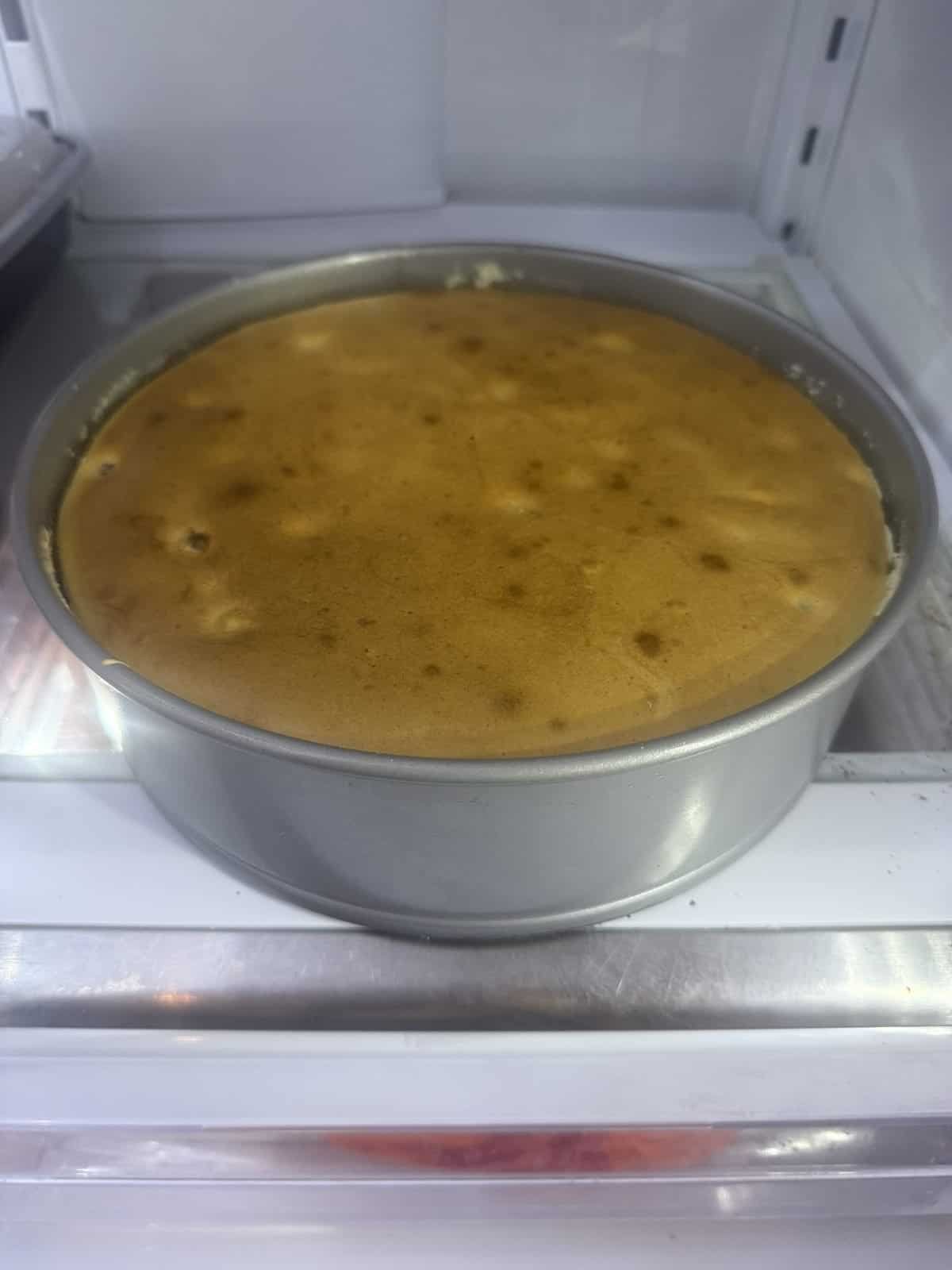
Choose a springform pan for delicate desserts you cannot flip out, like cheesecake, and a solid cake pan for everyday layer cakes you turn out and frost. This springform pan vs cake pan comparison breaks down how the two actually differ, so you reach for the right one instead of fighting a stuck cake or a leaky seam. A springform has removable sides that unclamp for a clean release, while a cake pan is one solid piece you invert to release the cake. Knowing which each does best saves a lot of frustration. For the roundup of specific models, our guide to the best springform pans covers that side in depth.
Pick a springform pan for cheesecakes, tortes, mousse cakes, and anything too delicate to flip, since the sides release without disturbing the top. Pick a solid cake pan for standard layer cakes, since it is cheaper, tougher, and has no seam to leak. The springform wins on gentle release; the cake pan wins on simplicity and durability.
Reader-supported through affiliate links at no cost to you. I bake with a springform pan for cakes and cheesecakes, so the notes on that side are genuine, and the cake-pan side draws on product research and the baking sources cited below. The springform I use runs in my own words with no brand claimed.
- A springform pan has a removable ring and base that unclamp for a clean release, ideal for delicate, wet, or layered desserts.
- A solid cake pan is one piece you invert to release the cake, which suits standard layer cakes.
- Springforms can leak at the seam if the seal is poor, so a well-built latch matters and a foil wrap helps for water baths.
- Cake pans are cheaper, tougher, and simpler, with nothing to loosen over time.
How We Compared
We judged both pans on the jobs bakers actually use them for: releasing the finished bake cleanly, resisting leaks, handling different recipes, and lasting through regular use. We grounded the guidance in baking sources rather than marketing. King Arthur Baking describes the springform’s design as making for an extra-easy release, well suited to cheesecakes, mousse cakes, tortes, and quiches. We treated the solid cake pan as the workhorse for standard cakes you turn out and frost, and weighed each pan on where it genuinely shines rather than forcing one to do it all.
Springform Pan vs Cake Pan at a Glance
| Factor | Springform Pan | Solid Cake Pan |
|---|---|---|
| Construction | Two pieces: ring with a latch plus a base | One solid piece |
| How you release | Unclamp the ring, no flipping | Invert and turn out the cake |
| Best for | Cheesecake, tortes, mousse, quiche, deep dish | Layer cakes, sheet-style rounds, everyday baking |
| Leak risk | Possible at the seam if the seal is poor | None, no seams |
| Durability | Good, but the latch can loosen over years | Very durable, nothing to loosen |
| Price | Higher | Lower |
Springform Pan, Pros and Cons
Pros
- Removable sides release delicate cakes without flipping, so the top stays intact.
- Handles wet and no-flip recipes like cheesecake, mousse, tortes, and quiche.
- Doubles as a serving base, so you can present straight from the pan.
- A well-built latch seals tightly, holding even wetter batters in place.
Cons
- The seam can leak if the seal is poor, and thin batters may seep.
- The latch can loosen over years of use, weakening the seal.
- Costs more than a basic cake pan.
I bake with a springform for cakes and cheesecakes, and what I value most is how well it holds everything in: the sides clamp tightly so batter stays put and it resists leaks even with wetter batters, then release cleanly when the cake is done. Mine has stayed solid and well built through a lot of baking, with the latch still closing firmly and no warping, which is exactly what you want from this style of pan. It fits anyone baking delicate or wet desserts they cannot flip. It is a weaker fit for someone who only bakes simple layer cakes.
Solid Cake Pan, Pros and Cons
Pros
- One solid piece with no seam, so there is nothing to leak.
- Tough and simple, with no latch or base to loosen over time.
- Cheaper than a springform, and easy to buy in matching sets for layer cakes.
- Ideal for standard cakes you invert, cool, and frost.
Cons
- You must flip the cake out, which risks damaging delicate or wet bakes.
- Not suited to cheesecake or no-flip desserts that cannot be inverted.
- Sticking is a real risk without proper greasing or parchment.
The solid cake pan is the everyday workhorse for layer cakes and rounds you turn out and frost. It fits anyone doing standard cake baking who wants a durable, affordable pan. It is a weaker fit for cheesecakes and delicate desserts that cannot be flipped. Lining it well, covered in our guide on how to line a pan with parchment, solves most sticking problems.
Head-to-Head: Releasing the Cake
This is the springform’s whole reason to exist. With a springform, you unclamp the ring and lift it away, leaving the cake sitting on the base untouched, which is the only practical way to free a cheesecake or a mousse cake without wrecking the top. King Arthur Baking notes the springform design makes for an extra-easy release and stunning results. A solid cake pan asks you to flip the cake upside down and turn it out, which works beautifully for a sturdy sponge or butter cake but would destroy a soft, wet dessert. For delicate and no-flip bakes, the springform wins clearly. For sturdy cakes you frost, the cake pan’s flip is no problem.
Head-to-Head: Leak Resistance
Here the solid pan has the structural edge. A one-piece cake pan has no seams, so a thin batter cannot escape, full stop. A springform joins a ring to a base, and Fat Daddio’s notes that over time a poorly made latch can loosen and create a gap that leaks. That said, a well-built springform seals tightly, and in my own use the clamp holds even wetter batters without seeping, so quality matters more than the format alone. For water-bath cheesecakes, wrapping the springform in foil is smart insurance. On pure leak-proofing the cake pan wins, but a good springform closes the gap.
Head-to-Head: Versatility and Durability
These two pull in opposite directions. The springform is the more versatile pan, handling cheesecakes, tortes, mousse cakes, quiches, deep-dish pizza, and other no-flip creations a solid pan cannot. The cake pan is the more durable and simpler tool, one rugged piece with no latch or base to loosen, and it costs less, which is why bakers buy them in matching sets for layer cakes. If you want one pan for the widest range of desserts, the springform wins; if you want a cheap, tough pan for everyday cakes, the solid pan wins. Many kitchens keep both for exactly this reason.
Which Fits Your Situation
| If this is you | Better choice |
|---|---|
| You bake cheesecake or mousse cakes | Springform pan |
| You bake standard layer cakes to frost | Solid cake pan |
| You want to serve straight from the pan | Springform pan |
| You want the cheapest, toughest option | Solid cake pan |
| You make tortes, quiche, or deep-dish | Springform pan |
| You bake simple cakes often and in bulk | Solid cake pan |
How to Choose Between Them
Start with what you bake most. If cheesecakes, tortes, or other delicate, no-flip desserts are on your list, the springform is close to essential, since nothing else releases them cleanly. If you mostly bake layer cakes you turn out and frost, a set of solid pans is cheaper, tougher, and all you need. Budget and durability tip a close call toward the solid pan, while range of desserts tips it toward the springform. A baker who does both ends up owning both, but if you buy only one, match it to the desserts you make most.
You can compare the two by area rather than by label before deciding.
The Verdict
For delicate, wet, and no-flip desserts, the springform pan is the clear pick, because its removable sides release a cheesecake or torte without touching the top. For everyday layer cakes, the solid cake pan wins on price, durability, and simplicity, with no seam to leak and nothing to loosen. Neither replaces the other, so the honest answer for most bakers is to own both and reach for the springform when a dessert cannot be flipped. If you can buy just one, let the desserts you bake most often make the call.
Common Mistakes to Avoid
Baking Cheesecake in a Solid Pan
Trying to turn a cheesecake out of a one-piece pan ends in a broken dessert. Cheesecake and other soft, wet bakes need the springform’s unclamping release, so match the pan to the recipe before you start.
Ignoring the Springform Seal
A loose or poorly latched springform leaks, especially with thin batter. Check that the latch clamps firmly, and for water baths, wrap the base in foil so no water seeps in and no batter seeps out.
Skipping the Pan Prep
Both pans stick without help. Grease and line them properly, and see our guide on lining pans with parchment, since a stuck cake ruins the release advantage of either pan.
Springform Pan vs Cake Pan FAQ
Can I use a cake pan instead of a springform pan?
For sturdy cakes you flip out, yes. For cheesecake, mousse cakes, and other soft or wet desserts, no, since you cannot invert them without damage. Those need a springform’s unclamping release, so match the pan to the recipe.
Can I use a springform pan for a regular cake?
Yes, any cake can bake in a springform, and the clean release is a nice bonus. Just make sure the latch seals well so thin batter does not seep, and grease and line it like any pan to prevent sticking.
Do springform pans leak?
They can if the seal is poor or the latch has loosened over time. A well-built springform with a firm latch holds batter reliably, and wrapping the base in foil is smart insurance for water baths or very thin batters.
What is a springform pan best for?
Delicate, wet, and no-flip desserts: cheesecakes, mousse cakes, tortes, quiches, and even deep-dish pizza. The design gives an extra-easy release for anything you cannot turn upside down.
Is a cake pan more durable than a springform?
Generally yes. A solid cake pan is one piece with nothing to loosen, while a springform’s latch can weaken over many years of use. A quality springform still lasts a long time, but the simpler pan has fewer parts to fail.
Do I need both pans?
If you bake both layer cakes and cheesecakes, both earn their place. A couple of solid rounds cover everyday cakes, and one good springform covers the delicate desserts. If you buy only one, choose based on what you bake most.
How do I stop a cake from sticking in either pan?
Grease the pan and line the bottom with parchment, and grease the parchment too for rich batters. Proper prep matters for both styles, since sticking undoes the easy release that either pan is supposed to give you.
For the bigger picture, see the comprehensive baker’s workspace methodology.
