
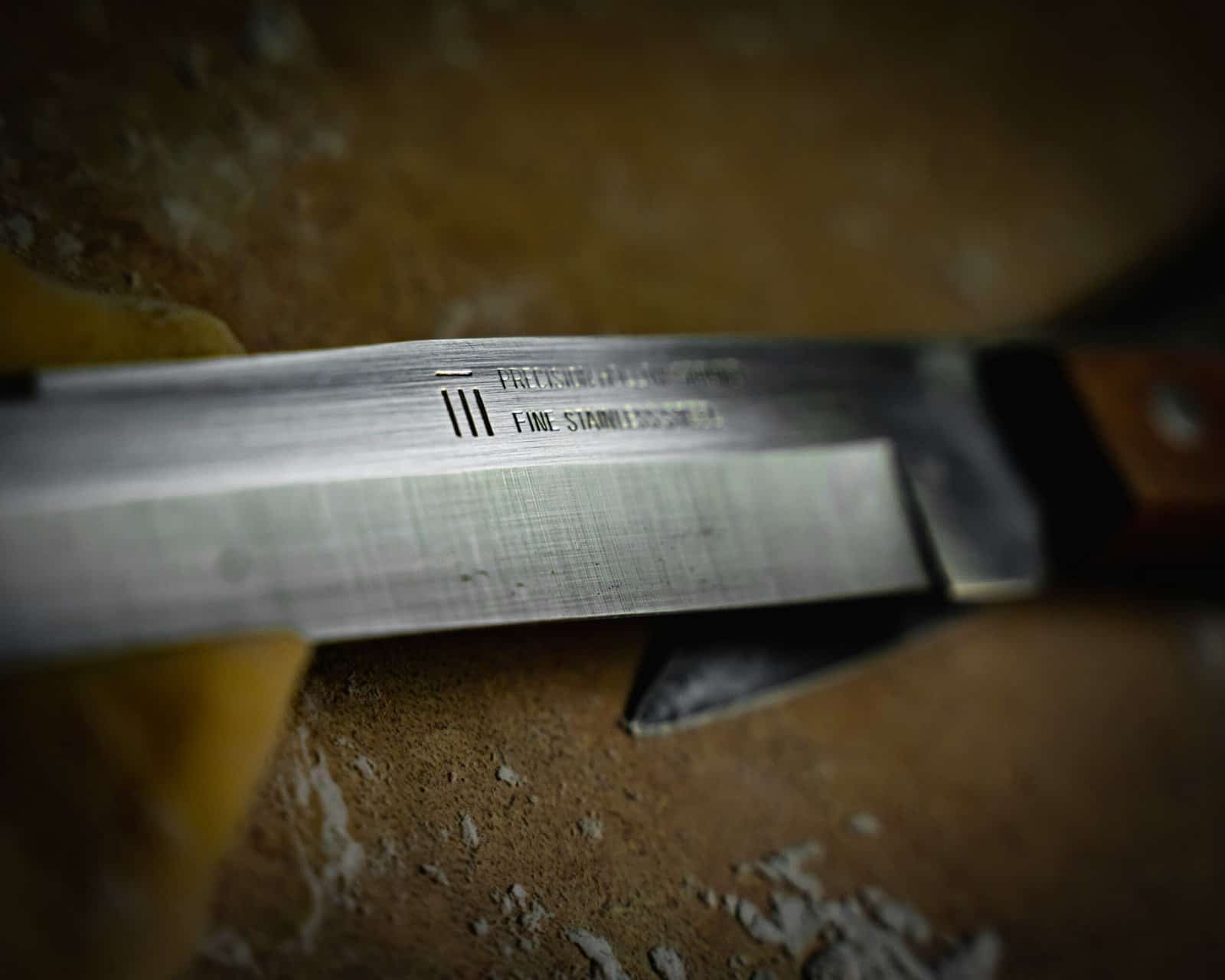
Separating meat from bone cleanly is a specific job, and a boning knife is the specific tool built for it. Its narrow, pointed blade slips along bones and through joints with a control that a big chef’s knife cannot match, saving you meat, money, and frustration. The best boning knife for you depends mostly on one thing: how flexible you want the blade, since that changes everything about how it handles fish, poultry, and red meat. This guide sorts boning knives by type so you can match one to what you butcher most, and it pairs naturally with a sturdy cutting board to work on.
Quick Verdict
For most home cooks, a semi-flexible boning knife handles the widest range of tasks. Choose a flexible blade if you mostly break down fish and poultry, a stiff blade for beef and pork, a curved edge for close trimming, and a Granton hollow-edge if food tends to stick. A comfortable, secure grip matters as much as the blade, since boning is wet work.
Key Takeaways
- Blade flexibility is the main choice: flexible for fish and poultry, stiff for red meat.
- A narrow, pointed tip is what lets a boning knife work close to bone and joint.
- A grippy, non-slip handle is essential because boning is slippery, wet work.
- Curved blades excel at close trimming; straight blades are the versatile default.
- Keep a boning knife sharp, since a dull one slips and is more dangerous than a sharp one.
How We Compared Boning Knives
A boning knife earns its place through blade flexibility suited to your meat, a fine, agile tip for working into joints, edge-holding steel, and a handle that stays secure in a wet hand. Those are the qualities weighed here, grouped by blade type rather than ranked, since the right boning knife depends on whether you break down whole fish, chickens, or primal cuts of beef. Keeping any of them sharp matters, so a good knife sharpener belongs in the same drawer.
1. Flexible Boning Knife (Best for Fish and Poultry)
Why It Stands Out
A flexible boning knife bends slightly along its length, letting the blade hug curved bones and slip under skin, which is exactly what filleting fish and breaking down poultry demand. That give lets you follow a rib cage or a fish spine closely, wasting almost no meat. For anyone who mostly works with delicate proteins, flexibility is the feature that matters.
Worth Knowing
The same flex that helps with fish makes a flexible blade less suited to powering through dense red meat or cartilage. Look for a blade that flexes at the tip but stays controllable, not floppy.
Who it is for: cooks who fillet fish and break down chicken often. Who should skip it: those working mainly with beef and pork.
2. Stiff Boning Knife (Best for Beef and Pork)
Why It Stands Out
A stiff boning knife holds a rigid line, giving you the control and force to work through the denser bones, joints, and connective tissue of beef and pork. The lack of flex means the blade goes exactly where you push it, which is what you want when separating a shoulder or trimming a roast. For red-meat butchery, stiffness is the strength.
Worth Knowing
A rigid blade is less nimble around the fine curves of fish and poultry than a flexible one. It rewards a firm, confident grip and a sharp edge to power through tougher tissue.
Who it is for: cooks breaking down larger cuts of beef and pork. Who should skip it: those focused on fish and delicate poultry work.
3. Curved Boning Knife (Best for Close Trimming)
Why It Stands Out
A curved boning knife has an upswept blade that makes sweeping, close cuts natural, ideal for trimming silverskin, removing fat caps, and following the contour of a bone. The curve keeps the edge in contact through an arc, so you trim in smooth strokes rather than short chops. For detailed trimming and shaping, the curve is a real advantage.
Worth Knowing
The curved profile takes a little practice to control compared with a straight blade. It excels at trimming but is less intuitive for straight, push-cut separation.
Who it is for: cooks who do a lot of trimming and cleanup work. Who should skip it: beginners who want the simplest handling.
4. Granton Hollow-Edge Boning Knife (Best for Release)
Why It Stands Out
A Granton edge has shallow dimples ground into the blade that create tiny air pockets, so meat and fat release instead of sticking to the steel. On the wet, tacky surfaces of raw protein, that release keeps your cuts clean and your rhythm smooth. For anyone frustrated by meat clinging to the blade, this feature earns its keep.
Worth Knowing
The dimples help release but do not change the blade’s core flexibility, so still choose stiff or flexible to match your meat. Granton blades can cost a little more than plain ones.
Who it is for: cooks who find meat sticking to their blade. Who should skip it: those on the tightest budget who do not mind a wipe now and then.
5. Budget Boning Knife (Best Value)
Why It Stands Out
A budget boning knife proves you do not need to spend much to get a narrow, pointed blade that works around bone, delivering the core function for very little. It is the easiest way to add a dedicated boning tool without a big outlay, and a decent one holds a working edge with regular sharpening. For occasional butchery or a first boning knife, it is plenty.
Worth Knowing
Cheaper steel may need sharpening more often and the handle may be less refined. Check that the grip is genuinely non-slip, since that is a safety issue on a boning knife.
Who it is for: occasional users and first-time buyers. Who should skip it: heavy users who want long edge retention.
6. Boning Knife with a Finger Guard (Best for Safety)
Why It Stands Out
A boning knife with a molded finger guard or bolster keeps your hand from sliding onto the blade when your grip gets slippery, which is the most common way people get hurt boning. That safety feature is genuinely reassuring during fast, wet work, letting you apply force with confidence. For newer cooks especially, the guard is worth prioritizing.
Worth Knowing
A pronounced guard can slightly limit how far you choke up on the blade. Pair it with a knife you store safely, as covered in our guide to storing knives safely.
Who it is for: newer cooks and anyone prioritizing grip safety. Who should skip it: experienced hands who want to choke fully up the spine.
Boning Knives at a Glance
| Type | Best for | Standout | Watch-out |
|---|---|---|---|
| Flexible | Fish, poultry | Hugs curved bones | Weak on dense meat |
| Stiff | Beef, pork | Control and control | Less nimble on fish |
| Curved | Trimming | Smooth sweeping cuts | Takes practice |
| Granton hollow-edge | Release | Meat does not stick | Costs a bit more |
| Budget | Value | Core function, low price | Sharpen more often |
| Finger guard | Safety | Hand stays off the blade | Limits choking up |
How to Choose a Boning Knife
Match flexibility to your meat
This is the biggest decision. Choose flexible for fish and poultry, stiff for beef and pork, and a semi-flexible blade if you do a bit of everything. The flex determines how the knife handles far more than the price does.
Look at the blade length and tip
Most boning knives run five to seven inches, with a fine, sharp tip for getting into joints. A shorter blade offers more control for detailed work, while a longer one covers larger cuts in fewer strokes.
Prioritize the handle
Boning is wet, slippery work, so a textured, non-slip handle is a safety essential, not a luxury. Test that it feels secure even when your hands are greasy, and favor a shape that fills your palm.
Plan to keep it sharp
A sharp boning knife is safer and more precise than a dull one, which slips. Budget for regular honing and sharpening, and pair your knife with a full knife set if you are building out your kit.
Common Boning Knife Mistakes to Avoid
Using the wrong flexibility
A stiff blade fights delicate fish, and a flexible one struggles with dense pork. Match the flex to the meat you cut most, or keep two if you do both often.
Working with a dull edge
A dull boning knife slips off bone and requires dangerous force. Keep it sharp so it bites where you place it and cuts with light pressure.
Ignoring the grip
A smooth handle turns treacherous once it is coated in fat. Choose a genuinely non-slip grip and wipe your hands as you work.
Forcing through bone
A boning knife works around bone, not through it. Use a cleaver or saw for hard bone, and let the boning knife do the precise separating it is built for.
Recommended Reading
- Chef knives, the everyday workhorse of any kitchen.
- How to sharpen a knife, to keep every blade cutting.
- Steak knives, to round out your table cutlery.
- choosing a kitchen knife
Boning Knife FAQ
What is a boning knife used for?
A boning knife removes meat from bone and separates joints, using its narrow, pointed blade to work close to the skeleton. It is used to break down poultry, fillet fish, trim roasts, and butcher larger cuts, saving meat that a wider knife would leave behind.
Should a boning knife be flexible or stiff?
It depends on your meat. A flexible blade hugs the curved bones of fish and poultry, while a stiff blade gives control and cutting force for beef and pork. If you do a bit of everything, a semi-flexible blade is the versatile middle ground.
What size boning knife is best?
Most boning knives are five to seven inches. A shorter blade around five inches gives more control for detailed poultry and fish work, while a six or seven inch blade suits larger cuts of red meat. Choose based on the size of what you butcher.
Can I use a boning knife instead of a fillet knife?
A flexible boning knife overlaps a lot with a fillet knife and can fillet fish well. A dedicated fillet knife is thinner and more flexible for delicate fish, but if you only occasionally fillet, a flexible boning knife covers both jobs.
Is a boning knife the same as a fillet knife?
They are close cousins but not identical. Fillet knives are typically longer, thinner, and more flexible, built specifically for fish, while boning knives come in flexible and stiff versions for a wider range of meats. A flexible boning knife bridges the two.
How do you keep a boning knife sharp?
Hone it regularly with a honing rod to realign the edge, and sharpen it with a stone or sharpener when honing no longer restores the bite. Because a sharp boning knife is safer than a dull one, keeping the edge keen is both a performance and a safety habit.
Can a boning knife cut through bone?
No. A boning knife works around and along bone, not through it. Forcing it against hard bone can chip the blade or cause a slip. Use a cleaver, bone saw, or kitchen shears for cutting through bone, and let the boning knife do the fine separating.
Do I really need a dedicated boning knife?
If you regularly break down whole chickens, fillet fish, or trim large cuts, yes, because the narrow blade does those jobs far better and more safely than a chef’s knife. If you rarely butcher your own meat, a chef’s knife may cover your needs.
Related guides: our picks for nakiri knives.
See the complete guide: the full guide to choosing the right cookware for your kitchen.
