
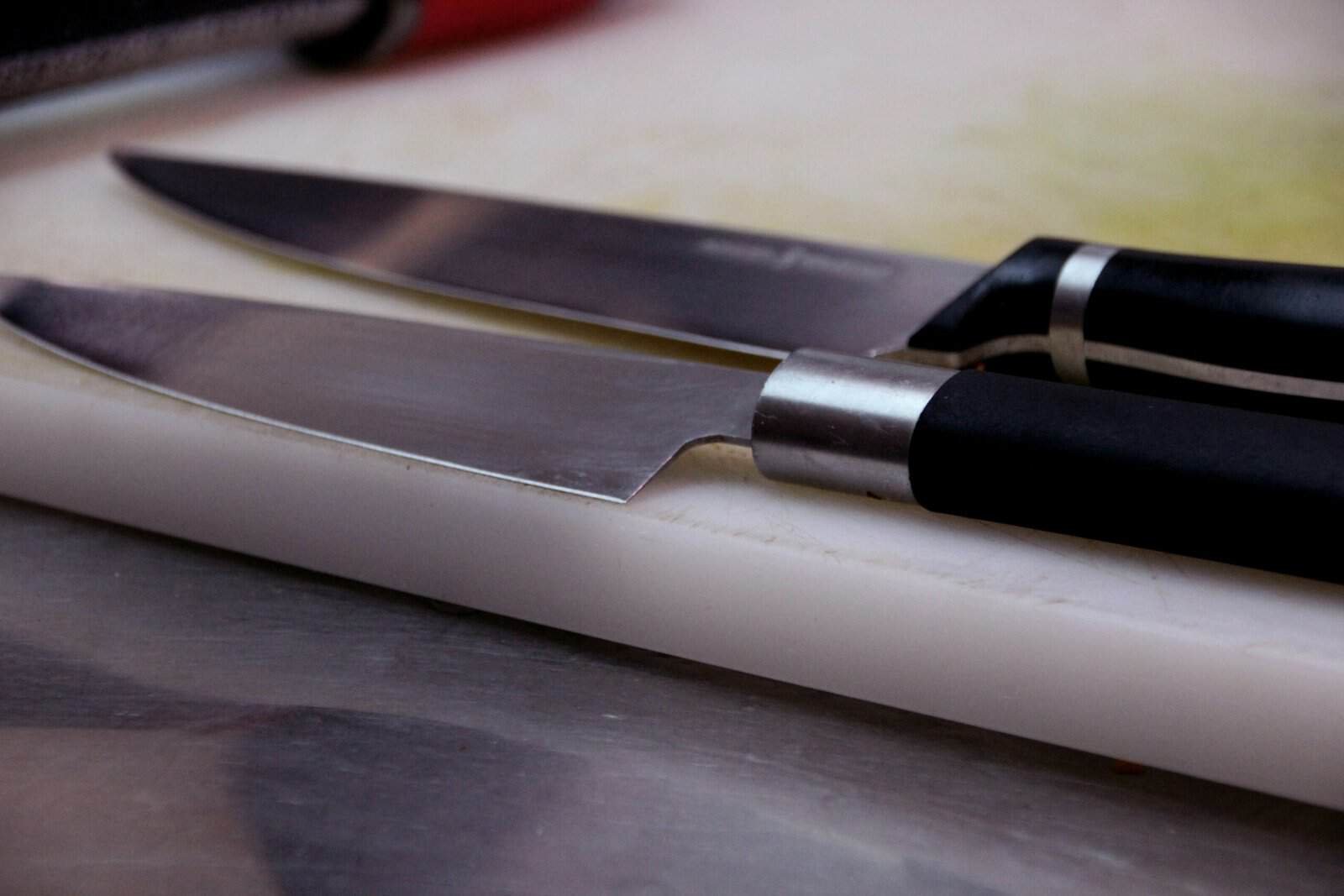
A sharp knife is safer than a dull one. The dull knife slips off tomato skins, requires more force, and is the cause of most kitchen cuts. Yet most home cooks never sharpen their knives, then replace them every few years, thinking the knives “wore out.” The blades didn’t wear out. They got dull. A reasonably-priced sharpener pays back its cost within months by extending the working life of every knife in the drawer.
This guide covers five sharpener categories that fit different households: an electric sharpener for set-and-forget convenience, a pull-through manual for fast touch-ups, a Japanese whetstone for serious enthusiasts who want to learn the craft, a guided-angle system for users who want hand-sharpening without freehand difficulty, and a budget pull-through that delivers most of the benefit at a fraction of the price. Each pick was selected for sharpening quality, knife-type compatibility, and learning curve.
The single most important variable is choosing a sharpener that matches the knives in your kitchen. Japanese knives (sharper edge angle, harder steel) need different sharpeners than German knives (more durable edge angle, softer steel). Between sharpenings, a honing rod realigns the edge and extends how long that sharpness lasts.
Quick Verdict
- Best for: home cooks tired of dull knives, anyone replacing knives too frequently due to perceived wear, gift-giving for cooking-focused households.
- Skip if: you own only ceramic knives (they need diamond-specific sharpeners, not covered here) or serrated bread knives only (serrated edges need specialty sharpeners or professional service).
Disclosure: SmartLifeItems is reader-supported. As an Amazon Associate, we earn from qualifying purchases made through links on this page, at no extra cost to you.
How We Chose These Knife Sharpeners
Four selection criteria:
Sharpening angle and adjustability. German chef knives have a twenty-degree edge angle per side; Japanese chef knives are closer to fifteen degrees. A sharpener locked to the wrong angle ruins the blade’s geometry over time.
Diamond, ceramic, or stone abrasive quality. Diamond abrasives cut hard steels (high-carbon Japanese) effectively; ceramic finishes the edge. Cheap abrasives wear out and contaminate the edge with metal debris.
Stages and finishing capability. Multi-stage sharpeners progressively coarsen-to-fine the edge for both repair work and finishing. Single-stage tools are limited to touch-ups.
Learning curve and consistency. The best sharpener for one user (electric, push-button) is the worst for another (enthusiast wanting whetstone craft). Match to the user’s interest and patience.
For a broader cutlery context, our complete guide on how to choose the right cookware covers the kitchen-tool foundation that knife selection sits within.
Decision Matrix: Which Sharpener for Which Household
| Your Household | Wants a quick fix, no learning curve | Wüsthof Pull-Through | Shapton Glass Stone | Work Sharp Precision Adjust | KitchenIQ Edge Grip 50 |
|---|---|---|---|---|---|
| Wants to learn knife sharpening as a craft | Best fit | Best fit | Skip (learning curve) | Workable | Best fit |
| Owns Japanese knives (Shun, Global) | Best fit (Asian-angle setting) | Skip (Western only) | Best fit | Best fit (adjustable) | Skip |
| Owns German knives (Wüsthof, Henckels) | Best fit | Best fit | Best fit | Best fit | Workable |
| Wants to learn knife sharpening as craft | Skip (machine) | Skip | Best fit | Workable | Skip |
| Budget under $30 | Skip | Workable | Skip | Skip | Best fit |
1. Chef ‘sChoice 1520: Best Electric Sharpener
The Chef ‘sChoice 1520 is the most widely-recommended electric sharpener for home use. Three-stage sharpening with diamond abrasives for the initial stages and ceramic polishing for the final stage. The two-angle system handles both Western (twenty-degree) and Asian-style (fifteen-degree) knives, which most competitor electric sharpeners don’t.
The advantage is consistency. Set the blade in the guided slot, pull through three times per stage, and the angle is maintained automatically. The disadvantage is removal: electric sharpeners take off more material per use than manual options, so frequent use over the years can shorten a knife’s overall life. For most home cooks, this is a worthwhile trade-off; the convenience produces more frequent sharpening, which extends knife usability dramatically.
Best for
Mixed Western and Japanese knife collections, users who want consistent results without a learning curve, gift-giving for cooking-focused households, and households where multiple users need to sharpen.
Skip if
You collect high-end Japanese knives and want to maintain their original edge geometry precisely; whetstones give finer control. Skip also if the budget is tight.
For a complete kitchen cutlery setup, our roundup of best knife sets under $100 covers the starter cutlery options that pair with a sharpener investment.
2. Wüsthof Pull-Through: Best Manual Pull-Through for Western Knives
The Wüsthof Two-Stage Pull-Through is the manual counterpart to the Chef’sChoice 1520 for Western-style knives specifically. Coarse and fine slots, fixed at the twenty-degree angle that Wüsthof and other German manufacturers grind their knives to. Simple operation: pull the blade through coarse, then fine, several passes each.
Manufactured by Wüsthof for their own knives, but works on any Western-style knife with similar angle geometry. Doesn’t work on Japanese knives whose fifteen-degree angle is shallower. Removes less material per pass than electric sharpeners.
Best for
Households with German-style chef knives, users who want manual control without a learning curve, owners who care about preserving knife life over decades, and kitchens where Wüsthof or Henckels make up most of the collection.
Skip if
You own Japanese knives; the angle is wrong. Skip also if you want true craftsmanship; this is functional rather than artisanal.
3. Shapton Glass Stone: Best Japanese Whetstone for Enthusiasts
For the user who wants to learn proper hand-sharpening and own a tool that produces results comparable to a professional sharpening service, the Shapton Glass Stone is the entry point. Available in different grit ranges (typically 1,000 grit for everyday sharpening and 6,000 grit for finishing), a starter setup uses both. Anyone who would rather not learn an angle should look at electric sharpeners specifically, which set the geometry for you.
The Shapton uses a thin abrasive layer bonded to a glass plate, which produces consistent cutting without the dishing (concave wear) that plagues traditional water stones. Doesn’t require pre-soaking like clay-bonded stones; splash some water, sharpen, and finish.
Learning curve is real. The first few attempts produce mediocre edges. After several weeks of practice, results consistently exceed what any consumer machine can produce. This is the craft option.
Best for
Enthusiasts wanting to learn hand-sharpening, owners of premium Japanese knives where preserving edge geometry matters, and users who already enjoy the process of cooking and want to extend that into tool maintenance.
Skip if
You want immediate results without practice; the learning curve is genuine. Skip also if no household member is interested in learning; whetstones go unused when treated as utility tools.
For pairing with the cookware that benefits from sharp knives, our roundup of best cutting boards for home cooks covers the surface that preserves edge longevity.
📑 Recommended Read: A sharp knife is one part of an efficient kitchen; storage and organization is the other. Check out our complete guide on how to organize your kitchen for the broader workflow improvements that pair with cutlery maintenance.
4. Work Sharp Precision Adjust: Best Guided-Angle System
The Work Sharp Precision Adjust splits the difference between machine ease and whetstone control. The blade clamps into a fixed holder; the user runs an abrasive plate along the blade at a precisely angled guide rod. This produces hand-sharpening results without the freehand-angle challenge that makes whetstones difficult to learn.
Adjustable angles from fifteen to thirty degrees, accommodating Japanese, German, and pocket-knife geometries. Three included abrasive grits cover coarse repair, fine sharpening, and finishing. Larger and more complex than pull-through sharpeners, but produces noticeably better results.
Best for
Users who want hand-sharpening quality without a freehand learning curve, mixed knife collections requiring angle adjustment, owners of high-end knives wanting maximum control, and hobbyists who enjoy the process but want consistency.
Skip if
You want quick, everyday touch-ups; the setup and clamp routine takes several minutes per blade. Pull-through sharpeners are faster for routine maintenance.
You can see why these tools are wrong for shears before deciding.
5. KitchenIQ Edge Grip 50: Best Budget Pull-Through
The KitchenIQ Edge Grip 50 demonstrates that budget pull-through sharpeners can deliver real benefit. Two stages (coarse and fine), the unit is small enough to live in a drawer, and the rubber base grips kitchen counters securely.
Not as durable as premium pull-through sharpeners, and the included angles are fixed for Western knives. But the actual sharpening performance on a dull knife is a meaningful improvement: the difference between a knife that struggles and a knife that cuts.
This is the right pick for skeptical buyers who aren’t sure whether they’ll actually use a sharpener. If the KitchenIQ gets used regularly over a year, upgrading to a Chef’sChoice or Work Sharp makes sense. If it sits in a drawer, you didn’t lose much.
Best for
First-time sharpener buyers, secondary sharpener for occasional use, budget-constrained households, gift-giving where the recipient may or may not be sharpening-interested.
Skip if
You have a serious knife collection; the budget tool isn’t doing those blades justice. Move up to the Chef’sChoice or Work Sharp if knives represent a meaningful investment.
For kitchen tool basics that complement a starter sharpener, our roundup of best kitchen shears covers another cutting tool category most kitchens benefit from.
How Often to Sharpen vs. Hone
Sharpening and honing are different processes that get confused.
Honing uses a steel or ceramic rod to straighten a slightly bent edge without removing meaningful material. Should be done every few uses or weekly for active home cooks. The honing rod that came with your knife block is for this.
Sharpening removes a small amount of metal from the blade to restore the cutting edge. Should be done every two to three months for active home cooks, or whenever the knife stops slicing a tomato cleanly with light pressure.
Doing only honing eventually fails because honing can’t restore an edge that’s worn down. Doing only sharpening wastes blade material because honing between sharpenings extends the time between needed material removal.
Signs Your Knife Needs Sharpening
The tomato test fails. Place a ripe tomato on the cutting board. Try to slice with the knife’s own weight, no pressure. A sharp knife slices cleanly; a dull knife crushes the skin or slides off without cutting.
Onions make you cry more than usual. A dull blade crushes onion cells rather than slicing them, releasing more sulfuric compounds. Sharper knives produce fewer tears.
Increased force needed for cuts. If you’re pushing harder to cut through food than you used to, the knife is dull. More force means more slips means more risk.
Visible edge damage. Chips, nicks, or visibly rolled-over edges are visible under good light. These won’t fix themselves with honing; they need sharpening.
Common Mistakes and How to Avoid Them
Sharpening at the wrong angle. Japanese knives ground at fifteen degrees per side won’t perform the same after a sharpener fixed at twenty degrees. Match the tool to the knife.
Skipping intermediate honing. Honing between sharpenings extends edge life dramatically. The steel that comes with knife blocks isn’t decorative.
Sharpening serrated knives at home. Serrated edges need a specialty tool or professional service. Most sharpeners listed here won’t work on serrated bread knives.
Using cheap sharpeners on premium knives. Inexpensive pull-throughs work fine on inexpensive knives; using them on a $300 Japanese chef knife damages the blade geometry.
Forgetting to clean the sharpener. Metal debris accumulates in the sharpener slots. Periodic cleaning maintains effectiveness and prevents contamination of newly-sharpened edges.
Treating a sharpening session as one-and-done. Even electric sharpeners produce better results with multiple light passes than fewer heavy passes. Patience produces the better edge.
Replacing knives when sharpening would solve the problem. Most “worn-out” knives are just dull. Sharpening recovers performance for a fraction of the replacement cost.
Sharpening too aggressively. Each sharpening removes material. Light maintenance preserves blade life; aggressive over-sharpening wears blades down faster than necessary.
Frequently Asked Questions
How long does it take to sharpen a knife?
Electric pull-through: under a minute. Manual pull-through: two to three minutes. Whetstone: ten to thirty minutes, including setup. Time investment depends on the chosen method.
Can I sharpen a serrated knife at home?
Most consumer sharpeners don’t handle serrated edges. Specialty serrated sharpeners exist; many users send serrated bread knives out for professional sharpening when needed.
How often should I sharpen my knives?
Every two to three months for active home cooks, less often for occasional cooks. Sharpen sooner if knives are notably dull.
What’s the difference between honing and sharpening?
Honing realigns the edge without removing meaningful material. Sharpening removes material to create a new edge. Both belong in a complete maintenance routine.
Will sharpening damage my knife?
Proper sharpening extends knife life. Improper sharpening (wrong angle, too aggressive, dirty abrasives) can damage knives. Match technique to tool.
Do I need different sharpeners for different knives?
Often yes, especially when collections include both Western and Japanese-style knives. Adjustable sharpeners or matched-pair systems address this.
Can I sharpen my pocket knife with kitchen sharpeners?
Depends on the angle. Some pocket knives use kitchen-knife angles; others use steeper utility angles. The Work Sharp Precision Adjust handles both with angle adjustment.
Are professional sharpening services worth it?
For premium knives, occasional professional service maintains the blade better than consumer tools can. Many households use consumer sharpeners for routine maintenance, plus annual professional service for special knives.
Related Reading
Explore more: chef knife vs santoku, knife blocks storage, and how to sharpen a knife. Also explore: why room temperature butter matters.
Worth understanding what is dulling them in the first place.
Electric models divide opinion. Whether electric sharpeners are worth using covers what they do to an edge.
Sharpening restores an edge almost indefinitely. When a knife is genuinely finished covers the four failures sharpening cannot fix.
