
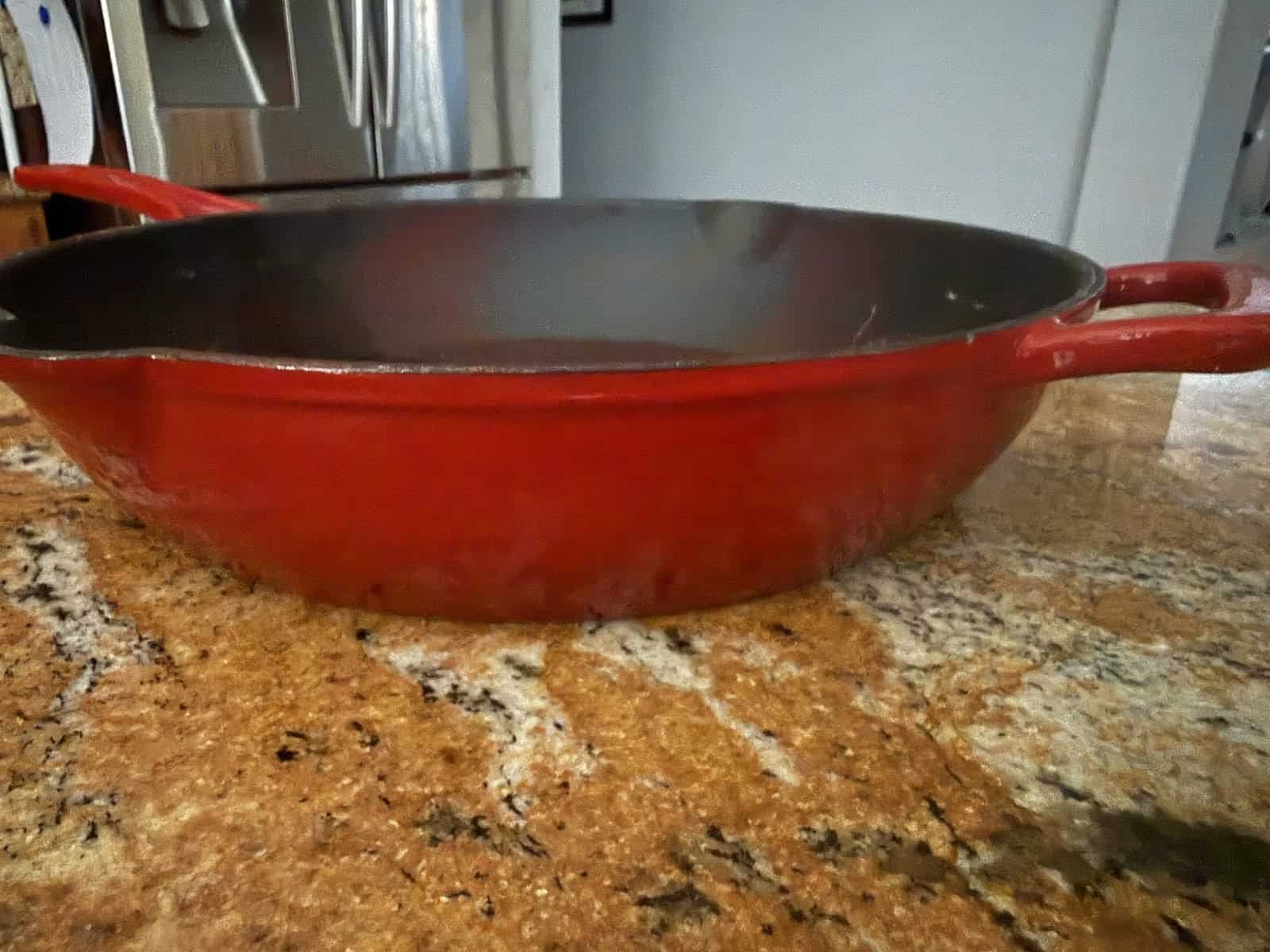
A braiser is the pan that browns and simmers in the same dish: wide and shallow to sear a whole batch of meat in a single layer, then deep enough to add liquid and let it cook low and slow under a lid. That roomy, flat bottom is what sets a braiser apart from a deep Dutch oven or a flat skillet, and it is why one pan can carry a whole family meal from stovetop to oven to table. The braiser I use is an enameled cast iron one, sturdy and big enough to feed the family, and it has earned a spot in the regular rotation. This guide sorts braisers by type so you can match one to your kitchen, and if you are weighing it against a deeper pot, our Dutch ovens guide pairs well with it.
Quick Verdict
For most kitchens, a classic enameled cast iron braiser in a mid-size, around 3.5 to 5 quarts, is the do-everything pick: wide enough to brown, deep enough to braise, and ready to serve at the table. Size up for big families, down for couples and small kitchens, and choose a budget braiser to try the format cheaply. All of them cook the same brown-then-simmer magic.
Why Trust This Guide
Picks are independent and reader-supported through affiliate links at no cost to you. The braiser featured first is the one I actually use, so those notes are my genuine experience, while the other types are grouped from product research so you can match one to your kitchen. No brand is named where I cannot confirm it, and nothing is described as tried that was not.
Key Takeaways
- A braiser is wide and shallow for browning, with sides deep enough to braise under a lid.
- The wide flat bottom sears a full batch in one layer, which a deep pot cannot do.
- Enameled cast iron braisers need no seasoning and wipe clean easily.
- A mid-size 3.5 to 5 quart braiser suits most families; size up or down to fit your table.
- Handles matter for a heavy, full pan, so look for a grip you can manage safely.
How We Picked the Best Braisers
A braiser lives or dies on a few practical things: a wide, flat cooking surface that browns food without crowding, sides tall enough to hold braising liquid, a capacity that matches how many you cook for, and handles you can manage when the pan is full and heavy. Those are the factors weighed here, grouped by size and use rather than ranked, since the right braiser depends on your kitchen and your table. The same durability that makes cast iron worth buying applies, which is why cast iron lasts for generations.
1. The Braiser I Use (My Pick)
Why It Stands Out
The braiser I use is an enameled cast iron pan with a wide, flat bottom, and it has become a genuine workhorse for family meals. It is sturdy and easy to manage, helped by its handle setup: one long skillet-style handle for lifting and tilting like a regular pan, plus a helper handle on the other side for a second grip when it is full and heavy. It is big enough to cook a whole family meal in one dish, browning meat in a single layer before I add liquid to braise. Just as useful day to day, the enameled surface is easy to clean, so a wipe or wash is all it takes.
Worth Knowing
A full braiser is heavy, which is exactly why that second helper handle matters, so use both hands when it is loaded. Like all enameled cast iron, it prefers gentle utensils and no dry overheating to protect the finish.
Who it is for: families who want one sturdy, easy-clean pan for brown-and-braise meals. Who should skip it: solo cooks who rarely make large one-pot dishes.
2. Classic Enameled Braiser (Best Overall)
Why It Stands Out
A classic enameled cast iron braiser in the mid-size range is the sensible default: wide enough to sear, deep enough to braise, and finished in enamel that needs no seasoning and wipes clean. Two loop handles make it easy to move from stovetop to oven, and the tight lid traps moisture for tender, slow-cooked results. For a first braiser, this balanced size and shape does almost everything.
Worth Knowing
Enamel can chip if dropped or scraped with metal, so treat it with care. A mid-size braiser is a compromise, roomy for most meals but not the largest capacity if you regularly cook for a crowd.
Who it is for: most cooks wanting one versatile brown-and-braise pan. Who should skip it: those who need maximum capacity or the smallest footprint.
3. Large Braiser (Best for Big Batches)
Why It Stands Out
A large braiser, in the 5 quart and up range, gives you room to brown and braise for a big family or a gathering without crowding the pan. The extra surface area is the difference between meat that sears and meat that steams, so bigger batches still develop real flavor. For anyone who cooks for a crowd or loves leftovers, the capacity pays off.
Worth Knowing
A large braiser is heavy, especially when full, so a solid pair of handles is essential and two hands are a must. Make sure it fits your oven and your storage before buying.
Who it is for: big families, entertainers, and batch cooks. Who should skip it: small households where a large pan is overkill and hard to store.
4. Compact Braiser (Best for Small Kitchens)
Why It Stands Out
A compact braiser, generally under 3 quarts, brings the brown-and-braise format to couples and small kitchens without a heavy, oversized pan. It heats quickly, stores easily, and is far simpler to lift and clean, while still searing and simmering smaller portions beautifully. For one or two people, it is the right-sized tool.
Worth Knowing
The smaller surface limits how much you can brown at once, so it is not built for crowds. Confirm the capacity suits your typical meal before buying.
Who it is for: couples, singles, and small kitchens. Who should skip it: anyone regularly cooking family-size or batch meals.
5. Budget Braiser (Best Value)
Why It Stands Out
A budget enameled braiser proves you do not need to spend a fortune to get the wide, flat, brown-and-braise design, delivering the same core cooking for far less. It is the easiest way to try the format without a big commitment, and it handles the same searing and slow cooking once you learn its heat. For value or a second pan, it is hard to beat.
Worth Knowing
Cheaper enamel can be less chip-resistant and the handles less refined, so treat it gently. Check the capacity and lid fit, since those vary more at the low end.
Who it is for: first-time buyers and value seekers. Who should skip it: those who want the most durable enamel and premium handles.
6. Oven-to-Table Braiser (Best for Serving)
Why It Stands Out
Every braiser can go to the table, but a colorful enameled model is built to look good doing it, carrying a bubbling dish straight from the oven to the middle of the meal. The enamel holds heat so food stays warm as it is served, and the finish wipes clean afterward. For anyone who entertains or loves a one-dish presentation, this is the appeal.
Worth Knowing
Set the hot braiser on a trivet, since enameled cast iron holds serious heat and will mark a bare table. Bright exteriors show scuffs over time, though they clean up well.
Who it is for: hosts and anyone who serves from the cooking dish. Who should skip it: cooks who plate in the kitchen and want the plainest, cheapest pan.
Braisers at a Glance
| Type | Best for | Standout | Watch-out |
|---|---|---|---|
| Family workhorse | Family meals | Sturdy, easy clean, easy to manage | Heavy when full |
| Classic mid-size | Most cooks | Versatile brown-and-braise | Not the biggest |
| Large | Batches, crowds | Room to brown | Heavy, needs storage |
| Compact | Small kitchens | Light, easy to store | Small capacity |
| Budget | Value, first pan | Same core design | Less durable enamel |
| Oven-to-table | Serving | Presentation, holds heat | Use a trivet |
How to Choose a Braiser
Size it to your table
A mid-size braiser around 3.5 to 5 quarts suits most families, while couples do well under 3 quarts and big households want 5 quarts and up. Picture your typical meal and the number you feed, since a braiser that is too big is heavy and one too small crowds the food.
Mind the handles and weight
Enameled cast iron is heavy, and a full braiser more so, so handles are not a detail. Look for sturdy loop handles or, like mine, a long handle paired with a helper handle, so you can lift and manage the pan safely when it is loaded.
Check the lid and shape
A well-fitting lid traps moisture for proper braising, so make sure it seats snugly. The bottom should be wide and flat for browning, with sides tall enough to hold liquid without being as deep as a Dutch oven, which changes the job it does best.
Enamel quality
Better enamel resists chips and stains and cleans up more easily, which is where price often shows. Whatever you choose, treat the finish gently with wood or silicone utensils, and it pairs well with the rest of your cookware choices.
Braiser vs Dutch Oven vs Skillet
When a braiser wins
A braiser is the sweet spot for dishes that start with a hard sear and finish with a gentle simmer, like braised short ribs, chicken thighs, or a big skillet-style dinner. Its wide, shallow shape browns more food at once than a tall pot, then holds enough liquid to braise it, all in one pan you can serve from.
When to reach for something else
For deep stews, soups, bread baking, or deep frying, a taller Dutch oven is the better tool, and for quick everyday searing a cast iron skillet is lighter and simpler. The three overlap, but each has a shape that fits its job best, as our Dutch oven vs skillet comparison lays out.
Common Braiser Mistakes to Avoid
Crowding the pan
Piling in too much meat at once steams it instead of searing it, wasting the braiser’s best trick. Brown in a single layer, in batches if needed, then return everything to braise.
Using metal utensils on the enamel
Metal spoons and whisks scratch and chip enameled surfaces over time. Stick to wood or silicone to keep the finish intact.
Overheating it dry
Enameled cast iron does not like being blasted empty on high heat, which can craze or discolor the enamel. Heat it gently with food or fat in the pan.
Setting the hot pan on a bare surface
A braiser holds heat long after cooking and will scorch a countertop or table. Always rest it on a trivet or heat pad.
Recommended Reading
- Dutch ovens under $50, for deeper stews on a budget.
- Mini cast iron skillets, for single-serving cast iron.
- Cast iron vs carbon steel, if you are comparing pan materials.
Braiser FAQ
What is a braiser used for?
A braiser is made for dishes that brown and then simmer, like braised meats, chicken thighs, stews thick enough to sear first, and big skillet-style dinners. Its wide, flat bottom sears food in one layer, and its lidded, moderately deep sides let you add liquid and cook low and slow, all in one pan. Before buying one it is worth reading what a braiser is actually good at, since the shape suits a narrower set of dishes than a stockpot.
What size braiser should I buy?
A mid-size braiser of about 3.5 to 5 quarts suits most families and handles the widest range of meals. Couples and small kitchens do well with something under 3 quarts, while big households or entertainers should look at 5 quarts and up. Match the size to how many you usually feed.
What is the difference between a braiser and a Dutch oven?
A braiser is wide and shallow, built to brown a lot of food in one layer and then braise it, while a Dutch oven is tall and deep, better for stews, soups, boiling, and bread. They overlap, but the braiser’s flat, roomy bottom is its advantage for searing, and the Dutch oven’s depth wins for liquid-heavy dishes.
Are braisers hard to clean?
No. Braisers are enameled cast iron, so they need no seasoning and wipe or wash clean easily, which in my experience is one of their best everyday traits. For stuck-on bits, a soak in warm soapy water loosens them, and gentle utensils keep the enamel smooth so cleanup stays simple.
Can a braiser go in the oven?
Yes. Enameled cast iron braisers are oven-safe and moving from stovetop sear to oven braise is exactly what they are designed for. Check the lid and knob for their temperature rating, since some knobs limit the maximum oven temperature, and always use mitts on the hot handles.
Do you need to season a braiser?
No. Braisers are coated in enamel, which requires none of the seasoning that bare cast iron does. You simply cook, then wash and dry it. That no-seasoning convenience, plus easy cleanup and acid-friendly cooking, is a big part of why enameled braisers are so popular.
Can you use metal utensils in a braiser?
It is best not to. Metal utensils scratch and can chip the enamel coating over time, dulling the finish and creating spots where wear starts. Use wood, silicone, or nylon tools to keep the enamel smooth and protect the pan for the long haul.
Is a braiser worth buying if I already have a Dutch oven?
If you often make brown-and-braise dishes, yes, because a braiser’s wide, shallow shape sears far more food at once than a tall Dutch oven. If you mostly make deep stews and soups, your Dutch oven may already cover it. The braiser earns its place for searing capacity and one-dish family meals.
For the broader category, how it compares to other oven-safe pans.
