
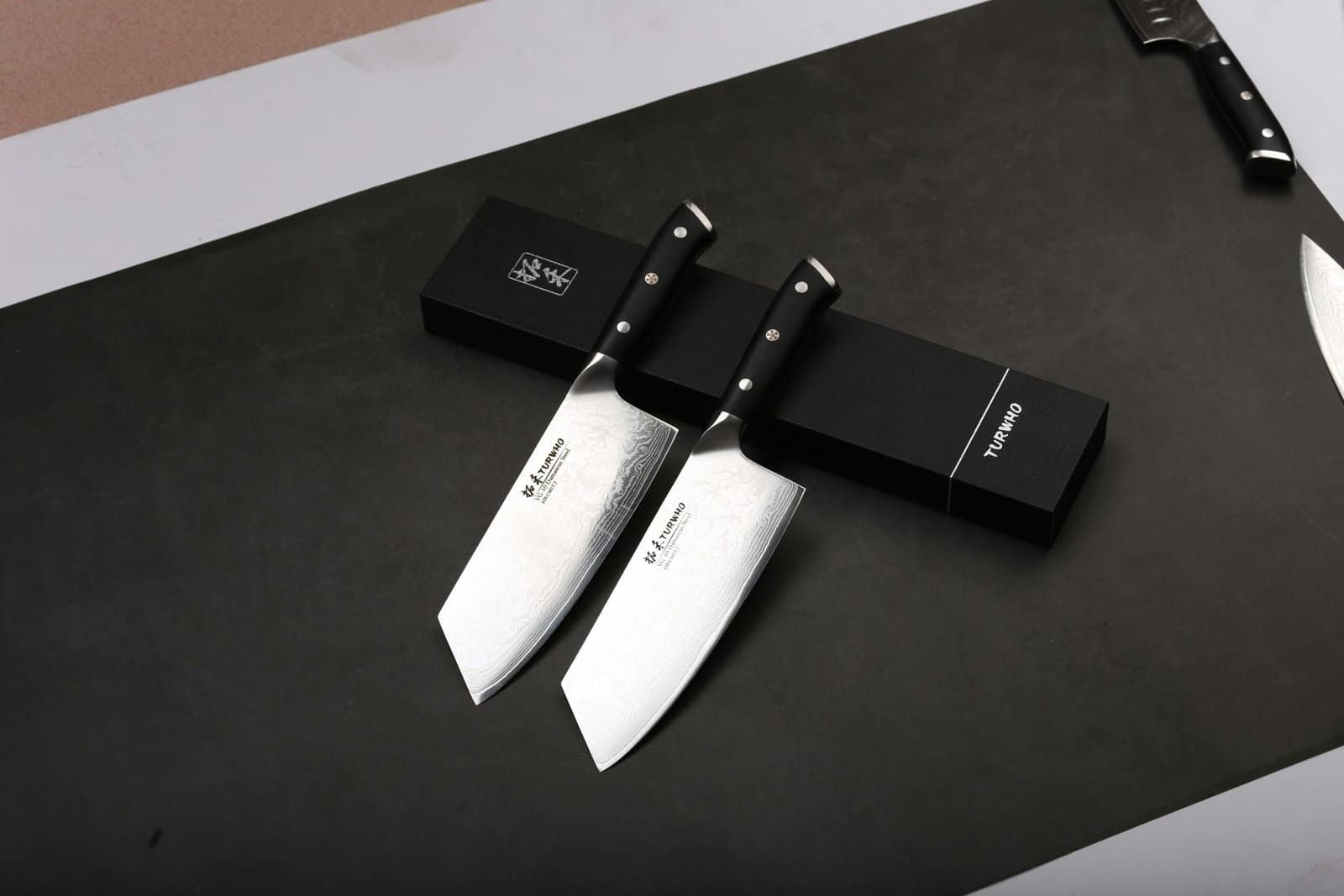
You stand at the cutting board with a pile of vegetables and two knives to choose from. The chef knife vs santoku question comes down to how you like to cut: the chef knife rocks through food on its curved edge, while the santoku chops straight down with a flatter blade. Both are versatile all-purpose knives, so the better pick depends on your technique and the feel you prefer. For our current top picks, see the best knife sharpeners guide.
Key takeaways:
- A chef knife has a curved belly for rocking cuts and a pointed tip for detail work.
- A santoku is shorter and flatter, favoring a straight up-and-down chop.
- The chef knife is the more versatile single knife for most kitchens.
- The santoku is lighter and excels at precise, downward slicing.
- Many cooks eventually own both and reach for each by task.
- Your cutting style matters more than which knife is objectively better.
Chef Knife vs Santoku: The Core Differences
Both knives aim to be the one blade that handles most kitchen tasks. They simply take different paths to get there. The chef knife leans on a curved edge and length, while the santoku leans on a flat edge and nimbleness.
Neither is objectively better, which is why both have devoted fans. The right choice depends on how you move a knife through food. Understanding each design makes the decision clear.
Once you know how each blade wants to move, the choice almost makes itself.
What Is a Chef Knife?
A chef knife is the classic Western all-purpose blade, usually around eight inches long. Its edge curves up toward a pointed tip, which supports a rocking motion. That curve and length make it adaptable across nearly every cutting task.
The pointed tip handles detail work like scoring or fine cuts. The longer blade tackles large vegetables and proteins with ease. For many cooks, it is the single most useful knife in the kitchen, and our roundup of the best chef knives covers the top options.
What Is a Santoku?
A santoku is a Japanese all-purpose knife, typically shorter than a chef knife. Its name refers to three uses: slicing, dicing, and mincing. The blade is flatter with a rounded tip rather than a sharp point.
Many santokus feature dimples along the blade, called a Granton edge, that help food release cleanly. The flatter profile suits a straight downward chop. It feels light and precise, which appeals to cooks who value control.
Blade Shape and Cutting Style
The biggest practical difference is how each blade meets the board. This shapes the motion you use and the foods each handles best. Matching the blade to your style is the whole decision.
The Chef Knife’s Rock
The curved belly lets you keep the tip on the board and rock the blade through food. This continuous motion is efficient for mincing herbs and garlic. It rewards cooks who like a flowing, rhythmic cut, and mincing a pile of herbs is where it feels effortless.
The Santoku’s Chop
The flatter edge favors lifting the whole blade and chopping straight down. This push-cut style gives clean, precise slices. It suits cooks who prefer deliberate, downward cuts over a rocking motion, and slicing vegetables into clean, even pieces is its strength.
Size, Weight, and Feel
Beyond the edge, the two knives feel different in the hand. That feel often decides which one a cook reaches for. Weigh it against your own comfort.
The chef knife is longer and often heavier, which gives reach and momentum for big jobs. The santoku is shorter and lighter, which many find nimble and easy to control. Smaller hands sometimes prefer the santoku’s compact size.
Balance matters too, since you hold either knife for long stretches. A comfortable grip prevents fatigue during heavy prep. If you can, handle both before deciding, and keep either one sharp with a good sharpener.
Chef Knife vs Santoku at a Glance
Here is a quick side-by-side to summarize the practical differences. Use it to spot which traits matter most to you.
| Feature | Chef Knife | Santoku |
|---|---|---|
| Blade shape | Curved belly, pointed tip | Flatter edge, rounded tip |
| Cutting style | Rocking motion | Straight downward chop |
| Length | Longer | Shorter |
| Weight and feel | Heavier, more reach | Lighter, more nimble |
| Best at | All-around versatility | Precise slicing and dicing |
Recommended read: Build out your kit with our guides to the best chef knives, how to sharpen a knife, and the best cutting boards.
Which Should You Choose?
The right knife follows from how you cook and what feels natural. Here is a simple way to decide. Most cooks land clearly in one camp once they try both motions.
Choose a chef knife if you want maximum versatility, like a rocking cut, or want one knife to do almost everything. It is the safer default for a first serious knife. Its length and tip handle the widest range of tasks.
Choose a santoku if you prefer a lighter knife, a straight chopping motion, or precise slicing of vegetables. It is a great pick for detailed prep and smaller hands. If you can, owning both lets you match the knife to the task.
Caring for Either Knife
Whichever knife you choose, care decides how well it performs over time. Both styles reward the same basic habits. A little upkeep keeps either blade cutting cleanly for years.
Hand wash and dry the knife right away rather than leaving it wet or using the dishwasher. Dishwasher heat and jostling dull and damage edges quickly. Quality knives meet recognized food-contact safety standards, so keeping them clean protects both the blade and your food.
Store the knife so the edge does not knock against other tools. A block, magnetic strip, or in-drawer guard all work. Hone the edge regularly and sharpen when honing no longer restores the bite.
Common Chef Knife and Santoku Mistakes to Avoid
A few missteps lead cooks to the wrong knife or a dull one. Each is easy to avoid.
Buying for Prestige Instead of Fit
Choosing a knife because it is trendy rather than comfortable leads to regret. Match the blade to your cutting style and hand size. The best knife is the one that feels right to you.
Using the Wrong Motion
Forcing a rocking cut on a flat santoku or chopping straight with a curved chef knife fights the design. Use the motion each blade is built for. The right technique makes either knife shine.
Neglecting the Edge
Even the perfect knife disappoints when dull, and a dull blade is less safe. Hone regularly and sharpen when needed, using our guide on how to sharpen a knife. Maintenance matters more than the style you pick.
Frequently Asked Questions
Is a chef knife or santoku better?
Neither is objectively better; they suit different cutting styles. A chef knife is more versatile with its curved, rocking edge, while a santoku excels at precise downward chopping. Choose based on how you like to cut.
Can a santoku replace a chef knife?
For many home cooks, a santoku handles most everyday tasks just fine. It is less ideal for rocking cuts or detail work needing a pointed tip. If you want one do-everything knife, a chef knife is the safer pick.
What is a santoku knife best for?
A santoku excels at precise slicing, dicing, and mincing with a straight downward chop. The flatter edge and lighter weight give excellent control. The dimpled versions also help food release cleanly.
Which knife is better for beginners?
A chef knife is often the best first knife because of its all-around versatility. That said, beginners who prefer a lighter, simpler chopping motion may find a santoku easier. Comfort in the hand matters most.
Why does a santoku have dimples?
The dimples, called a Granton edge, create small air pockets that help food release from the blade. This reduces sticking when slicing moist foods. Not every santoku has them, but many do.
Do I need both a chef knife and a santoku?
You do not need both, since either can handle most tasks. Many cooks enjoy owning both to match the knife to the job. If budget is tight, start with the one that suits your cutting style.
Where can I learn more about kitchen knives and safety?
The U.S. Consumer Product Safety Commission and NSF International publish guidance on safe kitchen tool use and food-contact standards.
Related Reading
Explore more: knife blocks storage. Also explore: saucepans everyday cooking, and silicone baking mats.
- how to choose the right cookware
- knife sets under 100
- paring knives
- santoku knives, if the santoku side wins you over.
- choosing a kitchen knife
