
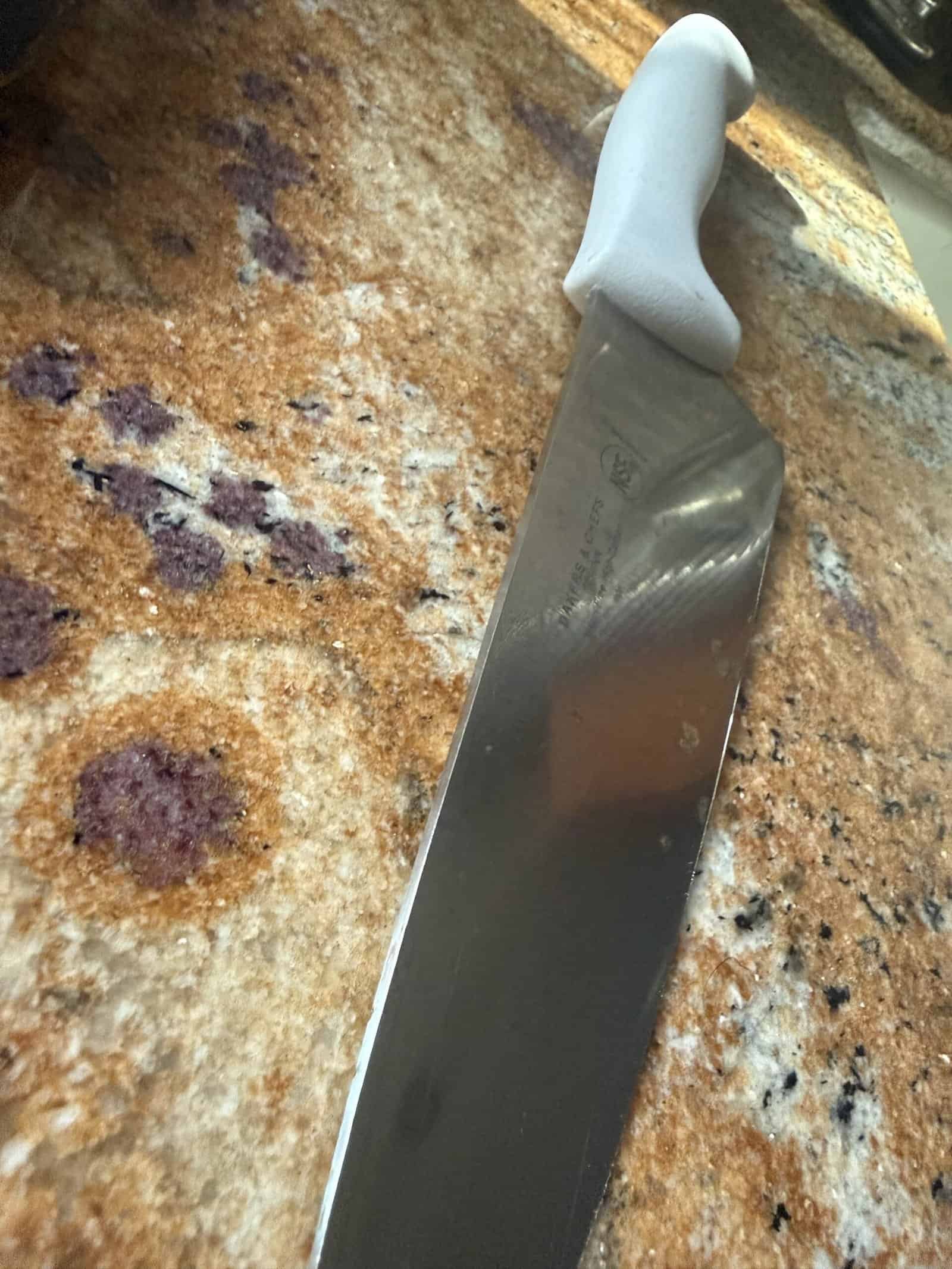
Most kitchen knife advice starts with steel composition and bolster geometry. Mine starts somewhere less impressive: the knife you reach for most is probably not the one you spent the most on. I have a magnetic strip on the wall holding a mix of sizes, and the ones that get pulled off it every day are not the ones a knife enthusiast would point at.
Quick Verdict
Buy one good chef’s knife, a bread knife, and a paring knife. That covers nearly everything. Add specialists only when a specific job keeps annoying you, and buy by feel in the hand rather than by spec sheet.
Key Takeaways
- Three knives cover most cooking. Sets sell you the other nine.
- How it feels in your hand beats every number on the box.
- A serrated edge is a different tool, not a lesser one.
- Storage matters more than people think. A drawer ruins edges.
- A sharp cheap knife outperforms a dull expensive one, every time.
The Knives That Actually Earn Their Space
| Knife | What it does | Worth it? |
|---|---|---|
| Chef’s knife | 80% of cutting | Yes. Buy the best you can. |
| Bread knife | Anything with a crust or skin | Yes. Nothing else does this. |
| Paring knife | Small work in your hand | Yes, and it can be cheap. |
| Steak knives | Eating, not cooking | If you eat steak. I do. |
| Boning knife | Meat off bone | Only if you break down meat |
| Santoku | Alternative to a chef’s knife | Preference, not addition |
| Cleaver | Bone and heavy work | Rarely. It looks better than it works. |
Start With Three
A chef’s knife does most of the work in any kitchen: chopping, slicing, most of what a recipe asks for. This is where money is well spent, because it is the one you will hold for hours a year. Chef’s knives is the roundup worth reading closely.
A bread knife is the one people skip and then regret. A serrated edge saws through crust, tomato skin, and anything with a hard outside and soft inside, and no amount of sharpness in a straight blade replicates it. I keep dedicated bread knives for exactly this reason.
A paring knife handles the small stuff you do in your hand rather than on a board. It does not need to be expensive. Paring knives are the cheapest useful thing in the drawer.
That is the whole core. Everything beyond it is a specialist, and specialists earn their space by solving a problem you actually have.
Why Sets Are Usually a Trap
A twelve-piece set is three knives you will use and nine that fill a block.
The economics are what they are: the manufacturer has to hit a price, so the money gets spread thin across a dozen pieces rather than concentrated in the three that matter. You end up with a mediocre chef’s knife instead of a good one, plus a boning knife you will never touch.
The exception is if you genuinely have nothing and need a floor to stand on. Sets under $100 covers that case honestly. But if you can buy three knives separately, do that instead.
Feel Beats Specs
This is the part that resists being written down, which is why articles skip it for steel grades.
A knife that feels balanced and comfortable in your hand will get used and get used well. One that feels heavy at the wrong end or has a handle shaped for someone else’s grip will sit there, however good the metal is. Weight, balance point, handle shape, and how the spine sits under your finger all matter more than a hardness rating.
Which is unhelpful advice if you are buying online, and I am not going to pretend otherwise. The practical version: buy from somewhere with returns, and if a knife feels wrong in week one, it will still feel wrong in year three.
Serrated Is Its Own Category
Worth separating out, because “serrated” gets treated as a downgrade and it is not.
A serrated edge works by sawing. The points bite through a hard surface while the scallops between them do the cutting. That is a fundamentally different action from a straight edge pressing down, and it is better at some things and worse at others.
Better at: crust, skins, anything where a straight blade would slide or crush. Worse at: precision, clean slices through soft material, anything needing a flat contact with the board.
The thing I have noticed in my own kitchen is that serrated edges get reached for more than any guide would predict. My ridged steak knives are the knives I use most, full stop, over everything else on the strip.
There is no mystery to why: I cook and eat a lot of meat, so the knives that meet meat get used constantly. That is worth saying because it is the actual lesson. The knife you use most is decided by what you cook, not by what the guides rank highest. Someone who eats mostly vegetables would find a chef’s knife in their hand all day and their steak knives in a drawer. Buy for your cooking, not for a hypothetical kitchen.
Storage Is Not an Afterthought
Where knives live decides how long they stay sharp, and a drawer is the worst answer.
Loose in a drawer, edges bang against other tools every time it opens. That dulls a knife faster than cutting does, which is a genuinely annoying way to lose an edge.
I use a magnetic strip on the wall rather than a block, and I will be honest that the reasons were convenience and that it looks good rather than any edge-preservation theory. It is on the wall, the knives are right there, and it takes no counter space.
The edge benefit came free. Nothing touches the blade, so nothing rolls it, which is the same problem a block solves by a different route. A block works fine and some people prefer it. Storage methods covers the tradeoffs, and the only genuinely wrong answer is loose in a drawer.
Sharp Matters More Than Expensive
A cheap sharp knife beats an expensive dull one at every task, without exception.
Which means the sharpening question is not separate from the buying question. If you will not maintain a knife, buying a better one mostly buys you a more expensive dull knife in eighteen months.
Mine are stainless, which is the forgiving choice and the right one for most kitchens. I use an electric sharpener on them once in a while, and the honest appeal is that it guides the blade so I am not trying to hold an angle by hand. It has never damaged my knives and has held up through years of regular use. Sharpeners covers the range, and sharpening technique goes deeper on method. Why knives dull explains what you are fighting.
The Specialists, Briefly
Add these only when a specific job keeps irritating you.
A santoku is an alternative to a chef’s knife rather than an addition, shorter and flatter with a different rocking action. Some people prefer it. The comparison is worth reading before buying both.
A boning knife earns its place if you break down whole chickens or trim your own cuts. If you buy meat already portioned, it will sit unused.
A cleaver is heavy and looks impressive and is genuinely needed for bone. Most home kitchens are not doing that. Buy one if you are, and skip it if you are not.
What You Cut On Matters Too
The board is half the equation and gets a fraction of the attention.
Glass and stone boards destroy edges. They are hard surfaces and your knife loses that argument every time. Wood and plastic both give slightly, which is what saves the edge.
I use a big wooden board, and the size does more than the material: enough room to actually work means less pushing things around and fewer awkward angles. Cutting boards covers the choice, and cookware generally if you are building a kitchen from scratch.
Recommended Reading
See chef’s knives, sharpening, and storage. For care, see knives and the dishwasher.
Choosing a Kitchen Knife FAQ
What knives do I actually need?
A chef’s knife, a bread knife, and a paring knife. That covers nearly all home cooking. Everything else is a specialist that earns its place only when a specific job keeps annoying you. Buying three good knives separately beats a twelve-piece set at the same price.
Should I buy a knife set or individual knives?
Individual, if you can. A set has to hit a price point, so the money gets spread across a dozen pieces instead of concentrated in the three you will use. You get a mediocre chef’s knife plus nine fillers. Sets make sense only if you are starting from nothing and need a floor.
How much should I spend on a chef’s knife?
More than on anything else in the drawer, because it does most of the work. But sharp beats expensive: a cheap knife you maintain outperforms a premium one you let go dull. If you will not sharpen it, spending more mostly buys a more expensive dull knife later.
What matters most when picking a knife?
How it feels in your hand. Balance, weight, handle shape, how the spine sits under your finger. That is unhelpful when buying online and it is still true. A knife that feels wrong in week one feels wrong in year three, so buy where you can return it.
Are serrated knives worse than straight edges?
No, they are a different tool. A serrated edge saws, so it bites through crust and skins where a straight blade slides or crushes. It is worse for precision and clean slices. In my kitchen the ridged steak knives are the knives I use most of anything, though that is because I cook a lot of meat rather than because serrated is better. What you cook decides what you reach for.
Where should I keep my knives?
Anywhere but loose in a drawer, where edges bang against other tools every time it opens. I use a magnetic wall strip, and honestly I chose it for convenience and because it looks good rather than for the edges. The edge benefit came free: nothing touches the blade. A block does the same job differently. The drawer is the only real mistake.
Do I need a santoku and a chef’s knife?
No. A santoku is an alternative to a chef’s knife, not an addition, with a shorter flatter blade and a different action. Some people prefer it. Owning both mostly means one sits idle.
Does the cutting board matter?
More than people think. Glass and stone boards wreck edges because your knife loses to a harder surface every time. Wood and plastic give slightly, which is what protects the edge. I use a big wooden board, and the size matters as much as the material.
Recommended Reading
- where a utility knife fits
- storing knives on a magnetic strip
- electric knife sharpeners good
- honing rods and sharpening steels
- kids kitchen knives
- knife rolls and travel cases
- nakiri knives
- steak knives with plastic handles
- how often should you replace kitchen knives
- cleaning a cutting board
- keeping a cutting board from sliding
- looking after your knives
- telling if a knife is sharp
- using a knife sharpening steel
