
The intuitive answer is that cutting wears a knife down, and it is mostly wrong. A knife spends a few minutes a day cutting and the rest of its life being knocked, scraped, washed, and stored. That is where the edge actually goes, which is good news, because most of it is avoidable.
Quick Verdict
Edges roll before they wear. Most dulling comes from contact with hard surfaces: boards, other utensils, the drawer, the dishwasher basket. Cutting food is a minor contributor. Fix the contact and a knife stays sharp for months.
Key Takeaways
- A “dull” knife usually has a bent edge, not a worn one.
- What you cut on matters more than what you cut.
- Glass and stone boards are edge-killers. Wood and plastic are not.
- Storage does more damage than cooking does.
- Serrated edges resist all of this, which is why they last.
Where the Edge Actually Goes
| Cause | How much it dulls | Avoidable? |
|---|---|---|
| Loose in a drawer | A lot, fast | Entirely |
| Glass or stone board | A lot, fast | Entirely |
| Dishwasher basket | Meaningful | Mostly |
| Scraping food off the board | Meaningful | Entirely |
| Bone, frozen food | Real but occasional | Usually |
| Cutting vegetables | Very little | That is the point |
Rolled, Not Worn
This is the thing that reframes the whole question.
The cutting edge of a knife is microscopically thin, and thin metal bends before it wears away. So the usual failure is not that the edge has been ground down, it is that it has folded over to one side. The steel is all still there. It is just no longer pointing where it should.
That is why a knife can feel dull long before it truly is, and why a honing rod can bring one back in seconds without removing any metal. Honing straightens a bent edge; sharpening grinds a new one. Confusing the two is why people hone a genuinely dull knife forever and wonder why nothing improves. Sharpening covers the distinction properly.
It also explains why contact is the enemy. Bending an edge takes very little. Every knock against something hard does a bit of it.
The Board Is Doing More Than the Food
Every cut ends with the edge hitting the board. That contact happens as many times as you cut, and what it hits decides everything.
Glass and stone boards do not give at all. Your knife loses that argument every single time, and the edge rolls a little on each contact. A glass board will take a knife from sharp to frustrating in weeks. They exist because they look nice and wipe clean, and they are the worst thing you can do to an edge.
Wood and plastic both yield slightly, which is the entire point. The board absorbs the impact instead of the edge. I use a big wooden board and it is kind to knives, without question. It is doing more edge-preservation work than any technique I could learn, and it is the main reason I think my knives survive the rest of my habits. Cutting boards covers the choice.
The related habit worth killing is scraping food off the board with the edge. Turn the knife over and use the spine, because dragging a sharpened edge sideways across a board is an efficient way to roll it.
I should admit I do this constantly. Knife goes flat, food gets pushed into the pan, edge takes the abuse. I know better and I do it anyway, and I am not going to pretend I have solved a habit I have not. What I will say is that I do not notice my knives suffering for it, which I put down to a forgiving board and forgiving knives rather than to the habit being fine. If I were cutting on glass with a hard Japanese blade, I suspect I would have learned this lesson properly by now.
Storage Beats Cooking for Damage
A knife is in the drawer far longer than it is in your hand.
Loose in a drawer, every open and close slides blades against other tools. That is metal on metal, which is exactly the contact that rolls an edge, and it happens dozens of times a week whether you cook or not.
A magnetic strip solves it, which is what I use. Nothing touches the edge, ever. A block does the same job differently. Storage methods covers the options, and the ranking is simple: anything is better than loose in a drawer.
The Dishwasher Contribution
Same mechanism, wetter.
A knife in a dishwasher basket moves during the cycle and contacts whatever is next to it. Add harsh detergent pitting the steel and a long hot wet cycle, and it accelerates everything.
I put mine in anyway, rinsed first, and I accept that it costs me edge life. That is a defensible trade if you sharpen. It is a bad one if you do not. The dishwasher question gets into which knives tolerate it, and the short version is that sturdy serrated ones barely care.
What Cutting Actually Costs You
Vegetables, meat, bread: almost nothing. Soft material against a hard thin edge does not do meaningful damage. This is what the knife is for and it is good at it.
Bone and frozen food are different, and they can chip rather than roll an edge, which is worse because chips do not hone out. If you are cutting bone you want a cleaver built for it, and if you are separating meat from bone regularly a boning knife is the right shape for the job. Using a chef’s knife for either is how good knives get chipped.
You can find out why shears dull differently before deciding.
Why Serrated Knives Seem Immortal
They are not immortal, they just fail invisibly.
A serrated edge cuts with points and the scallops between them. There is no fine polished bevel to roll, so all the contact damage that ruins a straight edge barely registers. The points are also recessed relative to the high spots, so they touch the board less.
That is why my ridged steak knives are the ones I reach for most, and why they have never seemed to need anything. They tolerate the dishwasher, the drawer, and general indifference. They do eventually wear out, and when they do you replace them rather than sharpen them, because sharpening serrations is a scallop-at-a-time job most people will not do.
Bread knives get the same benefit for the same reason. A dedicated bread knife outlives everything else in the drawer.
What Actually Fixes It
Most of this is habits rather than equipment.
Cut on wood or plastic. Never glass. Scrape with the spine, not the edge. Store on a strip or in a block, not loose. Hand wash the knife that matters. And then sharpen when honing stops restoring the bite, rather than on a schedule.
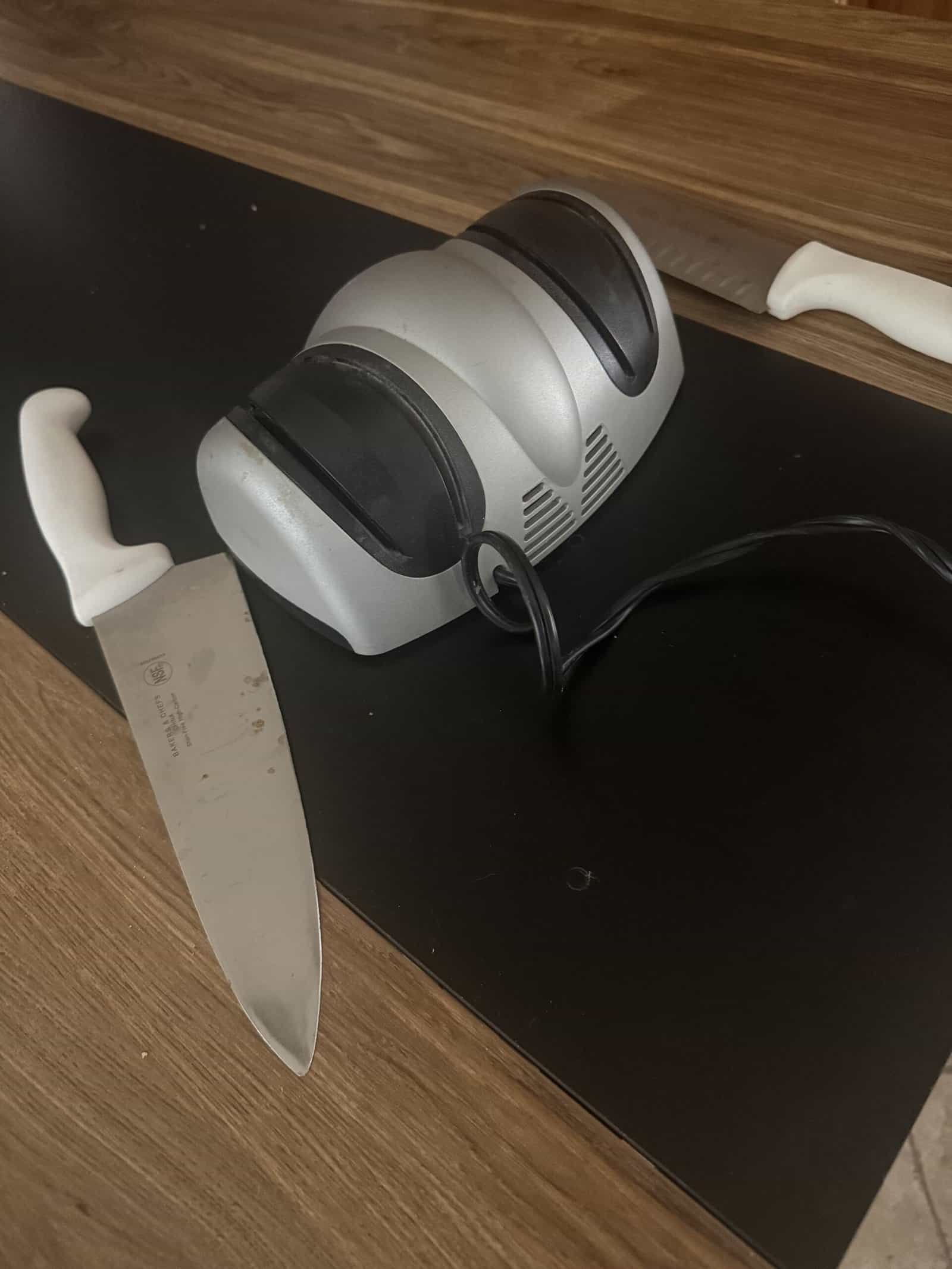
I use an electric sharpener, and the reason it works for me is that it guides the blade so I am not balancing an angle by hand. It has never chewed up my knives and it has held up through years of regular use. Sharpeners covers the range. Whatever you use, a sharp chef’s knife is worth more than an expensive dull one, and choosing well matters less than maintaining what you have.
Recommended Reading
See sharpening, storage, and choosing a knife. It also helps to understand checking whether your knife is sharp. For more, see using a sharpening steel.
Why Knives Get Dull FAQ
Why do knives get dull so fast?
Usually not from cutting. The edge is microscopically thin, so it bends before it wears, and every contact with something hard bends it a little. Drawers, glass boards, dishwasher baskets, and scraping food with the edge do most of the damage. Cutting vegetables does almost none.
Is my knife dull or just bent?
Most likely bent. A rolled edge feels identical to a dull one but all the steel is still there, just folded to one side. That is why a honing rod restores it in seconds without removing metal. If honing no longer brings the bite back, then it is genuinely dull and needs sharpening.
Does the cutting board really matter?
More than anything else you control. Every cut ends with the edge hitting the board. Glass and stone do not give, so the edge rolls on every contact and a glass board will wreck a knife in weeks. Wood and plastic yield slightly and absorb the impact instead.
Does the dishwasher dull knives?
Yes, mostly by knocking rather than chemistry. The blade moves and contacts other utensils through the cycle, which is the same mechanism as a drawer. Harsh detergent and a long hot wet cycle add to it. I use mine anyway, rinsed first, and sharpen more often as the price.
Why do my serrated knives never seem to dull?
Because there is no fine bevel to roll. A serrated edge cuts with points and scallops, and the points sit recessed so they contact the board less. They do wear out eventually, but you replace them rather than sharpen them, since serrations are a scallop-at-a-time job.
Can cutting vegetables dull a knife?
Barely. Soft material against a thin hard edge does very little. Bone and frozen food are the real risk, and they chip rather than roll, which is worse because chips do not hone out. Use a cleaver for bone and keep the chef’s knife away from it.
How often should I sharpen?
When honing stops restoring the bite, not on a schedule. Sharpening removes metal, so doing it more often than needed shortens the blade’s life over years. Let the knife tell you.
What is the single best habit for keeping knives sharp?
Get them out of the drawer. A knife spends far more time stored than in your hand, and loose in a drawer every open slides steel against steel. A magnetic strip or a block ends that entirely. It is the cheapest edge-life you will ever buy.
See the complete guide: the full guide to choosing the right cookware for your kitchen.
Dull is maintenance rather than the end. Replacing against sharpening covers the difference.
One habit dulls edges faster than cutting does. Scraping a board with the edge covers why the spine is the answer.
