
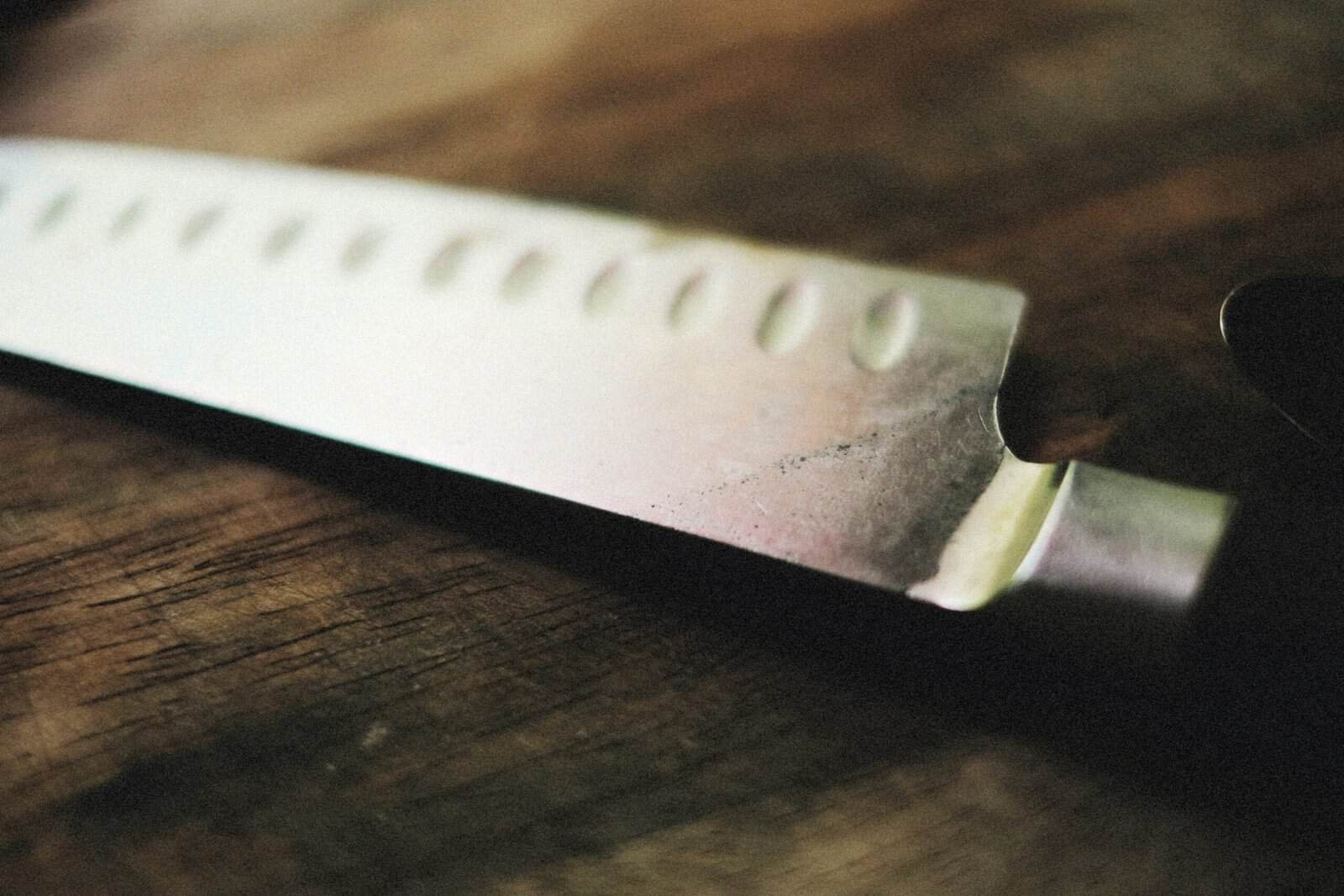
To use a sharpening steel, hold it upright with the tip on a surface, set the knife near the top at about a 15 to 20 degree angle, and draw the blade down and toward you from heel to tip, alternating sides. A sharpening steel does not actually sharpen; it hones, realigning an edge that has rolled slightly out of true. Used regularly, it keeps a sharp knife performing between real sharpenings, and the motion is simple once you have the angle and direction down.
Quick Answer
Stand the steel tip-down on a cloth, hold the knife at roughly a 15 to 20 degree angle near the top, and sweep the blade down the steel from heel to tip using light pressure. Alternate sides for several strokes each. This realigns the edge; it does not replace sharpening.
Key Takeaways
- A steel hones, meaning it realigns the edge, rather than sharpening it.
- Hold the knife at about a 15 to 20 degree angle to the steel.
- Draw from heel to tip, alternating sides evenly.
- Use light pressure and let the motion do the work.
- Hone often; sharpen only when honing no longer helps.
Step by Step: Using a Sharpening Steel
| Step | What to do |
|---|---|
| 1 | Stand the steel vertically, tip on a folded cloth |
| 2 | Place the blade heel near the top at 15 to 20 degrees |
| 3 | Sweep down and toward you, heel to tip |
| 4 | Switch to the other side of the steel |
| 5 | Alternate for four to six light strokes per side |
Honing Is Not Sharpening
The first thing to understand is what a steel does. As you use a knife, the thin edge rolls and bends microscopically out of alignment, which makes a sharp knife start to feel dull. A steel pushes that edge back into line, restoring the cutting feel without removing metal or creating a new edge. That is honing. Sharpening, by contrast, grinds a fresh edge on a worn blade. A steel maintains a sharp knife; it cannot rescue a truly dull one. Knowing the difference sets the right expectation for what the steel will do. Sharpening a knife covers the other job.
Set the Angle
Angle is the part people get wrong. You want the blade held at roughly 15 to 20 degrees to the steel, which is a fairly shallow angle, about the thickness of two stacked coins under the spine. Too steep and you round the edge; too shallow and the steel misses it. Once you find the angle, keeping it consistent through every stroke is what makes honing work. Many people start too upright, so err toward shallow. Holding a steady angle is more important than speed or force. Why knives get dull covers what honing corrects.
The Stroke
Stand the steel vertically with its tip resting on a folded towel for grip and safety. Set the heel of the blade against the top of the steel at your angle, then draw the knife down and toward yourself in one smooth motion so the whole edge, heel to tip, passes over the steel. Use light pressure; the steel realigns the edge, it does not need force. Repeat on the other side of the steel to hone both sides of the edge evenly. Four to six strokes per side is usually plenty. Knife sharpeners handle the deeper work when honing is not enough.
How Often to Hone
Honing is meant to be frequent, unlike sharpening. Many cooks give a knife a few strokes on the steel before or during each use, which keeps the edge aligned and the knife feeling sharp day to day. Because honing removes no metal, doing it often does no harm and keeps a good edge lasting longer between sharpenings. If honing stops restoring the cutting feel, that is the sign the edge is genuinely worn and needs sharpening rather than aligning. Regular honing simply stretches the time between those sharpenings. Chef knives and other everyday blades benefit most from frequent honing.
Common Honing Mistakes
The frequent errors are all easy to fix. Holding the knife too upright rounds the edge instead of aligning it, so keep the angle shallow. Pressing hard does not help and can damage the edge; light pressure is correct. Rushing the stroke leads to an inconsistent angle, so move smoothly rather than fast. And expecting a steel to fix a dull knife leads to frustration, since that is sharpening’s job, not honing’s. Avoid these and honing becomes a quick, reliable habit that keeps your knives cutting well. Storing knives safely protects the edge between uses.
Honing Steel Versus Other Tools
A honing steel is one of several edge tools, and it helps to know where it fits. A steel realigns an edge but removes no metal, so it maintains sharpness rather than restoring it. A whetstone or pull-through sharpener grinds a new edge and is what you reach for when honing no longer helps. An electric sharpener does the same grinding job faster and with less skill required. The steel is the daily maintenance tool that stretches the gap between those heavier sharpenings, not a replacement for them. Many kitchens keep both: a steel for frequent quick honing and a sharpener for the occasional real edge renewal. Using the steel often means you sharpen less often, which is easier on your knives since every sharpening removes a little metal. Knife sharpeners cover the grinding tools that pair with a steel.
Recommended Reading
Worth reading next: how to sharpen a knife, knife sharpeners, why knives get dull, and chef knives. It also helps to understand testing a knife for sharpness, and choosing a kitchen knife.
Choosing a Steel
Steels come in a few types, and the choice affects the feel more than the result. A traditional smooth steel is the classic honing rod and realigns the edge without removing metal. A ceramic rod hones and lightly polishes, and some grooved or diamond-coated rods remove a little metal, which blurs the line between honing and light sharpening. For pure honing, a smooth or ceramic steel is the standard pick. Length matters too, since the rod should be at least as long as your longest knife blade so the whole edge can pass over it in one stroke. Whichever you choose, the technique stays the same: shallow angle, light pressure, heel to tip, alternating sides. Our roundup of honing rods and steels covers choosing between smooth, ceramic, and diamond.
How to Use a Knife Sharpening Steel FAQ
How do I use a sharpening steel?
Stand the steel tip-down on a cloth, hold the knife near the top at about 15 to 20 degrees, and draw the blade down and toward you from heel to tip. Alternate sides for four to six light strokes each. This realigns the edge rather than sharpening it.
Does a steel actually sharpen a knife?
No, it hones. It realigns an edge that has rolled slightly out of true, restoring the cutting feel without removing metal. A steel maintains a sharp knife between sharpenings but cannot create a new edge on a genuinely dull one, which needs sharpening.
What angle should I use?
Roughly 15 to 20 degrees between the blade and the steel, a fairly shallow angle. Too steep rounds the edge; too shallow misses it. Finding the angle and holding it consistently through each stroke matters more than speed or pressure.
How much pressure should I use?
Light pressure. The steel realigns the edge and does not need force. Pressing hard can damage the edge rather than help it. Let the smooth motion and consistent angle do the work across four to six strokes per side.
How often should I hone with a steel?
Often. Many cooks hone a few strokes before or during each use. Because honing removes no metal, frequent use does no harm and keeps the edge aligned and sharp-feeling day to day, stretching the time between actual sharpenings.
When should I sharpen instead of hone?
When honing no longer restores the cutting feel. That means the edge is genuinely worn, not just misaligned, and needs metal removed to form a fresh edge. Honing maintains; sharpening restores. If the steel stops helping, it is time to sharpen.
Can I damage a knife with a steel?
You can if you hold too steep an angle or press too hard, which rounds or stresses the edge. Used correctly, with a shallow consistent angle and light pressure, a steel is gentle and helpful. The common mistakes are all about angle and force.
See the complete guide: the full guide to choosing the right cookware for your kitchen.
A rolled edge often comes from scraping rather than use. Whether scraping damages a knife covers the mechanism.
