
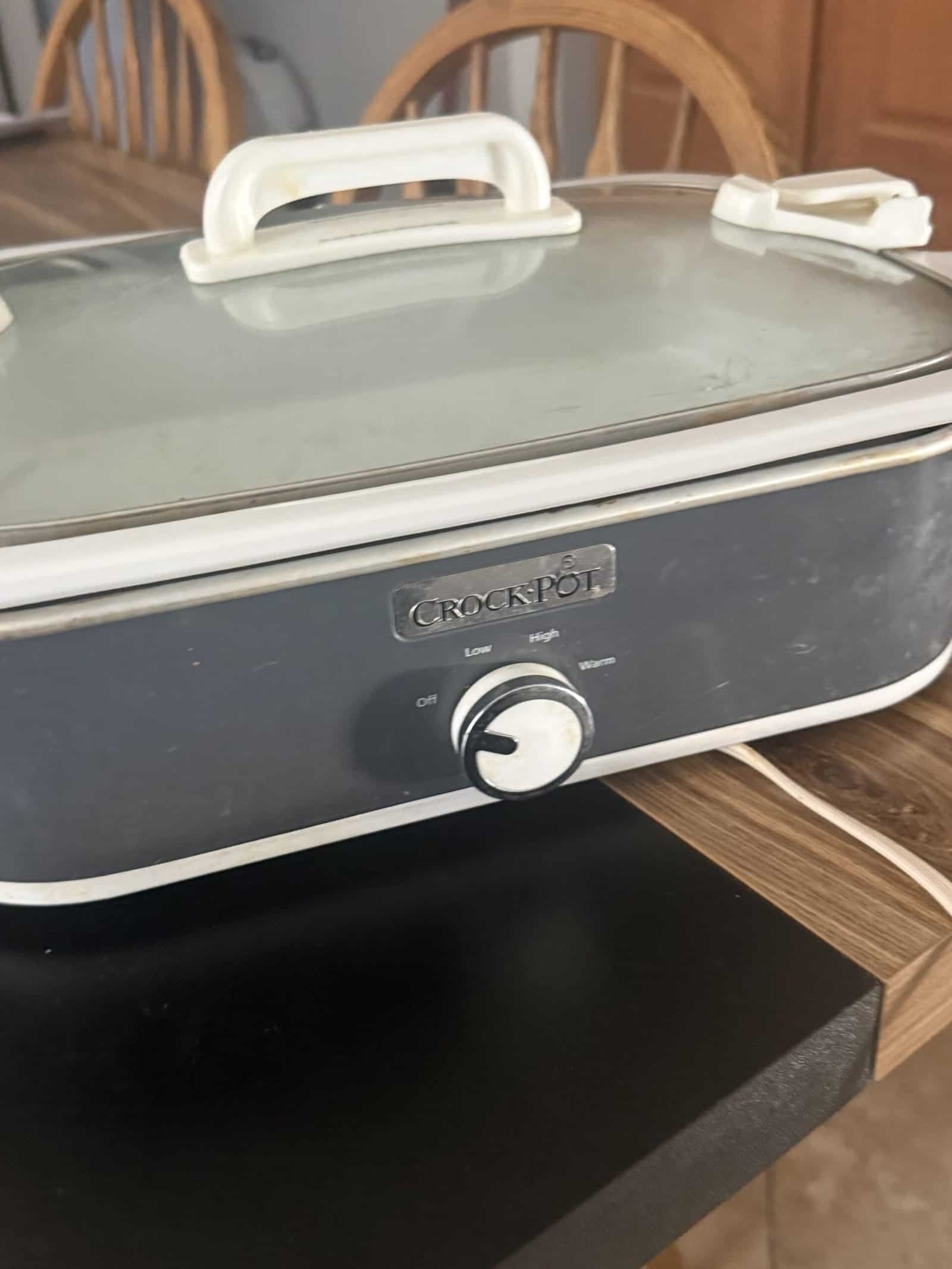
A slow cooker is designed to run unattended for hours, and eight to ten hours on low is what the appliance exists to do. The real question is not whether the machine can handle it. It is what you are comfortable with, and my own line sits in a specific place: I have run mine for about eight hours during the day, and I have never run it overnight.
Quick Verdict
Yes, a slow cooker is built to run all day, and eight hours on low is normal use rather than abuse. Whether you leave the house or sleep while it runs is a personal call about supervision, not a question about the appliance. Mine runs long days while I am around. It does not run while I am asleep.
Key Takeaways
- Eight to ten hours on low is what the appliance is designed for.
- The machine is not the risk. Cords, placement, and what is around it are.
- Supervised versus unsupervised is a choice, and reasonable people land differently.
- Low is safer and better than high for long cooks. High is for shorter ones.
- Warm is a holding setting, not a cooking setting.
Where the Lines Actually Are
| Scenario | Designed for it? | What I do |
|---|---|---|
| 8 hours on low, you are home | Yes, this is normal use | I do this |
| 8 hours on low, you are out | Yes, this is the intended use case | Personal call |
| Overnight while asleep | Yes, mechanically | I do not do this |
| Warm setting for hours | Holding only, not cooking | Short holds after cooking |
| Cracked cord or damaged unit | No | Do not run it at all |
What the Appliance Is Built For
A slow cooker is a low-wattage device with no moving parts that holds a low temperature for a long time. That is the entire design brief. Running eight hours is not stress-testing it, it is the intended use, and most recipes assume exactly that.
The low setting typically brings food to a simmer and holds it there, which is both safer and better for the food than high. Long, low, and slow is why connective tissue in tough cuts breaks down into something worth eating. Rushing that on high gets you hot food rather than good food.
The warm setting is worth understanding separately: it is for holding food that is already cooked, not for cooking. Starting a raw dish on warm is the one genuinely bad idea in this category, because it can leave food sitting in the temperature range where bacteria are happiest. See also our guide to whether you need a programmable model.
My Line, and Why It Is Where It Is
Here is my actual practice, and I want to be clear that it is a preference rather than a rule.
I have run mine for something like eight hours during the day. That is a long cook and it has never given me a moment of concern. But I have never run it overnight, and I do not intend to.
The distinction is not about the appliance. It is that supervised time is supervised time. If something goes wrong while I am awake and in the apartment, I will notice it. If something goes wrong at three in the morning, I will not. Those are meaningfully different situations even when the probability is the same, because the probability is not the only thing that matters.
Plenty of people run theirs overnight and nothing happens, which is the expected outcome. I just do not, and I would rather tell you where my line is than pretend I have found the objectively correct one.
What Actually Goes Wrong
When slow cooker incidents happen, the appliance is rarely the interesting part.
Cords are. A cord draped over a counter edge is something to catch on, and a cracked or frayed cord on any appliance is a reason to stop using it rather than a reason to be careful with it. Slow cookers live plugged in for long stretches, which makes the cord the thing worth inspecting.
Placement is next. A slow cooker gets hot on the outside, and it needs clearance, a stable surface, and nothing flammable against it. Under a cabinet with the lid venting steam onto the underside of the wood is not ideal for the cabinet.
Then there is the ordinary stuff: an extension cord it should not be on, a unit crowded against a wall, a lid that does not seat properly. None of these are exotic and all of them are more likely than a spontaneous failure of a machine with no moving parts.
How I Actually Use Mine
My slow cooker is a Crock-Pot and it gets used probably once every couple of weeks, which is pretty often for a crockpot. It is not a daily appliance in my kitchen and it was never going to be.
What goes in it is soups and slow things: chicken tortilla soup, riblets, some other soups, and I have done au jus in it. Those are the dishes that reward eight hours and punish thirty minutes, which is exactly the split that decides whether a slow cooker earns its counter space. What to cook in one goes deeper into where the line falls.
I usually use liners, which is mostly a cleanup decision. Nothing sticks or stains in mine anyway, and the insert is dishwasher safe and easy to clean, so the liner is convenience rather than rescue. Cleaning it is genuinely one of the easier jobs in my kitchen.
Low, High, and the Time You Actually Have
Low for long, high for short, and do not treat them as interchangeable with a conversion chart.
Low is roughly the eight-hour setting and it is what the appliance is for. High is roughly the four-hour setting, and it is what you use when you started late. The food is not identical: high gets there faster and gives up some of the texture that made you want a slow cooker in the first place.
If your day is eight hours and your recipe is four, the answer is low anyway, and a programmable model will drop to warm on its own when the mismatch is the other way around. Slow cookers are forgiving on the long end in a way they are not on the short end, which is the opposite of most cooking.
What This Costs to Run
Very little, and this is the quiet advantage nobody markets.
A slow cooker draws a fraction of what an oven does, and it does not heat your kitchen while doing it. Running one for eight hours costs a trivial amount of electricity compared to running an oven for two, which matters in a hot climate for reasons beyond the bill. The Dutch oven comparison gets into that tradeoff, since a Dutch oven means the oven is on.
When I Would Not Leave It
A few cases where I would not walk away regardless of how the appliance is designed.
Any visible damage to the cord or the unit. A lid that does not sit right. An extension cord, which is a bad habit with any heating appliance. A crowded spot without clearance. And a brand-new-to-you unit on its first run, because you do not yet know how hot it runs, and slow cookers vary more than you would expect between models.
None of that is dramatic. It is the same list you would apply to anything that stays plugged in and warm for a working day.
Recommended Reading
See what to cook in one and how to clean it. For picks, see slow cookers under fifty or a model with a countdown timer. For alternatives, compare a Dutch oven or an Instant Pot.
Leaving a Slow Cooker On FAQ
Can you leave a slow cooker on all day?
Yes. Eight to ten hours on low is what the appliance is designed to do, and most recipes assume it. It is a low-wattage device with no moving parts holding a low temperature, which is about as undemanding as cooking gets. I have run mine for about eight hours without a second thought.
Can you leave a slow cooker on overnight?
Mechanically, yes, and plenty of people do it. I do not. The distinction for me is not about the appliance, it is that supervised time is supervised time: if something goes wrong while I am awake I will notice, and at three in the morning I will not. That is a preference rather than a rule, and I would rather say where my line is than pretend it is the objectively right one.
Is it safe to leave a slow cooker on while you are out?
This is the use case the appliance was built for, and the design assumes it. The risks that matter are not the machine: a damaged cord, an extension cord, no clearance around a unit that gets hot, or a lid that does not seat. Deal with those and the rest is a personal comfort call.
Should I use low or high for a long cook?
Low, always, for anything long. Low brings food to a simmer and holds it, which is what breaks down tough cuts into something worth eating. High is the setting for when you started late, and it trades texture for speed. If your day is eight hours and the recipe says four on high, use low.
Can I cook on the warm setting?
No, and this is the one genuinely bad idea in the category. Warm is for holding food that is already cooked. Starting a raw dish on warm can leave it sitting in the temperature range where bacteria multiply happily, for hours. Use low to cook and warm to hold.
Does a slow cooker use a lot of electricity running all day?
No, and it is the quiet advantage nobody advertises. A slow cooker draws a fraction of what an oven does, and eight hours of slow cooker is cheaper than two hours of oven. It also does not heat your kitchen, which is worth real money in a hot climate.
Do I need to stir or check it during a long cook?
No, and lifting the lid works against you by dumping the heat it just spent an hour building. Slow cookers are sealed systems and they want to be left alone. That is the whole appeal, and checking on it is the instinct worth suppressing.
How often do people actually use a slow cooker?
Less than the purchase implies, and that is fine. Mine gets used about once every couple of weeks, which I would call pretty often for a crockpot. It is not a daily appliance. It is the one you reach for when the dish genuinely wants eight hours, and those dishes do not come along every day.
See the complete guide: the comprehensive choosing a stand mixer guide.
