
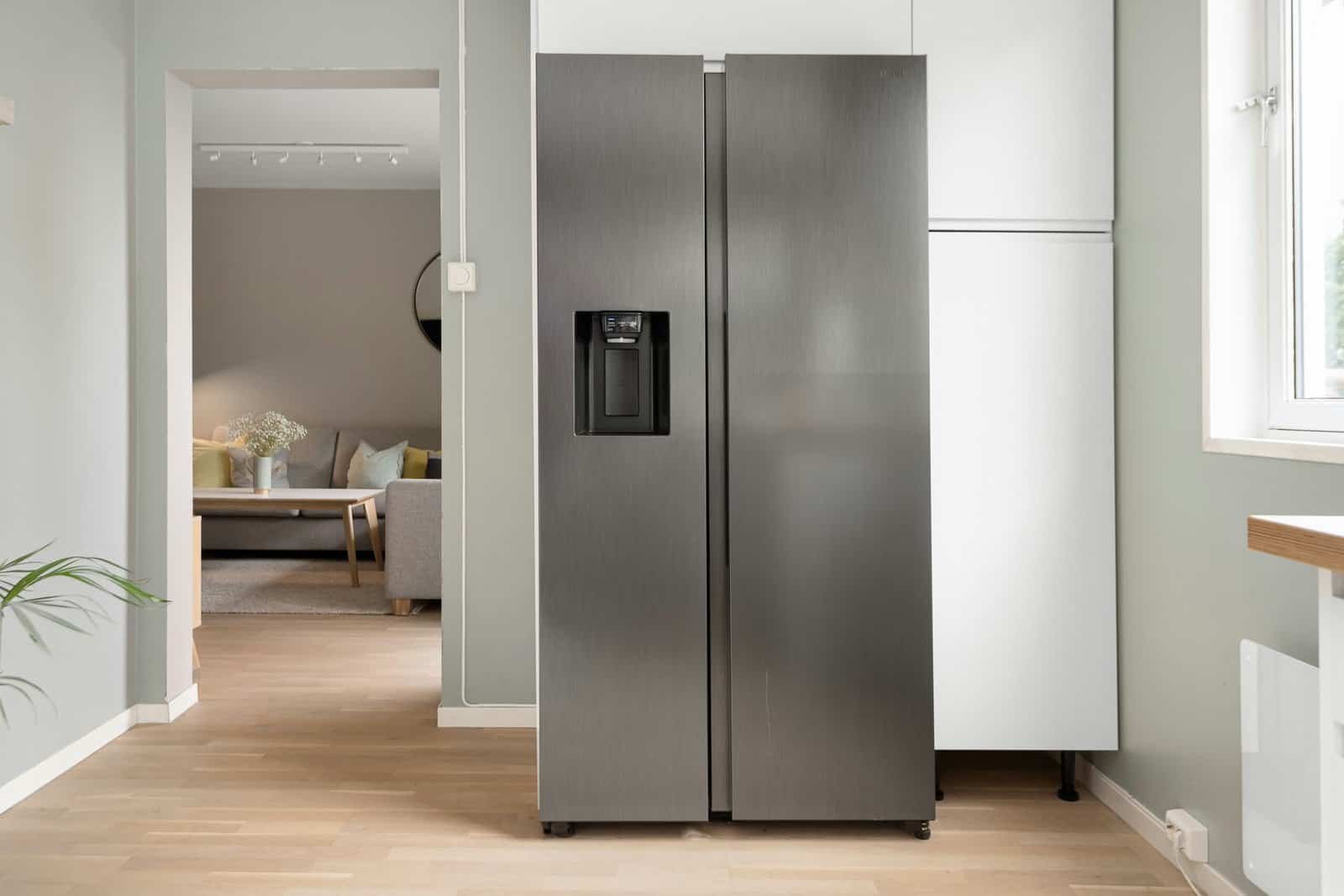
A fridge runs warm when cold air cannot circulate, when the door is not sealing, or when the compartment is working against more heat than it was designed to handle. Figuring out why your fridge is not cold enough usually ends at airflow rather than a broken part. Most of the causes are things you can see.
How the interior is packed matters more than people expect, which is one reason the way a fridge is laid out affects temperature and not just convenience. A blocked vent cools the shelf in front of it and nothing else.
Quick Answer
Check the vents inside for anything blocking them, then test the door seal with a sheet of paper, then pull the unit out and look at the condenser coils. Confirm the actual temperature with a separate thermometer rather than trusting the dial. Those four checks cover most cases.
Key Points
- Cold comes from the freezer side on most units, so a warm fridge often starts as a freezer airflow problem.
- The numbered dial is a setting, not a reading. Only a thermometer tells you what the compartment is doing.
- An overpacked fridge cools unevenly, because air has nowhere to move.
- Dusty condenser coils make the compressor work harder and cool less, and they are easy to reach.
- A seal that has lost its grip leaks cold continuously, which shows up as a unit that never stops running.
| What you notice | Likely cause | Check |
|---|---|---|
| Fridge warm, freezer fine | Blocked vent between the two compartments | Clear anything stacked against the rear or upper vents |
| Both compartments warm | Condenser coils, door seal, or a compressor fault | Coils and seal first, since both are visible |
| Runs constantly, never cycles off | Cold is leaking out as fast as it is made | Door seal, door left ajar, or a gap at the hinge |
| Cold at the back, warm at the front | Air not circulating, usually overpacking | Open up space around the vents and between items |
| Food freezing on the top shelf | Vent blowing directly onto it, or dial set too low | Move items away from the vent face |
| Warm only after a big grocery load | Normal recovery, not a fault | Give it several hours before judging |
| Warm in hot weather only | Ambient heat exceeding capacity | Coils, clearance around the unit, and direct sun |
General patterns only. Models differ in where the vents sit and how the compartments share cold air.
Why Blocked Vents Cause Most Warm Fridges
Most household fridges make cold in one place and distribute it with a fan. The fresh food compartment is cooled by air pushed through vents, usually at the back wall or near the top.
Push a large item flat against that vent and the air stops. The shelf right there stays cold while the rest of the compartment drifts warm, which is why the fault often reads as uneven rather than total.
The fix is leaving space. Air needs a path around items, not just into the compartment, and bins that keep groups of items contained help by stopping loose packages from drifting against the back wall.
Testing the Door Seal Properly
A seal can look intact and still fail. The gasket hardens with age and stops springing back, so it touches the frame without actually gripping it.
Close a sheet of paper in the door and pull. It should drag noticeably. If it slides out freely, the seal is not holding at that point, and you can repeat the test around the whole perimeter to find where.
Gaskets also go sticky with spills, which stops them seating. Wiping the gasket and the frame fixes a surprising number of these. A door that gets opened constantly has the same effect as a weak seal, which is part of why a well sorted interior cuts standing time, and knowing where things belong shortens the hunt.
Condenser Coils and Clearance
The coils shed the heat pulled out of the compartment. Coated in dust, they shed less of it, and the whole system loses capacity even though nothing has broken.
Households with pets reach this point faster, because shed hair mats into the fins. They sit behind a grille at the bottom front on many units, or across the back on older ones. A vacuum crevice tool and a brush clears them in a few minutes with the unit unplugged.
Clearance matters for the same reason. A fridge pushed tight into a cabinet run, or sitting next to an oven, has nowhere to dump heat. This is also why the symptom often appears only in summer, when the kitchen itself is warmer.
Why the Dial Misleads You
Numbered dials from one to five tell you nothing about the actual compartment temperature. They set a target that the unit may or may not be reaching, and the numbers are not a scale of degrees.
Digital displays are better but they report at the sensor, which sits in one spot. A compartment with poor circulation can read correctly at the sensor and be considerably warmer at the door.
An independent thermometer left on a middle shelf overnight settles the question. That reading is what matters for food safety, and how long food actually keeps assumes the compartment is holding its target rather than its setting.
When It Is Not a Fault at All
A fridge that struggles right after a grocery run is behaving normally. Warm items carry a lot of heat in, and the unit needs time to pull it back down.
Putting hot food straight in makes that worse and raises the temperature of everything around it, which is covered in what happens when hot food goes into cold storage. Cooling on the counter first is the simple answer.
Defrost cycles also cause brief warming on units with automatic defrost, and that is by design. A rise that resolves within an hour or two and repeats on a regular rhythm is the system working, not failing. Persistent frost patterns are a different signal, and freezer frost buildup points at seals and airflow in the same way.
Recommended Reading
Temperature and storage practice are the same subject from two directions. For keeping produce usable longer once the compartment is holding properly, produce savers cover the containers that help. For the step before storage, safe defrosting is where fridge temperature matters most.
Frequently Asked Questions
Why is my fridge not cold enough but the freezer is fine?
That pattern points at the vent between the compartments, since most units cool the fridge with air from the freezer side. Something stacked against the vent, or a fan that has stopped, breaks the supply. Clear the vent area first.
Can overfilling a fridge make it warmer?
Yes. Air has to circulate for the compartment to cool evenly, and a packed fridge blocks that movement. A full fridge holds temperature well once cold, but only if there are paths for air between items.
How do I know if the door seal is the problem?
Shut a sheet of paper in the door and pull it out. Real resistance means the seal is gripping, and easy sliding means it is not. Test several points around the door, since gaskets usually fail in one section rather than all over.
Should I just turn the dial colder?
Only after you know what the compartment is actually doing. Turning it down masks a blocked vent or a failing seal while raising running costs and freezing food at the back. Measure first, adjust second.
How long should a fridge take to recover after shopping?
Several hours is normal for a large load of room temperature groceries. Judging the unit during that window gives a misleading reading. If it has not settled by the next morning, treat it as a fault.
Does the fridge need space around it?
It does, because the coils have to release heat into the room. A unit wedged tightly into cabinetry or placed beside an oven loses capacity. The manual specifies the clearance for that model.
When should you call a technician?
When vents, seal, coils and clearance all check out and the compartment is still warm. At that point it is likely the fan, the thermostat, the defrost system or the sealed refrigerant circuit, none of which are owner-serviceable. A unit that runs constantly without cooling is worth looking at sooner.
