
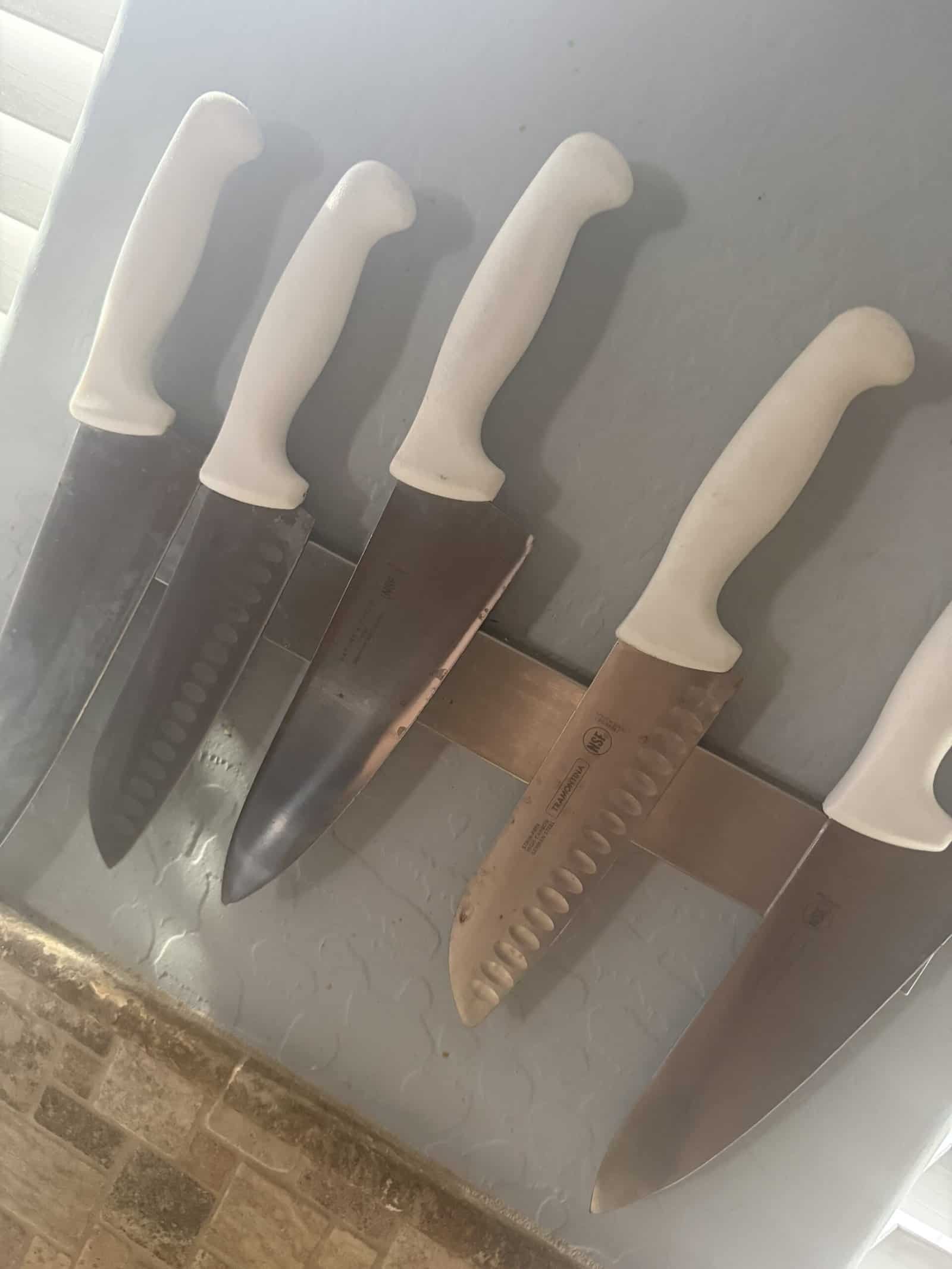
Carbon steel takes a better edge and demands you look after it. Stainless takes a slightly worse edge and asks nothing. I own stainless, and the reason I have never been tempted otherwise is that my knives go through the dishwasher and I sharpen them once in a while when it occurs to me. Carbon steel would have punished that within a month.
Quick Verdict
Stainless for almost everyone. Carbon steel is genuinely sharper and genuinely needs drying after every use, or it rusts. If that sentence sounds tedious, you have your answer and there is no shame in it.
Key Takeaways
- Chromium is the difference: it resists rust and slightly blunts the edge potential.
- Carbon steel rusts. Not “might rust”. Will, if you leave it wet.
- Carbon develops a patina, which is normal and protective, not damage.
- Carbon sharpens more easily and takes a finer edge.
- Modern stainless is far better than its reputation suggests.
The Trade
| Stainless | Carbon steel | |
|---|---|---|
| Rust | Highly resistant | Rusts readily |
| Edge potential | Very good | Slightly better |
| Sharpening | A bit more work | Easier, takes an edge fast |
| Maintenance | None | Dry immediately, every time |
| Appearance | Stays bright | Darkens into a patina |
| Dishwasher | Survives it | Absolutely not |
| Reactivity | Inert | Reacts with acidic food |
What Chromium Buys and Costs
Stainless steel is steel with chromium in it, and that is the whole story.
Chromium forms a passive oxide layer on the surface that stops rust before it starts. It is why stainless is stainless. The cost is that chromium slightly interferes with the carbide structure that lets an edge get truly fine, which is why carbon steel has the edge reputation.
The important caveat: that gap has narrowed a lot. Modern stainless alloys are far better than the reputation carbon steel enthusiasts are usually arguing against. The difference exists and is real, and for most cooking it is smaller than the difference between a sharpened knife and an unsharpened one. Most dulling has nothing to do with steel chemistry anyway.
Carbon Steel Rusts. Plan for It.
Not a risk. A property.
Leave a carbon steel knife wet on the board and it will spot within hours. Cut a lemon and leave the juice on it and it will react. Put it in a dishwasher and you have made a serious mistake, since a long hot wet cycle with harsh detergent is close to the worst possible environment for it.
The maintenance is not complicated: wash it, dry it immediately, put it away dry. Every single time, forever. That is genuinely all. Whether that is trivial or intolerable depends entirely on you.
This is where honesty helps. My knives go in the dishwasher, and I scrape food off the board with the spine of the blade, and I sharpen when it occurs to me rather than on any schedule. Stainless tolerates all of that. Carbon steel would have been a running argument I lost every week, and I would have ended up with a pitted knife and a grievance.
That is not a moral failing, it is an incompatibility, and recognizing it before you buy saves a lot of disappointment.
The Patina Is Not Damage
A carbon steel knife darkens with use, going gray, then blue-gray, then mottled. That is a patina, and it is a stable oxide layer that forms from contact with food and air.
It looks like the knife is dying. It is doing the opposite: a developed patina is mildly protective and slows further corrosion. Scrubbing it off with an abrasive to get the shine back removes that protection and starts the cycle over.
Rust is different and it is orange, flaky, and rough rather than smooth and dark. Patina is fine, rust is not, and telling them apart is the first skill of carbon steel ownership.
Reactivity, Which Nobody Mentions
Carbon steel reacts with acidic food, and it goes both ways.
Cut a lot of onions, tomatoes, or citrus with a fresh carbon blade and you can pick up a faint metallic note. It fades as the patina develops, but early on it is real. The blade also discolours quickly from that same contact.
Stainless is inert and does none of this. For a knife that mostly cuts vegetables and fruit, that is a genuine practical advantage that the sharpness argument tends to ignore.
Sharpening Cuts Both Ways
Carbon steel sharpens faster and takes a finer edge with less effort. That is a real pleasure if you sharpen by hand, and it is the reason people who love carbon steel love it.
Stainless takes more work to sharpen and, depending on the alloy, holds it comparably or better. Neither is difficult with a decent tool.
I use an electric sharpener on my stainless knives, which flattens this distinction almost entirely. It guides the blade so I am not balancing an angle by hand, it has never chewed up my knives, and it has held up through years of regular use. When the machine is doing the work, “sharpens easily” stops being a meaningful advantage, and the main argument for carbon quietly evaporates. Sharpeners covers the options and technique covers doing it by hand.
Where This Overlaps With the German and Japanese Question
These two comparisons get tangled together and they are separate axes.
Stainless versus carbon is about corrosion resistance. Hard versus soft is about edge retention versus toughness, and that is the German and Japanese distinction. You can have hard stainless, soft carbon, and every combination.
The reason they get confused is a correlation: traditional Japanese knives often use carbon or high-carbon steel and are hard, while German knives are usually softer stainless. So the stereotypes line up. But the properties are independent, and plenty of excellent modern Japanese knives are stainless.
Who Should Actually Buy Carbon
Someone who sharpens by hand and enjoys it, dries a knife without thinking about it, and wants the last few percent of edge.
That is a real person and carbon steel will make them happy. If it is you, buy it and enjoy it.
For everyone else, stainless is the right answer and it is not a compromise. It is what I own and I have never once wished otherwise. A modern stainless chef’s knife, kept sharp and off a glass board, will out-cook a neglected carbon blade every day. The steel matters far less than the maintenance, which is the recurring theme of every knife question. Choosing a knife comes down to feel and upkeep long before it comes down to alloy.
Recommended Reading
See choosing a knife, German vs Japanese, and why knives dull. It also helps to understand keeping rust off your knives.
Stainless vs Carbon Steel FAQ
Is carbon steel better than stainless?
Sharper, and higher maintenance. Carbon takes a finer edge with less effort and rusts if you leave it wet, every time, forever. Modern stainless closes most of the sharpness gap and asks nothing of you. I own stainless and have never regretted it, mostly because my habits would destroy carbon within a month.
Will a carbon steel knife really rust?
Yes, and quickly. Leave it wet on the board and it spots within hours. Leave lemon juice on it and it reacts. The fix is simple, wash and dry immediately, every use. Whether that is trivial or intolerable is a question about you rather than the knife.
What is the black patina on my carbon knife?
A stable oxide layer that forms with use, and it is protective rather than harmful. It looks like damage and it is the opposite. Scrubbing it off to restore the shine removes the protection. Rust is different: orange, flaky, rough. Patina is smooth and dark.
Can carbon steel knives go in the dishwasher?
No, and this is not a “you probably shouldn’t”. A long hot wet cycle with aggressive detergent is close to the worst environment you could design for carbon steel. If your knives go in the dishwasher, do not buy carbon.
Does carbon steel affect the taste of food?
It can, early on. Carbon reacts with acidic food, so a fresh blade cutting onions, tomatoes, or citrus may leave a faint metallic note, and the blade discolours from the same contact. It fades as the patina develops. Stainless is inert and does none of it.
Is stainless harder to sharpen?
Slightly, by hand. Carbon takes an edge faster and more easily, which is why hand-sharpeners love it. If you use a guided or electric sharpener the difference largely disappears, since the machine is doing the work either way.
Is carbon steel the same as a Japanese knife?
No, they are separate axes that get tangled. Stainless versus carbon is about rust. Hard versus soft is about edge retention versus chipping, which is the German and Japanese distinction. The stereotypes correlate because traditional Japanese knives are often hard carbon, but plenty of excellent Japanese knives are stainless.
Which lasts longer?
Whichever one you look after. A neglected carbon knife pits and rusts into something unpleasant within a year. A neglected stainless knife just gets dull, which is recoverable. That asymmetry is most of the argument for stainless.
See the complete guide: the full guide to choosing the right cookware for your kitchen.
