
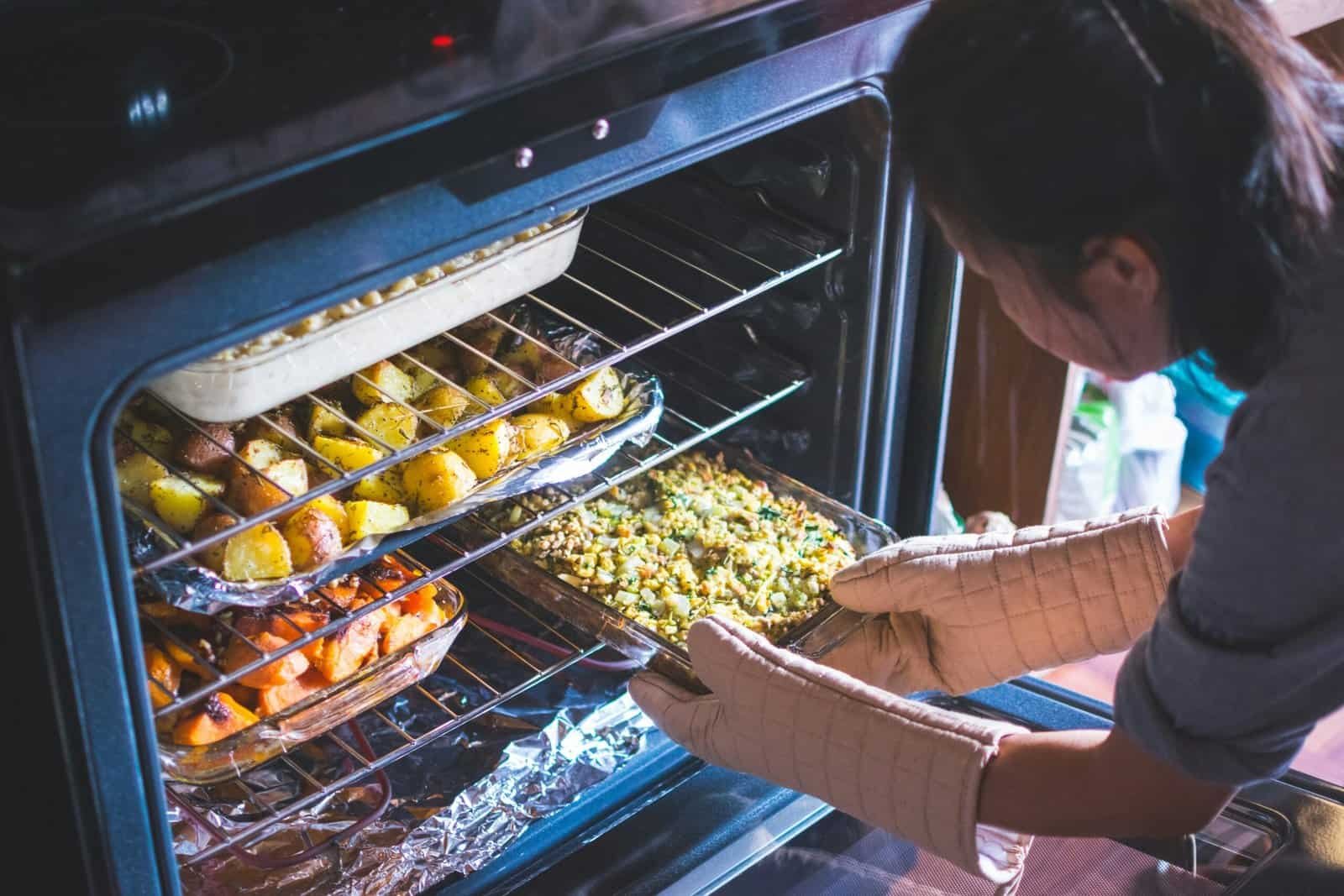
For our current top picks, see the best stainless steel cookware sets guide. Put the wrong pan in a hot oven and you can melt a handle, craze a coating, or shatter glass. Knowing how to tell if cookware is oven safe comes down to checking the maker’s marking, the material, and the weakest part of the pan, usually the handle, lid knob, or any coating. When in doubt, look for a stamped oven-safe symbol and a temperature limit on the base. Material matters too, since a stainless stockpot and a coated nonstick pan have very different limits. This guide shows exactly what to check before anything goes in the oven.
Quick Verdict
Check the bottom of the pan for an oven-safe symbol and a maximum temperature, then judge the weakest part: handles, knobs, and coatings usually set the real limit. Bare stainless and cast iron handle high heat well, while plastic handles, many nonstick coatings, and some glass have lower ceilings. If there is no marking and you are unsure, keep it on the stovetop.
Why Trust This Guide
The temperature notes draw on cookware and coating-safety guidance cited in Sources, and describe general material limits rather than any single brand’s claims.
Key Takeaways
- cast iron cookware lasts for generations
- Look for a stamped oven-safe symbol and a temperature limit on the pan’s base.
- The weakest part sets the limit: handles, lid knobs, and coatings usually fail first.
- Bare stainless and cast iron tolerate high heat; plastic handles and many coatings do not.
- Tempered glass and ceramic can be oven safe but dislike sudden temperature changes.
- When there is no marking and you are unsure, do not risk it.
Disclosure: SmartLifeItems is reader-supported. As an Amazon Associate, we earn from qualifying purchases made through links on this page, at no extra cost to you.
How We Researched This
This guide follows general cookware material limits and coating-safety guidance, including the point that nonstick coatings can degrade above their rated temperature, which is why a coated pan’s ceiling is usually lower than its metal body could handle.1 Always treat the manufacturer’s stamped limit as the final word for your specific pan, since food-contact cookware is rated for safe use within its stated temperature range.3
Check the Markings First
The fastest answer is usually printed right on the pan.
Look for the Oven-Safe Symbol
Turn the pan over and check the base for an oven-safe symbol, often a small oven or dish icon, sometimes with a number. Many makers stamp a maximum temperature there too, which is the limit to respect for the whole pan, handle included.
Find the Manufacturer’s Stated Limit
If there is no symbol, check the product listing, the box, or the brand’s care page for an oven-safe rating. A stated temperature is more reliable than guessing, and it accounts for the handle and any coating, not just the metal.
Judge the Material and the Weak Points
When markings are missing, the material and the most fragile part tell you most of what you need.
The Pan Body
Bare stainless steel and cast iron tolerate high oven heat well, which is why a clad stainless pot or a Dutch oven moves from stovetop to oven easily. Aluminum is usually fine at moderate temperatures, while a nonstick coating lowers the safe ceiling regardless of the metal underneath.
Handles, Knobs, and Coatings
The weakest part decides the limit. Plastic or silicone handles and lid knobs often cap a pan well below what the metal could take, and many can warp or melt in a hot oven. Metal and oven-safe phenolic handles handle more. Check the handle before you trust the body.
Glass and Ceramic
Tempered glass and oven-safe ceramic can go in the oven, but both dislike sudden temperature swings, which can crack them. Avoid moving them straight from the fridge or freezer into a hot oven, and let them warm up gradually. For coated bakeware like a springform pan, check both the glass or metal base and the coating rating.
A Quick Material Reference
As a rough guide when markings are missing: bare stainless steel and cast iron, bare or enameled, are the most oven-tolerant and handle high heat. Anodized aluminum is usually fine at moderate temperatures. Nonstick pans go in only up to their coating’s rating and never under the broiler. Pans with plastic or silicone handles follow the handle’s much lower limit, and glass or ceramic is oven safe only when labeled and only without sudden temperature swings. Treat this as a starting point, not a substitute for the maker’s stamp.
Oven-Safe Limits by Material
When a marking is missing or you want to understand why a pan has the limit it does, the material is the place to start. Here is how the common cookware materials behave in the oven.
Stainless Steel
Bare, fully clad stainless steel is among the most oven-tolerant cookware and handles high heat with no trouble, which is why a stainless skillet or saucepan moves to the oven easily. The catch is almost always the handle or lid knob: an all-metal stainless pan is broadly oven safe, while one with a plastic or silicone handle follows that part’s lower limit.
Cast Iron and Enameled Cast Iron
Bare cast iron is built for high, sustained heat and goes from stovetop to oven without concern, which is what makes it ideal for searing then roasting. Enameled cast iron is also oven friendly, though the enamel dislikes sudden temperature shocks and very high broiler heat, so warm it gradually and check the maker’s broiler guidance.
Aluminum and Anodized Aluminum
Plain and anodized aluminum are generally oven safe at moderate temperatures and heat quickly and evenly. Anodized aluminum is harder and more durable than bare aluminum. As with stainless, the handle material usually sets the real ceiling, so confirm it before trusting the body.
Nonstick (PTFE)
Many nonstick pans are oven safe only up to a coating-specific limit that sits well below what the metal body could take, and they should never go under the broiler. Exceeding that limit degrades the coating and can release fumes, so respect the rated temperature and keep the heat moderate.
Ceramic Nonstick
Ceramic-coated pans are often oven safe to a stated limit, but like other coatings they dislike very high heat and the broiler. Treat the coating’s rating as the ceiling, not the metal’s, and avoid the empty-pan preheat that high oven heat can mimic.
Tempered Glass and Stoneware
Oven-safe tempered glass and ceramic stoneware can roast and bake well, but thermal shock is their enemy. Moving them straight from the fridge or freezer into a hot oven, or adding cold liquid to a hot dish, can crack them. Let them change temperature gradually and follow the maker’s limits.
Copper and Specialty Pans
Copper pans are often oven safe, but their handles, linings, and rivets vary widely, so the maker’s rating matters more than the metal. Silicone bakeware is designed for the oven up to a stated temperature and is a different category from a silicone handle on a metal pan, which is only a grip and not meant for direct, prolonged heat.
Mixed-Material and Vintage Pans
Pans that combine materials, a copper body with a steel handle, or a metal pan with a wooden grip, follow the limit of whichever part fails first, which is usually the non-metal piece. Older or vintage cookware often has no surviving marking and unknown handle materials, so treat it cautiously and lean toward the stovetop unless you can confirm an oven rating from the maker.
Reading the Symbols and Ratings
Manufacturers communicate oven safety in a few standard ways, and knowing where to look saves guesswork.
The Oven-Safe Icon
A small oven or dish symbol stamped on the base means the pan is rated for oven use, often with a temperature beside it. If the icon has a number, that number is the maximum to respect for the whole pan, including the handle and any coating.
Where the Rating Lives
If the base has no symbol, the rating is usually on the original box, the product listing, or the brand’s care page. A stated temperature there is more reliable than judging by feel, because it already accounts for the handle and coating, not just the metal body.
When You Still Are Not Sure
A little caution beats a ruined pan or a kitchen hazard.
Default to the Stovetop
If a pan has no marking, an unknown handle material, or a coating you cannot rate, keep it on the stovetop rather than gambling in the oven. The cost of a wrong guess, a melted handle or shattered dish, is far higher than the inconvenience, and following the maker’s rating is the simplest way to use cookware safely. If you only need to finish a dish in the oven briefly, transferring the food to a dish you know is oven safe is a reliable workaround that avoids risking the pan entirely.2
Watch It the First Time
If you have confirmed a pan is oven safe but are using it in the oven for the first time, keep the temperature moderate and check on it partway through. A handle that is rated but worn, or a coating near its limit, will show trouble early, and catching it at the first sign beats discovering it after the damage is done.
Mind the Broiler and Very High Heat
Even oven-safe cookware may not be broiler safe, since the broiler runs hotter and more direct than the rated oven temperature. Check separately for a broiler rating, and keep coated pans away from the broiler entirely.
Common Oven-Safe Mistakes to Avoid
A few assumptions lead to damaged cookware.
Assuming the Whole Pan Matches the Metal
A stainless body does not mean a stainless-safe handle. People forget the plastic knob or handle, which often fails long before the metal. Always rate the weakest part.
Ignoring the Coating’s Lower Limit
A nonstick pan with an oven-safe metal body can still be limited by its coating. Respect the coating’s rating, since exceeding it degrades the surface and can release fumes.
Thermal-Shocking Glass
Moving glass or ceramic straight from cold to a hot oven can crack it. Let it come closer to room temperature first, and avoid sudden swings in either direction.
Recommended Reading
- How to choose the right cookware
- The best stockpots
- Dutch ovens that go stovetop to oven
- The best springform pans
Oven-Safe Cookware FAQ
How can I tell if a pan is oven safe?
Check the base for an oven-safe symbol and a temperature limit, then judge the weakest part, usually the handle, knob, or coating. Bare stainless and cast iron handle high heat well, while plastic handles and many coatings have lower ceilings. When unsure, keep it on the stovetop.
What temperature can oven-safe cookware handle?
It varies widely by material and the maker’s rating. Bare stainless and cast iron tolerate high oven heat, while pans with plastic handles or nonstick coatings are often limited to lower temperatures. Always follow the stamped or stated maximum for your specific pan.
Are nonstick pans oven safe?
Some are, up to a coating-specific limit that is usually lower than the metal body could handle. Check the maker’s oven-safe rating, keep the pan below that temperature, and avoid the broiler, since high direct heat degrades nonstick coatings.
Can a pan with a plastic handle go in the oven?
Only if the maker rates the handle as oven safe, and often only to a modest temperature. Many plastic handles warp or melt in a hot oven, so check the specific rating rather than assuming the handle matches the metal body.
Is stainless steel cookware oven safe?
Bare stainless steel cookware is generally oven safe to high temperatures, though a plastic or silicone handle or knob can lower the limit. All-metal stainless pans usually move from stovetop to oven easily; confirm the handle and lid rating first.
Can glass cookware go in the oven?
Oven-safe tempered glass can, but it dislikes sudden temperature changes that can crack it. Avoid moving glass straight from the fridge or freezer into a hot oven, let it warm gradually, and follow the maker’s temperature and broiler guidance.
Is oven-safe the same as broiler safe?
No. The broiler runs hotter and more direct than a rated oven temperature, so oven-safe cookware is not automatically broiler safe. Check for a separate broiler rating, and keep nonstick coatings away from the broiler entirely.
What cookware can go in the oven at high temperatures?
Bare stainless steel and cast iron, including enameled cast iron, tolerate high oven heat best, provided the handles and knobs are oven rated. Nonstick coatings, plastic handles, and untempered glass have much lower limits, so high-heat roasting is the domain of all-metal pans.
Can ceramic and stoneware go in the oven?
Oven-safe ceramic and stoneware can, but both crack under sudden temperature changes. Avoid moving them from cold storage into a hot oven, never add cold liquid to a hot dish, and follow the maker’s temperature and broiler ratings for your specific piece.
Is silicone bakeware oven safe?
Silicone bakeware is designed for oven use up to a stated temperature and is generally safe within it. This is different from a silicone handle on a metal pan, which is only a grip and not meant for prolonged direct oven heat at the same levels.
Related Reading
Explore more: how to store cast iron cookware, dutch oven vs stockpot, How Cast Iron Cookware Lasts for Generations, cookware for gas stoves, toaster vs toaster oven, oven mitts and pot holders, cookware for induction stoves, and air fryer vs oven. Also explore: juicers for beginners, and sous vide cookers.
Recommended Reading
See also our guides to cookware for gas stoves.
Sources
- Agency for Toxic Substances and Disease Registry (ATSDR), CDC. Per- and Polyfluoroalkyl Substances and nonstick cookware coating heat limits. https://www.atsdr.cdc.gov/pfas/
- U.S. Consumer Product Safety Commission. Cookware and kitchen product safety information. https://www.cpsc.gov/
- U.S. Food and Drug Administration. Safe Food-Contact Materials and Cookware. https://www.fda.gov/food
- For the specific answers, see which pans go from burner to oven.
- carbon steel pans
- cast iron skillets
- chef knives
