
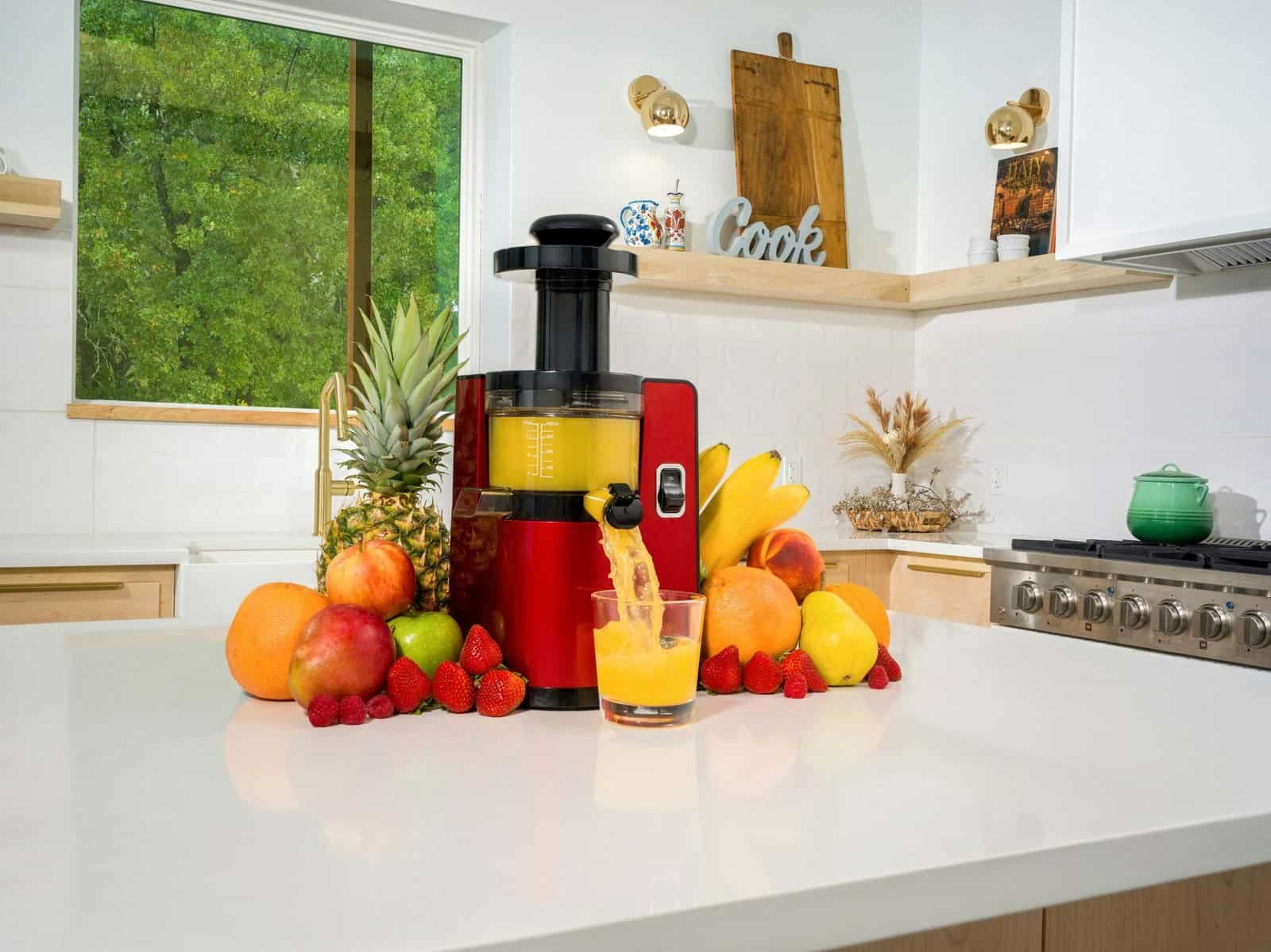
Most people who want to juice at home never start because they assume it requires expensive equipment, complicated operation, and a cleaning routine that takes longer than the juice is worth. The beginner juicer category has solved all three of those problems. Modern entry-level juicers produce quality fresh juice from a machine that costs under $100, operates with two or three steps, and cleans in under five minutes. The barrier is lower than it has ever been.
The bigger decision for beginners is juicer type, centrifugal or masticating, which determines juice quality, noise level, and what produce the machine handles well. This guide covers both types across the full beginner price range, so you can match the right machine to your specific morning routine. If you are building a complete healthy kitchen setup, our guides to the best blenders for smoothies and best food scales for meal prep cover the tools that work alongside a juicer for a complete nutrition-focused kitchen.
Disclosure: SmartLifeItems is reader-supported. As an Amazon Associate, we earn from qualifying purchases made through links on this page, at no extra cost to you.
What to Look for in the Best Juicers for Beginners
Juicer type is the first decision. Centrifugal juicers use a spinning blade to shred produce and separate juice through centrifugal force, fast, loud, and less effective with leafy greens. Masticating juicers use a slow-turning auger to crush and press produce, quieter, more nutrient-preserving, better with leafy greens, and slower to operate. For beginners who primarily juice citrus and hard vegetables, centrifugal is the easier starting point. For beginners who want leafy green juice from day one, masticating is worth the additional cost and operation time.
Feed tube size determines how much prep work the machine requires. A wide feed tube, 3 inches or more, accepts whole apples, large carrots, and other produce without cutting. A narrow feed tube requires pre-cutting everything to fit, adding prep time that compounds across daily use.
Cleanup complexity determines whether you actually use the machine every morning. A juicer with many small parts, fine mesh screens that clog easily, or components that are not dishwasher safe adds friction to the daily routine that causes most beginners to stop juicing within the first month. Look specifically for juicers with dishwasher-safe parts and minimal component counts.
Best Juicers for Beginners in 2026: Our Top 5 Picks
1. Breville BJE200XL Compact Juice Fountain, Best Overall
Best Overall | Price: ~$100
The Breville BJE200XL earns the top spot for beginners through a combination of juice quality, cleanup simplicity, and the 3-inch centered feed tube that accepts whole apples and large produce without pre-cutting. The 700-watt motor produces juice in seconds, a speed that makes the machine practical for morning routines where waiting is not an option. The juice quality consistently outperforms other centrifugal juicers at the same price point through a finer mesh filter that separates more pulp from the juice stream.
Breville BJE200XL, The Feed Tube Size That Changes Morning Prep
The 3-inch feed tube is the feature that separates the BJE200XL from narrower competitors most meaningfully for daily use. Dropping a whole apple into the feed tube and getting juice in ten seconds, versus cutting that apple into quarters to fit a narrow tube, is a time and friction difference that determines whether the juicer becomes a daily habit or an occasional effort. All parts except the motor base are dishwasher safe, which reduces the cleanup concern that stops most beginners from juicing consistently. At approximately $100, the BJE200XL sits at the top of the beginner range but delivers the ease of use that justifies the price for anyone committed to daily juicing.
Best for: Beginners who want the easiest possible morning juicing routine, anyone who primarily juices hard fruits and vegetables and wants maximum speed with minimum prep and cleanup.
PROS:
- 3-inch feed tube accepts whole apples without pre-cutting
- 700-watt motor produces juice in seconds
- Fine mesh filter for cleaner juice with less pulp
- All parts except the motor base are dishwasher safe
- Compact footprint for standard kitchen counters
CONS:
- Centrifugal design less effective with leafy greens
- Louder operation than masticating alternatives
- Pulp container fills quickly at high volume
2. Mueller Austria Juicer, Best Budget Pick
Best Budget | Price: ~$40
Mueller Austria delivers the core centrifugal juicing function at the lowest price on this list, a 1,100-watt motor, a 3-inch feed tube, and dishwasher-safe parts at approximately $40. The motor wattage actually exceeds the Breville BJE200XL at less than half the price, a specification that produces fast juice extraction from hard produce without the premium cost. The juice quality and mesh filter fineness fall slightly below the Breville, producing juice with marginally more pulp content, a trade-off most beginners find acceptable at the price difference.
Mueller Austria, The Best Entry Point for Uncommitted Beginners
For beginners who want to test whether daily juicing fits their routine before investing in premium equipment, Mueller Austria is the correct starting point. The 3-inch feed tube, dishwasher-safe parts, and high-wattage motor deliver everything that makes beginner juicing practical at a price that makes testing risk-free. If juicing becomes a consistent daily habit, upgrading to a Breville or masticating option later is straightforward. If it does not, the $40 investment is a significantly easier loss than $100+.
Best for: Uncommitted beginners who want to test daily juicing before investing in premium equipment, budget-conscious buyers who want the full centrifugal juicing experience at minimum cost.
PROS:
- Lowest price on this list is approximately $40
- 1,100-watt motor, highest wattage on this list
- 3-inch feed tube for whole produce input
- Dishwasher-safe parts for easy cleanup
- Fast juice extraction from hard produce
CONS:
- Slightly more pulp in juice than Breville at the same setting
- Build quality reflects the price point
- Less refined operation than premium alternatives
3. Omega J8006HDS Masticating Juicer, Best for Leafy Greens
Best for Leafy Greens | Price: ~$160
The Omega J8006HDS sits above the under-$100 beginner range but earns its place on this list for beginners who want leafy green juice from day one. Centrifugal juicers produce poor yield and low nutrient retention from spinach, kale, wheatgrass, and other leafy greens, the spinning blade tears rather than pressing, losing juice in the pulp. The Omega’s slow 80-RPM masticating auger presses leafy greens thoroughly, extracting significantly more juice per gram of produce than any centrifugal alternative.
Omega J8006HDS, Slow Pressing That Leafy Greens Actually Require
The 80-RPM operation produces minimal heat and minimal oxidation during juicing, preserving more enzymes and nutrients than the high-speed spinning of centrifugal alternatives. The quiet operation is a meaningful lifestyle difference for early morning juicing in shared homes. Cleanup involves more components than centrifugal alternatives, but all parts are dishwasher safe, and the auger design does not have the fine mesh screens that clog under heavy leafy green use. At approximately $160 the Omega is the highest-priced option on this list, justified for leafy green focused juicers and not justified for primarily hard-produce juicers who would see minimal benefit over the Breville at $100.
Best for: Beginners who plan to juice leafy greens, spinach, kale, wheatgrass, from the start and want the nutrient retention that masticating juicers provide over centrifugal alternatives.
PROS:
- Masticating auger extracts significantly more juice from leafy greens
- 80-RPM operation minimizes heat and oxidation for nutrient preservation
- Quiet operation suitable for early morning use in shared homes
- Dishwasher-safe parts
- Handles a wider produce range than centrifugal alternatives
CONS:
- Higher price at approximately $160
- Slower operation than centrifugal juicers, not ideal for rushed mornings
- More components to clean than centrifugal alternatives
- Narrow feed tube requires more pre-cutting than wide-tube centrifugal options
4. Hamilton Beach Big Mouth Juicer, Best Wide Feed Tube
Best Wide Feed Tube | Price: ~$50
Hamilton Beach named their juicer accurately. The 3-inch feed tube matches the Breville’s whole-produce capability at roughly half the price. The 800-watt motor handles hard produce at high speed, and the dishwasher-safe parts cover the cleanup requirement that determines daily use consistency. Juice quality sits between Mueller Austria and Breville, more refined than the Mueller, with slightly more pulp than the Breville’s finer mesh filter produces.
Hamilton Beach, Whole-Produce Convenience at Mid-Range Price
The combination of wide feed tube, adequate motor wattage, and dishwasher-safe construction at $50 makes the Hamilton Beach Big Mouth the strongest mid-range value on this list. It does not match the Breville’s juice quality or the Omega’s leafy green performance, but for beginners who primarily juice apples, carrots, citrus, and beets, the Hamilton Beach delivers everything that matters for daily use at a price that does not require premium justification.
Best for: Beginners who want wide feed tube convenience at a mid-range price, primarily hard-produce juicers who want to avoid pre-cutting without paying Breville’s premium.
PROS:
- 3-inch wide feed tube for whole produce input
- 800-watt motor for fast, hard-produce extraction
- Mid-range price at approximately $50
- Dishwasher-safe parts
- Adequate juice quality for standard produce variety
CONS:
- Slightly more pulp than Breville at comparable settings
- Less refined build quality than Breville
- Centrifugal design underperforms with leafy greens
5. Cuisinart CCJ-500 Pulp Control Citrus Juicer, Best for Citrus Only
Best for Citrus | Price: ~$35
For beginners whose juicing interest begins and ends with citrus, orange juice in the morning, lemon water through the day, lime for cooking, a dedicated citrus juicer outperforms a centrifugal machine for that specific purpose at a fraction of the cost. The Cuisinart CCJ-500 uses a reamer press design that extracts maximum juice from citrus without the bitterness that centrifugal blades introduce from pith contact. The pulp control selector adjusts from no pulp to high pulp, a preference variable that centrifugal juicers cannot match for citrus specifically.
Cuisinart CCJ-500, The Right Tool When Citrus Is the Only Goal
Auto-start activation, the reamer activates when you press citrus against it and stops when you lift, makes the operation genuinely one-step for standard citrus juicing. Cleanup involves the reamer, the strainer, and the juice pitcher, three components that rinse clean in thirty seconds. At approximately $35, the Cuisinart CCJ-500 is the most specialized and most affordable option on this list, exactly right for the beginner whose juicing goal is fresh orange juice every morning and nothing more complex than that.
Best for: Beginners whose juicing interest is exclusively citrus, anyone who wants the best possible orange, lemon, or grapefruit juice extraction without the cost and complexity of a full centrifugal or masticating machine.
PROS:
- Reamer design optimized for citrus extraction without bitterness
- Pulp control selector from no pulp to high pulp
- Auto-start activation for one-step operation
- Three-component cleanup in thirty seconds
- Lowest price for dedicated citrus performance at approximately $35
CONS:
- Citrus only, cannot juice hard produce or leafy greens
- Limited to the beginner whose needs are exclusively citrus-focused
- Less capable than centrifugal options for anyone who expands beyond citrus
Quick Comparison: Best Juicers for Beginners 2026
| Juicer | Price | Type | Feed Tube | Best For | Score |
|---|---|---|---|---|---|
| Breville BJE200XL | ~$100 | Centrifugal | 3 inch | Best overall | 9.1 |
| Omega J8006HDS | ~$160 | Masticating | Narrow | Leafy greens | 9.0 |
| Mueller Austria | ~$40 | Centrifugal | 3 inch | Budget pick | 8.8 |
| Hamilton Beach | ~$50 | Centrifugal | 3 inch | Wide feed tube value | 8.6 |
| Cuisinart CCJ-500 | ~$35 | Citrus press | Citrus only | Citrus focused | 8.4 |
Our Verdict on the Best Juicers for Beginners
The Breville BJE200XL at $100 is the right starting point for most beginners, the wide feed tube, fast operation, and dishwasher-safe construction cover every practical requirement for daily hard-produce juicing. Beginners who plan to juice leafy greens from the start should go straight to the Omega J8006HDS at $160, the masticating design is genuinely necessary for leafy green performance that centrifugal juicers cannot provide. Budget-conscious beginners testing the daily juicing habit should start with Mueller Austria at $40, the wide feed tube and high wattage deliver most of the Breville’s practical functionality at less than half the price. The Hamilton Beach at $50 splits the difference for buyers who want wide feed tube convenience without the full Breville investment. And beginners whose entire juicing interest is citrus should skip the centrifugal category entirely and start with the Cuisinart CCJ-500 at $35.
Frequently Asked Questions: Best Juicers for Beginners
What type of juicer is best for beginners?
Centrifugal juicers are the best starting point for most beginners, they are faster, easier to operate, and simpler to clean than masticating alternatives. The trade-off is lower performance with leafy greens and slightly less nutrient preservation. For beginners who primarily juice hard fruits and vegetables, centrifugal is the right entry point. For beginners committed to leafy green juicing from day one, a masticating juicer like the Omega J8006HDS is worth the additional investment.
How hard is it to clean a juicer?
Cleanup difficulty varies significantly between models. The easiest juicers to clean have dishwasher-safe parts and minimal component counts, the Breville BJE200XL, Mueller Austria, and Hamilton Beach all meet this standard. The most common mistake beginners make is letting pulp dry on the mesh filter, rinsing immediately after use prevents the buildup that makes cleanup significantly harder.
Can I juice leafy greens in a centrifugal juicer?
You can, but the results are poor. Centrifugal juicers produce low juice yield from leafy greens and leave significant juice content trapped in the pulp. If leafy green juice is part of your routine, a masticating juicer like the Omega J8006HDS extracts more juice per gram of produce from spinach, kale, and wheatgrass than any centrifugal alternative.
How much produce does it take to make a glass of juice?
More than most people expect before they start juicing. A standard 8-ounce glass of apple juice requires approximately 2 to 3 medium apples. A green juice with spinach, cucumber, and apple requires approximately 2 cups of spinach, half a cucumber, and 1 apple. The produce volume required per glass is the most common surprise for new juicers and a practical reason to have a wide feed tube that minimizes the prep time that volume of produce requires.
Is fresh juice healthier than store-bought?
Fresh juice contains more active enzymes and higher nutrient content than pasteurized store-bought juice, which undergoes heat treatment that reduces enzyme activity and some heat-sensitive vitamins. The more meaningful health variable for most people is sugar content, fresh fruit juice contains the same natural sugar content as the fruit it came from, which is significant at the quantities a juicer produces. Balancing fruit juice with vegetable juice reduces the sugar load while maintaining the nutrient density that makes fresh juicing worthwhile.
Related Reading
Explore more: toasters.
More Appliance Guides
Recommended Reading
See also our guides to manual juicers.
For the full rundown, see the comprehensive choosing a stand mixer guide.
