
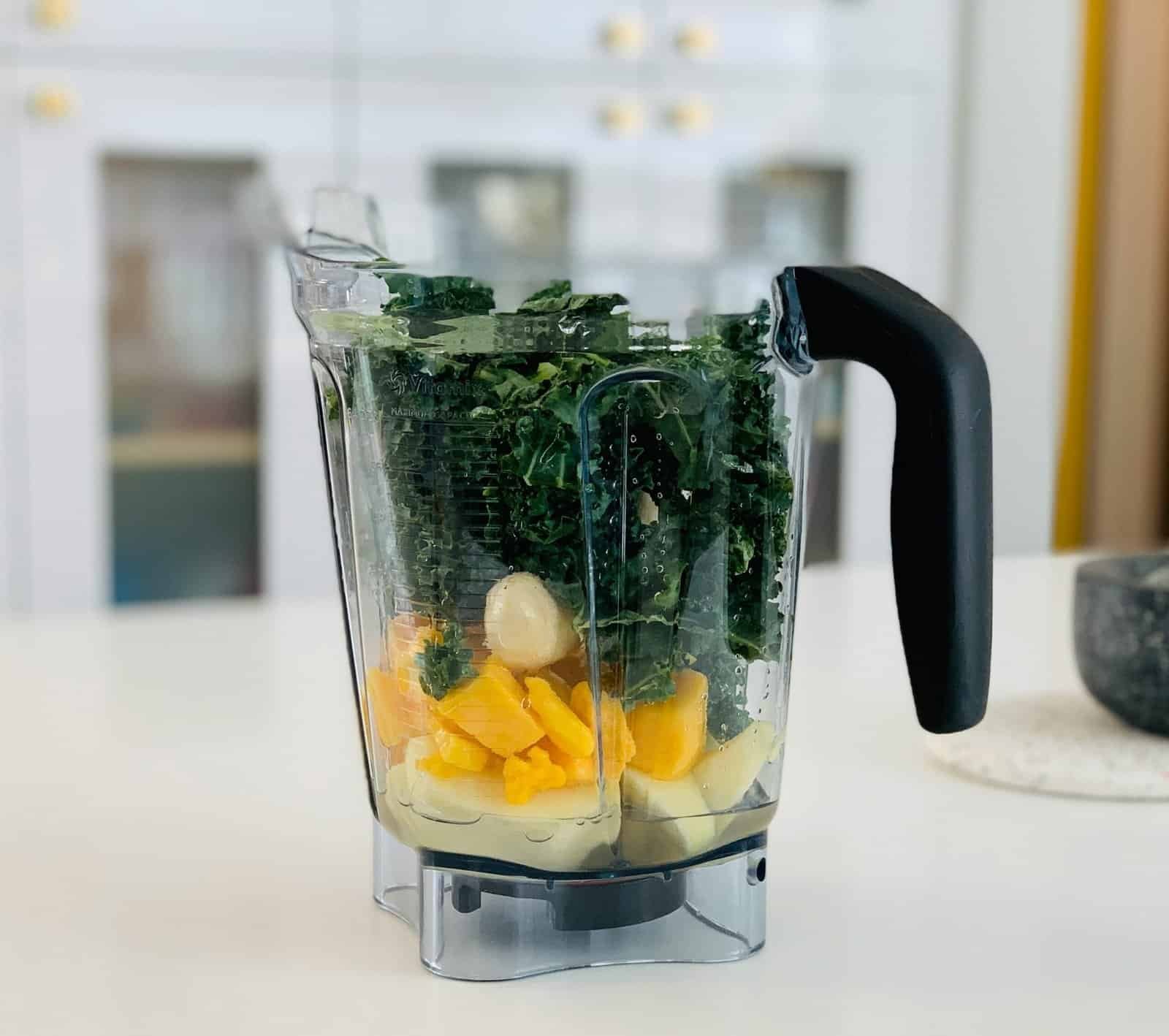
Most people who own an underperforming blender know exactly when it stopped being useful, the first time it failed at something they needed it to do. A underpowered motor that cannot crush ice. A narrow jar that spatters when blending hot soup. A blade assembly that takes five minutes to clean properly. The wrong blender does not just underperform. It creates enough friction that most people stop using it within weeks of purchase. If you’re shopping, start with our guide to the best blender.
The right blender for your kitchen depends on what you actually blend, not what the manufacturer’s marketing claims the machine can do. This guide covers every blender type, every key specification, and every use case so you can match the right machine to your specific cooking habits. If you already know you primarily make smoothies, our guide to the best blenders for smoothies covers the top options specifically optimized for that use. For smaller, more compact options, our guide to the best immersion blenders under $50 covers the stick blender alternative that suits soups and sauces better than a standard countertop blender.
The Four Blender Types and What Each Does Best
Countertop Blenders, The Versatile Standard
A countertop blender is the standard kitchen blender, a motor base, a jar, and a blade assembly that handles the widest range of blending tasks of any blender type. Motor power ranges from 300 watts in budget models to 1,500+ watts in premium machines. Jar capacity typically runs from 48 to 72 ounces. A quality countertop blender handles smoothies, soups, sauces, frozen drinks, nut butters, and food processing applications that narrower-purpose blenders cannot.
Personal Blenders, Single-Serve Simplicity
A personal blender uses a smaller jar, typically 20 to 32 ounces, that doubles as a drinking cup with a lid. The motor is optimized for single-serve smoothies and protein shakes rather than large-batch blending. Cleanup is minimal, the cup is the jar, which rinses clean in seconds. Personal blenders are the right choice for single-serving smoothies consumed immediately after blending and nothing more complex than that.
Immersion Blenders, Soup and Sauce Specialists
An immersion blender, also called a stick blender or hand blender, submerges directly into the pot, bowl, or container holding the food rather than requiring transfer to a jar. It is the best tool for blending hot soups directly in the pot, making mayonnaise and salad dressings, and pureeing sauces in the pan they cooked in. It cannot crush ice or handle frozen ingredients effectively and does not replace a countertop blender for smoothie and frozen drink applications.
High-Performance Blenders, Professional Results at Home
High-performance blenders, Vitamix, Blendtec, and similar premium machines, use motors above 1,200 watts with commercial-grade blade assemblies that pulverize ingredients that standard countertop blenders leave chunky or partially processed. They handle whole frozen fruit, ice, fibrous greens, nuts, and hard vegetables into completely smooth results that lower-powered machines cannot achieve. The price premium, typically $300 to $600, is justified for daily users who blend fibrous ingredients regularly and for whom smooth texture is non-negotiable.
The Key Specifications That Actually Determine Blender Performance
Motor Wattage
Motor wattage determines what the blender handles without straining. If you do smoothies with fresh fruit and yogurt, 300 to 500 watts is adequate. For frozen fruit and ice, 600 to 900 watts is the minimum for reliable performance. And if your vibe is fibrous greens, whole nuts, and very frozen ingredients, 1,000+ watts produces the smooth results that lower-powered blenders approximate but do not achieve. Blenders that strain on regular use burn out motors faster than the warranty period, buying adequate wattage for your actual use case is the most important purchase decision in the category.
Jar Material
Glass jars are heavy, scratch-resistant, and do not retain odors or stain from colored ingredients like turmeric and berries. They are dishwasher safe and do not leach any materials into hot liquids. The weight is the only practical downside, a full glass jar is heavy enough to be awkward for some users.
Tritan plastic jars are the premium plastic option, BPA-free, scratch-resistant, and lighter than glass. They handle hot liquids safely and do not absorb odors or stain as readily as standard plastic. Most quality countertop blenders use Tritan plastic jars.
Standard plastic jars are lighter and less expensive but scratch more easily, and scratched surfaces harbor bacteria more readily than smooth alternatives. They are also more likely to absorb odors and stain from pigmented ingredients over time.
Blade Design and Removability
Fixed blade assemblies, where the blade is permanently attached to the jar, are easier to clean because the entire jar goes into the dishwasher as a unit. Removable blade assemblies allow more thorough cleaning around the blade seal but introduce a gasket and seal system that can fail over time and create leaking at the blade base.
Blade width and angle determine blending thoroughness. Wider blade assemblies that reach closer to the jar walls reduce unblended ingredient pockets at the sides of the jar. Four-blade configurations outperform two-blade configurations for most blending applications.
Speed Settings and Programs
More speed settings provide more control for different applications. A minimum of 3 speeds, low, medium, high, covers standard blending needs. Pulse function is essential for controlled chopping and ice crushing. Pre-programmed settings for smoothies, soups, and ice crushing add convenience but are not essential for users comfortable with manual speed management.
Matching Blender Type to Your Actual Use Case
You make one smoothie every morning and nothing else → Personal blender. The single-serve jar, minimal cleanup, and lower price make it the right tool for exclusive single-serve smoothie use.
You make smoothies for two or more people → Countertop blender at 600+ watts. The larger jar and higher motor power handle multiple servings and frozen ingredients that personal blenders struggle with.
You make soups and sauces frequently → Immersion blender as a primary tool or countertop blender with a wide-mouth jar that handles hot liquids safely.
You blend fibrous greens, whole nuts, or hard frozen ingredients daily → High-performance blender. The smooth texture difference justifies the premium for daily users with demanding blending needs.
You want one blender that handles everything → Countertop blender at 900+ watts with a Tritan plastic or glass jar. This handles the widest range of applications without the premium investment that a Vitamix requires.
Our Verdict
Start with your primary use case and set motor wattage first, it is the specification that determines whether the blender handles your actual needs or fails at them within the first month. Choose jar material based on your cleaning preferences and ingredient variety. Match blender type to use case rather than price, a personal blender that perfectly suits your single-serve morning smoothie outperforms an underpowered countertop blender at twice the price for that specific application.
The single most common blender buying mistake is underestimating motor requirements. If frozen fruit, ice, or leafy greens are part of your regular use, buy at least 700 watts. The machines that handle demanding ingredients reliably cost more upfront and cost nothing in frustration and premature motor failure over two years of daily use.
Frequently Asked Questions: How to Choose the Right Blender
How many watts do I need in a blender?
For fresh fruit smoothies with soft ingredients, 300 to 500 watts is adequate. And for frozen fruit, ice, and harder ingredients, 600 to 900 watts is the minimum for reliable performance. Finally for fibrous greens, nuts, and hard frozen ingredients blended daily, 1,000+ watts produces the smooth results that lower-powered blenders cannot consistently achieve.
Is a glass or plastic blender jar better?
Glass is scratch-resistant, odor-resistant, and does not leach materials into hot liquids, but it is significantly heavier than plastic. Tritan plastic is the best plastic option, BPA-free, scratch-resistant, and suitable for hot liquids. Standard plastic scratches more easily and absorbs odors over time. For hot liquid applications like soups, glass or Tritan plastic are both appropriate. For cold smoothie applications, either material works well.
What is the difference between a blender and a food processor?
A blender is optimized for liquid-based blending, smoothies, soups, sauces, and frozen drinks, where the blade circulates ingredients through the liquid. A food processor is optimized for dry and semi-dry food processing, chopping vegetables, making pastry dough, shredding cheese, where the blade processes ingredients without liquid flow. Some tasks overlap, but each tool performs best in its primary category. Our guide to the best food processors under $75 covers the food processor side of this comparison.
Can I blend hot liquids in a standard blender?
Yes, with important precautions. Hot liquids expand when blended, creating pressure that can force the lid off and cause burns. Fill the jar no more than halfway with hot liquid, hold the lid firmly with a folded towel, and start on the lowest speed setting before increasing. Wide-mouth jars with vented lids handle hot liquids more safely than narrow jars with sealed lids.
How do I know if a blender is powerful enough for my needs?
The clearest test is whether the blender handles your most demanding regular ingredient without straining, laboring motor sounds, overheating, or chunky results where smooth is required. If your current blender struggles with frozen fruit, ice, or leafy greens, the motor is undersized for your use case. Match the wattage to the most demanding ingredient you blend regularly rather than to your most common ingredient.
Recommended Reading
See also our guides to how to choose a water filter, and immersion vs countertop blender.
Related Reading
Explore more: how to choose a water filter, immersion vs countertop blender, choose electric kettle, blender under 100, how to choose the right coffee grinder, how to choose the right air fryer, blender vs food processor, and how to choose the right stand mixer. Also explore: how to cook steak on stove.
