
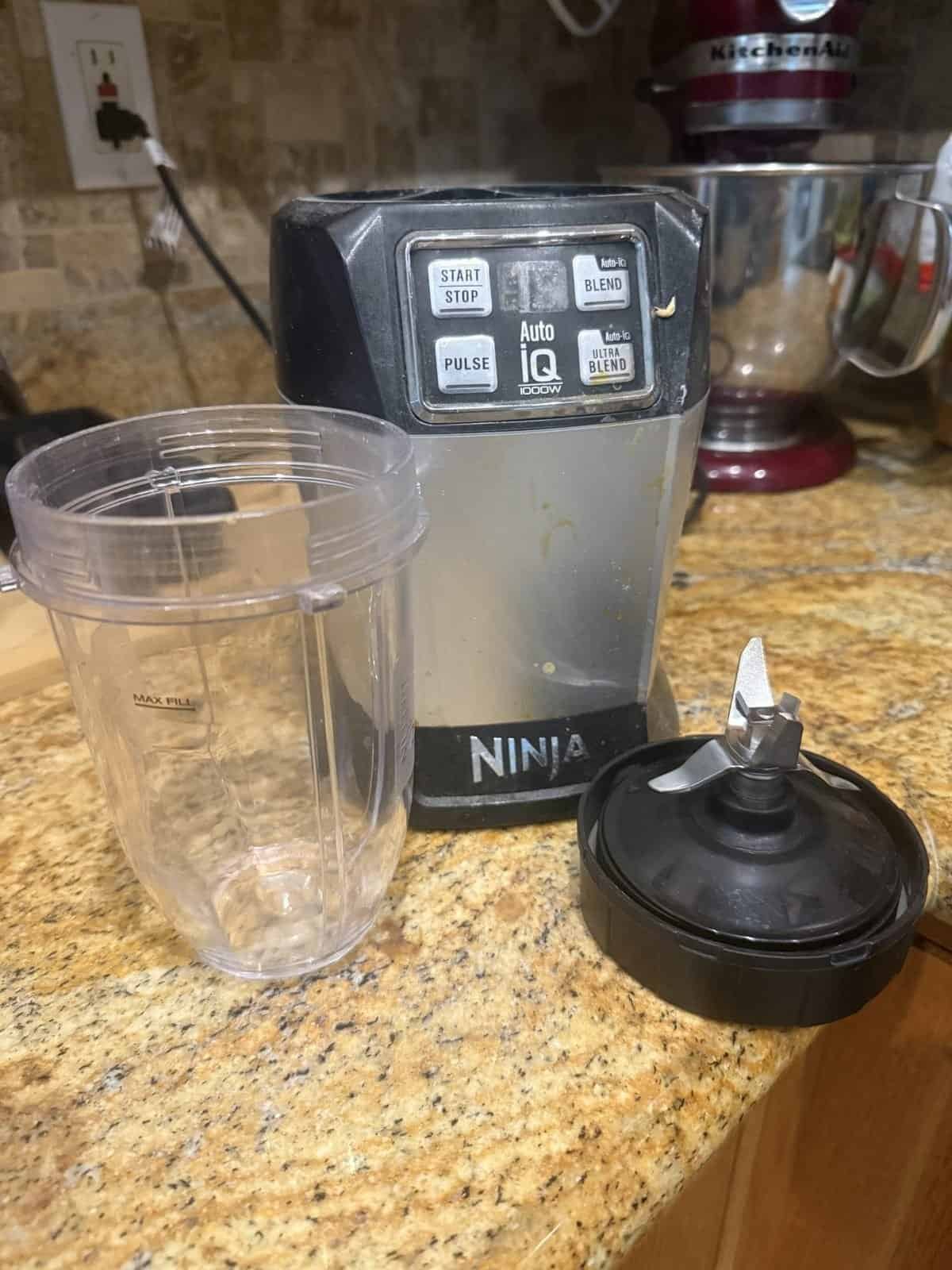
The right blender turns a smoothie from a gritty, half-blended chore into something genuinely good in under a minute. The wrong one leaves chunks of frozen fruit and kale stems floating in the glass. This guide to the best blenders for smoothies in 2026 is written mostly in a research voice, with one firsthand exception: the Ninja personal blender I have owned for years and pull out whenever a shake or smoothie is on the menu.
Disclosure: SmartLifeItems is reader-supported. As an Amazon Associate, we earn from qualifying purchases made through links on this page, at no extra cost to you.
Quick Verdict: Smoothie Blenders Worth Buying
For a full-size do-everything blender, the Ninja Professional Plus is the strong all-around pick that crushes ice and frozen fruit without strain. If you mostly make single servings, a Ninja personal blender is the simple, durable choice, and it is the one I use myself. The Vitamix E310 is the premium pick that lasts a lifetime, the NutriBullet Pro 900 makes the smoothest single-serve texture on a budget, the Oster Pro 1200 is the value full-size option, and the COSORI is the one to choose if noise bothers you. Pick based on batch size and how seriously you take your smoothies. Daily smoothies go easier when you know the fastest way to clean a blender.
| Blender | Type | Power | Best for |
|---|---|---|---|
| Ninja Professional Plus BN701 | Full-size pitcher | 1400 watts | All-around crushing power |
| Ninja Auto-iQ personal (what I use) | Single-serve | 1000 watts | Durable occasional use |
| Vitamix E310 Explorian | Full-size pitcher | 2 peak HP | Premium, buy-for-life |
| NutriBullet Pro 900 | Single-serve | 900 watts | Smoothest single-serve |
| Oster Pro 1200 | Full-size pitcher | 1200 watts | Value full-size |
| COSORI Smoothie Blender | Full-size pitcher | Quiet motor | Low-noise blending |
1. Ninja Professional Plus BN701: Best Overall
The Ninja Professional Plus is the blender most people should look at first. With a strong motor, a stacked Total Crushing blade assembly, and a large pitcher, it powers through ice and frozen fruit that bog down weaker machines, and the Auto-iQ presets take the guesswork out of a smoothie. The pitcher and blades are dishwasher-safe, which matters for something you use often. It is not a luxury machine, but for crushing power and capacity at a fair price, it is the dependable choice.
Who it suits: households that want one capable full-size blender for smoothies and frozen drinks. If you are weighing it against a food processor, our explainer on blender versus food processor helps.
2. What I Use: A Ninja Auto-iQ Personal Blender
This is the one I actually own. It is a Ninja Auto-iQ personal blender, the single-serve kind where you blend right in the cup, and the honest story is one of quiet reliability. I do not use it all that often, but that is exactly what makes its track record notable: it has lasted many years, and every time I pull it out to make a smoothie or a shake, it just works and does a good job. There is no fuss, no coaxing, no dead motor after a season of light use. For occasional single-serve blending, that kind of durability is worth more than a spec sheet.
The case for a personal Ninja is simplicity. You blend and drink from the same cup, cleanup is minimal, and the compact base tucks away when you are done, which suits anyone who blends now and then rather than daily. My unit is an older model, so the current path is Ninja’s personal lineup, like the Nutri-Blender Plus or other Nutri Ninja single-serve models. If you want a durable, no-drama blender for the occasional shake, this is the one I can speak to from experience.
3. Vitamix E310 Explorian: Best Premium
The Vitamix E310 is the pick when you want a blender that may outlast every other appliance in your kitchen. Vitamix machines are the standard professionals reach for, with a powerful motor and aircraft-grade blades that pulverize anything into a genuinely smooth result, and the variable speed dial gives precise control. It costs considerably more than the mainstream picks, which is the only real downside, but the performance and longevity are why people who buy one rarely buy another.
Who it suits: serious smoothie makers who want buy-for-life quality. For a sense of where premium pays off, see our guide on how to choose the right blender.
4. NutriBullet Pro 900: Best for Ultra-Smooth Single-Serve
If your priority is the silkiest possible single-serve smoothie, the NutriBullet Pro 900 is the specialist. Reviewers who test these head-to-head often give NutriBullet the edge for sheer smoothness on single servings, cutting cleanly through fibrous greens and frozen fruit into a creamy texture. Like other personal blenders, you blend and go in the same cup, and the parts are dishwasher-safe. It is an affordable, focused tool that does one thing very well.
Who it suits: smoothie drinkers who want the smoothest single-serve result for less. It is a natural companion to our picks for coffee mugs for a complete morning lineup.
5. Oster Pro 1200: Best Value Full-Size
The Oster Pro 1200 delivers full-size power at a budget-friendly price. Its strong motor and Smart Settings handle smoothies, milkshakes, and crushed ice, and the glass jar resists scratching and odor better than plastic over the long haul. It is not as refined as a Vitamix or as preset-driven as a Ninja, but for a capable family-size blender that does not cost much, it punches above its price.
Who it suits: value shoppers who want a full pitcher and a durable glass jar. For other budget kitchen picks, see our roundup of blenders under one hundred dollars.
6. COSORI Smoothie Blender: Best Quiet
If a loud blender ruining a quiet morning is your concern, the COSORI is built to be gentler on the ears while still blending well. It pairs a capable motor with noise-reducing design, so you can make a smoothie early without waking the house, and it includes presets for common drinks. It is the thoughtful pick for shared homes, apartments, and early risers who do not want to announce breakfast to the neighbors.
Who it suits: early risers and anyone in a shared or thin-walled space. We go deeper on this in our guide to quiet blenders for early mornings.
What to Look For in a Smoothie Blender
Motor power
Power is what crushes ice and frozen fruit into a smooth drink rather than a chunky one. Full-size blenders with strong motors handle the toughest ingredients, while personal blenders with moderate power are fine for softer mixes and occasional use. Match the power to how thick and frozen your smoothies tend to be.
Full-size or personal
Full-size pitcher blenders make big batches and tackle the hardest ingredients, while personal single-serve blenders win on convenience, cleanup, and storage for one drink at a time. If you blend daily for a household, go full-size; if you blend occasionally for yourself, a personal model is simpler.
Blade design and jar
Look for a sturdy multi-blade assembly that pulls ingredients down into the blades, and decide between a scratch-resistant glass jar or a lighter plastic cup. Glass lasts and resists odors, while plastic personal cups are portable and convenient.
Cleanup and noise
Dishwasher-safe parts make a blender far more likely to stay in use, and self-clean cycles help on full-size models. If you blend early or live in close quarters, a quieter machine is worth seeking out.
Getting the Best Smoothie From Any Blender
Technique closes most of the gap between blenders. Add liquid first so the blades have something to pull ingredients into, then soft items, then frozen fruit and ice on top, which helps everything circulate instead of jamming. Do not overfill past the max line, since a too-full jar blends unevenly and can leak. Start slow and build up speed, using pulse to break up frozen chunks before running continuously. And rinse or run a quick water-and-soap cycle right after use so dried smoothie does not cement onto the blades. These habits matter as much as the machine, which is why a simple, well-kept blender can make a great smoothie. For other healthy-kitchen tools, see our picks for food processors, immersion blenders under fifty dollars, and coffee makers under seventy-five dollars, plus our guide to immersion versus countertop blenders.
Frequently Asked Questions
What is the best blender for smoothies?
For most people the Ninja Professional Plus is the best all-around full-size pick, while the NutriBullet Pro 900 makes the smoothest single-serve smoothies and the Vitamix E310 is the premium buy-for-life option. The right one depends on batch size and budget.
Full-size or personal blender for smoothies?
Choose a full-size pitcher blender if you make big batches or blend for a household, and a personal single-serve blender if you usually make one drink and value cleanup and storage. Personal blenders are also the more affordable, simpler choice for occasional use.
How much power do I need to crush ice?
Crushing ice and frozen fruit reliably wants a strong motor and a good blade design. Full-size blenders with higher wattage handle it best, while personal blenders manage softer or partly thawed ingredients more comfortably than solid ice.
Are personal blenders good for smoothies?
Yes, especially for single servings. They blend directly in a portable cup, clean up fast, and store compactly, which makes them ideal for occasional or on-the-go smoothies. For very thick frozen mixes, add enough liquid to keep things moving.
How do I make a smoothie without chunks?
Layer liquid first, then soft ingredients, then frozen fruit and ice on top, and start slow before going to high. Adding enough liquid and not overfilling are the two biggest factors in a smooth, lump-free result.
Is a Vitamix worth the money?
For frequent, serious use, often yes. Vitamix machines deliver exceptional smoothness and last for many years, which spreads the higher cost over a long life. For occasional smoothies, a more affordable blender is usually the sensible choice.
How do I clean a blender easily?
Rinse it right after use, then add warm water and a drop of dish soap and run it for a few seconds to self-clean before a final rinse. Doing this immediately prevents dried smoothie from hardening on the blades.
How long do blenders last?
It varies widely by quality and use. Premium machines can last well over a decade, while budget models last a few years, and lightly used personal blenders can keep going for years simply because they are not pushed hard. Good cleaning habits extend any blender’s life.
Related Reading
Keep going with a beginner-friendly juicer. Also explore: why salt pasta water.
