
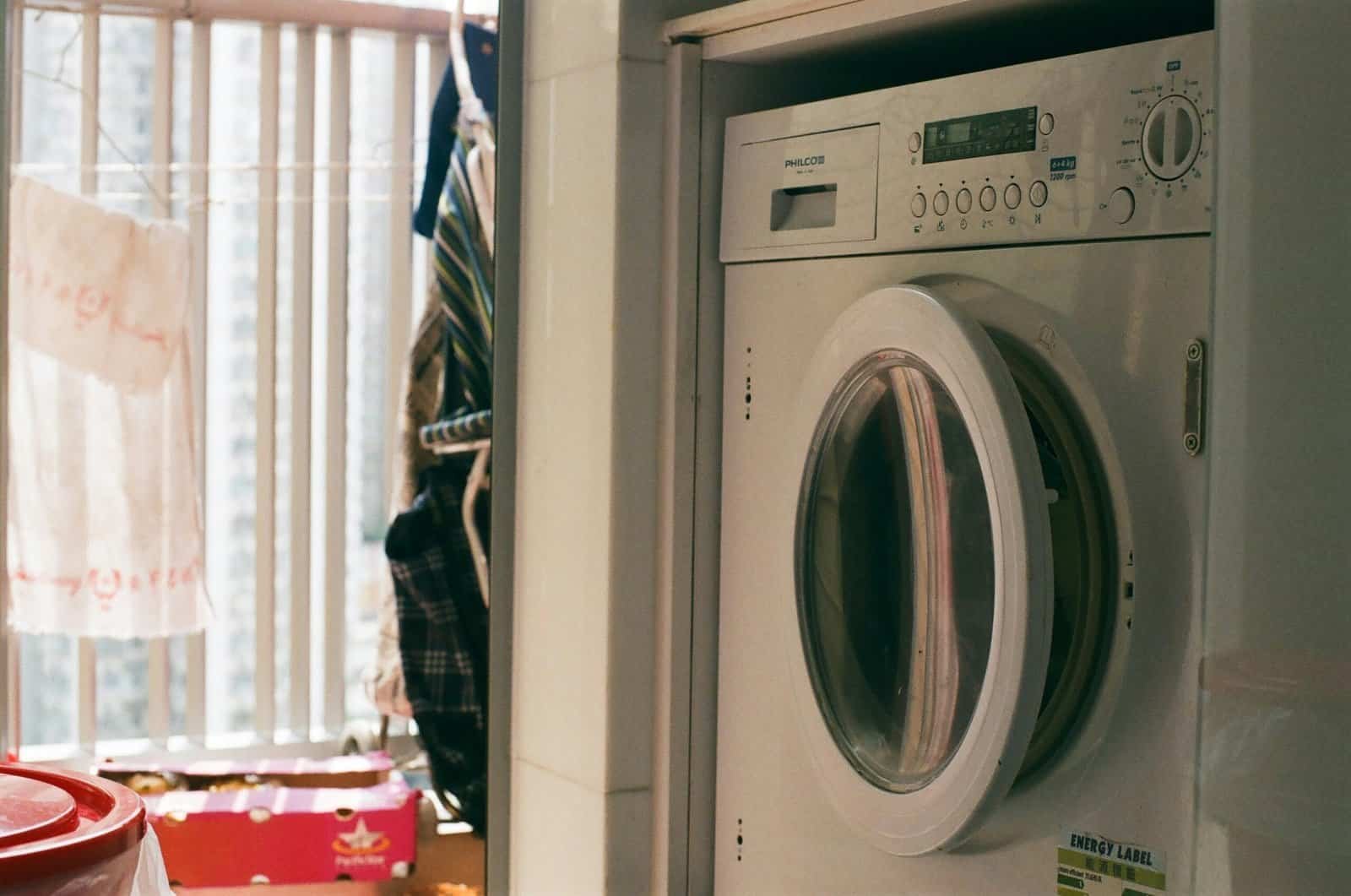
Portable washing machines exist because plumbing does not. If your apartment has no hookups, a portable unit connects to a kitchen or bathroom faucet, drains into a sink, and rolls away afterward. That is the entire proposition, and everything else about them follows from it.
Capacity is where expectations need adjusting. A portable machine handles a fraction of a standard load, so a household producing two full loads a week ends up running four or five smaller ones.
Quick Verdict
Check faucet compatibility before anything else, since adapters fit standard threaded taps and not pull-out sprayers. Single-tub units are cheapest and need manual water changes. Fully automatic models handle fill, wash, and drain unattended. Expect roughly half the capacity of a standard machine.
Key Takeaways
- Faucet type decides whether a machine can connect at all
- Drainage runs into a sink or tub rather than a standpipe
- Fully automatic units cost more and run unattended
- Twin-tub machines are cheaper and need manual intervention
- Capacity is roughly half a standard washer
- Weight when full makes rolling them harder than expected
How We Picked
Connection compatibility came first, since a machine that cannot attach to your faucet is not an option regardless of its other qualities. Pull-out sprayers and non-threaded taps rule out most adapters.
Drain arrangement ranked next. A machine draining into a sink needs the hose secured, and a hose that slips out mid-cycle empties onto the floor.
Capacity mattered because it sets how many cycles a week you will run. A machine holding six pounds and one holding fifteen produce very different laundry routines.
Noise counted for apartments specifically. A spin cycle that rattles through a shared wall is a neighbor problem rather than only an inconvenience.
We excluded washer-dryer combos, which are a different category with their own drying limitations and much higher cost.
Fully Automatic Portable Washers
Why It Stands Out
These handle the whole cycle without intervention. Connect the inlet hose, position the drain, press start, and come back to washed clothes.
The programs mirror a standard machine, with wash, rinse, and spin running in sequence and water levels selected automatically by load size.
For anyone replacing a laundromat trip rather than supplementing it, that unattended operation is what makes the machine actually get used week after week.
Most also include a lint filter and a delay start, which are quality-of-life features the cheaper category lacks entirely.
Worth Knowing
They cost several times what a twin-tub does, which is the main barrier.
They also need the faucet occupied for the entire cycle, so a kitchen sink is unavailable for an hour at a time. In a one-bathroom apartment that scheduling matters.
Spin speeds are lower than full-size machines, which means clothes come out wetter and take longer on a rack.
Best for regular use as a primary washing machine in a unit without hookups. Skip if the budget is tight or if you only need occasional small loads.
Twin-Tub Washers
Why It Stands Out
A twin tub separates washing and spinning into two compartments, and costs a fraction of an automatic machine. For a small budget it is the cheapest way to stop going to a laundromat.
They also wash faster in raw terms, since the wash tub agitates hard and the spin tub is a dedicated extractor rather than a compromise.
Spin extraction on many twin tubs is genuinely strong, which means clothes come out drier than from an automatic portable and dry faster afterward.
Worth Knowing
Everything is manual. You fill it, run the wash, move wet clothes to the spin tub by hand, drain, refill for the rinse, and repeat.
That means standing over it for the duration. A load takes less clock time and more of your attention than an automatic machine.
Moving sopping clothes between tubs drips, which is fine in a bathroom and less fine on a kitchen floor.
Best for tight budgets and anyone happy to be hands-on. Skip if the appeal of a washing machine is walking away from it.
Compact Single-Load Washers
Why It Stands Out
The smallest category, holding a few pounds and sized for one person’s weekly essentials rather than a household wash.
They fit where nothing else does: under a counter, inside a closet, or in the corner of a studio bathroom.
Water and electricity use per cycle is very low, which matters where utilities are metered separately or included with a cap.
Worth Knowing
Capacity is genuinely small. Towels and bedding are out of scope, and a pair of jeans plus a few shirts fills one.
They suit topping up between laundromat trips rather than replacing them, which is a different purchase than most people intend.
Build quality varies enormously at the low end of this category, and the cheapest units are effectively disposable.
Best for single occupants washing small items frequently. Skip if you need to wash towels, sheets, or anything bulky.
Faucet Adapters and Connection Kits
Why It Stands Out
The adapter is what makes the machine work, and the one in the box fits a standard threaded faucet and nothing else. A universal kit covers the taps that standard adapter misses.
Kits typically include several thread sizes, a rubber washer set, and sometimes a quick-connect coupling that speeds setup between loads.
For anyone in a rental with an unknown faucet, buying the kit alongside the machine avoids discovering the incompatibility after delivery.
Worth Knowing
Pull-out sprayer faucets are the common failure. Those have no threads at all, and no adapter attaches without replacing the tap.
Some kits require removing an aerator that has been in place for years, which can seize and need a wrench and penetrating oil.
A poor seal drips continuously, which is a nuisance on a countertop and a real problem in a cabinet.
Best bought at the same time as the machine. Skip only if you have already confirmed your faucet threads match, and small-space setup sits in apartment kitchen essentials.
Drain Hose Extensions and Sink Clips
Why It Stands Out
The drain hose supplied is short, and it needs to reach a sink or tub without kinking. An extension puts the machine where you want it rather than where the hose allows.
A clip securing the hose to the sink edge prevents the failure everyone experiences once, which is the hose working loose during a drain cycle and emptying onto the floor.
Extensions also let a machine drain into a bathtub while sitting in a bedroom or hallway, which opens up placement options in a small unit.
Worth Knowing
Drain pumps have limited lift. A hose routed too high or too long backs up and the machine errors out.
Longer hoses hold standing water after a cycle, which develops a smell if left. Draining and hanging them helps.
Best for any installation where the sink is not directly beside the machine. Skip long extensions if the machine has a gravity drain rather than a pump.
Rolling Bases and Anti-Vibration Pads
Why It Stands Out
Portable machines are heavy when full, and a rolling base turns dragging one across a floor into pushing it. Wheels with brakes hold it still during a spin cycle.
Anti-vibration pads address the apartment problem directly. A spin cycle transmits through a hard floor into the unit below, and pads absorb enough of it to matter.
They also stop a machine walking across the floor during an unbalanced spin, which is how drain hoses get pulled loose.
Worth Knowing
A rolling base raises the machine, which changes the drain hose geometry and can push it beyond the pump’s lift.
Pads compress over time and need replacing, and cheap foam ones flatten within months.
Best for hard floors, upstairs apartments, and machines that need to move between uses. Skip if the machine lives permanently in one spot on carpet.
Portable Washers at a Glance
| Type | Typical capacity | Attention needed | Best for |
|---|---|---|---|
| Fully automatic | 8 to 12 lb | None during cycle | Primary machine |
| Twin tub | 10 to 18 lb split | Constant | Tight budgets |
| Compact single-load | 2 to 6 lb | Minimal | One person, small items |
| Standard washer | 15 to 25 lb | None | Reference point |
How to Choose a Portable Washing Machine
Check the faucet before the machine
Standard threaded taps accept the included adapter. Pull-out sprayers have no threads and cannot connect without replacing the faucet, which decides the whole purchase.
Work out where it drains
The hose has to reach a sink or tub without climbing too high for the pump. Measuring that route before ordering avoids an awkward discovery.
Size to your actual weekly laundry
A portable holds roughly half a standard load. Two full loads a week becomes four or five portable cycles, which is a real time commitment.
Consider the noise floor
Spin cycles transmit through hard floors into neighboring units. Anti-vibration pads and running loads at reasonable hours both matter in an apartment.
Automatic Against Twin Tub
Fully automatic
Runs unattended, mirrors a normal washing machine, and costs several times more. It occupies the faucet for the whole cycle and spins clothes less dry than a twin tub. Small loads and long damp cycles are one route to towels developing an odor.
Twin tub
Cheap, fast, and strong on spin extraction, which means clothes dry quicker afterward. It requires you to move wet clothes between tubs and stand over the whole process.
Common Portable Washer Mistakes to Avoid
Buying before checking the faucet
The single most common problem. A pull-out sprayer cannot be adapted, and discovering that after delivery means returning the machine.
Underestimating cycle count
Half the capacity means twice the cycles. A household expecting one laundry session ends up doing four, which changes whether the machine actually saves time.
Leaving the drain hose unsecured
A hose that works loose during the drain empties onto the floor. A clip costs almost nothing and prevents the one failure that causes real damage.
Ignoring vibration in an upstairs unit
Spin cycles carry through floors. Pads and sensible timing prevent a complaint, and where to put everything sits in organizing a small space.
Recommended Reading
- drying without a dryer
- sorting and storage
- apartment essentials
- using the space around a sink
- small-space planning
- where clothes end up
Part of our guide to organizing a laundry room.
Frequently Asked Questions
Do portable washing machines need special plumbing?
No. They connect to a standard threaded faucet with an adapter and drain into a sink or tub. Pull-out sprayer faucets are the exception, since they have no threads to attach to.
How much laundry does a portable washer hold?
Roughly half a standard machine, typically eight to twelve pounds for a fully automatic unit. Compact single-load models hold considerably less.
Are twin-tub washers worth it?
For tight budgets, yes. They cost a fraction of an automatic machine and spin clothes drier, and every step is manual including moving wet laundry between tubs.
Can I use one in an upstairs apartment?
Yes, with attention to vibration. Spin cycles transmit through hard floors into the unit below, and anti-vibration pads reduce that considerably.
Where does the water drain?
Into a sink or bathtub through a hose. The pump has limited lift, so a drain routed too high or through too long a hose backs up and errors out.
Do they wash as well as a full-size machine?
Cleaning is comparable for normal loads. The differences are capacity, cycle length, and spin speed, which leaves clothes wetter and slower to dry.
Can they handle towels and bedding?
Fully automatic models handle towels and small bedding in reduced quantities. Compact single-load machines cannot, and a comforter is beyond every unit in this category.
