
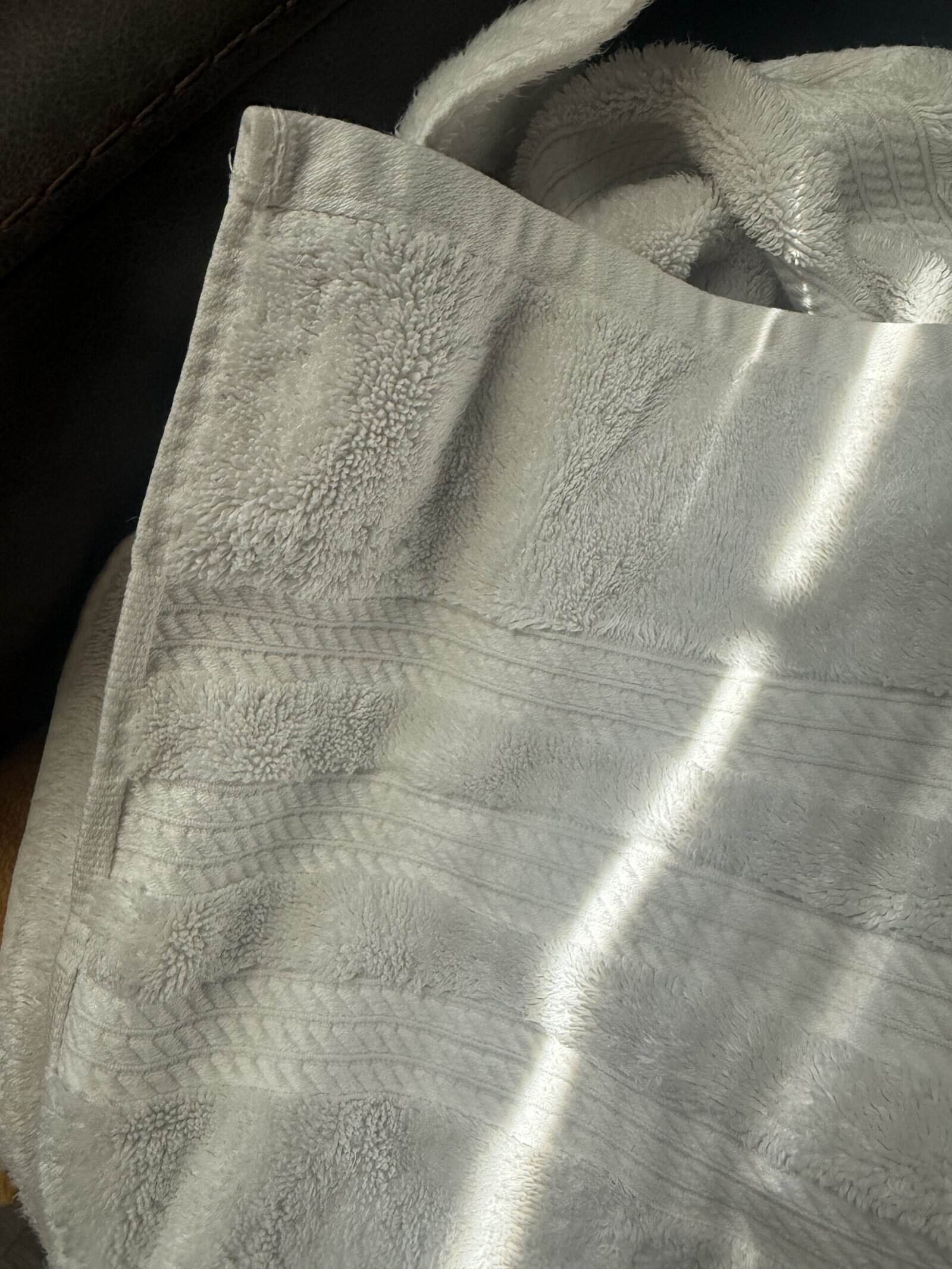
The instinct is that a towel smelling after a wash was not cleaned properly, so the fix must be more detergent or more washing. That usually makes it worse.
Mine sometimes smell. I wash cold, use dryer sheets, and use detergent without fabric softener, which is a combination that explains most of it. Our note on laundry hampers and baskets covers frequency.
Quick Answer
Residue from detergent and dryer sheets coats the fibers and traps moisture, which feeds bacteria. Cold water removes body oils less effectively than hot, and both together produce the smell.
What Actually Causes It
| Cause | Why it produces odor |
|---|---|
| Detergent residue | Coats fibers, holds moisture and soil |
| Fabric softener or dryer sheets | Deposits a waxy layer that repels water |
| Cold water washing | Less effective on body oils and bacteria |
| Overloading the machine | Nothing rinses fully |
| Damp sitting time | Bacteria multiply before drying starts |
| The machine itself | Biofilm in the drum and seal |
Why More Detergent Makes It Worse
Detergent works by suspending soil so water can carry it away, and a wash cycle has a fixed amount of rinsing.
Past a certain dose, there is more detergent than the rinse can remove, so the excess stays in the fabric along with whatever it was holding.
Towels are thick and absorbent, which makes them worse at rinsing clean than a shirt is.
The result is a layer that attracts moisture, holds soil, and gives bacteria something to live on. Adding more detergent to fix the smell adds more of the cause. Our note on stain removers for laundry covers dosing.
Softeners and Dryer Sheets
Fabric softener works by depositing a thin lubricating layer on fibers, which is what makes fabric feel soft.
Dryer sheets do the same thing by a different route, transferring a coating onto fabric with heat.
That coating is water-repellent, which is a problem for a towel specifically since absorbency is the entire point of one.
It also builds up over time, and the accumulated layer holds moisture at the surface rather than letting it evaporate, which is the condition bacteria need. Our roundup of fast-drying bath mats covers materials.
Why Cold Water Matters Here
Body oils need heat
Oils that transfer from skin to towel dissolve less readily in cold water.
Bacteria survive cold cycles
Cold water does not reach temperatures that reliably reduce bacterial populations.
Detergents are formulated for a range
Many work at cold temperatures and few work as well as they do warm.
Cold is right for most laundry
Towels are the exception rather than the rule, which is why this catches people out. Our note on portable washing machines covers the temperature question.
What My Routine Looks Like
I wash cold and use dryer sheets, with detergent and not usually fabric softener.
Towels sometimes smell afterward, which is the expected outcome of that combination rather than a mystery.
Cold water leaves more body oil behind, and dryer sheets deposit a coating that holds moisture. Neither is dramatic on its own and together they produce the result.
That is worth stating because the routine is a completely ordinary one, and the smell is not evidence of doing something unusual or careless.
Material Changes How Fast It Happens
Not all towels develop the problem at the same rate, and construction is most of the reason.
Thick plush cotton holds the most water, which is what makes it feel luxurious and also what keeps it damp longest between uses.
Waffle weave and Turkish-style flat weaves hold less water and dry considerably faster, which is why they resist odor better despite feeling thinner.
Bamboo and microfiber blends behave differently again, and microfiber in particular attracts and holds body oils in a way cotton does not.
None of that overrides the routine, and it does mean two people with identical washing habits can get different results from different towels. Our roundup of shower caddies for renters covers the same principle underfoot.
The Damp Sitting Problem
Bacteria multiply fastest in warm damp conditions, and a finished wash cycle sitting in a closed drum is exactly that.
An hour is usually fine. Overnight frequently is not, and the smell that develops is difficult to remove afterward.
The same applies to a used towel left bunched on a hook or the floor rather than spread out.
Hanging a towel spread wide enough to dry between uses does more for the smell than anything that happens in the machine. Our roundup of drying racks for small laundry rooms covers drying space.
Stripping Built-Up Residue
Where buildup has accumulated over months, a normal wash will not remove it because normal washing is what created it.
Washing with hot water and no detergent at all is the simplest reset, sometimes with white vinegar in the rinse or baking soda in the drum.
Vinegar and baking soda should not go in together, since they neutralize each other and accomplish less than either alone.
Commercial laundry stripping products exist for the same purpose, and they are worth reading the instructions on rather than improvising. Our roundup of laundry sorters covers what goes back in afterward.
Check the Machine
Front-loading washers develop biofilm in the door seal, which is a fold that stays damp between uses.
The detergent drawer accumulates residue that never fully rinses, and it comes out for cleaning on most machines.
A machine that smells will transfer that to everything it washes, which makes towel troubleshooting pointless until it is addressed.
Running an empty hot cycle with the machine’s own cleaning setting, or with vinegar, is standard maintenance rather than a repair. Our note on organizing a laundry room covers that.
Hard Water Complicates It
Water hardness affects how detergent behaves, and it is a variable most people never account for.
Minerals in hard water bind with detergent and reduce how much of it is available to actually clean, which is why people in hard water areas instinctively add more.
Adding more produces exactly the residue problem described above, so hard water pushes people toward the behavior that causes the smell.
Those same minerals also deposit onto fabric over time, stiffening towels and giving soil more to cling to.
Where water is genuinely hard, a water softener or a detergent formulated for it does more than changing any washing habit. Our note on organize a bathroom covers the setup.
What Changes It
Less detergent, not more
Half the recommended dose is frequently enough, and excess is the primary cause.
Skip softener and dryer sheets on towels
Both reduce absorbency and both leave a coating that holds moisture.
Wash towels warmer than the rest
They are the load where temperature does the most work.
Dry immediately and fully
Damp sitting time undoes everything the wash accomplished.
Common Mistakes to Avoid
Adding more detergent
The residue is the cause, so more of it makes the problem worse rather than better.
Using softener for softness
Towels get soft from the dryer rather than from a coating that repels water.
Mixing vinegar and baking soda
They neutralize each other, so use one or the other.
Leaving the load in the drum
Bacteria multiply in a warm damp closed space, which is what a finished cycle is.
Smelly Towels FAQ
Why do my towels smell even after washing?
Usually residue from detergent and dryer sheets coating the fibers and trapping moisture, which feeds bacteria. More washing with the same routine repeats it.
Does yours happen?
Sometimes. I wash cold and use dryer sheets, with detergent and not usually softener, which is the combination that produces it.
Should I use more detergent?
Less. A wash cycle only rinses so much, and excess detergent stays in the fabric holding soil and moisture.
Is cold water the problem?
Partly. Body oils dissolve less readily in cold water and bacterial reduction is limited. Towels are the load where warmer water helps most.
Are dryer sheets as bad as fabric softener?
For towels, effectively yes. Both deposit a coating that repels water, which works directly against what a towel is for.
How do I strip built-up residue?
Hot water with no detergent, optionally with vinegar in the rinse or baking soda in the drum. Not both together, since they cancel out.
Could it be the washing machine?
Yes. Front-loader door seals hold biofilm and detergent drawers accumulate residue. A machine that smells passes it to everything.
Does hanging matter?
Considerably. A towel spread wide dries between uses, while one bunched on a hook stays damp and develops odor regardless of washing.
