
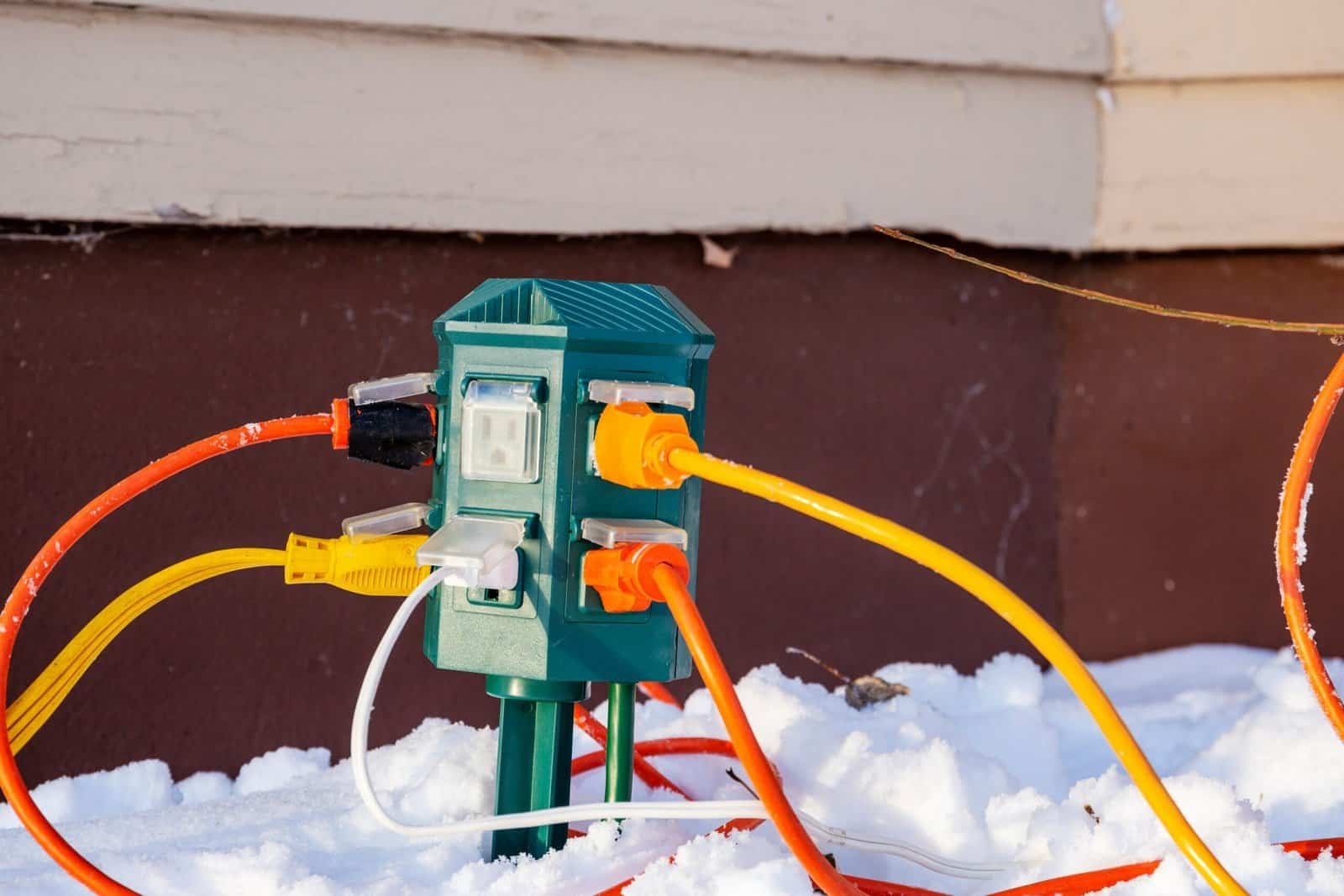
An outdoor smart outlet lets you schedule string lights, holiday displays, pond pumps, and block heaters without walking outside in the rain. The indoor version of the same product fails within a season out there, so weather rating is the specification that decides whether you buy once or twice.
Two things separate a good one from a cheap one. The enclosure has to seal while a plug sits in it, since a lid that only closes on an empty socket protects nothing in use. And the radio has to reach the house through a wall, which is where plenty of outdoor outlets disappoint at the far end of a yard.
Quick Verdict
Buy an outlet rated IP44 or better with a gasketed cover that closes over a plugged-in cord. Check the cold-weather rating if you run holiday lights, since many units stop responding below freezing. Test the signal at the intended spot before mounting anything permanently.
Key Takeaways
- The cover must seal with a plug inserted, not only when empty
- IP44 handles splashing; IP65 and above handle direct spray
- Cold kills range and battery-free radios alike, so check the operating range
- Wi-Fi through an exterior wall loses more signal than people expect
- Amperage rating matters for pumps and heaters, less for lights
- Ground fault protection belongs upstream at the receptacle, not in the smart plug
How We Picked
Sealing behavior came first. We favored designs where a gasketed lid closes around the cord, since that is the state the outlet spends its working life in. Covers that seal only when empty are marketing rather than protection.
Temperature range came second. Manufacturers publish an operating range, and units rated to freezing rather than well below it stop responding on the nights you most want the lights on. Cold-weather ratings vary more between models than the price suggests.
Radio performance settled the rest. An outdoor outlet sits behind a wall and often behind siding, and 2.4 GHz travels better than 5 GHz through both. Units supporting only 5 GHz were marked down for outdoor use regardless of how well they perform inside.
1. The Dual-Outlet Weatherproof Plug
Why It Stands Out
Two independently switched sockets in one weatherproof housing cover the common case: string lights on one schedule, a fountain or an inflatable on another. One device, one outlet occupied, two things controlled.
Worth Knowing
Verify independent switching before ordering. Some dual outdoor plugs switch both sockets together, which halves their usefulness and is easy to miss in listings. Check the description for separate control rather than assuming.
Right for yards running more than one seasonal device. Skip it if you control a single load.
2. The Heavy-Duty High-Amperage Outlet
Why It Stands Out
Pond pumps, sump pumps, and engine block heaters draw far more than a string of lights. A heavy-duty outdoor outlet rated for higher continuous amperage handles those without overheating, and the internal relay is built for repeated switching under load. Every smart outlet draws a little around the clock, which our guide to standby draw puts in context.
Worth Knowing
Read the continuous rating rather than the peak. A plug rated for a brief surge but a lower continuous draw will fail on a pump that runs for hours. Motor loads also stress relays more than resistive loads like heaters do.
Right for pumps, compressors, and heaters. Skip it for lighting, where it is unnecessary cost.
3. The Stake-Mounted Yard Outlet
Why It Stands Out
A stake pushes into a flower bed or lawn and puts the sockets where the lights are rather than at the house wall. For holiday displays, garden lighting, and anything at the far end of a yard, it removes a run of extension cord across a path.
Worth Knowing
Ground-level units sit in the zone that floods, and snow buries them. Position the sockets facing down or sideways rather than up, and check the stake length against your soil, since a short stake in loose soil tips over.
Right for garden lighting and seasonal displays away from the house. Skip it where ground water pools.
4. The In-Wall Weatherproof Receptacle
Why It Stands Out
Replacing the exterior receptacle itself with a smart version removes the dangling plug adapter. It looks like part of the house, nothing hangs off the wall, and the weatherproof in-use cover you already own keeps working.
Worth Knowing
This is electrical work behind a wall plate, and in many places it needs a permit or an electrician. Exterior receptacles also require ground fault protection, so the replacement has to preserve that, whether the protection sits in the receptacle or upstream at the breaker.
Right for permanent installations where appearance matters. Skip it as a DIY job unless you are confident and permitted.
5. The Hub-Connected Outdoor Switch
Why It Stands Out
Outlets using a low-power mesh protocol rather than Wi-Fi hold a connection at the end of a yard where Wi-Fi drops out. Each device also relays for the next, so a second unit halfway extends the network rather than competing for bandwidth.
Worth Knowing
You need a hub, and that is an extra purchase plus another point of failure. Confirm the outlet still switches on a schedule when the hub is offline, and read hub options before committing to a protocol.
Right for large yards and homes already running a hub. Skip it for a single outlet by the back door.
6. The Timer Outlet With Photocell
Why It Stands Out
A built-in light sensor switches at actual dusk rather than at a clock time, so lights follow the seasons without you editing a schedule twice a year. Better units combine the photocell with app control, giving you both.
Worth Knowing
Photocells need to see sky. Mounted under a deep eave or behind a shrub, the sensor reads dark all day and the lights stay on. Position matters more than the sensor quality does.
Right for dusk-to-dawn lighting without schedule maintenance. Skip it in shaded mounting positions.
Mounting and Cable Management
Keep the outlet above the drip line
Water runs down a wall and pools at the bottom. Mounting the unit a foot or more off the ground, and under an overhang where one exists, keeps it out of the splash zone and the snow line.
Loop the cord below the plug
A drip loop is a downward bend in the cord before it reaches the socket, so water running along the cable drips off the bottom of the loop rather than tracking into the connection. It costs nothing and prevents the common failure.
Use outdoor-rated extension cords
Indoor cords have thinner jackets that crack in UV and cold. An outdoor-rated cord costs a little more and survives a season on the ground, which an indoor one does not.
Check the enclosure after the first storm
Open the cover once after heavy rain and look for water inside. Finding it early means repositioning the unit rather than replacing it.
Outdoor Smart Outlets at a Glance
| Type | Install | Typical use | Main limitation |
|---|---|---|---|
| Dual weatherproof plug | Plug in | Lights and a second device | Check independent switching |
| Heavy-duty outlet | Plug in | Pumps and heaters | Cost for light loads |
| Stake-mounted | Push into ground | Garden and displays | Sits where water pools |
| In-wall receptacle | Electrician | Permanent installs | Permit and wiring |
| Hub-connected | Plug in plus hub | Far corners of a yard | Needs a hub |
| Photocell timer | Plug in | Dusk-to-dawn lighting | Needs sky visibility |
How to Choose an Outdoor Smart Outlet
What is the weather rating?
IP44 handles splashing from any direction and suits a sheltered wall. IP65 and above handle direct spray and suit exposed positions. Look for the rating stated with a number rather than the word weatherproof on its own.
Does the cover seal with a plug in it?
This is the detail that separates products. An outlet spends its life with a cord in it, so a lid that closes only over an empty socket leaves the connection exposed at the one time it matters.
How cold does it get where you live?
Operating ranges vary, and units that stop responding near freezing are common. If you run holiday lights through winter, the low end of the temperature range is the specification to compare.
Will the signal reach?
Test with a phone at the intended spot before mounting. Exterior walls, siding, and foil-backed insulation all cut signal more than an interior wall does, and 2.4 GHz travels further than 5 GHz through all of them.
Outdoor Outlet Versus Indoor Plug in a Box
Why people try the box
An indoor smart plug inside a weatherproof enclosure costs less than a purpose-built outdoor unit, and for a sheltered porch it sometimes survives. The appeal is real when you already own the plug. Outdoor outlets pair naturally with patio heaters, which are among the more common things people want on a timer.
Why it fails
Condensation forms inside the box as temperature swings, and the indoor plug has no gaskets or drainage to handle it. Ratings also assume the enclosure stays sealed, which it does not with a cord passing through. Outdoor-rated units cost more because the sealing is engineered rather than improvised.
Common Outdoor Smart Outlet Mistakes to Avoid
Buying on the word weatherproof
Look for an IP rating with numbers. Weatherproof and weather-resistant carry no defined meaning on their own.
Ignoring the temperature range
Units that stop responding below freezing are common, and holiday lighting is when that matters. Compare the low end before ordering.
Mounting before testing signal
Screwing a bracket into siding and then discovering the outlet drops offline is a wasted afternoon. Plug it in at the spot and check the app first.
Overloading a light-duty plug
A pump or heater on an outlet rated for lights overheats the relay. Match the continuous amperage rating to the load, and see indoor plug ratings for how the same principle works inside.
Recommended Reading
- indoor plugs and load ratings
- light strips for covered outdoor areas
- irrigation control for the same yard
- outdoor cameras and their power needs
- hubs for devices at the edge of Wi-Fi range
- where outdoor devices fit in a build
- bulbs for covered porches
- sensors for outdoor taps and pipes
Frequently Asked Questions
Can I use an indoor smart plug outside?
No, even inside a box. Condensation forms as temperatures swing, and indoor plugs have no gaskets or drainage. Outdoor-rated units are engineered for the cord to pass through while the seal holds.
What IP rating do I need outdoors?
IP44 suits a sheltered wall or a covered porch. IP65 and above suit exposed positions taking direct rain. Look for the numbered rating rather than the word weatherproof.
Do outdoor smart outlets work in winter?
It depends on the model. Many stop responding near freezing, and the operating range is published for exactly this reason. If you run holiday lights, compare the low end of that range before buying.
Will Wi-Fi reach my back yard?
Test before mounting. Exterior walls and siding cut signal more than interior walls, and 2.4 GHz carries further than 5 GHz. For far corners, a hub-based mesh protocol holds a connection where Wi-Fi does not.
Can I run a pond pump on one?
Only on an outlet rated for the continuous amperage the pump draws. Motor loads stress relays harder than lights do, so check the continuous rating rather than the peak.
Do I still need GFCI protection?
Yes. Ground fault protection for exterior receptacles is a wiring requirement, and a smart plug does not provide it. The protection belongs in the receptacle or at the breaker, upstream of anything you plug in.
