
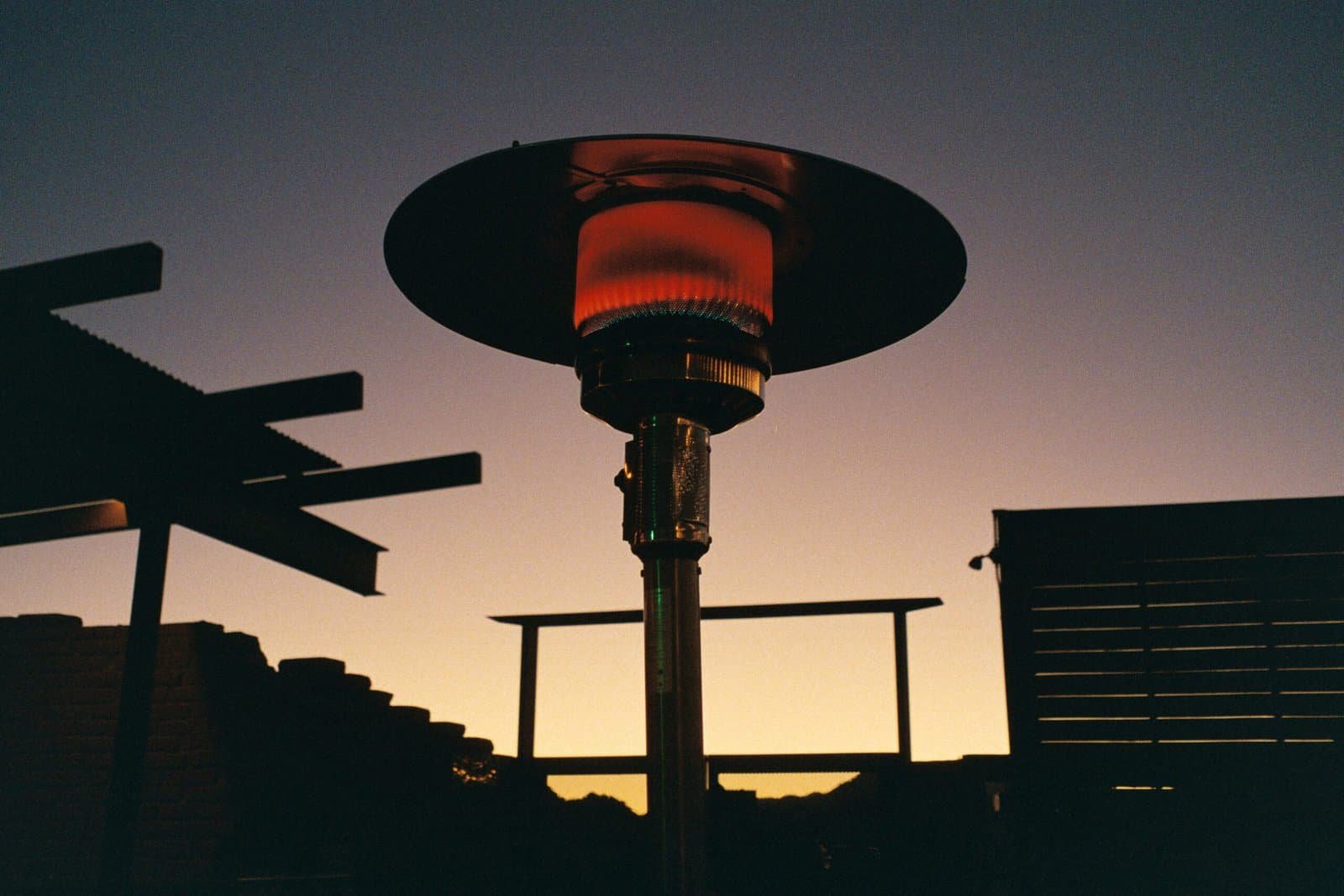
An outdoor patio heater warms people rather than air, which is why an infrared unit aimed at a seating group beats a more powerful heater pointed at open space. Outdoor patio heaters split into gas models rated in BTU and electric models rated in watts, and the two behave so differently in wind that the numbers barely compare. Anyone planning to run an electric heater outside should start with our roundup of outdoor smart outlets, since the supply decides what is possible.
This guide covers how far each type reaches, what wind does to them, and which ones are safe under a roof.
Quick Answer
A propane standing heater is the most flexible choice for an open patio, because it puts out serious heat and goes wherever you put it. Electric infrared suits covered porches and balconies, since it produces no combustion byproducts. Natural gas costs the least to run once installed. For a flame rather than radiant heat, see our fire pit guide.
Key Takeaways
- Gas heaters are rated in BTU, electric in watts, and roughly 3,400 BTU equals one kilowatt
- Infrared warms surfaces and people directly, so it holds up far better in wind
- Anything burning fuel needs open air, and never belongs in an enclosed space
- A standard household circuit limits a plug-in electric heater to about 1,500 watts
- Standing propane heaters need clearance overhead and a stable, level base
- Fire pit tables produce ambience and modest heat, which is a different purchase
How We Picked
Effective range came first. Manufacturers quote a heat radius that assumes still air, and real patios rarely oblige. Heaters with directional reflectors and adjustable angles ranked ahead of omnidirectional designs.
Wind behavior came second. Convection heaters lose most of their output to a light breeze, while infrared keeps working. That difference decided a lot of the ordering.
Placement flexibility came third. A heater that must live near an outlet, a gas line, or a wall bracket suits a different patio than one on wheels. Mounting options and cylinder handling both counted.
Safety hardware came fourth. Tip-over shutoff, flame failure devices, and adequate guarding are standard on good units and missing on cheap ones.
1. The Propane Standing Patio Heater
Why It Stands Out
The tall mushroom design puts a burner above head height and spreads heat outward in a circle, typically covering a seating group of four to six. Output sits far above what any household electric heater can reach. A twenty pound cylinder runs roughly ten hours at full output.
Worth Knowing
They are top-heavy and need a weighted base or a filled reservoir, and wind knocks over cheap ones. Convection heat blows away easily, so exposed patios lose much of the benefit. Cylinders need exchanging, storing outdoors, and checking for leaks.
Right for open patios with seating in the round. Skip it on a windy deck or under a low roof.
2. The Electric Infrared Patio Heater
Why It Stands Out
Infrared emitters heat objects and people directly rather than warming the air between, so a breeze carries away far less of the output. Nothing burns, which makes them the only sensible option under a solid roof or on an enclosed balcony. Instant on and off suits short sessions.
Worth Knowing
A plug-in unit on a standard household circuit tops out around 1,500 watts, which is a fraction of a propane heater’s output. Coverage is directional, so people outside the beam feel very little. Our roundup of surge protectors and power strips covers why a heater should never share one.
Right for covered porches, balconies, and anywhere combustion is unwise. Skip it for a large open area.
3. The Tabletop Patio Heater
Why It Stands Out
A small propane or electric unit sits on a table and warms the people around it. It costs a fraction of a full-size heater, stores in a cupboard, and moves between a balcony and a picnic table. For two to four people at close range it does the job.
Worth Knowing
Coverage is genuinely small, often a few feet, and the heat sits at table height rather than surrounding you. Propane versions use small cylinders that empty quickly and cost more per hour. Anything with a flame on a table needs a clear, stable surface and constant supervision.
Right for balconies, small tables, and occasional use. Skip it as the main source of heat for a group.
4. The Wall or Ceiling Mounted Infrared Heater
Why It Stands Out
Mounting the emitter overhead or on a wall clears the floor entirely and puts the heat where it works best, angled down onto seating. Fixed installation also allows hardwiring beyond the 1,500 watt plug-in limit. Many models include remote or wall switch control.
Worth Knowing
It only heats where it points, so furniture layout has to be settled before mounting. Hardwired units usually need an electrician and a dedicated circuit. Our roundup of smart plugs covers scheduling for the plug-in versions.
Right for covered patios with a fixed seating layout. Skip it if the furniture moves around.
5. The Natural Gas Patio Heater
Why It Stands Out
Running from a house gas line removes cylinder swaps entirely and costs considerably less per hour than propane. Output matches or exceeds standing propane models. Once installed, it is the lowest effort heater in the category.
Worth Knowing
Installation requires a gas fitter and a permanent line, which fixes the heater in place forever. Upfront cost is much higher once the line is counted. It is a poor choice for renters or anyone likely to rearrange the space.
Right for a permanent patio with existing gas nearby. Skip it in a rental or a temporary setup.
6. The Fire Pit Table
Why It Stands Out
A propane or natural gas flame sits in the middle of a usable table surface, giving light, focus, and warmth in one piece of furniture. People gather around it in a way they do not gather around a heater. Glass wind guards keep the flame steady.
Worth Knowing
Heat output is low relative to a dedicated heater, and it radiates outward at knee height rather than onto your upper body. It also occupies the middle of the table permanently. Our roundup of entryway lighting covers the ambience side if warmth is not really the goal.
Right for atmosphere and mild evenings. Skip it if you need genuine heat in cold weather.
Patio Heaters at a Glance
| Type | Typical output | Wind tolerance | Safe under a roof? |
|---|---|---|---|
| Standing propane | 40,000 BTU | Poor | Open sided only |
| Electric infrared | 1,500 W plug-in | Good | Yes |
| Tabletop | 10,000 BTU or 1,500 W | Poor to fair | Depends on fuel |
| Wall or ceiling infrared | 1,500 W and up | Good | Yes |
| Natural gas | 40,000 BTU | Poor | Open sided only |
| Fire pit table | 50,000 BTU, poorly directed | Fair with glass | No |
How to Choose a Patio Heater
Is the space open, covered, or enclosed?
This decides the fuel before anything else. Open patios take gas comfortably. Covered but open-sided areas need adequate clearance and ventilation. Enclosed spaces such as a sunroom or a screened porch with solid walls rule out combustion entirely, and electric infrared is the answer.
How exposed is it to wind?
Convection heaters warm air, and moving air takes that warmth away immediately. Infrared warms the people and surfaces it reaches, which survives a breeze far better. On an exposed deck, infrared at moderate output frequently outperforms a much larger gas heater. Indoor rooms need a different machine, which our space heater guide covers.
What supply does the location have?
A plug-in electric heater needs an outdoor rated outlet on a circuit that can carry it, and it should never share a circuit with other loads. Gas means either cylinders to store and swap or a permanent line to install. The supply usually narrows the choice faster than the heat output does.
How many people, and how spread out?
A standing heater warms a circle. A directional infrared unit warms a beam. Seating that spans a long table suits two directional units better than one tall heater in the middle, and seating in a cluster suits the opposite.
Propane vs Electric
Where propane wins
Raw output and placement freedom. A standing propane heater produces many times what a household outlet can deliver, and it goes anywhere on the patio without a cord. For an open area on a cold night, nothing plug-in comes close.
Where electric wins
Safety under cover, wind resistance, and running cost consistency. Nothing burns, so there are no combustion byproducts and no cylinder to handle. Our roundup of smart thermostats covers the indoor equivalent of the same control question.
What Trips People Up
Using a gas heater in an enclosed space
Anything burning fuel consumes oxygen and produces carbon monoxide, and an enclosed patio or tent traps both. Manufacturers state outdoor use only, and it is not a formality. Our roundup of smart smoke detectors covers the alarms that belong nearby.
Running a heater on an extension cord
Space heaters draw close to the full capacity of a household circuit, and an undersized cord or a shared power strip becomes a fire risk quickly. A heater belongs plugged directly into a suitable outdoor rated outlet. Anything else is a compromise worth avoiding.
Comparing BTU to watts directly
Roughly 3,400 BTU equals one kilowatt, so a 40,000 BTU propane heater is around twelve kilowatts of raw output. That looks decisive against a 1,500 watt electric unit, but the electric heater delivers a much larger share of its output onto people rather than into passing air.
Ignoring clearances
Standing heaters need substantial space above and around them, commonly several feet, and awnings and umbrellas are the usual casualties. Check the specified clearance against the actual roof height before buying. Our roundup of umbrella stands and holders covers keeping the two apart.
Related Reading
- light strips for outdoor and covered spaces
- portable speakers for patio use
- air quality monitors for spaces with combustion nearby
- smart home devices that need no permanent installation
- smart bulbs for scheduling outdoor lighting
Frequently Asked Questions
How many BTU does a patio heater need?
A standing propane heater around 40,000 BTU comfortably covers a seating group of four to six in still conditions. Smaller tabletop units near 10,000 BTU suit two or three people at close range. Wind reduces all of these figures substantially, so treat them as a still-air ceiling.
Are electric patio heaters any good?
For covered and semi-covered spaces, yes. Infrared emitters warm people directly rather than heating air, so they hold up in a breeze far better than gas convection heaters. Their limitation is total output, since a plug-in unit is capped near 1,500 watts on a normal circuit.
Can I use a patio heater under a covered patio?
Electric infrared, yes, subject to the clearance the manufacturer specifies. Gas heaters need open sides and generous overhead clearance, and they should never run in an enclosed space. A structure with a roof and solid walls counts as enclosed even outdoors.
How long does a propane tank last in a patio heater?
A standard twenty pound cylinder runs roughly ten hours at full output on a typical 40,000 BTU heater. Turning the output down extends that considerably. Cold weather reduces cylinder pressure, which can lower the effective output near the end of a tank.
Is infrared better than propane?
Better in wind, under cover, and for short sessions, since it heats people rather than air and starts instantly. Propane wins on raw output and on placement freedom in open spaces. The right answer depends on whether your patio has a roof and how exposed it is.
Do patio heaters work in the wind?
Convection heaters, gas ones included, lose most of their effect in even a light breeze because the warmed air simply moves away. Infrared performs far better, since the energy travels to surfaces directly. Windbreaks and screens help both types more than extra output does.
What safety features should a patio heater have?
Gas models should have a tip-over shutoff and a flame failure device that cuts fuel if the flame goes out. Electric models should be rated for outdoor or damp use and plugged into a protected outdoor circuit. Guards over hot surfaces matter wherever children or pets are around.
Is a fire pit table a substitute for a heater?
Not really. Fire pit tables produce light and atmosphere with modest, poorly directed warmth at knee height. On a mild evening they are pleasant, and in genuinely cold weather they underdeliver next to a dedicated heater of similar rated output.
