
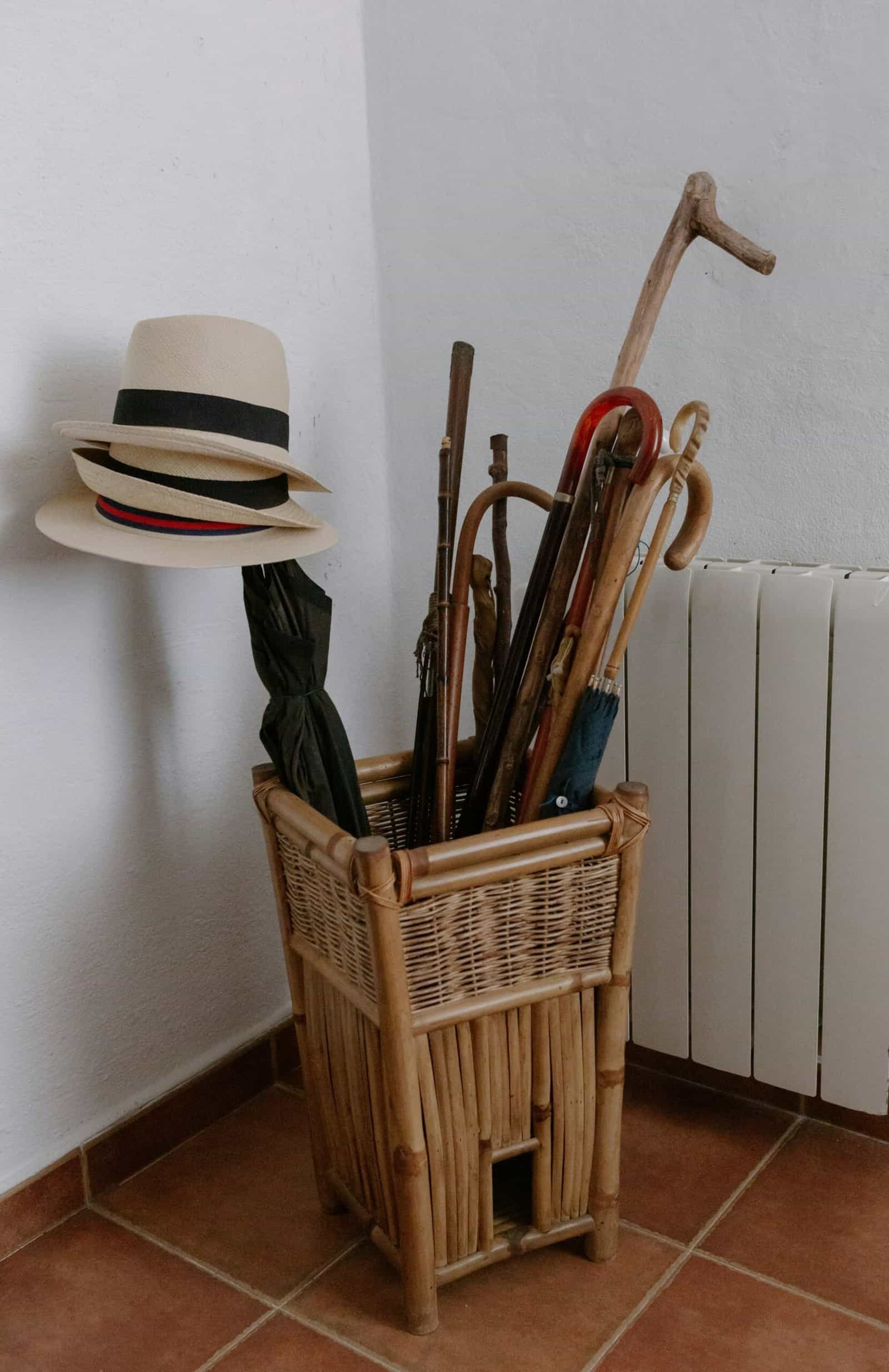
An umbrella stand has to hold water rather than let it out, which sounds obvious until you notice how many have drainage holes in the base. Those are designed for porches and covered outdoor entries, and indoors they put a puddle on your floor.
The second problem is tipping. A tall narrow cylinder holding two wet umbrellas is top-heavy, and lightweight ones go over when someone pulls an umbrella out in a hurry.
Quick Verdict
Indoors, buy a stand with a sealed base and a removable drip tray you can empty. Weight at the bottom is what stops tipping, so ceramic and cast iron beat thin metal. Wall-mounted holders suit narrow hallways where a floor stand is in the way.
Key Takeaways
- Drainage holes belong outdoors, not on an indoor floor
- Base weight determines whether it tips
- A removable tray is what makes emptying practical
- Wet umbrellas dry faster open than stood in a tube
- Narrow stands suit walking sticks, not golf umbrellas
- Standing water grows odor within days
How We Picked
Water handling came first. A sealed base with a removable tray contains what drips off, and that is the difference between a stand and a decoration.
Stability ranked next, since a stand that goes over spills everything it collected.
Diameter mattered because umbrella sizes vary enormously. A stand sized for a folding umbrella does not take a golf umbrella, and a wide one lets small umbrellas fall sideways.
Cleaning counted, since standing water plus fabric residue produces odor within days in a warm hallway.
Weighted Ceramic and Stone Stands
Why It Stands Out
Ceramic and stone stands are heavy enough that they do not move when an umbrella is pulled out, which is the main failure of lighter designs.
A sealed base holds water rather than passing it to the floor, and the interior wipes clean.
They also read as furniture rather than utility, which matters in an entryway visitors see.
Depth means umbrellas stand upright rather than leaning against the rim.
Worth Knowing
Weight cuts both ways. Emptying one means tipping something heavy and full over a sink or outside.
Ceramic chips and cracks if knocked, and a cracked base leaks quietly onto the floor.
Good for entryways with floor space. Skip if you cannot lift it to empty, and entryway planning sits in entryway organizers and mudroom storage.
Metal Stands With Removable Trays
Why It Stands Out
A lift-out tray is what makes emptying practical. You take the tray to a sink rather than carrying the whole stand.
Metal stands weigh less than ceramic, which matters if you move it to vacuum, and they survive being knocked.
Divided interiors keep several umbrellas separated rather than tangled, which stops the handle hunt.
Worth Knowing
Light metal stands tip, particularly tall narrow ones. Base width matters more than height for stability.
Untreated or scratched metal rusts where water sits, which is exactly the base.
Good where regular emptying matters. Skip thin lightweight designs, and general storage sits in shelf organizers.
Wall-Mounted Umbrella Holders
Why It Stands Out
A wall bracket takes no floor width, which decides usability in a corridor where two people pass.
Mounted above a boot tray or a small drip tray, it handles the water problem while keeping the floor clear.
It also keeps umbrellas visible rather than buried in a tube, so you take one when you need it.
Worth Knowing
Water drips down the wall unless something sits underneath, which people forget until the paint marks.
This needs drilling and permission, and umbrella weight is modest so drywall anchors handle it.
Good for narrow hallways. Skip without something below to catch drips, and coat storage sits in coat racks and hooks.
Compact Stands for Folding Umbrellas
Why It Stands Out
Most people carry folding umbrellas rather than full-length ones, and a stand sized for those takes a fraction of the footprint.
Shorter compartments hold folding umbrellas upright instead of letting them drop and lie at the bottom.
Small stands fit beside a console or inside a closet, where a full-height one would not.
Worth Knowing
They will not take a golf umbrella or a walking-stick style, which sit far too tall.
Low sides mean water can splash out if the stand gets knocked.
Good for households carrying folding umbrellas. Skip if you own full-length ones.
Drip Trays and Boot Tray Pairings
Why It Stands Out
Standing umbrellas open in a tray dries them far faster than closing them into a tube, where the folds hold water for a day.
A boot tray with a raised lip takes an open umbrella and contains everything that runs off it.
The same tray does double duty for boots when it is not raining.
Worth Knowing
An open umbrella takes real floor space, which a narrow hallway cannot spare.
Leaving one open on carpet transfers the water rather than containing it, so this needs a hard floor or a tray.
Good where floor space allows. Skip in narrow corridors, and tray options sit in boot trays and mats.
Freestanding Stands With Hooks
Why It Stands Out
Combination units add hooks or a rail above the umbrella base, handling coats and umbrellas in one footprint.
For a small entryway that consolidation matters more than any individual feature.
The umbrella base also weights the bottom, which is what stops a coat tree tipping when loaded.
Worth Knowing
Coats hanging above a wet umbrella base collect the humidity, which slows their drying.
Loading hooks on one side while the base is empty still tips these, so the umbrella weight only helps when there are umbrellas in it.
Good for small entryways needing both. Skip if coats will hang directly over standing water.
Umbrella Storage at a Glance
| Type | Floor space | Takes full-length | Easy to empty |
|---|---|---|---|
| Ceramic or stone | Moderate | Yes | Heavy to lift |
| Metal with tray | Moderate | Yes | Yes |
| Wall-mounted | None | Yes | Needs a tray below |
| Compact stand | Small | No | Yes |
| Open drip tray | Large when in use | Yes | Yes |
| Combination unit | Moderate | Yes | Varies |
What to Look For
Check whether the base drains
Holes in the bottom mean it was built for a porch. Indoors that puts water on your floor rather than containing it.
Weigh the base, not the stand
Stability comes from a low center of gravity. A tall light stand goes over when someone grabs an umbrella quickly.
Measure your umbrellas
Folding, full-length, and golf umbrellas differ enough that a stand suits one and fails the others.
Look for a removable tray
Emptying is the maintenance this needs, and a lift-out tray is the difference between doing it and leaving it.
Drying Umbrellas Properly
Open beats closed
A closed umbrella holds water in the folds for a day or more. Standing it open in a tray dries it in a few hours.
Do not store it damp
Fabric closed while wet develops mildew and the metal frame corrodes at the joints, which is what makes an umbrella fail.
Empty the stand regularly
Standing water grows odor within days in a warm hallway, and evaporation leaves residue that stains.
Shake it outside first
Most of the water comes off in two seconds at the door, which reduces everything the stand has to handle.
Where the Stand Should Sit
Position decides whether an umbrella stand works or becomes an obstacle people walk around.
Inside the door rather than beside it. An umbrella coming in is already dripping, and a stand two steps further in means two steps of water on the floor first.
Off the walking line, since the point where people pivot to remove shoes is where a stand gets kicked. A corner beside the door frame keeps it out of that path.
Away from carpet. Even a sealed stand transfers humidity to whatever it sits on, and carpet under an umbrella stand stays damp through a wet season.
Not directly under coats. Wet coats above a stand holding water create a small pocket of humidity that slows both of them drying.
On a hard floor with a mat underneath if you can. That catches the splash when someone puts an umbrella in without shaking it out, which is most of the time.
Floor Stands Against Wall Holders
Floor stands
Contain water in a base, need no fixing, and hold several umbrellas upright. They take floor space and can be knocked over.
Wall holders
Keep a corridor clear and keep umbrellas visible. They need drilling and something underneath to catch drips.
Common Mistakes to Avoid
Buying an outdoor stand for indoors
Drainage holes are the giveaway. Those work on a porch and put water on a hallway floor.
Storing umbrellas closed and wet
Folds hold water, fabric develops mildew, and the frame corrodes at the joints. Open drying prevents all three.
Choosing a tall narrow stand
Height without base width tips easily, especially when someone pulls an umbrella out in a hurry.
Keeping umbrellas that no longer work
Stands fill with broken umbrellas nobody throws out, so the working one is buried under three with bent ribs.
Never emptying it
Standing water in a warm hallway smells within days and leaves residue as it evaporates, and floor cleaning sits in steam mops.
Recommended Reading
Part of our guide to organizing an entryway.
Frequently Asked Questions
Should an umbrella stand have drainage holes?
Not indoors. Holes in the base are for porches and covered outdoor entries, and inside they put the water on your floor rather than containing it.
Why does my umbrella stand keep tipping?
Base weight and width. A tall narrow stand made of thin metal goes over when someone pulls an umbrella out, and ceramic or a wide base fixes it.
How do I dry an umbrella properly?
Stand it open in a tray. Closed, the folds hold water for a day or more, which is what causes mildew in the fabric and corrosion at the frame joints.
What size stand do I need?
Match it to what you own. Folding, full-length, and golf umbrellas differ enough that a stand sized for one will not hold the others properly.
What works in a narrow hallway?
A wall-mounted holder with something underneath to catch drips. A floor stand in a corridor causes more daily annoyance than it solves.
How often should I empty it?
Whenever there is standing water, which in wet weather means every few days. It grows odor within days in a warm hallway and leaves residue as it evaporates.
Can I use a boot tray instead?
Yes, and it works better for drying since you can stand umbrellas open in it. It takes considerably more floor space while in use.
