
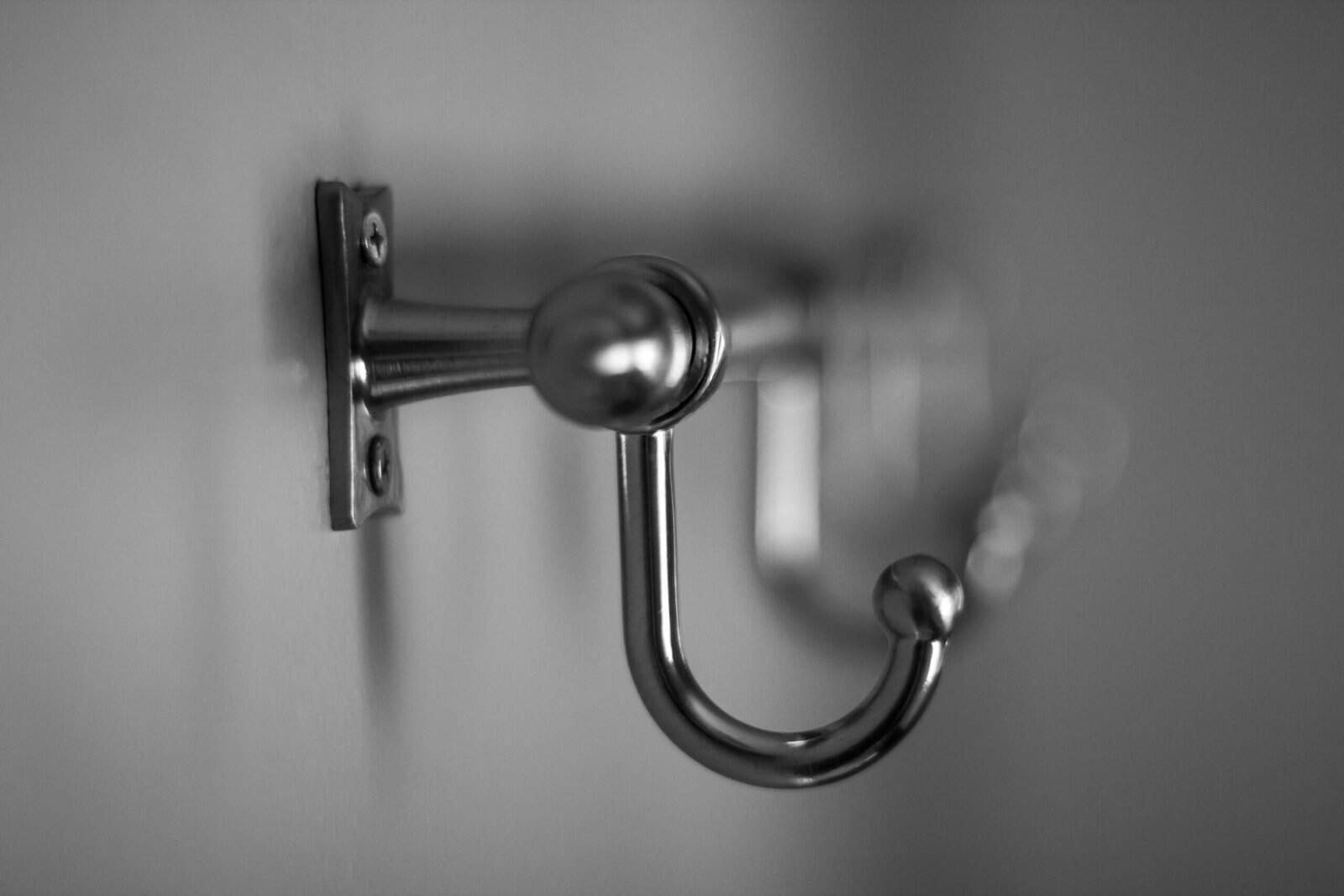
Coat storage fails in one of two ways. Either the hook pulls out of the wall because nobody checked what a wet winter coat weighs, or the rack tips because a freestanding pole holding six coats is top-heavy by design.
| Mounting | Realistic capacity | Renter friendly |
|---|---|---|
| Screwed into a stud | Heavy, full row of coats | No |
| Drywall anchor | A few light items | No |
| Adhesive hook | One light jacket at most | Yes |
| Over-door rack | Moderate, spreads load | Yes |
| Freestanding tree | Heavy if weighted at base | Yes |
| Tension pole | Light to moderate | Yes |
Key Points
- A wet winter coat weighs far more than a dry one
- Drywall anchors hold much less than people assume
- Freestanding racks tip unless the base is weighted
- Hook height decides whether coats drag on the floor
- Spacing matters more than hook count
- Adhesive hooks suit bags and scarves, not coats
Part of our guide to organizing an entryway.
How We Picked
Load capacity came first, since the common failure is a hook or rail holding less than the coats put on it.
Mounting method ranked next. What your wall is made of decides more than which product you buy, and a stud-mounted rail outperforms an expensive rack on anchors.
Spacing mattered because a rail with eight hooks four inches apart holds four coats, not eight. Bulky winter coats need real separation.
Stability counted for freestanding options, where a weighted base is the difference between furniture and a hazard.
Wall-Mounted Hook Rails
Why It Stands Out
A rail screwed into studs handles a full row of winter coats, which nothing else on this list does reliably.
Mounting into structure rather than plasterboard is what makes the difference, and a rail spanning two studs spreads the load properly.
Rails take no floor space at all, which suits narrow hallways where furniture would block the path.
Hook spacing on purpose-built rails is usually generous enough for coats rather than the four inches decorative ones use.
Worth Knowing
Stud spacing is fixed, so a rail positioned for looks may miss them entirely. A stud finder costs little and prevents the common failure.
This needs drilling and permission, which rules it out for many renters.
Good for owners and anyone with permission to fix to walls. Skip drywall-only mounting for coat weight, and wall systems sit in pegboards and wall organizers.
Freestanding Coat Trees
Why It Stands Out
A coat tree needs no fixing, moves anywhere, and comes with you when you leave, which is the whole argument for renters.
Weighted or wide bases resist the tipping that ruins cheap versions, and the specification worth checking is base weight rather than height.
Hooks at two heights let children reach their own, which is what gets coats off the floor in a family home.
Worth Knowing
Loading one side tips it. Coats hung evenly around the pole stay stable, and three heavy coats on one hook do not.
They occupy a corner of floor, typically a foot and a half square, which a narrow entryway cannot spare.
Good for renters with corner space. Skip lightweight bases entirely, and entryway planning sits in entryway organizers and mudroom storage.
Over-the-Door Hook Racks
Why It Stands Out
Hooks hanging over a door need no tools and hold more than adhesive because the load transfers to the door itself.
They suit rentals completely, leaving nothing behind and marking nothing if the hook has a padded contact point.
The back of a door is otherwise unused space, so this adds storage without taking anything.
Worth Knowing
A loaded rack stops the door closing flush, and in a tight hallway it can catch the frame.
Hook thickness has to match the door. Thick modern doors defeat some designs, and a tight fit marks the paint over months.
Good for renters and closet doors. Skip on doors that need to close flush.
Individual Wall Hooks
Why It Stands Out
Separate hooks let you set spacing and height to suit what you actually hang, rather than accepting a rail’s fixed layout.
Positioning them across two studs spreads the load without needing a rail that happens to match your wall.
Mixing heights is straightforward, which suits households where adults and children both need access.
Worth Knowing
Each hook is a separate hole, and getting a row level takes a spirit level rather than a good eye.
A single hook into drywall holds far less than a rail across studs, so heavy coats need finding structure.
Good where a rail will not fit your studs. Skip for renters who cannot drill.
Adhesive and Damage-Free Hooks
Why It Stands Out
Removable adhesive hooks mount on painted walls and doors with no holes, and they come off cleanly when installed and removed correctly.
For bags, scarves, dog leads, and umbrellas, they hold plenty and cost almost nothing.
They also work where nothing else does, such as a tiled or concrete surface you cannot drill.
Worth Knowing
Weight ratings assume a clean surface and full curing time, and most failures come from loading them the same day.
A wet winter coat exceeds what most adhesive hooks hold, and they fail by pulling paint off the wall.
Good for light items in rentals. Skip for coats, which is the failure people repeat, and bathroom equivalents sit in bathroom organizers.
Tension Pole Coat Racks
Why It Stands Out
A pole braced between floor and ceiling carries load without touching the walls, which suits renters who cannot drill and lack floor space for a tree.
They occupy a few inches of footprint rather than a square foot and a half.
Adjustable hook heights along the pole let you configure it for what you own.
Worth Knowing
They need a solid flat ceiling. Suspended, sloped, or textured ceilings will not hold one, and a pole coming down with coats on it is a real nuisance.
Tension relaxes over months, so retensioning occasionally is part of owning one.
Good for renters with a flat ceiling and no floor space. Skip on suspended ceilings.
What to Look For
Find out what your wall is
Studs, drywall, plaster, and masonry all hold different loads with different fixings. That answer decides more than the product does.
Space hooks for winter coats
Four inches apart looks tidy and holds half as many coats as it appears to. Six to eight inches suits bulky outerwear.
Check the height against your longest coat
Coats dragging on the floor collect dust and get stepped on. Mounting high enough for your longest item is worth measuring first.
Weight the base on anything freestanding
Base weight rather than height determines whether a coat tree stands up loaded. Cheap ones tip with three coats on one side.
What a Loaded Rack Actually Weighs
Coats add up faster than expected
A heavy winter coat runs several pounds dry, and a wet one considerably more. Six of them is a load most people never estimate.
Bags are the hidden weight
A work bag with a laptop often outweighs the coat beside it, and it hangs from a single hook rather than spreading across a rail. Umbrellas are the awkward item most racks handle badly, and our umbrella stand roundup covers the alternatives.
Drywall anchors have modest limits
Rated capacities assume a straight downward pull, and a coat hook pulls outward from the wall as well as down, which reduces what the anchor holds.
Studs solve it
A rail screwed into structure handles what any household puts on it. Locating studs is the single most useful step in this whole category.
Locating Studs Before You Drill
This is the step that decides whether a coat rack lasts years or pulls out in a month, and it takes about five minutes.
Studs in most homes sit sixteen or twenty-four inches apart, measured center to center. Finding one tells you roughly where the next is.
An electronic stud finder is the reliable method and costs less than the rack. Run it horizontally along the wall and mark both edges of what it detects, then aim for the middle.
Knocking works as a rough check. A hollow sound means empty cavity, and a duller solid sound means structure behind, though it takes practice to trust.
Electrical outlets and switches are usually fixed to a stud on one side, which gives you a starting point without any tools at all.
Once you find one, measure sixteen inches along and check again. A rail spanning two studs spreads the load across both and handles anything a household hangs on it.
Where studs land in the wrong place, a length of timber screwed across two of them gives you a mounting surface anywhere along its length.
Wall-Mounted Against Freestanding
Wall-mounted
Highest capacity when fixed into studs, takes no floor space, and stays where you put it. It needs drilling and permission.
Freestanding
Moves anywhere, needs no fixing, and suits renters completely. It occupies floor space and tips if the base is light or the load is uneven.
Common Mistakes to Avoid
Hanging coats on adhesive hooks
A wet coat exceeds what most hold, and they fail by taking paint with them. Adhesive suits bags and scarves rather than outerwear.
Mounting into drywall without anchors
A screw straight into plasterboard pulls out under the first loaded coat. Studs or proper anchors are the two options.
Spacing hooks too closely
Bulky coats need six to eight inches between hooks. Closer spacing produces a rail holding half what its hook count suggests.
Overloading one side of a coat tree
Even distribution keeps it standing. Three heavy coats on one hook is how a freestanding rack ends up on the floor, and shoe storage sits in shoe racks and storage.
Worth reading next: entryway organizers covers the full setup, shoe racks covers the floor, and closet systems covers what goes away rather than on display. For wall mounting generally, pegboards and wall organizers is the relevant guide, and organizing your kitchen.
Frequently Asked Questions
How much weight can a coat hook hold?
Into a stud, plenty for a full row of coats. Into drywall with anchors, far less than most people expect, since a hook pulls outward from the wall as well as down rather than straight down.
Can I hang coats on adhesive hooks?
Light jackets at most. A wet winter coat exceeds what they hold, and they fail by pulling paint off the wall rather than simply dropping.
How far apart should hooks be?
Six to eight inches for bulky winter coats. Four-inch spacing looks tidy and holds roughly half the coats the hook count suggests.
Why do freestanding coat racks tip?
Uneven loading and a light base. Base weight is the specification that matters, and coats distributed around the pole stay stable where three on one hook do not.
What works if I cannot drill?
Freestanding trees with weighted bases, over-door racks, and tension poles all hold real weight without touching the walls.
How high should a coat rack be?
High enough that your longest coat clears the floor. Measuring the longest item you own before mounting prevents the common annoyance.
Are tension pole racks stable?
With a solid flat ceiling, yes. Suspended or sloped ceilings will not hold one, and tension relaxes over months so it needs occasional checking.
