
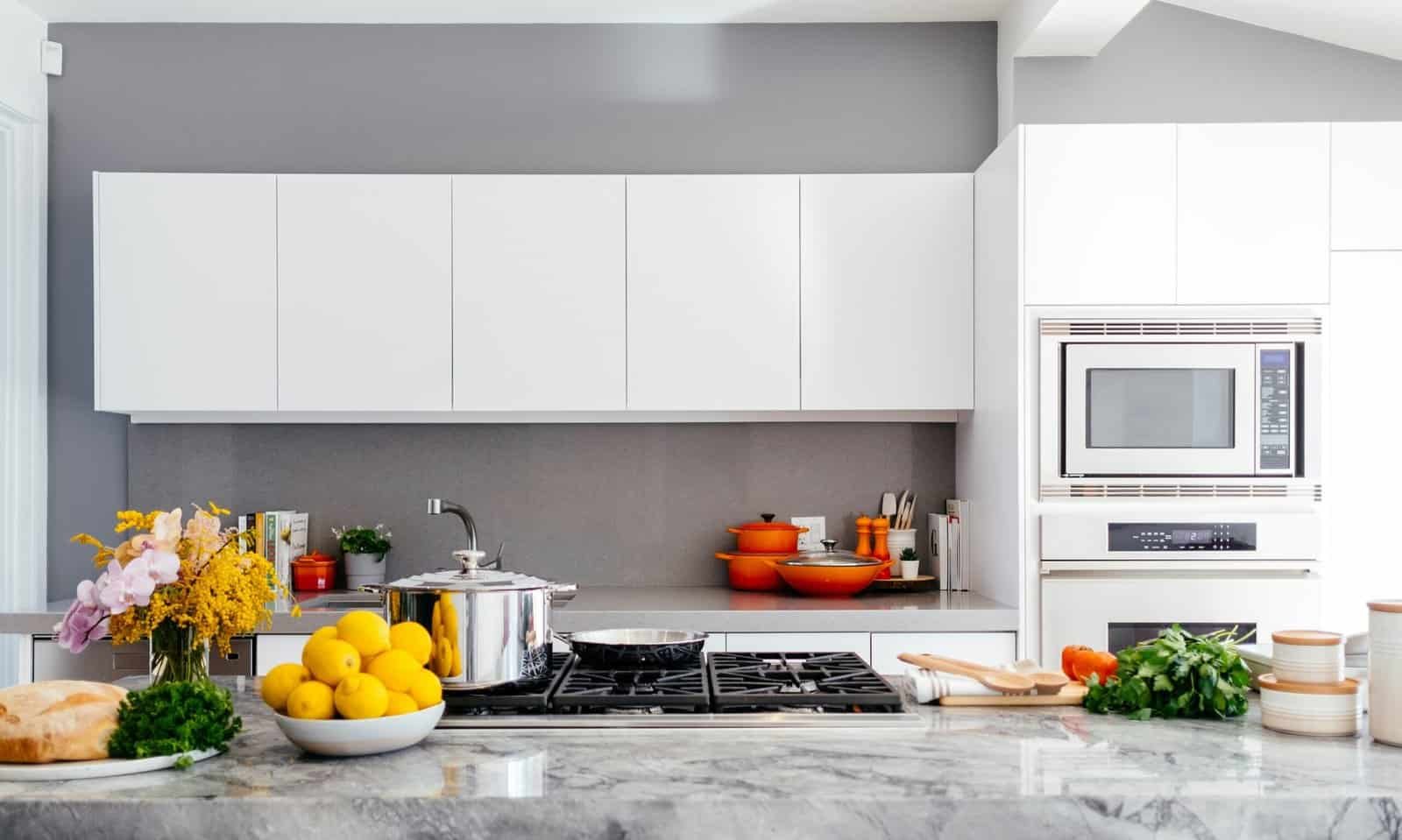
Kitchen organization isn’t a Pinterest aesthetic; it’s the difference between a kitchen that supports daily life and one that fights against it. The cabinet you can never quite close because three pans don’t really fit. The pantry where the pasta lives is next to the laundry detergent. The drawer you’ve been calling “the junk drawer” for so long that nobody remembers what it was supposed to hold. The refrigerator that forces a small archaeological dig every time you reach for the mustard. Comparing options? See our best kitchen utensil sets roundup.
None of this is about minimalism or aesthetic restraint. The kitchen that works isn’t the kitchen with the fewest items; it’s the kitchen where each item has a place that makes sense, where high-frequency things are easy to reach, where storage matches how the household actually cooks. A well-organized kitchen reduces friction at every meal, makes cleanup faster, and quietly prevents the food waste and lost dollars that come from forgetting what you already have.
This guide walks through how to organize each zone of the kitchen with intention, the food safety questions that intersect with storage decisions, and the satellite guides for the specific equipment that makes each zone work.
Last updated: June 6 2026 | By Austin Murphy
Food safety note: Kitchen organization intersects directly with food safety. Refrigerator zone temperatures, food storage timelines, and chemical separation from food storage all have documented best practices. The USDA cold food storage chart provides specific guidance on storage durations. Cleaning chemicals should never be stored above or with food. For kitchens without a dedicated pantry, consolidating scattered dry goods into one cabinet is the first move.
Key Takeaways
- Organize by zone (prep, cook, store, clean) rather than by item type; cooking workflow drives placement.
- Pantry storage with airtight containers extends ingredient life and makes inventory visible at a glance.
- Refrigerator organization affects food safety: zone temperatures vary, and certain foods belong on specific shelves per USDA guidance.
- Cleaning chemicals must be stored separately from food, never above food storage, and ideally in their own cabinet per NFPA and food safety best practices.
Why Kitchen Organization Affects Daily Life
The disorganized kitchen costs time and money in ways that don’t show up as a line item. Five minutes hunting for the right spatula three times a day adds up to over an hour and a half a week. Forgotten produce in the back of the crisper becomes thrown-out produce, which becomes more groceries to replace it. The mystery container in the back of the freezer that gets defrosted, evaluated, and discarded because nobody can identify it.
The disorganized pantry is worse. Ingredients you bought because you forgot you already had them. Expired baking soda that ruined a cake before you realized it was old. Pasta and rice in their flimsy original bags are collecting moisture in humid climates.
The refrigerator has its own version: opened condiments lingering past usefulness, leftovers buried until nobody remembers what they were, raw meat dripping onto vegetables on the shelf below. The USDA cold food storage chart provides specific guidance on how long different foods stay safe, but the chart only helps if you can see what’s in the fridge.
Kitchen organization solves these problems through infrastructure, not willpower. The cabinets that close because you used cabinet and shelf organizers that double the vertical space. The drawer that supports cooking because drawer organizers give each utensil a slot. The pantry that’s actually shoppable because pantry storage containers make contents visible.
The Zone-Based Approach
Most kitchen organization advice fails because it sorts by item type (“all the lids in one drawer”) rather than by use (“everything you need for making coffee in one place”). The zone approach starts with what you actually do in the kitchen.
Prep zone. Where you cut, measure, and combine ingredients. Should be near the sink and have cutting boards, knives, measuring tools, mixing bowls, and prep utensils within reach.
Cook zone. Where heat happens. The stove and oven area should have pot holders, frequently used spices, cooking utensils, and oven mitts immediately accessible. The pans you use weekly should be steps from the stove, not stored across the kitchen.
Cleanup zone. Sink and dishwasher area. Dish soap, sponges, dish towels, drying rack. See dish soap dispensers, dish drying racks, and kitchen trash cans.
Storage zone. Pantry and refrigerator. Organized for visibility first, with rotation toward the front so older items get used before newer ones.
Serving zone. If you have one, near the dining area. Plates, glasses, and serving utensils.
Specialty zones. Coffee station, baking station, kid-snack zone. Created when one type of activity happens often enough to deserve its own setup.
Most kitchens benefit from being organized into three to five zones based on which activities happen most. The decisions follow once the zones are mapped: items live where they’re used, not where they look tidy.
Kitchen Organization Decision Matrix
The matrix below maps household situation and space constraints to the organization approach and the satellite guides for each.
| Profile | Organization Priority | Approach | Linked Guide |
|---|---|---|---|
| Small apartment kitchen | Vertical space and dual-purpose tools | Cabinet organizers + lazy susans + under-sink stacking | Cabinet organizers + Lazy susans |
| Cluttered drawers | Drawer compartments | Modular drawer dividers | Kitchen drawer organizers |
| Disorganized pantry | Visibility and decanting | Airtight containers + labels + height zones | Pantry storage containers |
| Spice cabinet chaos | Visible spice access | Dedicated spice racks or drawer-style spice organizers | Spice racks and organizers |
| Refrigerator overwhelm | Zone storage and visibility | Bin system + clear labeling + USDA storage timing | Refrigerator organizer bins + How long food lasts in fridge |
| Under-sink mess | Pull-out stacking under plumbing | Adjustable under-sink organizers | Under-sink organizers |
| Lots of meal prep | Modular container set + scales | Meal prep containers + food scale | Meal prep containers + Food scales for meal prep |
| Frequent baking | Dedicated baking station | Group bakeware + ingredients + tools in one zone | Bakeware sets |
| Multiple cooks sharing kitchen | Predictable, labeled placement | Drawer dividers, labeled containers, consistent zones | Drawer organizers |
| Kids in the kitchen | Low-zone safety and access | Kid items at kid height, sharps and chemicals secured high | Cabinet organizers |
| Adjacent laundry space | Crossover organization | Hampers, baskets, utility storage | Laundry hampers and baskets |
| Closet or pantry overflow | Whole-home organization | Closet systems, shoe storage as overflow | Closet organizers and systems + Shoe racks and storage |
Organizing the Cabinets
Kitchen cabinets are usually the worst-utilized space in the home: deep, dark, hard to reach, designed for an era when people owned less stuff. Real organization here pays back daily.
Vertical dividers for pans and lids. Stacking pans damages nonstick surfaces and makes the bottom pan inaccessible. Vertical dividers (the kind designed for sheet pans) let you slide one pan out without disturbing the others. See cabinet and shelf organizers for the picks.
Lazy Susans for corner cabinets. Corner cabinets are notorious dead zones. A lazy susan turns the back corner into accessible storage. Two-tier versions double the capacity.
Riser shelves for tall cabinets. Adding a shelf in the middle of a tall cabinet doubles usable space. Lower riser for shorter items, upper level for taller items or those you reach for less.
Pull-out drawers retrofitted into base cabinets. The single most expensive but highest-impact cabinet upgrade. Pulling out a drawer is dramatically easier than reaching into the back of a cabinet.
Edge-out access for the most-used items. Whatever you use daily should be in front; whatever you use rarely should be in back. Most kitchens have this backwards because people put new items in front and push older items back.
Organizing the Drawers
Drawers without dividers become entropy machines. A drawer that started organized degrades within weeks. The fix is structural: divide once, never reorganize.
Adjustable drawer dividers. The flexibility matters because different drawers have different needs. Modular dividers reshape as the kitchen evolves. See kitchen drawer organizers.
Dedicated utensil drawer. The cooking utensils you use most belong in one drawer, divided by type. Spatulas in one slot, ladles in another, tongs in a third. See kitchen utensil sets for the contents.
Knife drawer or knife storage. Loose knives in drawers are a finger-injury risk. Either a knife block, an in-drawer knife organizer, or a magnetic strip. Knife edges should never touch other knives or hard surfaces. See knife sets under $100. A dedicated timer on the oven door is one of the small things that keeps a working kitchen running.
Measuring tools together. Measuring cups and spoons in the same place, near where you bake. See measuring cups and spoons.
The functional junk drawer. One drawer for things that don’t have another home, divided into compartments. Rubber bands, twist ties, picture-hanging hardware, lone batteries. Even the junk drawer benefits from compartments.
Organizing the Pantry
The pantry is where most household food dollars sit, and where most household food waste originates. Visibility and rotation solve both problems.
Decant into clear containers. Original packaging hides what’s running low and what’s expired. Pantry storage containers in a coordinated set make inventory visible at a glance.
Label everything. Even when the contents look obvious, label them with the type and the date opened. Flour and powdered sugar look alike. Date labels are how you know whether the baking powder is still active.
Group by category and frequency. Bake the ingredients together. Grains and pasta together. Snacks are within the household’s reach.
Rotation discipline. Older items move to the front; newer items go behind. The discipline is annoying for one week and natural after a month.
Dedicated baking ingredient storage. Flour, sugar, brown sugar, baking soda, and baking powder in airtight containers. Brown sugar in particular stays soft only in airtight storage.
Lazy Susans for jars and bottles. Honey, oils, vinegars, and sauces. Turn rather than reach. See lazy susans and turntables.
Spice organization separately. Spices live in their own micro-zone, alphabetized or grouped by cuisine. Spice racks and organizers for vertical or drawer-based options.
Organizing the Refrigerator
The refrigerator is unique in kitchen organization because the organizational decisions intersect directly with food safety. Different shelves are at different temperatures; different foods belong in different zones.
The temperature gradient. The top shelves run warmest, the bottom shelves coldest, the door warmest of all. Items that don’t tolerate temperature swings (eggs, dairy) belong on interior shelves, not the door.
Raw meat on the bottom shelf is contained. Always the lowest shelf, so any drips don’t contaminate produce below. Always in a container or on a plate to catch any leaks.
Produce in the appropriate drawer. Crisper drawers have humidity controls; high-humidity for leafy greens, low-humidity for fruit that produces ethylene.
Bin organization for visibility. Clear bins let you see what’s in each zone. Bins by category (snacks, leftovers, breakfast ingredients) keep similar items together. See refrigerator organizer bins.
Date and label leftovers. The mystery container in the back is wasted food. A simple piece of tape with the date solves this entirely.
USDA storage timing. The federal cold food storage chart provides specific durations for each food category. Cooked leftovers should be used within three to four days. Raw poultry is one to two days. Hard-boiled eggs last one week. The full picture lies in how long food lasts in the refrigerator.
Don’t overpack. Air circulation matters for even cooling. A refrigerator stuffed full has cold spots and warm spots that compromise safety.
📑 Recommended Read: The cookware you store affects how you organize storage. Heavy cast iron needs different shelving than light nonstick. Vertical pan dividers protect coatings; lazy susans keep specialty pieces accessible. Check out our complete guide on how to choose the right cookware for the storage implications of each material.
Organizing Under the Sink
The under-sink area is the most universally chaotic zone in the kitchen, mostly because plumbing makes traditional shelving impossible.
Pull-out organizers designed for plumbing obstacles. Two-tier pull-outs that work around the drain pipe. Specifically designed for the constraint. See under-sink organizers.
Group by purpose. Cleaning supplies in one zone, dish supplies in another, trash bags separately.
Hooks on cabinet doors. Spray bottles hang. Brushes hang. Vertical space on the door doubles the capacity.
Drip protection on the cabinet bottom. The most common cause of under-sink damage is a slow leak nobody noticed. A boot tray or plastic mat protects the cabinet floor and makes leaks visible.
The Safety Question: Chemicals Apart From Food
Cleaning chemicals and food storage containers should never share a cabinet. The risk of contamination, particularly for households with children, is real and easily avoided.
The principles:
Cleaning chemicals in dedicated storage. Under the sink is typical and acceptable if no food storage is in the same cabinet. Or in a separate cleaning supplies cabinet entirely.
Never above food. Stored chemicals can leak or spill onto food below. Always store chemicals below food, never above.
Original containers only. Don’t decant cleaning supplies into food-shaped containers. The number of accidental poisonings from cleaners stored in water bottles or food containers is non-trivial.
Pet food and human food are separate from chemicals. The same principles apply. Pet food doesn’t belong under the sink with bleach.
Fire safety implications. Flammable cleaning supplies (some degreasers, aerosols) should not be stored near heat sources. The NFPA cooking fire data identifies the stovetop area as the highest-risk zone; the cabinet directly over the stove should not store flammables.
Counter and Wall Storage
Counter space is premium real estate. Items that live on the counter should earn it through daily use.
You can work out the order before you turn on any heat before deciding.
Daily-use items only. Coffee maker, toaster, stand mixer (if used daily). Everything else belongs in storage.
Vertical wall storage where possible. Magnetic knife strips, pot rails, hanging utensils. Free counter and reduces drawer pressure.
Paper towel holder. Either wall-mounted or counter unit. See paper towel holders.
Trash can placement and sizing. Should be near the prep zone for efficient cleanup. Size matched to the household frequency of taking out. See trash cans for kitchens.
Drying rack strategy. Either always out (countertop rack) or always away (in-cabinet drying or fold-down). Halfway approaches lose. See dish drying racks.
Tool corral. A single jar or container for the cooking tools you use most often. Wooden spoons, spatulas, whisks. Within arm’s reach of the stove.
Meal Prep Organization
For households that prep meals in advance, the organization extends beyond storage into ingredient preparation, portioning, and storage workflows.
Modular container sets. Same-size containers stack better, label more consistently, and travel reliably. See meal prep containers.
Food scale for portioning. Eyeballed portions vary; weighed portions don’t. See food scales for meal prep.
Cooling racks for batch cooking. Multiple racks let multiple sheet pans of prep cool simultaneously. See cooling racks.
Refrigerator zone for prepped food. A dedicated shelf or zone for the week’s prep prevents the meal prep from getting buried under everything else.
Freezer organization for batch cooking. Vertical storage in flat freezer bags, dated and labeled. Allows visibility and rotation.
Beyond the Kitchen: Crossover Organization
Kitchen organization doesn’t end at the kitchen door. Adjacent zones (laundry, pantry overflow, mudroom) often need coordinated systems.
Laundry adjacency. If laundry is in or near the kitchen, hampers and baskets need a home. See laundry hampers and baskets.
Closet overflow. Linens, table settings for entertaining, and holiday-only items. A closet system keeps overflow accessible without taking up kitchen space. See closet organizers and systems.
Entry storage. If grocery deliveries arrive at a back door near the kitchen, having a staging area helps. See shoe racks and storage for the closely related entry zone.
Common Mistakes
Organizing by item type instead of by use. All your knives in one place might look neat, but it doesn’t support cooking. Group by zone (prep, cook, store, clean) instead.
Buying organizers before purging. Organize what you actually use, not what’s currently in the kitchen. Most kitchens have at least twenty percent of items that haven’t been used in a year.
Storing things where they look good rather than where they’re used. The beautiful display case across the kitchen is the wrong home for the pan you use daily.
Skipping labels. Identification matters even when the contents look obvious. Powders look alike, decanted ingredients look alike, leftovers in identical containers look alike.
Storing cleaning supplies with food. Cross-contamination risk and child safety risk. Always separate.
Stacking heavy items on top of fragile ones. Cast iron on top of nonstick damages the nonstick. Heavy items low, fragile items higher.
Ignoring the USDA food storage timing. Items past their usable window become waste. Date everything and rotate.
Letting the spice cabinet become a graveyard. Spices lose potency over time. A twice-yearly review of the spice cabinet prevents the use of stale spices.
Treating the organization as a one-time event. Kitchens evolve. The organizational system needs occasional adjustment as cooking habits change.
Buying too many organizers at once. Implement gradually. The organizer that doesn’t work in your kitchen is wasted spend.
Forgetting fire safety. Towels, paper products, and flammable cleaning supplies should not be stored next to or over the stove.
Building the Organized Kitchen Over Time
The all-at-once kitchen reorganization is satisfying but often unsustainable. A phased approach produces better long-term results.
Phase 1: purge. Identify what you actually use versus what just lives in your kitchen. Donate, sell, or discard items that haven’t been used in a year.
Phase 2: map zones. Walk through a typical week’s cooking. Note what gets used where. Map zones based on actual workflow, not idealized workflow.
Phase 3: Organize the highest-friction zone first. Whichever area causes you the most daily annoyance is the highest-leverage starting point. Often it’s the spice cabinet, the drawer, or the pantry.
Phase 4: Add organizers strategically. Buy specific organizers for specific problems, not generic sets you hope will fit somewhere.
Phase 5: address adjacent zones. Once the kitchen interior is set, address the under-sink, pantry overflow, and adjacent storage.
Phase 6: maintain. A monthly fifteen-minute review keeps the system functional. The cost of letting it degrade is hours of reorganizing later.
Frequently Asked Questions
What should I organize first? The zone that causes the most daily friction. Usually, the spice cabinet, the utensil drawer, or the pantry.
Are clear containers really worth it? For pantry items, yes. Visibility is the difference between using what you have and forgetting what you have. See pantry storage containers.
How do I organize a small kitchen? Vertical space and dual-purpose items. Stack with risers, use lazy susans in corners, and keep the counter clear of single-use items. See cabinet and shelf organizers. Counter work is easier with light coming from under the cabinets rather than from a fixture behind you.
What’s the safest way to store cleaning supplies? In a dedicated cabinet, never above food, always in their original containers. Under the sink is acceptable if no food is stored there.
How should I organize the refrigerator? By temperature zone (warm shelves for items that tolerate temperature, cold shelves for sensitive items, door for condiments only) and by visibility (bins for categories). See refrigerator organizer bins and food storage timing.
Should I decant pantry items? For staples (flour, sugar, rice, pasta, oats), yes; the visibility and freshness benefits are real. For things you buy in original-packaged form rarely (specialty sauces, single-use items), leave them in original packaging.
How often should I reorganize? A monthly fifteen-minute touch-up plus a deeper review twice a year. Reorganizing constantly is a sign the system isn’t right; never reorganizing is a sign the system is degrading.
How do I keep things organized with multiple people in the household? Labels and consistency. If everyone knows where the cutting boards live, everyone returns them. If placement is intuitive, training is easy.
Is meal prep worth the storage investment? For households cooking multiple servings at a time, yes. The container investment pays back in food savings within months. See meal prep containers.
What organization tool is most underrated? The lazy susan. Turns wasted corner cabinet space into accessible storage. See lazy susans and turntables.
References
- USDA Food Safety and Inspection Service. Cold Food Storage Chart. FoodSafety.gov. https://www.foodsafety.gov/food-safety-charts/cold-food-storage-charts
- National Fire Protection Association. Cooking Fire Safety. NFPA Public Education. https://www.nfpa.org/Public-Education/Fire-causes-and-risks/Top-fire-causes/Cooking
SmartLifeItems independently researches the products we recommend. Learn more about who we are and how we review.
Related Reading
Keep going with a countertop compost bin, a steam mop, and how to choose a water filter. Also explore: how to organize a fridge, how to organize small kitchen, kitchen shears, how to deep clean a kitchen, and how to organize your pantry. Also explore: mesh wifi systems.
Also see: mortar and pestle, mortar and pestle vs spice grinder, cheese slicers, corkscrews, egg holders, kitchen scoops, wire cleaning brushes, why your dishwasher leaves spots.
More Guides in This Collection
- drink pitchers
- drinking glasses
- egg cookers
- egg slicers
- fine mesh strainers
- garlic presses
- herb scissors
- ice cream makers
- ice cream scoops
- indoor grills
- insulated tumblers
- kitchen scales
- kitchen tongs
- mandoline slicers
- mason jars
- meat thermometers
- milk frothing pitchers
- pasta makers
- pegboards wall organizers
- pizza cutters
- popcorn makers
- portable bluetooth speakers
- portable induction cooktops
- robot lawn mowers
- salad spinners
- silicone basting brushes
- silicone spatulas
- stockpots
- vegetable peelers
- wine fridges home storage
- wine glasses
- difference between convection and conventional ovens
- how to soften butter quickly
- how to store flour long term
- how to store knives safely
- olive oil grades explained
- why cakes sink in middle
- why do onions make you cry
- why does brown sugar harden
- why eggs cook differently
- why food browns when cooked
- why is my cake dense
- why is my rice mushy
- why meat needs to rest
- why meringue wont stiffen
- why room temperature butter matters
- why salt pasta water
- The other half of this problem is owning less rather than arranging more.
- jar openers, for hands that struggle with tight lids.
- box graters
- cocktail shakers bar tools
- colanders and strainers
- bathroom organizers for small spaces
- coat racks and hooks for entryways
- console tables with storage
- drying racks for small laundry rooms
- entryway organizers and mudroom storage
- k cup organizers and storage
- key and mail organizers
- knife blocks storage
- toilet paper holders and storage
- organizing a bathroom
- organizing a laundry room
- organizing an entryway
Related guides: our picks for pot lid organizers.
Explore more: the best soup making gear, the best personal pizza pans, the best burger smashers.
Drawers are usually the first space to run out. Measuring a drawer before buying an insert covers the part most people skip.
Automation handles the jobs you repeat daily. Where to start with kitchen automation covers the four worth doing first.
Tableware takes more cabinet room than the piece count suggests. Dinnerware sets and what they include covers sizing a set to your storage.
Drawer space is usually the binding constraint. Flatware weight and finish covers what to look for.
Bowls stack badly compared with plates. Everyday bowl choices covers sizes that do more than one job.
Serving pieces are bulky and used rarely. Platters worth the shelf space covers restraint on this category.
Boards for serving differ from boards for prep. Serving boards covers the distinction.
Knife storage decides how much counter you keep. Strips against blocks compares the two formats.
Small tools need somewhere to live too. What a handheld vacuum handles covers where it earns its place.
A tidy freezer affects more than it looks like. Why ice picks up freezer smells covers sealing and turnover.
