
Some baked-on messes laugh at a soft sponge. When carbon has welded itself to a cast iron skillet or a grill grate has a season of char on it, a stiff wire brush is the tool that actually cuts through it. The best wire cleaning brushes pair tough steel or brass bristles with a handle that survives real pressure, so you can scrub off rust, crust, and burnt-on grease without the bristles bending or shedding. They shine on cookware, cast iron, and outdoor grime, where you scrub, then rinse and dry the item afterward. One important caveat rides along for grill grates, and we cover it in full below, but for the cast iron and cookware jobs, a good wire brush is hard to beat.
I keep one for exactly this, and I reach for it most on my cast iron after a messy cook. This guide pairs that habit with product research and the consumer-safety sources listed at the end. For the aftermath on the stovetop, our guide to how to clean burnt pots and pans covers the gentler methods that handle everyday messes.
Quick Verdict
The Rocky Mountain Goods Wire Brush is the pick most people should start with: a long handle, dense steel bristles, and a build that takes hard scrubbing on cast iron and grime. Want a trusted budget workhorse for rust and utility jobs? The Forney Wire Scratch Brush. Cleaning grill grates? Read the safety section first, because bristle-free tools are the safer call there.
Why Trust This Guide
Independent picks, reader-supported through affiliate links at no cost to you. Selections draw on product research, consumer-safety guidance, and the sources cited below, and we intentionally left recalled wire grill brushes off the list. First-person notes appear only where the tool was genuinely used, and the brush I own runs in my own words with no brand claimed.
Key Takeaways
- Wire brushes are at their best on cast iron, cookware, rust, and tough grime, where you rinse the item after scrubbing.
- Bristle material matters: steel is the most aggressive, brass is gentler on softer metals, and nylon is for light-duty work.
- On grill grates, wire bristles can break off and end up in food, a hazard behind large 2026 recalls, so inspect the grate before cooking or use a bristle-free tool.
- Never use a wire brush on nonstick coatings, which it will destroy.
How We Picked the Best Wire Cleaning Brushes
We focused on the jobs a wire brush does safely and well: scrubbing cast iron, cookware, rust, and outdoor grime. The traits that separated the good from the flimsy were bristle density and anchoring, since bristles that fan out or pull loose are both useless and, on grates, unsafe. We looked for handles long enough to keep knuckles clear of the surface, a solid block or shaft that does not flex under pressure, and a bristle material matched to the task. We deliberately excluded the metal wire bristle grill brushes caught in the 2026 Weber and Cuisinart recalls, and we weighted safety guidance heavily, since Consumer Reports and medical sources are clear that wire on food-contact grates carries a real ingestion risk. The result is a set of durable brushes for cookware and utility scrubbing, with honest guidance on where a wire brush belongs and where it does not.
1. Rocky Mountain Goods Wire Brush
Why It Stands Out
The Rocky Mountain Goods brush is the heavy-duty all-rounder. Its dense carbon steel bristles and long, curved handle give you reach and force for scrubbing cast iron, stripping rust off tools, and cutting through baked-on grime. The bristles stay put under hard pressure, which is exactly what you want when a light brush would just skate over the mess.
Worth Knowing
Steel bristles are aggressive, so keep this one away from soft metals and any coated surface. It is a scrubber for tough jobs, not a delicate touch-up tool.
Buy it if you want one sturdy brush for cast iron, rust, and grime. Skip it if you need something gentle for softer or coated surfaces.
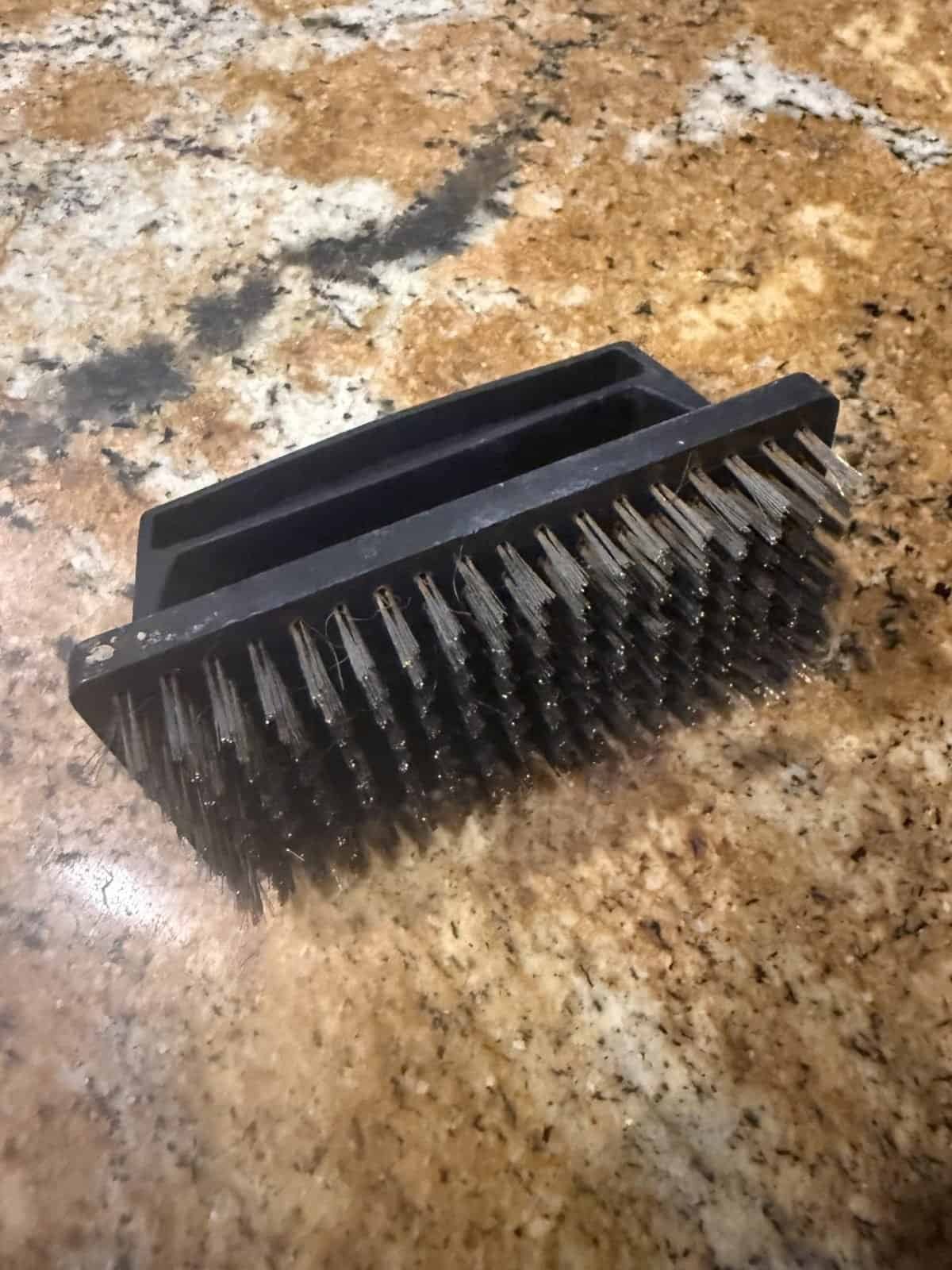
2. The Wire Brush I Use
Why It Stands Out
This is the brush I actually own, so I will speak plainly about it. It is a sturdy two-sided block brush with a scraper edge, and I use it on both my cast iron and my grill grates. The build is the reason I keep it: I lean into stuck-on carbon and it does not bend, splay, or shed, and years in it still scrubs like new. On cast iron I scrub, then rinse and dry the pan and give it a light oil, and it clears the crust faster than anything else I have reached for.
Worth Knowing
Because I use it on grates too, I follow the same habit every time: run it over the warm grate, then wipe the grate down and look it over before any food touches it, which is the routine anyone using a wire brush on grates should keep. If your brush is a no-name like mine, look for the same things I rely on: densely packed bristles that do not pull loose and a block that does not flex.
Buy a brush like this if you want a rugged scrubber for cast iron and cookware. Skip it for grates if you would rather not manage the bristle-safety step, and jump to the bristle-free options below.
3. Forney Wire Scratch Brush
Why It Stands Out
The Forney is the trusted budget workhorse. A staple in welding and metalworking shops, it brings tightly set steel bristles and a simple wood or steel handle that outlasts brushes costing more. For rust removal, cast iron, and shop grime, it does the core job for very little money.
Worth Knowing
It is a plain utility brush with no frills, no scraper, and a shorter handle than the grate-focused options, so your hand rides closer to the work. That is a fair trade at the price.
Buy it if you want a dependable, low-cost utility brush for rust and cast iron. Skip it if you want a long handle and a built-in scraper.
4. Nine Bull Wire Brush Set
Why It Stands Out
The Nine Bull set is the pick for people who clean more than one kind of surface. You get steel, brass, and nylon brushes in one bundle, so you can match the bristle to the job: steel for the toughest grime, brass for softer metals that steel would gouge, and nylon for light-duty scrubbing. The compact size suits detail work in tight spots.
Worth Knowing
These are small hand brushes, so they are better for detailed cleaning than for big flat surfaces. The short handles keep your hand close to the work.
Buy it if you want the right bristle for different metals and jobs. Skip it if you only need one big brush for one surface.
5. Bates Choice Wire Brush Set
Why It Stands Out
The Bates Choice set is the durable everyday option for a mix of household scrubbing. The set combines bristle types with comfortable, grippy handles, and the build holds up to repeated rust, grime, and cast iron duty. It is a sensible all-purpose kit to keep in the garage and the kitchen.
Worth Knowing
As with any set, you pay a little for the variety you may not fully use, and the individual brushes are mid-size rather than heavy industrial tools.
Buy it if you want a comfortable, versatile set for around the house. Skip it if you want a single dedicated heavy-duty brush.
6. Stainless Steel Scrub Brush With Scraper
Why It Stands Out
A stainless steel scrub brush with a built-in scraper is the pick for stubborn cookware messes. The scraper edge lifts the worst of a baked-on layer, then the stainless bristles work the rest, which makes short work of a crusted sheet pan or a grimy cast iron surface. Stainless resists rust better than plain steel, so it holds up to frequent rinsing.
Worth Knowing
Stainless bristles are still aggressive and will scratch soft or coated surfaces, so keep this to bare metal cookware. The scraper is for flat surfaces, not curved ones.
Buy it if you scrub a lot of stuck-on cookware and want a scraper too. Skip it if you only need a simple brush for light grime.
Wire Cleaning Brushes at a Glance
| If you want this | Reach for | Why |
|---|---|---|
| One heavy-duty all-rounder | Rocky Mountain Goods Wire Brush | Dense steel bristles, long handle, takes hard scrubbing |
| A rugged cast iron and grate brush | A sturdy two-sided block brush like the one I use | Does not flex or shed, scraper edge, years of use |
| A dependable budget workhorse | Forney Wire Scratch Brush | Tightly set steel bristles, cheap, long-lasting |
| The right bristle for every metal | Nine Bull Wire Brush Set | Steel, brass, and nylon in one bundle |
| A versatile household kit | Bates Choice Wire Brush Set | Mixed bristles, comfortable grips, all-purpose |
| Stubborn baked-on cookware | Stainless brush with scraper | Scraper lifts the worst, rust-resistant bristles |
How to Choose a Wire Cleaning Brush
Bristle Material
Steel bristles are the most aggressive and best for rust, cast iron, and heavy grime. Brass is softer, so it cleans without gouging softer metals and finishes. Stainless steel resists rust and suits frequent kitchen rinsing. Nylon is for light-duty scrubbing where metal would be too harsh. Match the bristle to the surface, and when in doubt, start softer.
Handle and Build
A brush is only as good as its anchoring. Look for densely packed bristles set firmly into a solid block or shaft, since loose bristles are useless and, on grates, dangerous. A longer handle keeps your knuckles off the surface and adds force on tough spots, while a comfortable grip lets you push through baked-on messes without your hand giving out first.
The Job It Is For
Be honest about what you are cleaning. Cast iron, rust, and shop grime are natural wire-brush territory. Delicate finishes and any nonstick coating are not, since a wire brush will scratch or destroy them. A stainless brush with a scraper earns its place if you fight stuck-on cookware often, while a simple utility brush is plenty for occasional rust.
Grill-Grate Safety
If you plan to use a wire brush on grill grates, treat safety as a buying factor, not an afterthought. Consumer Reports recommends replacing a wire grill brush after about 100 uses or at the end of each grilling season, before the bristles start to loosen, and inspecting the grate before every cook. A model with a replaceable head makes that easier. If that upkeep sounds like more than you want to manage, a bristle-free tool removes the risk entirely.
Wire Brush vs Bristle-Free Grill Cleaner
The Bristle Hazard
On grill grates, the downside of wire is real. Bristles can break off during cleaning, stick to the grate or food, and be swallowed, causing internal injuries that sometimes need surgery. The concern is large enough that in 2026 the Consumer Product Safety Commission announced recalls of about 3.2 million Weber and roughly 1.72 million Cuisinart metal wire bristle grill brushes over detaching bristles. That is why we left those brushes off this list and why grate use calls for extra care.
Safer Grate-Cleaning Options
For grates, bristle-free tools do the same job without the loose-metal risk. A grill stone or pumice block scours off char, a metal scraper follows the grooves of the grate, a coil-style bristle-free brush cleans without individual bristles to shed, and a ball of aluminum foil held with tongs works in a pinch. Whatever you use, wipe the grate and inspect it before food goes on. Save the wire brush for cast iron and cookware, where you rinse the item afterward and the risk does not apply.
Common Wire Cleaning Brush Mistakes to Avoid
Using One on Nonstick
A wire brush will shred a nonstick coating in seconds, ruining the pan and leaving you scrubbing flakes of coating out of your food. Keep wire on bare metal only, and use a soft sponge on nonstick. Our guide to how to clean a nonstick pan covers the right approach.
Skipping the Grate Inspection
The single most important habit with any wire grill brush is checking the grate for loose bristles before you cook. It takes ten seconds and it is the step that prevents a swallowed bristle. Wipe the grate with a damp cloth or foil after brushing, and look it over in good light.
Keeping a Worn-Out Brush
A brush that is fanning out or dropping bristles is past its life. On cookware that is merely annoying, but on grates it is a hazard. Replace grill brushes on the schedule the safety experts suggest rather than running them until they fall apart.
Buying a Recalled Brush
Before buying any metal wire bristle grill brush, check whether the model is part of the 2026 Weber or Cuisinart recalls. If you already own one, stop using it and follow the recall instructions rather than taking your chances with the grate.
Recommended Reading
Frequently Asked Questions
What is a wire cleaning brush best for?
Tough scrubbing on bare metal: cast iron, rusty tools, baked-on cookware, and outdoor grime. You scrub, then rinse and dry the item, which is why it suits cookware so well. It is not for nonstick, delicate finishes, or, ideally, food-contact grill grates.
Are wire grill brushes safe to use?
They carry a real risk. Bristles can break off, stick to the grate or food, and be swallowed, which is behind large 2026 recalls of Weber and Cuisinart wire grill brushes. If you use one on grates, inspect the grate before cooking and replace the brush regularly, or switch to a bristle-free tool.
What can I use instead of a wire brush on my grill?
Bristle-free options do the job without loose metal: a grill stone or pumice block, a metal scraper, a coil-style bristle-free brush, or a ball of aluminum foil held with tongs. Wipe and inspect the grate before food touches it either way.
Can I use a wire brush on cast iron?
Yes, and it is one of the best uses for one. Scrub off stuck-on food and carbon, then rinse, dry the pan thoroughly, and give it a light coat of oil to protect the surface. Our guide to how to season a cast iron skillet covers that last step.
Steel, brass, or stainless bristles?
Steel is the most aggressive, for rust and heavy grime. Brass is gentler and better on softer metals. Stainless resists rust and holds up to frequent kitchen rinsing. Pick the softest bristle that still gets the job done to avoid scratching the surface.
How often should I replace a wire brush?
For grill use, Consumer Reports suggests replacing it after about 100 uses or at the end of each grilling season, before the bristles loosen. For cookware and utility use, replace it once the bristles fan out or start pulling loose.
Will a wire brush scratch my cookware?
On bare cast iron or stainless, light scratching is normal and harmless, and cast iron re-seasons over it. On nonstick, anodized, or coated cookware, a wire brush causes real damage, so keep it to bare metal only.
Is my current wire grill brush part of a recall?
Check the model against the 2026 Weber and Cuisinart recall notices from the Consumer Product Safety Commission. If it is included, or if it is shedding bristles, stop using it on grates and either follow the recall or switch to a bristle-free tool.
Keep reading: our silicone basting brushes guide.
