
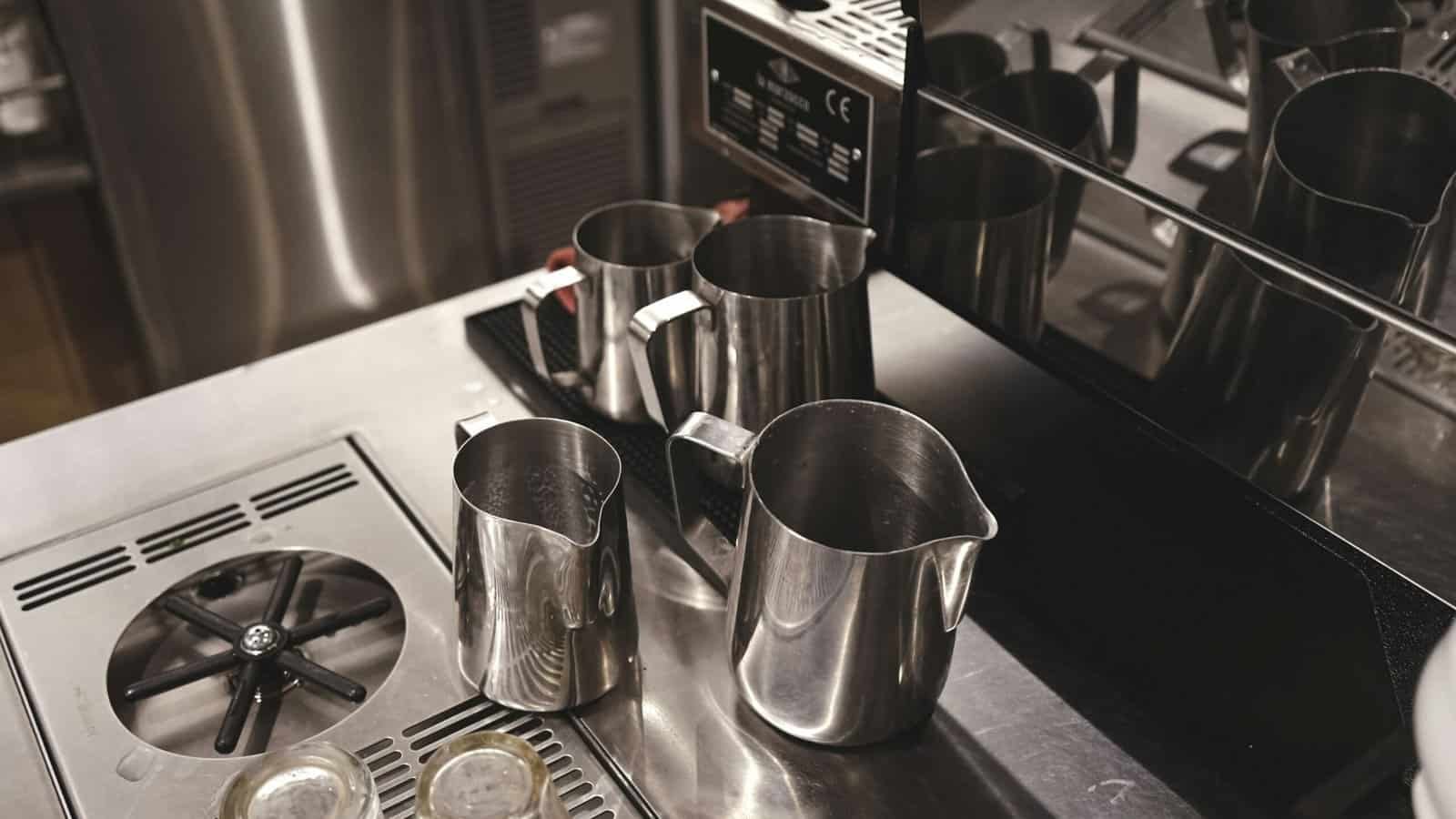
Why does your rosetta keep blobbing into a shapeless smudge even after you nailed the microfoam? More often than not, the jug is the problem. The best milk frothing pitchers give you a symmetrical spout, the right capacity for your drink, and stainless walls that telegraph milk temperature through your hand, three things that decide whether your pour lands clean or runs lopsided. The jug shapes the milk, while a quality espresso tamper shapes the puck, and both decide the final cup.
Quick verdict:
- Best overall: Rattleware Latte Art Pitcher, a proven roll-spout workhorse.
- Best precision: Barista Hustle Milk Pitcher, with spout-to-handle alignment within a millimeter.
- Best value: De’Longhi DLSC069, hugely popular and dependable.
- Best for beginners: MHW-3BOMBER, a wide crocodile spout that is easy to control.
Disclosure: SmartLifeItems is reader-supported. As an Amazon Associate, we earn from qualifying purchases made through links on this page, at no extra cost to you.
How We Picked the Best Milk Frothing Pitchers
We focused on what actually shapes the pour: spout symmetry and profile, capacity matched to common drink sizes, wall thickness for heat feedback, and durable 304 stainless construction. We leaned on widely accepted milk-texturing principles around building even microfoam. The notes below come from published specifications and consistent owner reports rather than hands-on testing of every model.
| Your situation | Rattleware | Barista Hustle | Fellow Eddy | Normcore | De’Longhi |
|---|---|---|---|---|---|
| Total beginner | Best fit | Workable | Workable | Skip | Best fit |
| Chasing precise latte art | Workable | Best fit | Best fit | Best fit | Workable |
| Want lowest price | Best fit | Workable | Skip | Workable | Best fit |
| Prefer handleless control | Workable | Skip | Skip | Best fit | Skip |
| Want etched measurements | Workable | Best fit | Best fit | Skip | Skip |
Pitcher prices shift with size and finish options, so confirm the current cost before you buy.
1. Rattleware Latte Art Pitcher: Best Overall
Why It Stands Out
The Rattleware Latte Art Pitcher has been a fixture behind specialty cafe bars for over two decades. Its roll-spout profile transitions smoothly from a wide fill to a controlled stem, so one jug handles hearts, tulips, and simple leaves. The 304 stainless build is durable and gives clear heat feedback.
Worth Knowing
It comes in several sizes, with the 12-ounce ideal for single drinks and the 20-ounce for larger or paired pours. One caution: buy the authentic Rattleware, since cheaper knockoffs copy the look but not the build. The genuine version etches its logo into the base.
It suits almost any home barista who wants a versatile, proven jug. Skip it only if you specifically want handleless or ultra-sharp competition geometry. For most setups, it is the easiest pitcher here to recommend. The reinforced rim also holds its shape after years of counter knocks.
The roll spout is one of the most copied profiles in coffee for good reason.
2. Barista Hustle Milk Pitcher: Best Precision
Why It Stands Out
The Barista Hustle Milk Pitcher is built around one idea: the spout and handle align within a millimeter. That precision means the milk goes exactly where you aim it, which matters as your patterns get more detailed. The 600ml capacity suits most home drinks comfortably.
Worth Knowing
It is made from a hefty 0.9mm stainless steel that heats evenly and feels balanced in the hand. Six etched volume markings appear on both sides for left and right-handed pourers. A stainless or electrocoated matte black finish is available, with a long warranty on the welded handle.
It suits the barista moving from hearts toward defined tulips and rosettas. Skip it if you only make the occasional latte and want to spend less. For precise, repeatable pours, it is a standout. The two-sided markings are a thoughtful touch for left and right-handed pourers.
The factory alignment check is what separates it from a generic jug.
3. Fellow Eddy: Best Design
Why It Stands Out
The Fellow Eddy pairs a refined look with genuinely useful features. Laser-etched interior measurements keep your milk dose consistent without guesswork. The spout is shaped for confident fills and clean stems alike.
Worth Knowing
It comes in a classic polished stainless finish and a striking polished granite look. The 12-ounce version is marked for 6, 8, and 10 ounces, and the 18-ounce for 8, 10, and 12 ounces. The build quality matches the premium aesthetic.
It suits the barista who wants performance and a pitcher that looks good on the counter. Skip it if you want the lowest price or a competition-sharp beak. For design plus function, it is hard to beat.
Etched marks survive years of washing where printed lines fade.
4. Normcore Handleless Milk Pitcher: Best Handleless
Why It Stands Out
The Normcore Handleless Milk Pitcher drops the handle to give you maximum freedom over grip and angle. Many baristas who switch to handleless say they never go back, citing more flexibility for latte art. A silicone heat-resistant band around the middle keeps your hand safe.
Worth Knowing
It is crafted from 1mm stainless steel in a double-coated black or white finish. Normcore offers two sizes and a choice between a rounded or sharper spout. Handleless pitchers take some practice before they feel natural.
It suits the barista who grips the jug by the body and wants more control. Skip it if you rely on a handle or are still learning the basics. For a sleek, flexible handleless option, it is an excellent pick.
Holding the jug any way you like opens up pouring angles a handle blocks.
5. De’Longhi DLSC069: Best Value
Why It Stands Out
The De’Longhi DLSC069 quietly does everything well without calling attention to itself. At 17 ounces it handles most home drinks, and the stainless build feels solid in hand. With thousands of high reviews, it is one of the most popular pitchers around.
Worth Knowing
The spout gives good control for basic to intermediate patterns like hearts, tulips, and simple rosettas. The handle stays comfortable even during longer steaming sessions. It is not the sharpest spout, but it is consistent and reliable.
It suits the home barista who wants dependable performance at a friendly price. Skip it if you want competition-grade geometry. For everyday value, it is an easy recommendation. Its popularity also means plenty of owner feedback to draw on.
Reliable and consistent is exactly what most home setups need.
6. MHW-3BOMBER Milk Pitcher: Best for Beginners
Why It Stands Out
The MHW-3BOMBER uses a wide crocodile spout that lets the milk travel a longer path, making flow easier to control. That extra control helps beginners pour even shapes before they develop fine technique. The symmetrical build avoids the lopsided spouts common on mass-produced jugs.
Worth Knowing
It comes in 400ml, 500ml, and 600ml sizes to match your drink. The wider spout also gathers milk well for more complex patterns later. Stainless construction keeps it durable and easy to clean.
It suits the new barista who wants a forgiving spout and room to grow. Skip it if you already pour advanced art and want a sharper beak. For learning latte art, it is a smart starting jug.
A forgiving flow lets you focus on texture and timing first.
How to Choose a Milk Frothing Pitcher
A few details decide how a pitcher pours. Work through these before buying.
Match Capacity to Your Drink
A 12-ounce pitcher suits single lattes and smaller drinks like cortados. A 20-ounce handles larger drinks or two at once. Pick a size where your milk fills the jug roughly a third to halfway for the best vortex.
Pick the Right Spout Shape
Round or wide spouts pour a forgiving stream that beginners control more easily. Sharp, pointed spouts give the precision advanced artists need for fine lines. A moderate taper is the best all-around choice for most home baristas.
Mind Wall Thickness and Material
Stainless steel heats evenly and lets you feel the milk temperature through the wall. A 304 or 18/10 grade resists rust and lasts for years. Thicker walls give slightly delayed but very readable heat feedback.
Handle or Handleless
A handle keeps things intuitive and is the safe default for most people. Handleless jugs offer more grip freedom but take practice to master. Choose based on how you naturally hold the pitcher when you pour.
Frothing Pitcher vs Electric Milk Frother
These two tools froth milk in completely different ways. Here is how they compare.
When a Pitcher Wins
A frothing pitcher pairs with your machine’s steam wand to make true microfoam for latte art. It gives you full control over texture and temperature. For espresso drinks and pouring designs, the pitcher is the right tool.
When a Standalone Frother Wins
An electric milk frother heats and froths on its own, with no steam wand required. It is simpler for quick cappuccinos and travel mugs. If your machine lacks a steam wand, a dedicated frother device fills the gap.
Common Milk Frothing Mistakes to Avoid
A few errors keep your art looking rough. Each is easy to correct.
Using an Asymmetrical Pitcher
A cheap jug with an off-center spout makes consistent pours nearly impossible. Your art looks lopsided no matter how good your technique is. A symmetrical, quality pitcher fixes the problem instantly.
Overfilling the Jug
Too much milk leaves no room for the vortex that builds smooth microfoam. Fill the pitcher only a third to halfway before steaming. The empty space is where texturing actually happens.
Ignoring Milk Temperature
Steaming past the ideal range scorches the milk and ruins the texture. Use the pitcher walls to feel when it gets too hot to hold. Stopping in the sweet spot keeps the foam silky.
Buying Three Cheap Jugs Instead of One Good One
Budget pitchers that underperform end up costing more than one quality jug. Most baristas land on a single reliable pitcher anyway. Invest once in a symmetrical, well-built option.
Frequently Asked Questions
What is the best milk frothing pitcher in 2026?
The Rattleware Latte Art Pitcher is the best overall for most home baristas, with a proven roll spout, durable 304 stainless build, and sizes for single or paired drinks. For precise latte art, the Barista Hustle leads. Beginners do well with the forgiving MHW-3BOMBER.
What size frothing pitcher should I get?
A 12-ounce pitcher suits single lattes and smaller drinks, while a 20-ounce handles larger or paired pours. Choose a size where your milk fills the jug about a third to halfway, which builds the best vortex. Many baristas own one small and one medium.
Does the spout shape really matter?
Yes, the spout shape sets your line accuracy and fill speed. Round or wide spouts are forgiving and beginner-friendly, while sharp spouts give the precision advanced artists need. A moderate taper works well for most home baristas.
Is a handleless pitcher better?
Handleless pitchers offer more grip freedom and pouring flexibility, which many experienced baristas prefer. They do take practice, since pouring without a handle is less intuitive at first. Beginners usually start with a handled jug.
What material is best for a frothing pitcher?
Stainless steel, specifically 304 or 18/10 grade, is the standard for durability and even heating. It also lets you feel the milk temperature through the wall, which guides your steaming. Avoid thin, flimsy jugs that dent and lose shape.
How much milk should I put in the pitcher?
Fill the jug only about a third to halfway before steaming. The empty space gives the milk room to spin into a vortex and build microfoam. Overfilling leaves no room to texture properly.
Do I need a pitcher if I have an electric frother?
If your machine has a steam wand, a pitcher gives you true microfoam and pour control for latte art. A standalone electric frother froths on its own and suits quick drinks or steam-wand-free setups. They serve different roles.
Where can I learn more about milk texturing?
The Specialty Coffee Association and the National Coffee Association publish guidance on milk steaming and espresso drink fundamentals.
Recommended read: Complete your bar with our guides to the best espresso tampers, best knock boxes, and best espresso machines under $500. No steam wand? See the best standalone milk frothers.
Related Reading
Explore more: water filter pitchers. Also explore: dish soap dispensers, and cordless vacuums for apartments.
Recommended Reading
See also our guides to drink pitchers.
Fill level and starting temperature both affect the result. Common reasons milk will not froth covers the technique side.
