
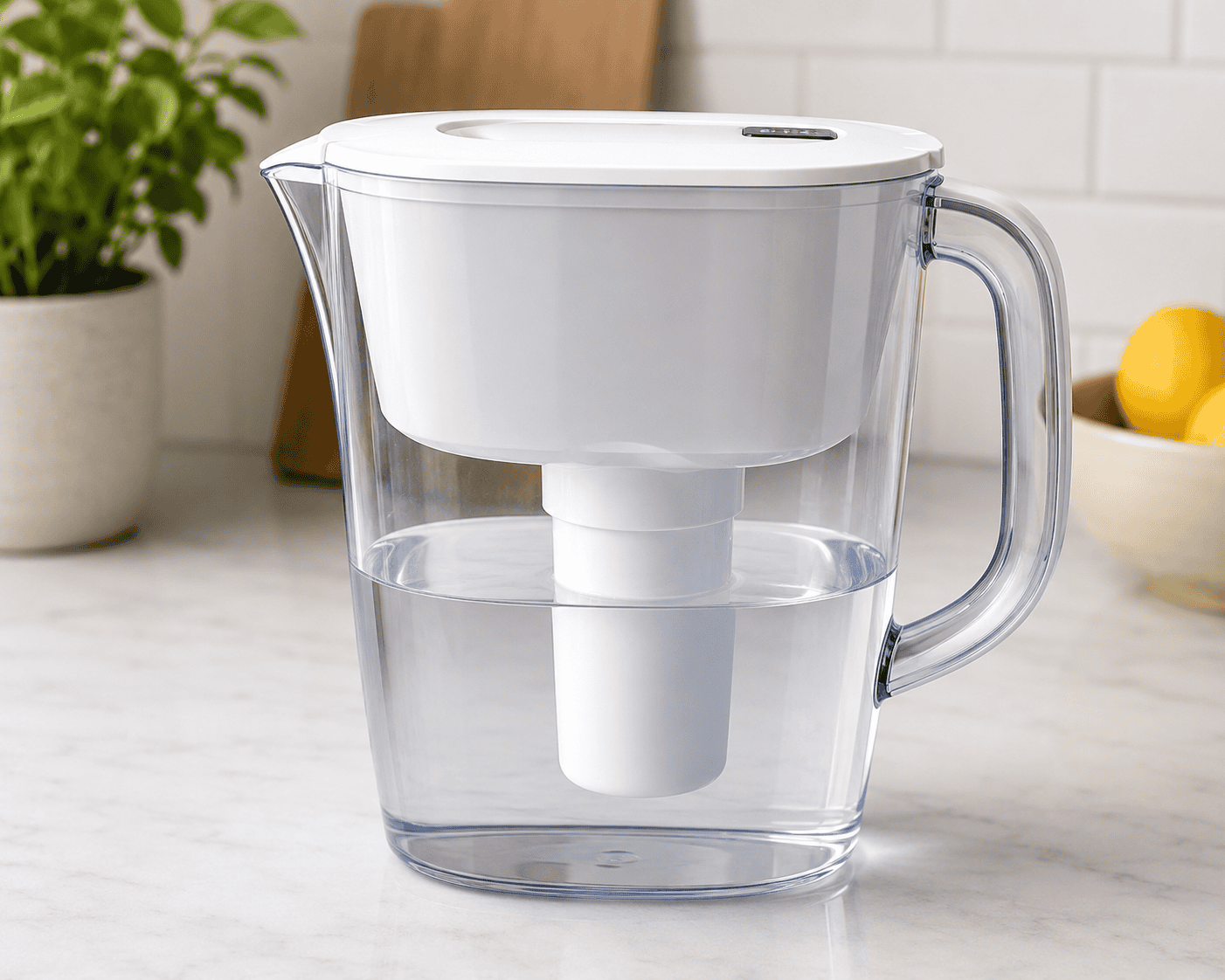
You fill a glass from the tap, catch a whiff of chlorine, and pour it out. The best water filter pitchers fix that without any plumbing, dropping a filter into a jug that lives in your fridge door. They cut chlorine taste and reduce common contaminants, and the right one depends on your water, your household size, and how often you want to swap filters. For serving juice, water, or iced tea rather than filtering, see our guide to the best everyday drink pitchers.
For most kitchens the Brita Elite pitcher hits the sweet spot of price, easy filters, and solid everyday filtration. Heavier filtration needs, big households, and long-filter-life shoppers each have a better match below.
Top pick: The Brita Elite (Everyday) Pitcher balances price, wide filter availability, and reliable reduction of chlorine taste and several common contaminants. Want maximum reduction? The ZeroWater pulls more out. Big household? Size up to a 10-cup or larger dispenser.
| Your situation | Brita Elite | ZeroWater | PUR Plus | Aquagear | Epic Pure | Brita Standard |
|---|---|---|---|---|---|---|
| Best all-rounder | Best fit | Workable | Workable | Workable | Workable | Workable |
| Maximum reduction | Workable | Best fit | Workable | Best fit | Best fit | Skip |
| Long filter life | Workable | Skip | Workable | Best fit | Best fit | Workable |
| Tight budget | Workable | Workable | Best fit | Skip | Skip | Best fit |
| Fast pour | Best fit | Skip | Best fit | Workable | Workable | Best fit |
Prices and filter availability shift often; confirm current cost before buying.
Disclosure: SmartLifeItems is reader-supported. As an Amazon Associate, we earn from qualifying purchases made through links on this page, at no extra cost to you.
How We Picked the Best Water Filter Pitchers
We weighed what actually matters at the fridge door: what each filter reduces, third-party certification, capacity, filter life and ongoing cost, pour speed, and how the pitcher fits a real shelf. The U.S. Environmental Protection Agency notes that home filters vary widely in what they remove, so matching the filter to your water is the key step. We leaned toward pitchers with published certifications and a track record, and we flag where a model trades speed for stronger filtration. For a wider kitchen-upgrade view, see our guide to choosing a coffee maker, since water quality shapes coffee too.
Recommended read: Filtered water makes better ice and cold brew. Pair a pitcher with our best countertop ice makers guide.
Brita Elite (Everyday) Pitcher
The Brita Elite is the default for a reason: filters are everywhere, the price stays reasonable, and it reliably cuts chlorine taste while reducing several common contaminants. It is the pitcher most people should start with.
Why It Stands Out
Filter availability is the quiet superpower here. You can grab replacements at almost any grocery or pharmacy, which means you actually change them on time. The pour is quick and the lid design makes refills easy one-handed.
Worth Knowing
It targets taste and common contaminants rather than the broadest possible list. If your water has specific problem contaminants, check the model’s certification sheet against your local water report first.
Best for households that want a no-fuss, widely supported pitcher for better-tasting water. Skip it if you need maximum contaminant reduction or have a confirmed problem contaminant that this filter is not certified to address.
ZeroWater 10-Cup Pitcher
ZeroWater is the choice when you want the most pulled out of your water. Its multi-stage filter aims at a broad range of dissolved solids, and it includes a meter so you can see when the filter is spent.
Why It Stands Out
The included water-quality meter takes the guesswork out of filter changes, reading dissolved solids so you know when to swap. Many people notice a flatter, cleaner taste compared with a basic carbon-only filter.
Worth Knowing
That stronger filtration comes with a slower pour and a shorter filter life, so you replace filters more often. Some users also notice a faint taste as the filter nears the end of its life, which the meter helps you catch.
Best for people on water with high dissolved solids who want the deepest reduction and do not mind frequent filter swaps. Skip it if you want a fast pour or the lowest long-term cost.
PUR Plus Pitcher
PUR Plus is the value all-rounder, reducing common contaminants at a friendly price. It sits close to the Brita Elite on capability while often coming in a touch cheaper on filters.
Why It Stands Out
It reduces chlorine taste and a useful set of common contaminants, and the filters are easy to find. The pour stays quick, which keeps it practical for daily refills.
Worth Knowing
Like other carbon-based pitchers, it focuses on taste and common contaminants rather than the widest list. Seat the filter firmly, since a loose fit is the usual cause of slow or uneven filtering.
Best for budget-minded households that want solid everyday filtration without overpaying. Skip it if you want maximum reduction or a built-in quality meter.
Aquagear Pitcher
Aquagear targets shoppers who want a broad contaminant claim list paired with a long-life filter. It leans premium, trading upfront cost for fewer filter changes.
Why It Stands Out
The long-life filter means fewer swaps over a year, which suits people who hate the change-it cadence of cheaper pitchers. It markets a broad reduction list, so it appeals to thorough shoppers.
Worth Knowing
The pour is on the slower side, a common trade for denser filtration. The upfront price is higher, though the long filter life narrows the gap over time.
Best for households that want broad filtration and prefer changing filters less often. Skip it if you want the cheapest entry price or the fastest pour.
Epic Pure Pitcher
Epic Pure is another long-life, broad-claim option, popular with people who want a larger reservoir and a denser filter. It overlaps Aquagear in spirit, with its own filter ecosystem.
Why It Stands Out
A denser filter and long service life reduce how often you shop for replacements. The reservoir size suits households that drink a lot of filtered water through the day.
Worth Knowing
Expect a slower pour and a higher upfront cost, the usual price of denser filtration. Check that replacement filters are easy for you to reorder before committing to the system.
Best for higher-volume households that want broad filtration and long filter life. Skip it if you need a fast pour or want filters you can grab locally on short notice.
Brita Standard Pitcher
The Brita Standard is the budget anchor: cheap to buy, cheap to maintain, and good enough for the most common goal, which is better-tasting water. It is the easiest first step into filtered water.
Why It Stands Out
Low entry price and the most widely stocked filters make it the easy starter. It pours fast and fits almost any fridge door, so it disappears into a routine.
Worth Knowing
It focuses on chlorine taste and a narrower contaminant set than the premium options. If you need more than taste improvement, step up to the Elite filter or a denser system.
Best for renters, dorms, and anyone who mainly wants better-tasting tap water for the lowest cost. Skip it if you need broad contaminant reduction.
How to Choose a Water Filter Pitcher
Four questions sort the field fast.
Match Filtration to Your Water
Start with your local water quality report or a home test, then read each filter’s certification for what it actually reduces. A pitcher that nails taste may not address a specific contaminant, so buy to your water, not to the marketing.
Size It to Your Household
A single person does fine with a small pitcher, while a family pours through a 10-cup or a larger dispenser. Measure your fridge shelf or door height first, since a tall pitcher that does not fit gets left on the counter.
Weigh Filter Life and Cost
Cheap pitchers cost less upfront but ask for frequent filter changes, while long-life filters cost more per filter but fewer swaps. Add up a year of filters, not just the sticker price, to see the real cost.
Consider Pour Speed and Ease
Denser filters reduce more but pour slower, which matters if you refill often. Look for an easy-fill lid and a comfortable handle, the small details that decide whether you actually use it.
Pitcher Filters vs Faucet and Under-Sink Filters
A pitcher is not your only option, so it helps to know where it wins.
Where Pitchers Win
Pitchers need no installation, cost little to start, and move with you, which suits renters and small kitchens. They are the simplest way to improve taste and reduce common contaminants without touching your plumbing.
Where Plumbed Filters Win
Faucet and under-sink filters deliver filtered water on demand without refilling a jug, and under-sink systems often handle higher volumes and broader filtration. They cost more and need installation, but they suit homeowners who want filtered water straight from the tap.
Common Water Filter Pitcher Mistakes to Avoid
The pitcher is only as good as how you use it. Avoid these.
Skipping Filter Changes
A filter past its life filters less and can harbor buildup, undoing the point of the pitcher. Track changes on a calendar or use a model with a meter or indicator, and swap on schedule rather than by guesswork.
Buying Without Checking Your Water
Picking a pitcher on price alone can miss a contaminant you actually have. Read your water report or run a home test first, then match the filter’s certified reductions to your real needs.
Forgetting to Pre-Soak the Filter
Skipping the recommended filter prep can leave a dusty first batch and slow flow. Follow the soak-and-flush steps on the box for a new filter, which clears carbon fines and gets the pour up to speed.
Leaving It on the Counter in Heat
Filtered water left warm for long stretches can grow off-tastes. Keep the pitcher in the fridge, refill before it runs dry, and rinse the reservoir now and then to keep things fresh.
What a Filter Pitcher Costs to Own
The sticker price is only part of the story, so think a year ahead before you buy.
Add Up the Filters, Not Just the Pitcher
A cheap pitcher with frequent filter changes can cost more over a year than a pricier one with long-life filters. Estimate how many filters you will use in a year and multiply, since that ongoing cost is the real number that matters.
Get More From Every Pour
Filtered water is not just for drinking, since it also makes cleaner coffee, tea, and ice. Many households keep a pitcher going for an electric kettle and for cold brew, which spreads the value across the kitchen.
Store Spare Filters Properly
Keep replacement filters sealed and dry until you need them, alongside your other pantry storage. A spare on hand means you actually swap on schedule instead of stretching a spent filter another week.
Frequently Asked Questions
What is the best water filter pitcher?
For most kitchens, the Brita Elite pitcher is the best all-rounder, balancing price, easy-to-find filters, and reliable reduction of chlorine taste and common contaminants. If you want maximum reduction, the ZeroWater pulls more out, while big households should size up to a larger dispenser.
Do water filter pitchers remove all contaminants?
No. Each filter is certified to reduce a specific set of contaminants, not everything. Check the model’s certification against your local water report, and step up to a denser filter or a plumbed system if you need broader reduction.
How often should I change the filter?
It depends on the model and your usage, so follow the manufacturer’s schedule or indicator. A meter, sticker, or app reminder helps, since a spent filter quietly stops doing its job and can affect taste.
Are these certified to actually work?
Reputable pitchers publish third-party certifications listing what they reduce. Look for that documentation and match it to your water, rather than trusting general marketing claims about purity.
Why does my pitcher pour so slowly?
Slow pours usually mean a denser filter, a filter that was not pre-soaked, or one nearing the end of its life. Pre-soak new filters per the instructions, seat them firmly, and replace on schedule.
Will a pitcher improve my coffee and ice?
Often, yes. Reducing chlorine and some minerals can give cleaner-tasting coffee, tea, and ice. Many people keep a pitcher specifically for drinks, since taste improvements are easy to notice.
Can I put a water filter pitcher in the dishwasher?
Check the manual, since many reservoirs are hand-wash only and the filter itself never goes in the dishwasher. When in doubt, hand-wash the pitcher and simply rinse the filter housing.
Related Reading
Explore more: how to choose a water filter, why salt pasta water, milk frothing pitchers, smart water leak detectors, and countertop water filters. Also explore: dish soap dispensers, and cordless vacuums for apartments.
Recommended Reading
See also our guides to milk frothing pitchers, and how to choose a water filter.
Filtered water freezes into better ice. What makes ice taste wrong covers when the water is the cause.
