
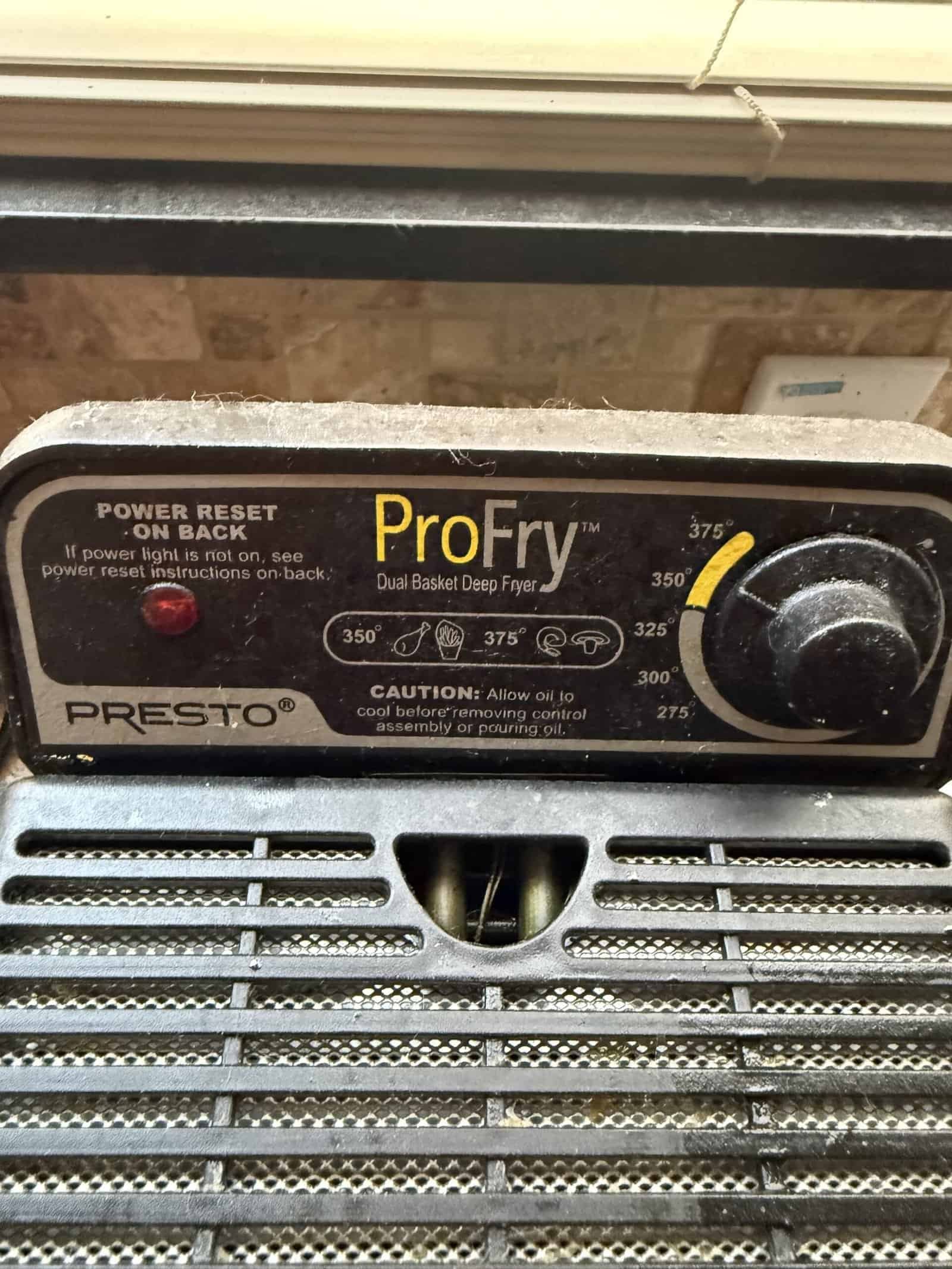
Frying releases oil into the air as fine droplets, and those droplets land on every surface in the room and keep releasing smell for days afterward. The cooking smell you notice during frying is temporary. The one that lingers is a film on your walls, cabinets, and fabrics.
| Where the smell lives | How long it lasts | What removes it |
|---|---|---|
| Air in the room | Hours | Ventilation |
| Film on hard surfaces | Days to weeks | Degreasing cleaner |
| Fabric and soft furnishings | Weeks | Washing or airing |
| Extractor filters | Until cleaned | Degreasing or replacement |
| The oil itself | Until changed | Fresh oil |
Quick Answer
Ventilate during and after cooking rather than only afterward, since airborne oil settles within the first hour. Wipe hard surfaces near the fryer with a degreasing cleaner while the film is fresh. Old oil smells considerably worse than fresh, so changing it removes a large part of the problem.
What Is Actually Happening
Hot oil produces aerosolized droplets that travel further than steam does. They rise, spread across the room, and settle on whatever they meet, which is why the smell reaches rooms you were not cooking in.
Those droplets then oxidize on the surface they landed on. Oxidized oil smells stale and rancid rather than like food, which is why day-old frying smell is unpleasant in a way that fresh frying is not.
The film is invisible until it accumulates. By the time a surface feels tacky, it has been collecting for a long time.
Ventilation Timing Matters More Than Amount
Extraction during cooking removes droplets before they land. Ventilation afterward only clears the air that remains, which is the smaller part of the problem.
Running an extractor for fifteen to twenty minutes after you finish catches what is still airborne while it is still airborne. Switching it off the moment cooking ends leaves that suspended oil to settle.
Cross ventilation moves more air than an extractor alone. An open window on the opposite side of the room creates a path rather than a local suction point.
Closing doors to the rest of the home during frying contains the spread, which is worth doing before rather than after.
What Happens in My Kitchen
The smell does not linger much at all after I fry, which surprised me given how much people complain about it.
A candle sometimes, and that is the extent of what I do about it. No special routine and no deep cleaning afterward.
I suspect the reason is frequency. Frying went from about once a week to once every three weeks, and the film that causes lingering smell builds up across sessions rather than from any single one.
The oil matters too. I filter between uses and replace it after three or four rounds, so it never gets to the stage where old oil is producing its own smell.
My experience covers moderate-frequency home frying with a ventilated setup. It does not cover daily frying, kitchens without extraction, or open-plan spaces where there is nothing to contain the spread.
Old Oil Is a Large Part of It
Degraded oil smells worse while cooking and leaves a worse residue behind. Oil past its usable life produces compounds that fresh oil does not, and those are what people describe as the stale fried smell.
Food particles left in the oil burn on every use, and burnt debris smells stronger than the oil itself. Straining removes that in a minute and makes a noticeable difference.
Replacing oil on schedule rather than pushing it is one of the more effective smell controls available, and it costs nothing beyond the oil. The thresholds sit in reusing frying oil.
The Film on Surfaces
Hard surfaces near the fryer collect the heaviest deposit. Cabinet doors, the wall behind the hob, and the underside of an extractor hood all accumulate faster than anything else.
Wiping those down while the film is fresh takes a fraction of the effort of removing it later. Oxidized oil bonds to surfaces over weeks and needs a degreasing cleaner rather than a general one.
Extractor filters are the item most often ignored. A saturated filter stops extracting and starts recirculating smell, and metal mesh filters go in the dishwasher.
Soft furnishings hold smell longest because they cannot be wiped. Curtains, cushions, and anything fabric in the room need washing or airing, and the wider cleanup sits in cleaning up after deep frying.
What Actually Neutralizes Smell
Ventilation
The only thing that removes odor rather than covering it. Everything else on this list is secondary to moving air out of the room.
Degreasing surfaces
Removes the source. A candle masks the smell from a greasy cabinet door and the door keeps producing it.
Simmering something aromatic
Citrus peel, vinegar, or cinnamon in water replaces one smell with another. It works and it is masking rather than removing.
Bowls of vinegar or baking soda
Absorb some airborne odor overnight. Modest effect, and useful where ventilation is limited.
Air purifiers with carbon filters
Carbon adsorbs odor molecules, which HEPA alone does not. Options sit in air purifiers.
Reducing It at the Source
A lid or splatter guard contains a large share of the aerosol before it reaches the room. That is the highest-value change and the one people skip because it makes checking the food harder.
Frying at the correct temperature produces less smoke than frying too hot. Overheated oil breaks down and smokes, and smoke carries smell far more effectively than vapor does.
An enclosed fryer with a lid contains more than an open pan, which is one of the practical arguments for a dedicated appliance over a pot on the hob. Options sit in deep fryers.
Air frying sidesteps the problem almost entirely, since there is no volume of hot oil to aerosolize. Comparisons sit in air fryer against oven.
When It Has Already Set In
A kitchen that smells of frying days later has a film problem rather than an air problem, and airing it out will not resolve that. Ventilation is the permanent fix, and a stronger range hood covers what actually clears frying odor at the source.
Work outward from the fryer. Surfaces closest collect the most, and cleaning those addresses the majority of the source before you touch anything else.
Wash or air any fabric in the room. Curtains in particular hold smell long after every hard surface has been cleaned.
Check the extractor filter, which is frequently the last thing anyone looks at and often the worst offender. Related cleaning sits in cleaning a deep fryer.
Related Reading
Oil condition affects smell more than most people realize, covered in how many times you can reuse frying oil. The surfaces around the fryer need their own attention, covered in cleaning up after deep frying and cleaning the fryer itself. Getting rid of used oil is its own question, covered in disposing of cooking oil. For anyone reconsidering the method entirely, air fryers avoid the problem, and enclosed fryers contain more than an open pan.
Frequently Asked Questions
Why does fried food smell linger for days?
Because airborne oil droplets settle on surfaces and form a film that keeps releasing odor. The air clears within hours, and the film on walls, cabinets, and fabric is what lasts.
How do I get rid of the smell after frying?
Ventilate during and after cooking, wipe nearby hard surfaces with a degreasing cleaner while the film is fresh, and wash or air any fabric in the room. Masking alone leaves the source in place.
Does an extractor fan actually help?
Considerably, provided it runs during cooking rather than only afterward. It removes droplets before they settle, and leaving it on for fifteen to twenty minutes after catches what remains airborne.
Does old oil smell worse?
Yes. Degraded oil produces compounds fresh oil does not, and burnt food particles left in it smell stronger still. Straining between uses and replacing on schedule reduces the problem noticeably.
Do candles or air fresheners work?
They mask rather than remove. That is fine alongside ventilation and cleaning, and on its own it leaves a greasy film continuing to produce the smell you are covering.
Why does the smell reach other rooms?
Aerosolized oil travels further than steam and settles wherever it lands. Closing doors during frying contains the spread, and it needs doing before cooking rather than after.
Does air frying avoid the problem?
Largely, since there is no volume of hot oil to aerosolize. Some smell still occurs from the food itself, and it is a fraction of what deep frying produces.
Where the fryer sits affects the room. kitchen layout and storage covers placement.
