
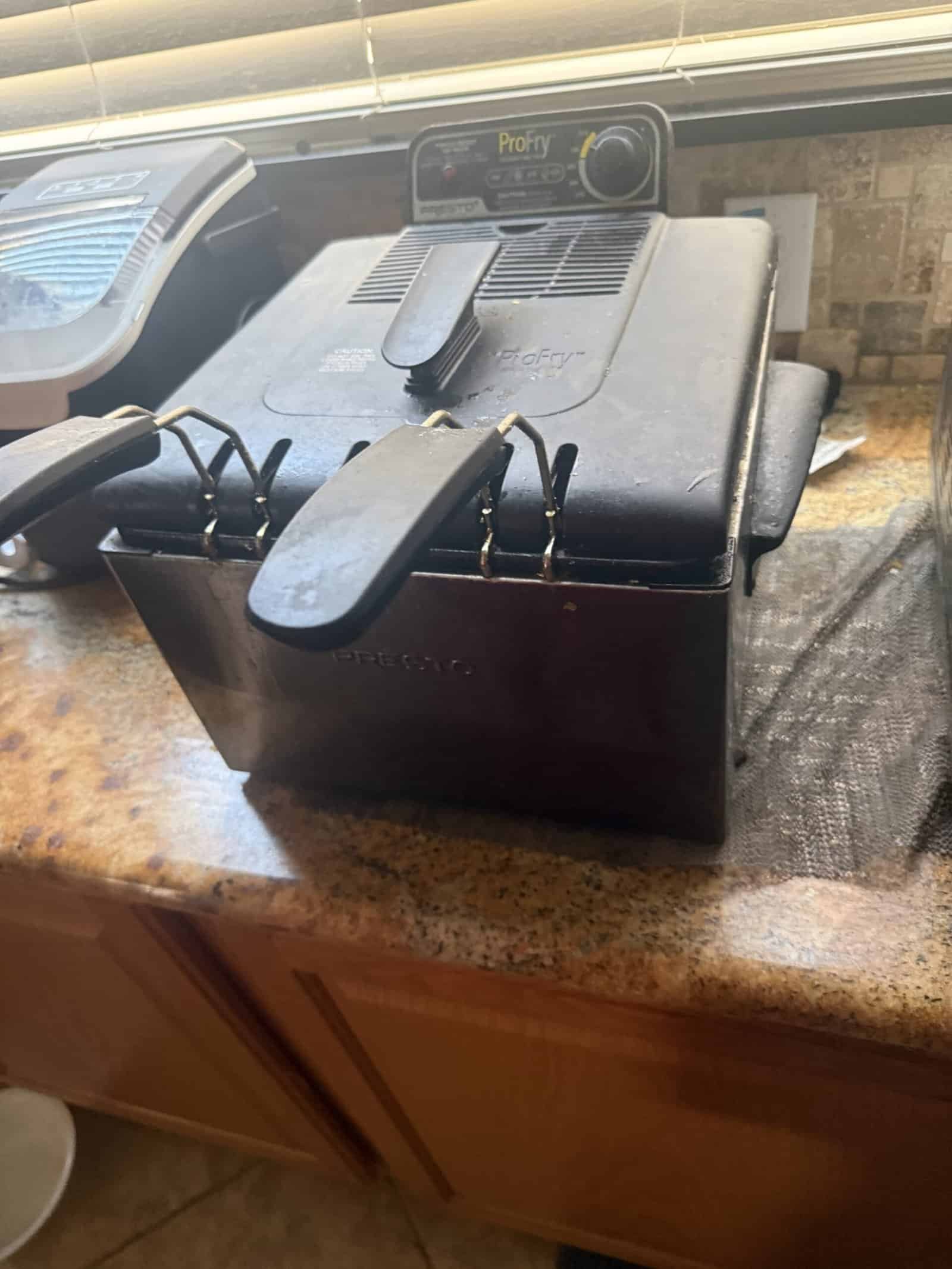
Deal with the oil first and everything else gets easier. Strain it while it is warm, leave it in a sealed container or back in the fryer, and only then start on the equipment. Trying to clean around a pot of hot oil is how the job becomes difficult.
The rest splits by what tolerates water. Baskets and removable parts wash normally, and the pot, lid, and anything electrical get wiped rather than submerged.
Quick Answer
Let the oil cool to warm, strain it into a container, then wash the baskets and removable parts. Wipe the pot and lid by hand rather than submerging anything with wiring in it. Wipe surfaces near the fryer while the oil film is still fresh.
Key Points
- Strain the oil before touching anything else
- Warm oil pours cleanly, cold oil does not
- Baskets are usually dishwasher safe
- The pot and lid get washed by hand
- Never submerge the electrical housing
- Surface film near the fryer is easiest to remove fresh
Order of Operations
| Step | What to do | Why this order |
|---|---|---|
| 1 | Turn off and let the oil cool to warm | Hot oil is a burn risk, cold oil will not pour |
| 2 | Strain the oil into a sealed container | Removes debris that would burn next time |
| 3 | Remove baskets and removable parts | These wash normally |
| 4 | Wipe the pot and lid, then hand wash | Removes bulk grease before water |
| 5 | Wipe the housing and exterior | Never submerged |
| 6 | Wipe surrounding surfaces | Film is easiest to remove fresh |
The Oil Comes First
Warm rather than hot is the target for straining. Hot oil is dangerous to pour and cold oil is too thick to move cleanly, so the window is somewhere in between.
A fine mesh sieve or cheesecloth over a funnel catches the debris that would otherwise burn on the next use. That single step does more for the oil’s life than anything else, covered in reusing frying oil.
Where the oil is finished rather than being kept, disposal has its own rules and none of them involve a drain, covered in disposing of cooking oil.
How I Do It
The baskets are dishwasher friendly, so those go straight in and I do not think about them.
The pot and lid get washed by hand and wiped out. That is the part that takes actual effort, and it is the reason the whole job is not simply loading a dishwasher.
I filter the oil between uses rather than dumping it each time, so most sessions the oil goes back rather than out. Disposal comes up every three or four rounds instead of every time.
None of this takes long. Frying has a reputation for a difficult cleanup and the actual routine is straining, a dishwasher load, and washing two items by hand.
My experience covers a domestic deep fryer with removable baskets. It does not cover open-pot frying on a hob, which spreads more, or fryers without removable parts, where everything is a wipe job.
Wipe Before Water
Grease removed dry never reaches the drain, and that matters both for your pipes and for how much scrubbing follows.
Paper towel through the pot before it goes anywhere near a sink removes the bulk. What is left is a film that soap and hot water handle easily.
Going straight to washing up means emulsifying a large volume of grease into the water, where it separates further down the pipe and deposits there instead.
The same applies to the sieve, funnel, and anything else the oil touched. Wipe first, wash second.
What Goes in the Dishwasher
Baskets and racks
Usually dishwasher safe and the easiest part of the job. Check the manual once and then stop thinking about it.
Removable pots
Some fryers have a pot that lifts out and some do not. Where it does and the manual allows it, the dishwasher handles it.
The lid
Depends on whether it contains a filter or a vent assembly. Anything with a mesh filter in it usually needs hand washing.
Never the housing
The base contains the element and the controls. It gets wiped with a damp cloth and nothing more, regardless of how greasy it looks.
The Surfaces Around It
Frying puts oil into the air, and it lands on everything nearby. The wall behind the fryer, adjacent cabinet doors, and the counter all collect a film.
Wiping those while the film is fresh takes seconds. Left for weeks it oxidizes and bonds, and then it needs a degreasing cleaner and real effort.
Extractor filters collect the most of anything in the room and get checked the least. Metal mesh filters usually go in the dishwasher, and the wider smell problem sits in why kitchens smell like fried food.
What Makes It Harder
Letting the oil go cold before straining. Thick oil clings to the pot and pours badly, which turns a clean transfer into a mess.
Cleaning around hot oil. Working over a full pot of hot oil is unsafe and it means the pot cannot be cleaned anyway.
Leaving it until the next day. Grease is far easier to remove while warm, and a fryer left overnight needs soaking.
Using too little paper towel. Being sparing at the wipe stage means doing the work with water instead, which is slower and worse for the drain.
What the Splatter Reaches
Oil travels further than most people account for, which is why cleanup extends past the appliance itself.
Fine droplets carry several feet from the fryer and settle on anything in that radius. A counter that looks clean often has a film on it that only becomes obvious when you run a cloth across.
The floor immediately around the fryer collects too, and a greasy floor is a slip hazard rather than just a cleaning task. Wiping it after a session is worth doing for that reason alone.
Anything left out on the counter during frying gets coated. Moving items away before you start is easier than cleaning each of them afterward, and it takes seconds.
Between Sessions
Where the oil is staying in the fryer, a closed lid keeps dust out and slows oxidation. Air exposure degrades oil between uses as well as during them.
The exterior is worth wiping even when the interior is untouched, since the film that lands on it during frying is what makes the appliance feel greasy months later.
Storing it clean rather than intending to clean it before next use is the same principle that applies to every appliance, and machine-specific guidance sits in cleaning a deep fryer.
Straightforward Against a Real Job
Straightforward looks like straining warm oil, a dishwasher load of baskets, hand washing the pot and lid, and a quick wipe of nearby surfaces. That is fifteen minutes and it is what most sessions should be.
A real job looks like oil gone cold and thick, grease left for days, an unwashed extractor filter, or a fryer that has never had its exterior wiped. All of those are avoidable by doing the easy version at the time. Equipment that makes the routine easier sits in deep fryers compared.
Related Reading
- the machine itself
- straining and reuse
- getting rid of used oil
- the smell that lingers
- fryers with removable parts
- the low-cleanup alternative
Frequently Asked Questions
What order should I clean up after frying?
Oil first. Cool it to warm, strain it into a container, then handle the equipment. Cleaning around a full pot of hot oil is unsafe and means the pot cannot be washed anyway.
Can deep fryer baskets go in the dishwasher?
Usually yes, and they are the easiest part of the job. The pot, lid, and anything containing a filter more often need hand washing, and the electrical housing never gets submerged.
Should I wipe before washing?
Yes. Removing the bulk of the grease with paper towel keeps it out of the drain and means the washing up removes a film rather than a layer.
Can I submerge a deep fryer?
Only parts that detach completely and the manual approves. The base contains the heating element and controls and gets wiped with a damp cloth only.
Why is it harder if I leave it overnight?
Grease is far easier to remove warm. Cold oil thickens and clings, and residue left overnight bonds to surfaces, which turns a wipe into a soak.
Do I need to clean the surfaces around the fryer?
Yes, and fresh is far easier than later. Airborne oil lands on nearby walls, cabinets, and counters, and it oxidizes into a film that needs a degreasing cleaner once it sets.
What about the extractor filter?
It collects more than anything else in the room and gets checked least. Metal mesh filters usually go in the dishwasher, and a saturated filter stops extracting and starts recirculating smell.
Cleaning is easier with the right equipment. equipment that suits your cooking covers selection.
