
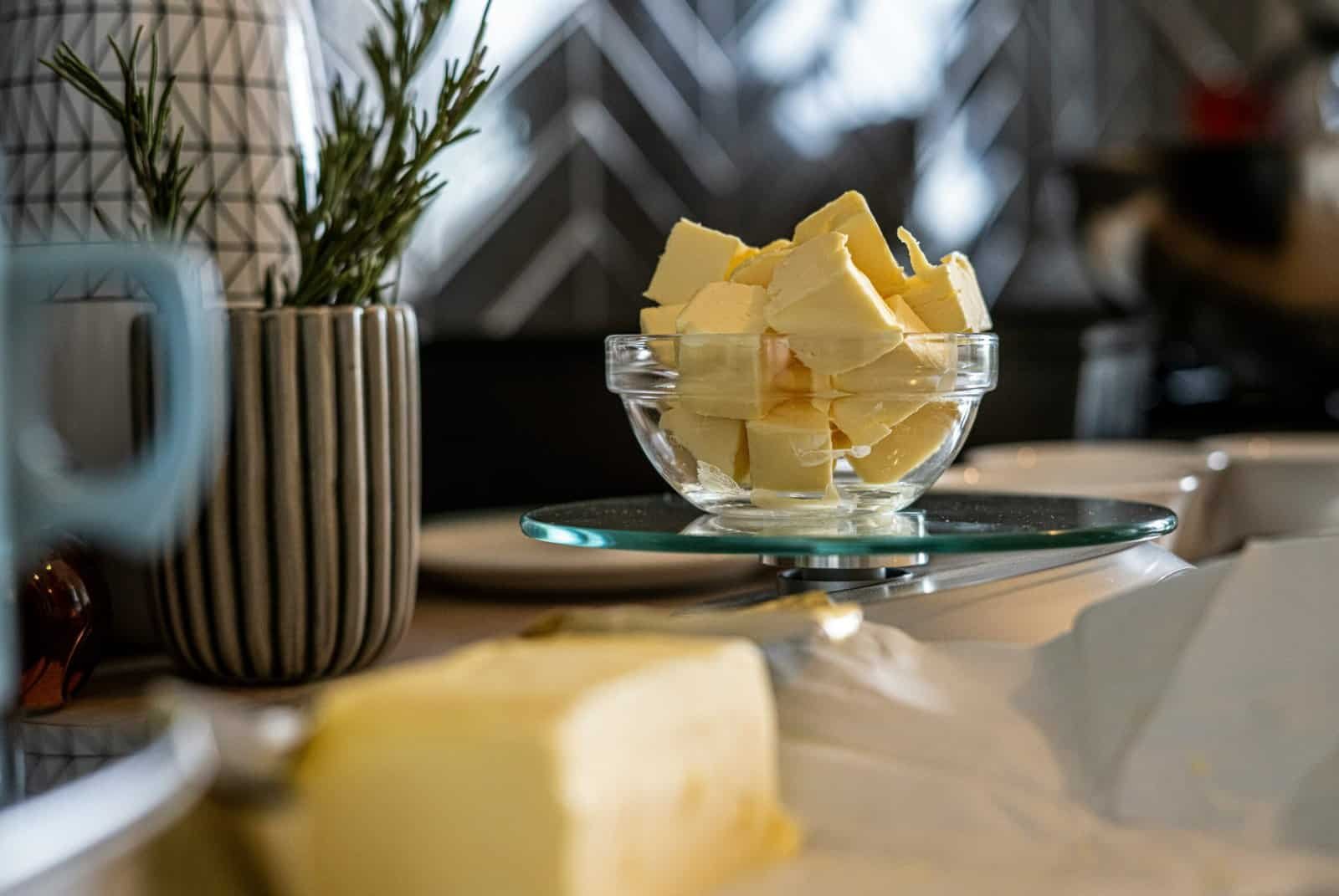
To soften butter quickly, cut it into small cubes, grate it on a box grater, or pound it flat between parchment to expose more surface area, and it turns pliable in minutes; the warm-glass trick and short, low-power microwave bursts work too. You are ready to bake and the recipe calls for softened butter, but yours is rock-hard from the fridge, and knowing how to soften butter quickly saves the wait. The goal is butter that is cool but pliable, not melted, since melted butter changes how a recipe turns out. Softened butter is what lets you cream it properly for light cakes and cookies. If your cookies spread too much, butter temperature is often the reason, as our guide on why cookies spread explains. This guide covers the fastest safe methods and how to tell when butter is just right.
Quick Verdict
To soften butter quickly, cut it into small cubes, grate it on a box grater, or pound it flat between parchment with a rolling pin, all of which expose more surface area so it warms in minutes. The warm-glass method and short microwave bursts at low power also work, but stop before it melts. You want butter that is cool yet pliable, holding its shape with a little give.
Why Trust This Guide
Independent guidance, reader-supported through affiliate links at no cost to you. The methods follow general baking practice and the food-safety guidance cited in Sources, and describe broadly accepted techniques rather than any single brand’s claims.
Key Takeaways
- More surface area means faster softening: cube, grate, or flatten the butter.
- The warm-glass trick softens a stick gently without any heat appliance.
- Microwave only in short, low-power bursts to avoid melting.
- Softened means cool but pliable, holding its shape with a little give, not melted.
- Melted butter changes baking results, so do not overshoot.
How We Researched This
This guide follows general baking practice for preparing softened butter and basic food-safety guidance from the USDA and FDA on handling dairy at safe temperatures. Because butter is perishable, it should not be left at room temperature far longer than needed, in line with safe-handling principles. The goal is pliable, not warm or melted, butter.
Butter-Softening Methods at a Glance
This table summarizes the key points at a glance.
| Method | Speed | Best for |
|---|---|---|
| Cut into small cubes | Fast | Hands-off softening while you prep |
| Grate on a box grater | Fastest | Quick softening with no heat |
| Pound flat between parchment | Fast | When you need pliable butter right away |
| Warm-glass method | A few minutes | Softening a whole stick gently |
| Microwave, low-power bursts | Fastest but riskiest | Real time pressure, watched closely |
Why Does Softened Butter Matter?
Many recipes depend on butter at the right softness. Creaming softened butter with sugar beats in air that lightens cakes and cookies, and that only works when the butter is pliable. Our guide on why room-temperature butter matters goes deeper, and a good stand mixer makes creaming easier. Butter that is too cold will not cream, and butter that has melted will not hold the air, so the temperature genuinely affects the outcome.
Why Not Just Melt It
Melted butter behaves differently from softened butter in a recipe, often changing the texture and spread, especially in cookies. Butter temperature also feeds into issues like cakes sinking in the middle, and it works alongside leavening covered in our baking soda vs baking powder guide. Unless a recipe specifically calls for melted butter, the target is soft and pliable, which is why the quick methods below all stop short of melting.
Cut It Into Small Pieces
The simplest speed trick is to increase surface area. Slicing a cold stick into small cubes lets it warm up far faster than a solid block, since more of the butter is exposed to room temperature.
How to Do It
Cut the cold stick into small, even pieces and spread them out on a plate. Left at room temperature, the cubes soften in a fraction of the time a whole stick would take, with no special equipment needed.
Grate the Butter
Grating takes the surface-area idea further and is one of the fastest no-heat methods. Shredded butter softens almost as you go, making it ready to use very quickly.
How to Do It
Use the large holes of a box grater to grate cold butter into shreds, which is easiest when the butter is firm. The thin pieces come to a pliable temperature in just a few minutes spread on a plate.
Pound It Flat
Flattening butter both warms it and makes it pliable mechanically, which is handy when you need it fast.
How to Do It
Place the stick between two sheets of parchment or wax paper and roll or gently pound it flat with a rolling pin. The thinner sheet of butter softens quickly and is easy to incorporate, a favorite trick of bakers in a hurry.
The Warm-Glass Method
This gentle, no-appliance trick softens a whole stick without changing its shape much.
How to Do It
Fill a tall glass with hot water, let it sit a moment to warm the glass, pour out the water, then invert the warm glass over the stick of butter on a plate. The trapped warmth softens the butter in several minutes without melting it.
The Microwave, Carefully
The microwave is fast but the easiest way to accidentally melt butter, so it takes a light touch.
How to Do It
Microwave the butter at low power in very short bursts of just a few seconds, checking and turning it between each. Stop the moment it gives to gentle pressure. It is easy to overshoot into melting, so err on the side of too-short bursts and check often.
Which Method Should You Use?
The best method depends on how fast you need it and how much butter you are softening.
For the Fastest Results
Grating or flattening the butter softens it quickest by exposing the most surface area, making either ideal when you need pliable butter in just a few minutes. Cubing is slightly slower but more hands-off, since you simply spread the pieces out and wait.
For a Whole Stick, Gently
The warm-glass method is a good choice when you want to soften a whole stick without cutting it up or risking melting, since the gentle trapped warmth works evenly. It takes a few minutes but needs no appliance and keeps the stick intact.
When You Are in a Real Hurry
The microwave is the fastest but the riskiest, so reach for it only when you can watch it closely and use short, low-power bursts. If you have a couple of minutes to spare, grating or the warm-glass trick is safer and just as effective.
Plan Ahead When You Can
The simplest method of all is time, when you have it.
Leave It Out in Advance
If you know you will be baking, set the butter on the counter ahead of time so it softens gradually at room temperature. This needs no tricks and gives perfectly pliable butter, though, following USDA safe-handling guidance, butter should not be left out far longer than needed since it is perishable. Keeping butter in a water-sealed crock avoids the softening step altogether, since it stays spreadable on the counter.
How to Tell When Butter Is Softened
Knowing the target keeps you from going too far.
The Press Test
Properly softened butter holds its shape but yields easily when you press it with a finger, leaving a clean indent without your finger sinking through or the butter looking greasy. It should still feel cool, not warm or shiny. If it has started to melt or look oily, it has gone too far for creaming.
If You Soften It Too Much
Overshooting is common, especially in the microwave.
Firm It Back Up
If the butter has become too soft or partly melted, pop it back in the refrigerator for a short time to firm up to the right pliable texture. If it has fully melted, it may be best to start with a fresh stick for recipes that need creaming, since melted butter will not whip in air. For accurate amounts in your recipe, see our measuring guide and our measuring cups and spoons guide.
Recommended Reading
- Why your cookies spread too much
- Cake pans for home bakers
- The best hand mixers
- How to measure flour
- butter dishes
Softening Butter FAQ
How do I soften butter quickly?
Increase its surface area: cut it into small cubes, grate it on a box grater, or pound it flat between parchment with a rolling pin. The warm-glass trick and short, low-power microwave bursts also work. Stop while the butter is cool and pliable, before it melts.
Can I soften butter in the microwave?
Yes, but carefully. Use low power in very short bursts of a few seconds, checking between each, and stop as soon as the butter yields to gentle pressure. The microwave melts butter easily, so err on the side of too-short bursts to avoid overshooting.
What does softened butter mean?
Softened butter is cool but pliable: it holds its shape yet gives easily when pressed, leaving a clean indent without sinking through or looking greasy. It is not warm, shiny, or melted. This texture is what allows butter to cream properly with sugar.
Why not just melt the butter instead?
Melted butter behaves differently in recipes, often changing texture and, in cookies, causing more spread. Unless a recipe specifically calls for melted butter, soft and pliable is the target, since softened butter can trap the air that lightens baked goods.
How long does butter take to soften at room temperature?
A whole stick can take a while to soften on the counter, which is why the quick methods help. Cutting, grating, or flattening it cuts that time to just a few minutes by exposing more surface area, so you do not have to plan far ahead.
What is the warm-glass method?
Fill a tall glass with hot water to warm it, pour the water out, then turn the warm glass upside down over a stick of butter on a plate. The trapped warmth softens the butter in several minutes without melting it or changing its shape much.
What if I soften the butter too much?
If it is too soft or partly melted, refrigerate it briefly to firm it back to a pliable texture. If it has fully melted, it is often best to use a fresh stick for recipes that require creaming, since melted butter cannot whip in the air a recipe needs.
Does butter temperature affect cookies?
Yes. Butter that is too soft or melted often makes cookies spread more, while properly softened butter holds structure better. Butter temperature is a common reason cookies turn out flat, so getting it right matters for the final texture.
What is the fastest way to soften butter?
Grating cold butter on a box grater or pounding it flat between parchment with a rolling pin softens it quickest, since both expose maximum surface area. Either gets butter to a pliable, ready-to-use texture in just a few minutes without melting it.
Can I soften butter in warm water?
The warm-glass method uses heat indirectly: you warm a glass with hot water, empty it, and invert it over the butter. Submerging unwrapped butter directly in water is not ideal, but the trapped warmth of a heated glass softens a stick gently without melting it.
How do I know if butter is too soft for creaming?
If the butter looks greasy or shiny, has started to melt at the edges, or your finger sinks straight through it, it is too soft to cream well. Properly softened butter holds its shape, feels cool, and gives a clean indent when pressed. Chill overly soft butter briefly to firm it up.
Related Reading
Explore more: why do onions make you cry, why does brown sugar harden, why is my rice mushy, why meringue wont stiffen, why pie crust gets tough, and why eggs cook differently.
