
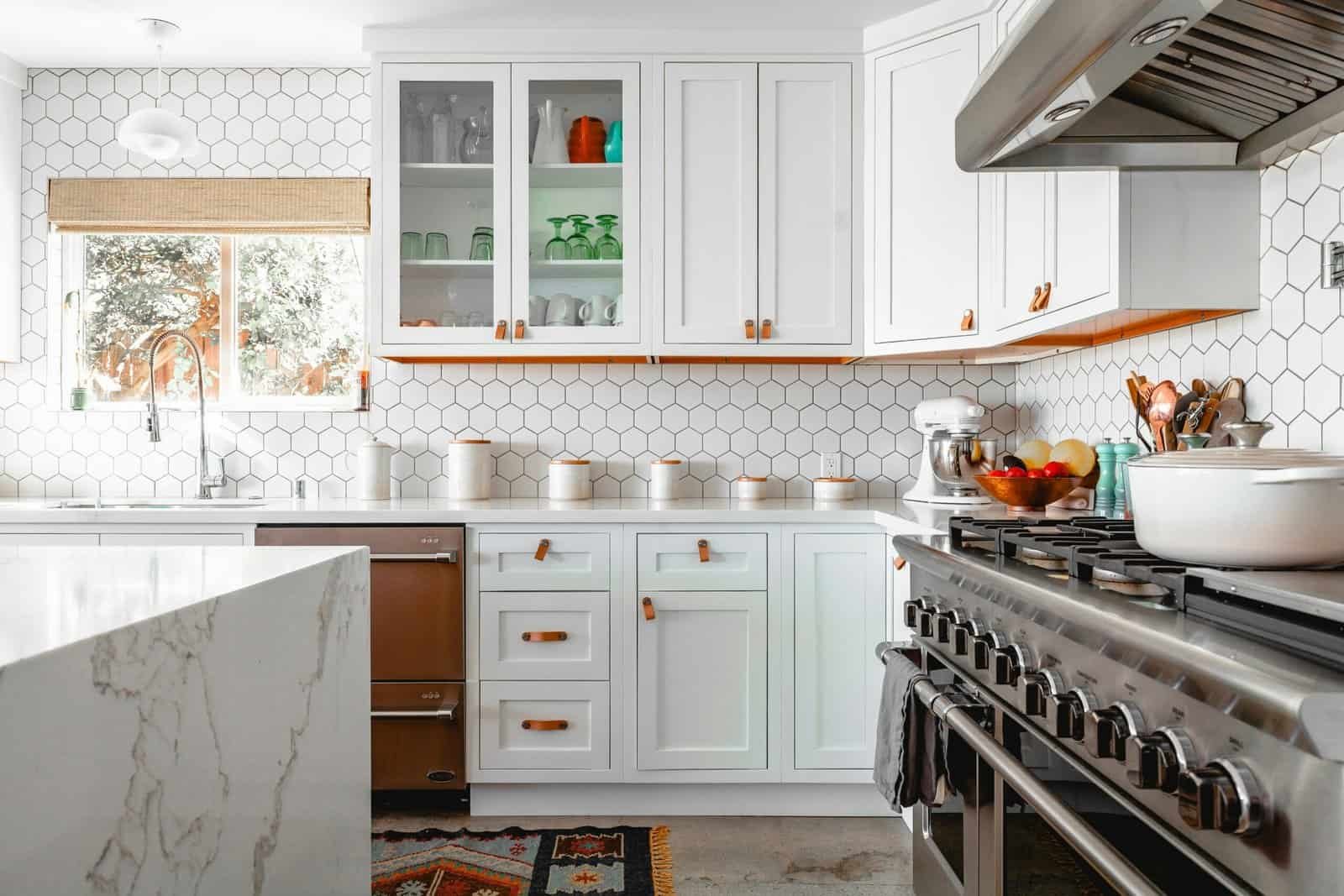
Deep cleaning a kitchen is not the same as wiping down counters and running the dishwasher. The deep clean addresses the places that daily cleaning skips: the inside of the oven, the gasket of the refrigerator, the underside of the range hood, the grout between backsplash tiles, the back corners of cabinets where grease and dust have built up. Done properly, the deep clean takes most of a day and resets the kitchen to a state that daily cleaning maintains for another three to six months. If you’re shopping, start with our guide to the best kitchen utensil sets.
This guide walks through the realistic sequence: top-down work order, hardest jobs first while energy is high, and the appliance-specific procedures for the four kitchen items that most need attention (oven, fridge, dishwasher, range hood). The goal is a fully-reset kitchen at the end of one day, not a perfect-looking kitchen at the end of a week.
Plan for a six-to-eight-hour day if your kitchen hasn’t been deep cleaned recently. Four hours if you do this quarterly and the buildup is mild.
Key Takeaways
- Top-down work order prevents redoing surfaces. Always clean ceilings and upper cabinets before counters and floors.
- The oven, fridge, dishwasher, and range hood are the four appliances most overlooked by daily cleaning and most worth deep-cleaning attention.
- Skipping appliance pull-outs is the most common mistake. The dust and grease accumulating behind the fridge and stove is significant and never gets daily attention.
- Quarterly deep cleans take half the time of annual ones because there’s less buildup to remove.
Why Deep Cleaning Matters Beyond Surface Wipe-Downs
Daily cleaning handles the surfaces you see and use every day. Counters, stovetop, dishes, floors. What daily cleaning doesn’t reach is the hidden buildup that compounds over months: grease film on cabinets near the stove, dust accumulating on top of the fridge, food particles sealed into appliance gaskets, hard-water mineral scale on the dishwasher interior.
Left unaddressed, this buildup becomes increasingly difficult to remove. A range hood filter cleaned monthly takes ten minutes. The same filter neglected for two years may need replacement entirely because the baked-on grease has fused to the mesh. The same principle applies across the kitchen: regular deep cleaning is faster, cumulatively, than infrequent emergency cleaning.
Deep cleaning also catches problems early. A small leak under the sink, a developing pest situation in a back corner, a worn refrigerator gasket failing slowly: all surface during a thorough deep clean. Fixing them small is cheaper than fixing them after they’ve cascaded.
For households resetting the entire kitchen including organization and storage, deep cleaning is the foundation layer. The organization work sits on top of clean surfaces. Our complete guide on how to organize your kitchen covers the organization layer that follows.
What You Need Before You Start
Stock the cleaning supplies before starting. Running to the store mid-task breaks the work flow.
General cleaners. All-purpose spray, glass cleaner, degreaser specifically for kitchens, baking soda, white vinegar.
Specialty cleaners. Oven cleaner if you don’t have a self-cleaning oven, stainless steel cleaner for appliance exteriors, granite or stone cleaner if applicable, cast iron care supplies if applicable.
Tools. Microfiber cloths (six to ten), sponges, scrub brushes including a small detail brush for crevices, paper towels, trash bags, rubber gloves.
Empty containers and clearing space. Counter or table space to hold fridge and pantry contents during transfer. Cooler for cold items if the fridge deep clean takes more than an hour.
For cookware that needs simultaneous deep cleaning (cast iron restoration, stainless steel polishing, copper care), our guide on seasoning cast iron covers that adjacent task.
Step 1: Clear and Pre-Treat
Start with the heaviest tasks while energy is fresh.
Pre-treat the oven and the dishwasher first because they need dwell time while you work on other tasks. For the oven, apply oven cleaner per its label and let it sit while you continue. For the dishwasher, run an empty hot cycle with vinegar or a dedicated dishwasher cleaning tablet, which dissolves mineral scale during the cycle.
Clear all small appliances and decorative items off the counters. Move them to a staging area like the dining table. Empty counters let you clean surfaces properly and reveal what was hidden underneath.
Open windows or run the exhaust fan. Several deep-cleaning chemicals (oven cleaner, ammonia-based glass cleaners) produce strong fumes in confined spaces.
Step 2: Top-Down Order: Ceilings and Upper Cabinets
Work from highest to lowest. Anything you clean on top falls onto whatever’s below, so cleaning the floor first wastes work.
Start at the ceiling. Wipe down light fixtures and vent covers with a microfiber cloth. Cobwebs and dust accumulate here unnoticed.
Move to the top of the upper cabinets. The flat top of upper cabinets collects greasy dust faster than almost any other kitchen surface, and is rarely cleaned. Use a degreaser, scrub the top, wipe with a clean cloth.
Clean the upper cabinet fronts and any visible sides. Pay particular attention to cabinets near the stove, which collect airborne grease.
Step 3: Range Hood, Vent, and Filter
The range hood collects grease and particulates from every cooking session. Most range hoods have removable mesh filters that need either dishwasher cleaning or a hot soak with degreaser.
Remove the filter. Soak it in hot water with a strong degreaser for fifteen to thirty minutes. Scrub remaining residue with a brush. Rinse, dry, replace.
While the filter soaks, clean the underside and exterior of the range hood. Grease drips off the hood onto the stovetop below; the underside accumulates a layer of fine grease that wipes clean with a degreaser. The exterior gets a stainless-steel-appropriate cleaner.
Check the vent ducting where accessible. If you can see grease buildup inside the duct, professional cleaning may be appropriate. Range hood fires are a real kitchen hazard from neglected ducts.
Step 4: Inside the Oven and Stovetop
The oven cleaner you applied in step 1 has had time to work. Scrub the loosened residue with a sponge and rinse with clean water until the surface is clean.
For self-cleaning ovens, run the cycle per the manual. The cycle is long (often two to four hours) and produces high heat; plan around it.
For the stovetop, the procedure depends on type. Gas burners come apart for cleaning; the grates soak in a degreaser bath while you clean the burner caps separately. Electric coil ranges have removable drip pans that soak similarly. Smooth-top induction or radiant ranges need a dedicated ceramic-top cleaner and a non-abrasive pad.
Don’t forget the knobs and the front panel. Grease accumulates around stove knobs and on the visible panel below the cooktop.
Step 5: Refrigerator Inside and Out
Empty the refrigerator into a cooler with ice packs. Remove all shelves, drawers, and door bins. Wash each in warm soapy water in the sink. Let air dry.
With the fridge empty, wipe down the interior walls and ceiling with warm water and a small amount of dish soap. Avoid bleach or strong chemicals that can transfer to food. For tough spots, baking soda paste works without leaving residue.
Pay attention to the gasket (the rubber seal around the door). Food particles and mildew accumulate here. A toothbrush with soapy water cleans the channels effectively. A clean gasket also seals better, which directly reduces energy use.
Pull the refrigerator out from the wall. The condenser coils on the back or underneath collect dust that reduces cooling efficiency. Vacuum the coils with a brush attachment. While the fridge is pulled out, vacuum and mop the floor underneath.
Reassemble, replace contents, check the drip pan beneath the fridge if your model has one.
For households restocking the fridge with intentional organization, our roundup of best refrigerator organizer bins covers the container categories that maintain the reset.
Step 6: Cabinets, Counters, and Backsplash
Empty one cabinet at a time. Wipe the interior shelves, the inside of the doors, and the exterior cabinet faces. Check for crumbs in back corners. Replace contents.
For counters, the cleaner depends on material. Granite and stone need pH-neutral cleaner. Laminate handles almost any household cleaner. Butcher block needs food-safe oil after cleaning. Stainless steel cleans with stainless-steel-specific products that don’t leave streaks.
The backsplash often shows accumulated cooking residue, particularly above the stove. Grout between backsplash tiles needs detail work: a toothbrush with baking soda paste lifts most discoloration. For mildew in grout, hydrogen peroxide diluted half-and-half with water works on most surfaces.
📑 Recommended Read: Cabinet organization compounds with deep cleaning. Resetting the kitchen during a deep clean is the optimal moment to upgrade storage. Check out our complete breakdown of best cabinet and shelf organizers for the categories that fit most cabinet types.
Step 7: Sink, Disposal, and Floor
Scrub the sink basin with appropriate cleaner. Stainless steel sinks benefit from a final polish with vinegar or stainless cleaner. Porcelain sinks should avoid abrasive scrubbers that scratch the surface.
Clean the disposal by running ice cubes with a halved lemon through it. This both cleans and freshens. For severe odor, a baking-soda-and-vinegar treatment followed by hot water flushes the trap.
Clean the faucet base where mineral scale collects. White vinegar in a small bag, wrapped around the faucet aerator for thirty minutes, dissolves most scale.
Finish with the floor. Sweep, then mop with appropriate floor cleaner. Pay attention to corners and along baseboards where dust accumulates.
Common Mistakes and How to Avoid Them
Working bottom-up. Cleaning floors first means redoing them after dust from upper surfaces lands. Top-down only.
Skipping appliance pull-outs. The dust and grease behind the fridge and stove is significant and never gets daily attention. Pulling them out is awkward but matters.
Using bleach on stainless steel. Causes permanent damage. Use stainless-steel-specific cleaners only.
Mixing cleaning chemicals. Ammonia and bleach produce toxic chloramine gas. Vinegar and bleach produce chlorine gas. Use one product at a time and rinse thoroughly between.
Forgetting the dishwasher itself. Dishwashers clean dishes but need their own cleaning. Monthly hot cycles with vinegar or a dishwasher cleaner prevent the food residue and mineral scale that develop over time.
Replacing rather than cleaning. Many people replace yellowed plastic, scaled fixtures, or grease-stained surfaces that would clean back to like-new with appropriate technique. Try cleaning first.
Doing the deep clean once a year only. Quarterly is dramatically faster cumulatively. The annual deep clean fights three to four months of buildup that quarterly cleaning prevents.
Not ventilating. Oven cleaner, bleach products, and many degreasers produce strong fumes. Open windows and run exhaust fans throughout.
Frequently Asked Questions
How long should a deep clean take? Six to eight hours for a first deep clean or one after a long gap. Four hours for a quarterly deep clean. Shorter if you keep up with maintenance.
How often should I deep clean the kitchen? Quarterly is the recommendation. Twice yearly is acceptable. Annually leads to harder cleaning work each time.
Should I deep clean before or after organizing? Deep clean first, then organize. Organization on dirty surfaces gets dirty fast.
Can I deep clean in stages over multiple days? Yes. The full single-day approach is more efficient, but stages work fine if you can’t dedicate a full day. Top-down order still applies within each stage.
What’s the most overlooked deep-clean area? The top of upper cabinets, the gasket of the refrigerator, and the underside of the range hood are consistently the three most-skipped areas.
Are commercial kitchen cleaning services worth it? For households doing deep cleans rarely or who don’t have the physical capacity, yes. For households doing quarterly maintenance themselves, the cost rarely justifies versus DIY.
How do I keep the kitchen clean longer between deep cleans? Daily counter wipe-downs, weekly oven-bottom check, monthly range hood filter, and not letting individual issues compound. Most kitchen deep cleans are necessary because small things have accumulated.
What about pets in the kitchen during cleaning? Keep pets out during chemical cleaning. Some products are irritating or toxic to dogs and cats. Wait until surfaces are fully dry and ventilated before reintroducing pets.
Recommended Reading
See also our guides to how to clean a deep fryer. See also our guides to dish soap dispensers, humidifiers, and steam mops.
Related Reading
Explore more: how to clean a nonstick pan, how to clean a deep fryer, deep fryers under 100, how to clean coffee grinder, how to organize small kitchen, how to clean air fryer, how to clean burnt pots pans, and deep fryers. Also explore: mesh wifi systems.
