
The best space heaters warm one room at a time, which lets you turn the central thermostat down and stop paying to heat rooms nobody uses. Six heater types cover almost every situation, and choosing the right type matters far more than choosing a specific unit. If dry winter air already bothers you, pair whichever heater you pick with one of these room humidifiers, because heated air feels drier fast.
Room size, heat-up speed, and noise drive nearly every complaint afterward. Those three factors decide whether a heater gets daily use or ends up in the closet.
The Short Version
Ceramic fan-forced heaters suit most people who want a cold room usable in minutes. Oil-filled radiators win when you need steady warmth for hours without noise. Infrared and quartz models heat you rather than the air, which is ideal at a desk or in a drafty garage. Pick by how long you sit in the room.
Key Takeaways
- Nearly every plug-in heater tops out around 1,500 watts, so heat output is roughly the same across types.
- Fan-forced designs heat fast and make noise; radiator designs heat slowly and stay silent.
- Infrared warms objects and people directly, so it works in spaces you cannot seal.
- Plug a heater straight into a wall outlet, never into an extension cord or power strip.
- Tip-over switches and overheat cutoffs are standard on current models and worth confirming.
How We Picked
We compared heater categories instead of individual units, because model lineups change every season while the underlying designs stay stable. Each section below describes a type of heater and what that type genuinely does well. You then shop that type using the search link provided.
We ranked categories on five things: how fast the room becomes comfortable, how the heat feels once it arrives, noise, safety hardware, and control precision. Honest drawbacks appear in every section below.
One constraint people overlook constantly: the circuit, not the heater. A 1,500 watt heater pulls roughly 12.5 amps, which fills most of a standard 15 amp household circuit on its own.
1. Ceramic Fan-Forced Heaters
Why It Stands Out
Ceramic heaters push air across a heated ceramic element with a small fan. That combination moves warmth into a room faster than any other plug-in design. A cold bathroom becomes comfortable in minutes rather than an hour.
They are also the cheapest and smallest category. Most units weigh little enough to carry with one hand, so a single heater covers a whole morning routine.
Worth Knowing
The fan is the tradeoff. Constant airflow creates noise somewhere between a desk fan and a bathroom vent, and that becomes obvious in a quiet bedroom at night.
Moving air also stirs up dust, and the element can smell faintly hot for the first few uses.
Best for: Bathrooms, small bedrooms, and any room you want warm quickly rather than continuously. Skip it if fan noise bothers you at night, or if dust is already a problem that an air purifier for the bedroom would serve better.
2. Oil-Filled Radiator Heaters
Why It Stands Out
Oil-filled radiators heat sealed oil inside metal fins, then release that warmth by convection. No fan runs, so these are the quietest heaters you can buy, and the warmth feels gentler than forced air.
Thermal mass is the real advantage. Fins stay warm after the element cycles off, which keeps a room steady for hours.
Worth Knowing
Warm-up is slow. Expect twenty to thirty minutes before a cold room feels different, which makes these poor choices for quick bursts of heat.
These are also the heaviest category. Most roll on casters, so treat one as furniture for a single room.
Best for: Bedrooms, home offices, and anywhere you want silent warmth running for hours. Skip it if you need heat immediately or plan to move the unit between floors.
3. Infrared and Quartz Heaters
Why It Stands Out
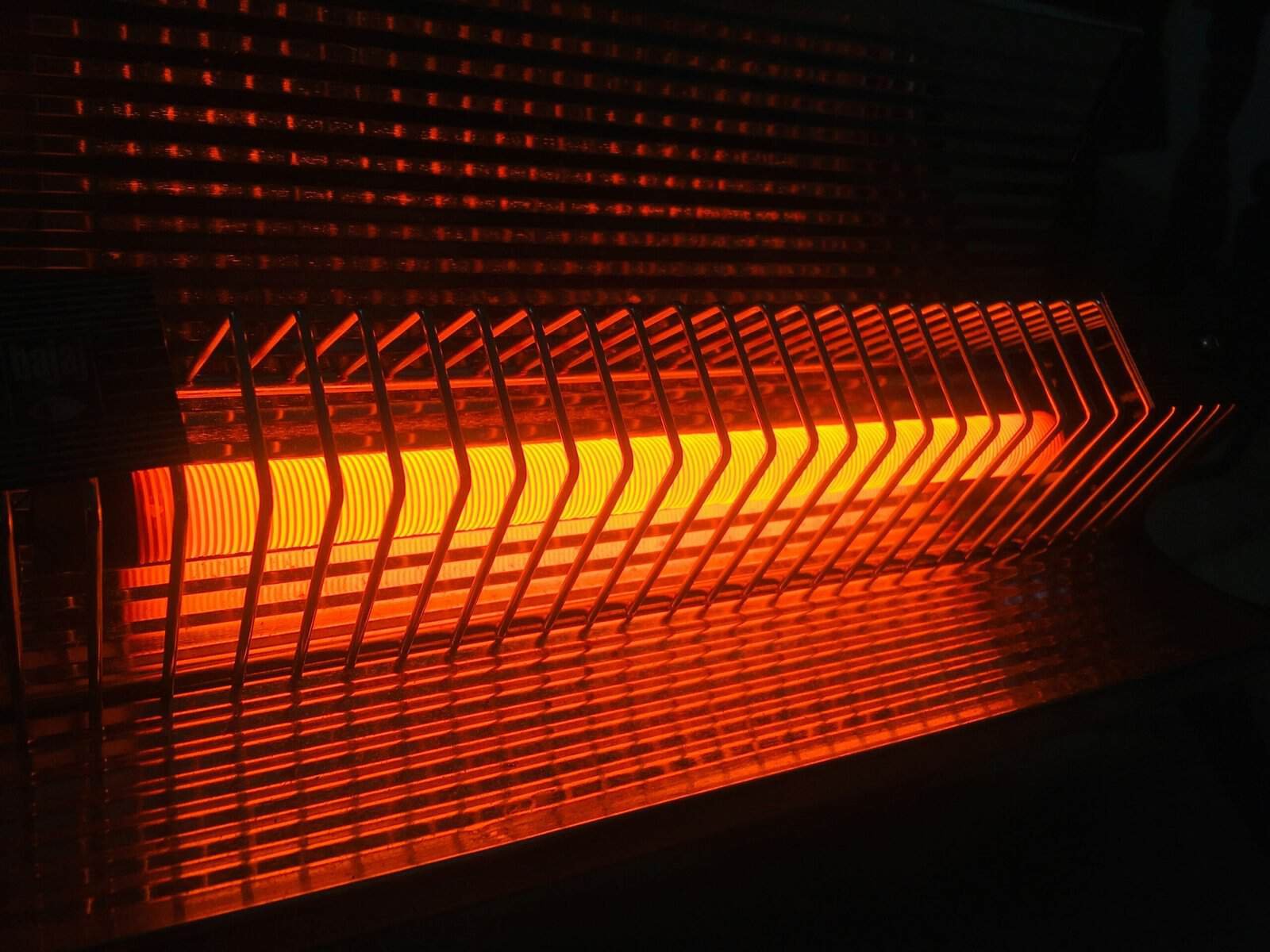
Infrared heaters send radiant heat directly at objects and people instead of warming the air first. You feel warm the moment the element glows, much like standing in winter sunlight. Nothing else in this group delivers comfort that fast.
Because air temperature barely matters, these work in spaces that leak heat. Garages, workshops, and drafty corners suit infrared far better than convection.
Worth Knowing
Coverage is directional and limited. Step out of the beam and the warmth disappears, so an infrared heater does not make a whole room comfortable for a group.
The exposed elements also run hot and glow visibly. Keep them away from curtains, bedding, and pet traffic.
Best for: Desks, reading chairs, garages, and other spots where you sit still in a space you cannot seal. Skip it if you want even warmth across a whole room, or if the heater will sit near soft furnishings.
4. Oscillating Tower Heaters
Why It Stands Out
Tower heaters stack a heating element vertically and sweep the airflow side to side. Oscillation spreads warmth across a wider area than a fixed fan-forced box, which suits medium living rooms and open bedrooms.
The narrow footprint helps too. A tower slides between a sofa and a wall, and the tall outlet pushes heat above furniture.
Worth Knowing
Output is still capped at the same wattage as a small ceramic box. Oscillation distributes heat more evenly but does not create more of it, so a large room will still feel uneven at the far end.
Tall and narrow also means tippable. Confirm the base is wide before putting one near a doorway or a toddler.
Best for: Medium rooms and open layouts where even coverage matters more than raw speed. Skip it if the space is genuinely large, or if a tall unit would sit in a busy walkway.
5. Plug-In Panel and Wall-Mount Heaters
Why It Stands Out
Panel heaters are flat, slim units that hang on a wall or stand on short feet. They free up floor space completely, which matters in a nursery, a small bathroom, or a cluttered office.
Most run without a fan, so they stay quiet and warm a small room gradually. Getting the unit off the floor also keeps it clear of rugs, bedding, and curious pets.
Worth Knowing
Heat output is modest by design. A panel heater takes the chill off a small, reasonably insulated room, and it will not rescue a cold basement.
Mounting adds effort and permanence. Renters should check what the lease allows first, and this guide to renter-friendly home upgrades covers the same problem across other gear.
Best for: Small rooms with no spare floor space, and homes with pets or young children. Skip it if you need fast heat or serious output in a large or poorly insulated room.
6. Heaters With a Built-In Thermostat and Smart Control
Why It Stands Out
A real thermostat cycles the element off once the room hits your target, then back on when it drifts. That feature cuts running cost more than any other, because a heater without one runs until you remember it.
Smart models add scheduling and phone control, so the bathroom can be warm before you get up. Some tie into the same routines as your whole-home smart thermostat, which keeps the two systems from fighting each other.
Worth Knowing
Thermostat accuracy varies widely. Many built-in sensors sit beside the heating element, so they read warm and cut off early, leaving the far side of the room cold.
Smart features also depend on an app that may change over time. Check that the physical controls do everything you need.
Best for: Anyone running a heater daily or overnight, and anyone who wants the room warm on a schedule. Skip it if you only need occasional short bursts. Note that smart heaters should still go straight into a wall outlet, not into one of the smart plugs you might use for lamps.
Best Space Heaters at a Glance
| Heater Type | What It Is Good At | The Tradeoff |
|---|---|---|
| Ceramic fan-forced | Fastest warm-up, cheap, easy to carry | Fan noise and moving dust |
| Oil-filled radiator | Silent, steady warmth that holds for hours | Slow to start, heavy, stays in one room |
| Infrared or quartz | Instant warmth in drafty or open spaces | Directional only, hot glowing elements |
| Oscillating tower | Even coverage in medium rooms, slim footprint | Same output as a small box, tips more easily |
| Panel or wall-mount | Zero floor space, quiet, out of reach | Modest output, mounting effort |
| Thermostat and smart control | Lowest running cost, scheduling, hands-off comfort | Sensor placement errors, app dependence |
What to Look For in the Best Space Heaters
How Big Is the Room You Actually Need to Heat
Room size decides the type, not the wattage. Because nearly every plug-in heater lands around 1,500 watts, a bigger room needs better heat distribution rather than a bigger number. Towers and radiators spread warmth; ceramic boxes and infrared panels concentrate it.
Insulation shifts the answer too. Drafty rooms reward infrared, sealed rooms reward convection.
Does It Have a Thermostat or Only Power Settings
This is the difference between a heater that manages itself and one that runs flat out. Fixed high and low settings force you to babysit the room, and the result is usually too hot or too cold.
Look for a numeric target rather than a vague dial. Precise setpoints make overnight use practical and stop the room overshooting.
How Much Noise Can You Tolerate
Any heater with a fan makes sound, and no marketing term changes that. Bedrooms and offices want a fanless radiator or panel design. Living rooms and bathrooms tolerate fan noise easily.
Airflow has an upside worth weighing. Moving air distributes heat where a ceiling fan on low would otherwise do the job.
Which Safety Features Are Present
Two matter most: a tip-over switch that cuts power when the unit falls, and an overheat cutoff that shuts the element down if airflow gets blocked. Both are common on current models and worth confirming. A cool-touch housing helps in homes with pets or small children.
Ceramic vs Oil-Filled Heaters
When Ceramic Wins
Ceramic wins whenever speed matters more than silence. You want a home office comfortable ten minutes after you sit down. Fan-forced air delivers that; a radiator cannot.
Portability is the other advantage. One light ceramic unit follows you from kitchen to office to bathroom.
When Oil-Filled Wins
Oil-filled wins for long, quiet sessions. Overnight in a bedroom, or a full workday at a desk, silence and steady warmth both add up.
Dry throat complaints also drop compared with constant forced air. A room still benefits from soft surfaces like a living room rug that cut cold floor contact.
Using a Space Heater Safely
Plug It Directly Into a Wall Outlet
This is the single most important habit. A heater drawing 12.5 amps continuously is more current than most extension cords and power strips are built to carry, so the cord becomes the weak point.
Save the power strips and surge protectors for electronics, where loads are small and intermittent. Give the heater its own circuit when you can, since sharing with a microwave invites a tripped breaker.
Keep Clear Space On Every Side
Heaters need air moving freely around them to stay at their designed temperature. Leave a few feet of open space around the unit, and keep bedding, curtains, laundry, and furniture out of that zone.
Place the heater on a hard, flat surface. Thick carpet can block the intake underneath and let heat build inside the housing.
Turn It Off When You Leave the Room
Unattended operation is where problems compound, because nobody notices a blocked vent or a tipped unit. Switch it off when you leave for the day, and use a thermostat and timer if you want warmth overnight. Working smoke alarms belong in every sleeping area, and connected smoke detectors reach your phone when you are out.
Common Misconceptions
Thinking a Higher Wattage Model Will Heat a Bigger Room
Standard household outlets cap plug-in heaters at roughly 1,500 watts, so shopping for more output is a dead end. Every category above produces about the same heat. What changes is how that heat gets distributed, which is why type beats specification.
Assuming a Space Heater Will Lower the Heating Bill On Its Own
Electric heat only saves money when you turn the central system down and heat one occupied room instead. Add a space heater while leaving the thermostat where it was and the bill goes up. The savings come from the tradeoff, never from the appliance.
Believing an Extension Cord Is Fine If It Looks Heavy Duty
Cord ratings are easy to misjudge, and a heater runs near maximum draw for hours rather than seconds. Thin conductors and loose connections handle that sustained load worst. Plug into the wall every time.
Expecting Infrared to Warm a Whole Room
Infrared heats what it can see, which is why it feels immediate and why it stops the moment you move. Buyers who want even warmth across a living room are shopping the wrong category.
Recommended Reading
Heating one room well often exposes the rest of the comfort problem, and these couch covers do more for a cold living room than most people expect. Warming outdoor space is a different job, handled by patio heaters. For the opposite season, these smart window air conditioners take the same approach in reverse.
Frequently Asked Questions
Which of the best space heaters should you buy for a bedroom?
An oil-filled radiator or a fanless panel heater suits bedrooms best, because neither makes noise while you sleep. Both warm the room gradually and hold the temperature steady. Choose a model with a numeric thermostat so it cycles off instead of running all night.
How much does it cost to run a space heater?
Cost depends on your local electricity rate and how many hours the heater runs. A thermostat changes the answer dramatically, since a cycling heater draws full power only part of the time. The reliable way to save is turning the central heat down while heating one occupied room.
Is it safe to leave a space heater on overnight?
It is safer with the right setup, though turning it off is always the lower risk choice. If you do run one overnight, use a model with a thermostat, a tip-over switch, and an overheat cutoff, plug it into a wall outlet, and keep clear space around it.
Can you plug a space heater into an extension cord?
No. A space heater pulls close to the full capacity of a household circuit for hours at a time, and extension cords and power strips are not built for that sustained load. Plug the heater directly into a wall outlet, and move the heater rather than the power.
What is the difference between infrared and ceramic space heaters?
Ceramic heaters warm the air and circulate it with a fan, so the whole room slowly comes up to temperature. Infrared heaters send radiant heat straight at people and objects, so you feel warm instantly but only within the beam. Ceramic suits enclosed rooms, infrared drafty ones.
Do space heaters dry out the air?
They do not remove moisture, but warming air lowers its relative humidity, which is why heated rooms feel dry. Forced-air models make the effect more noticeable because they move air across your skin. Running a humidifier alongside the heater fixes the dry throat most people blame on the heater. Damp air feels colder than dry air at the same temperature, which is why pulling moisture out of a room sometimes does more than adding heat.
