
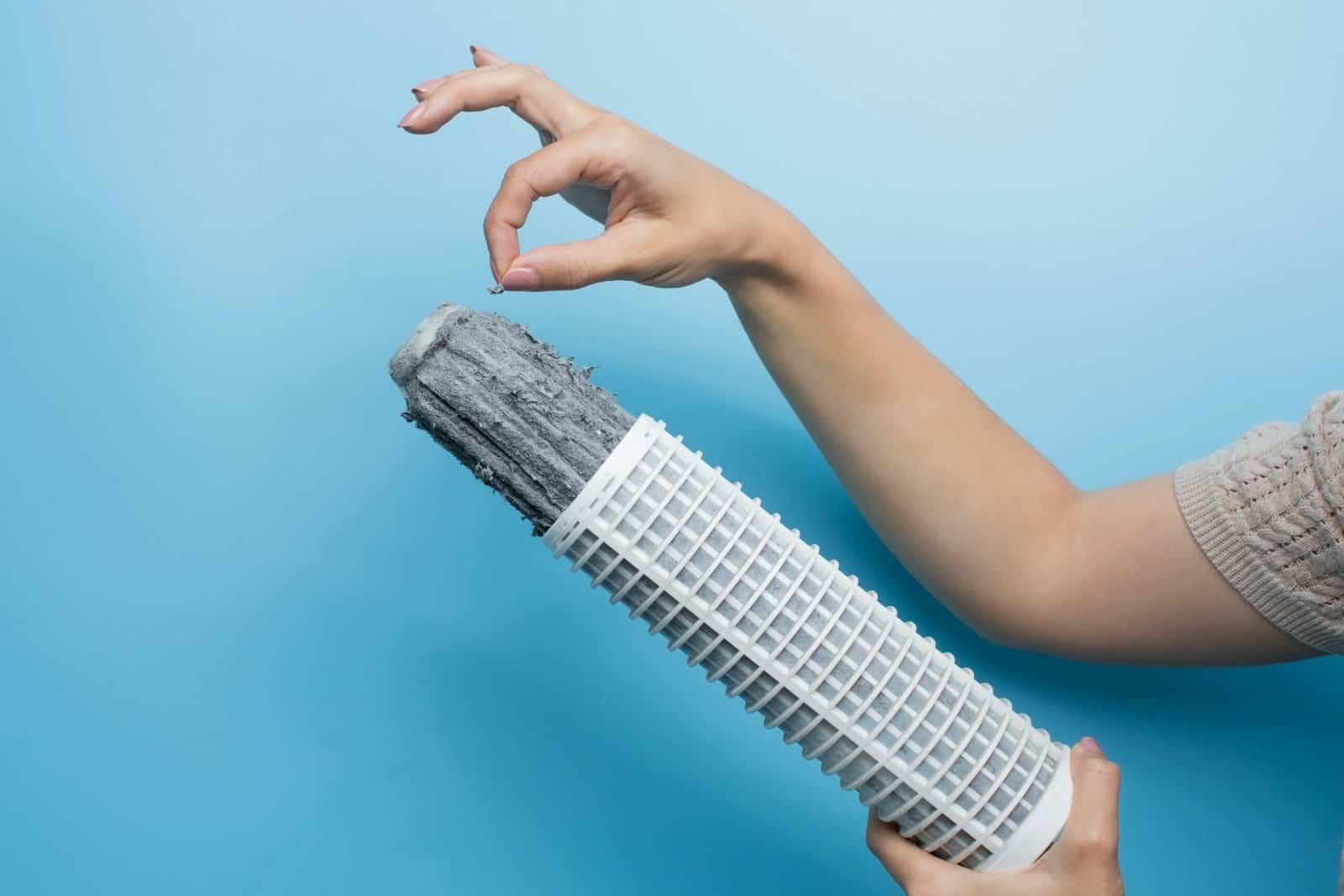
Most true HEPA filters run six to twelve months, activated carbon filters three to six, and washable pre-filters need cleaning every two to four weeks rather than replacing. How often you should replace air purifier filters depends on which layer you are talking about, because a single cartridge often combines two or three with very different lifespans.
Manufacturer intervals assume continuous use in average conditions. Our roundup of air purifiers for bedroom use covers how filter cost differs between models.
| Layer | Typical interval | Replace or clean |
|---|---|---|
| Washable pre-filter | Every 2 to 4 weeks | Vacuum or rinse |
| Activated carbon | 3 to 6 months | Replace |
| True HEPA | 6 to 12 months | Replace |
| Combined HEPA and carbon cartridge | 6 to 12 months | Replace whole |
| Permanent or washable HEPA-type | Per manual, often 1 to 3 years | Clean, then replace |
| UV lamp, where fitted | Per manual, often 1 to 2 years | Replace |
Quick Answer
Follow the manual first, then adjust for conditions. Vacuum the pre-filter every few weeks and the whole thing lasts longer. Replace carbon sooner than HEPA if they are separate layers, because carbon saturates rather than clogs. Pets, smoke, construction dust and running the unit around the clock all shorten every interval.
Key Takeaways
- Different layers have different lifespans, even in one cartridge.
- Carbon saturates invisibly, so it has no reliable visual signal.
- Cleaning the pre-filter is the cheapest way to extend the rest.
- A filter light is a timer, not a sensor, on most units.
- Never wash a true HEPA filter unless the manual says washable.
- Pets, smoke and dust all cut the intervals substantially.
Why the Layers Differ
A pre-filter catches hair, lint and large dust. It is usually a plastic mesh or a thin fabric screen, and it is designed to be cleaned rather than thrown away.
Activated carbon adsorbs gases and odors. It does not clog with particles; it fills up at a molecular level and then simply stops working.
A true HEPA filter traps fine particles in a pleated mat of fibers. It clogs progressively, which raises resistance and reduces airflow.
Those are three different failure modes, which is why one interval cannot cover all of them. Our roundup of smart air purifiers covers the models that track this for you.
Carbon Is the One People Leave Too Long
A saturated carbon filter looks exactly like a fresh one. There is no darkening, no visible loading, nothing to inspect.
The symptom is odor returning. If the unit stopped dealing with cooking smells or pet odor, the carbon is done even if the HEPA layer is fine.
Heavy odor loads saturate carbon fast. A kitchen-adjacent unit or a home with smokers will go through it well inside the stated interval.
Where carbon and HEPA are separate cartridges, replacing carbon on its own schedule is cheaper than replacing both together.
The Filter Light Is a Timer
What it actually counts
On most units it is a running-hours counter that trips at a set number. It has no idea what is on the filter.
Why that misleads
A unit run on low in a clean room may have plenty of filter left when the light comes on. One run hard through a dusty summer may be past it well before.
What to do instead
Use the light as a prompt to look. Pull the filter, check loading and airflow, and decide from there.
Air quality sensors are different
A particulate sensor measures the room, not the filter. It tells you the air is dirty without telling you why.
Signs a HEPA Filter Is Finished
Reduced airflow at the outlet is the main one. A clogged pleated filter restricts air, and you can feel the difference at the vent.
The unit working harder to reach the same result is the same signal read a different way. A smart unit ramping to high on a normal day is reporting resistance.
Visible gray loading across the pleats is confirmation rather than the trigger. Filters look dirty long before they stop working.
A musty smell from the unit means moisture has got into the media, and that filter is finished regardless of age. Our roundup of cordless vacuums covers reducing the dust load that reaches the purifier in the first place.
What Shortens Every Interval
- Pets. Hair loads pre-filters quickly and dander loads HEPA.
- Smoking or frequent cooking smoke. Saturates carbon fastest of all.
- Running around the clock. Double the hours, roughly half the interval.
- Construction or renovation dust. Can clog a HEPA filter in weeks.
- Open windows on a dusty street. More particles in means more on the filter.
- High-traffic rooms. Foot traffic lifts settled dust back into the air.
- Skipping pre-filter cleaning. Everything the pre-filter should have caught goes to the expensive layer instead.
Our roundup of smart plugs covers scheduling a unit to run in occupied hours rather than continuously, which stretches every interval.
Room Size Changes the Interval Too
A purifier rated for a smaller room than the one it is in has to run harder and longer to reach the same result. Harder and longer means more air through the filter, which means the filter loads faster.
This is the quiet reason an undersized unit costs more than it saves. The purchase price is lower and the filter bill is higher, permanently.
The coverage figure on the box assumes a specific air-change rate. Running a unit at the top of its rated range keeps it on high most of the time, which is both louder and more expensive to feed.
Sizing up one step usually means the unit spends most of its life on a low setting. That is quieter, uses less power, and stretches every filter interval at once.
Cleaning What Can Be Cleaned
Pre-filters are the whole game here. Vacuuming one every few weeks, or rinsing it if the manual allows, extends the HEPA and carbon layers noticeably.
Let a rinsed pre-filter dry completely before it goes back. Damp media in a running unit grows exactly what you bought the purifier to remove.
True HEPA filters are not washable. Water collapses the fiber structure and destroys the filtration the pleats provide, even though the filter still looks intact.
Washable HEPA-type filters are a different product, rated lower, and they have their own cleaning instructions plus an eventual replacement date. Our roundup of cabinet and shelf organizers covers somewhere to keep the spare filters you will need.
Recommended Reading
Frequently Asked Questions
How often should you replace air purifier filters?
True HEPA usually every six to twelve months, activated carbon every three to six, and washable pre-filters cleaned every two to four weeks rather than replaced. Check the manual for your model, then shorten the intervals if you have pets, smoke or heavy dust.
Can you wash a HEPA filter?
Not a true HEPA filter. Water collapses the fiber structure and destroys the filtration, even though the filter looks undamaged afterward. Washable HEPA-type filters are a separate, lower-rated product with their own instructions.
How do you know when a filter is done?
For HEPA, reduced airflow at the outlet, or a smart unit running high on a normal day. For carbon, odors returning. Visible gray loading confirms it but is not the trigger, since filters look dirty long before they stop working.
Is the filter indicator light reliable?
It is a running-hours timer on most units, not a sensor, so it has no idea what is actually on the filter. Treat it as a prompt to pull the filter and look rather than as a measurement.
Why does carbon need replacing sooner?
Because it saturates rather than clogs. Carbon adsorbs gas molecules until it has no capacity left, and a saturated filter looks identical to a fresh one. The only signal is odors coming back.
Do pets change the schedule?
Substantially. Hair loads the pre-filter within weeks and dander loads the HEPA layer. Cleaning the pre-filter more often is the cheapest response, since it keeps hair out of the expensive layer.
Can you use third-party replacement filters?
Some are fine and some are not. Check that a filter claiming HEPA performance states a genuine rating rather than describing itself as HEPA-type or HEPA-style, which are different things with lower capture rates.
Does running it less save filter life?
Yes, roughly proportionally, since most intervals are really running-hours figures. Scheduling a unit for occupied hours rather than around the clock stretches every layer, though it also means the air is unfiltered the rest of the time.
