
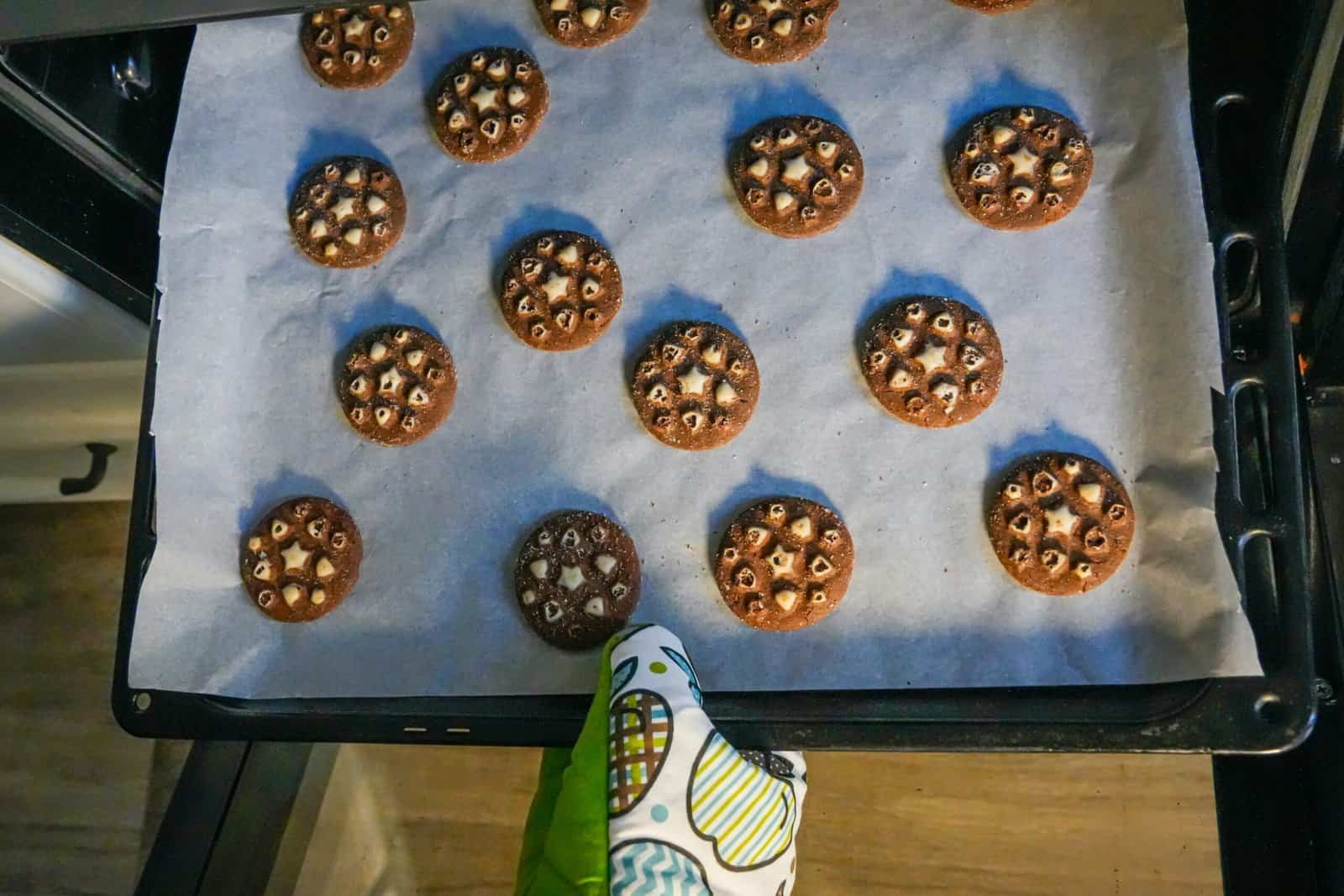
Replace a baking sheet when it warps badly enough to pool batter or slide food, when a nonstick coating has started flaking, or when rust has pitted through the surface. Deciding when to replace baking sheets trips people up because the most alarming-looking change, the dark brown staining, is the one that matters least.
A well-used aluminum sheet that has gone bronze is usually fine. Our roundup of baking sheets and cookie sheets covers what to buy when one genuinely is finished.
Quick Answer
Four things end a baking sheet: a warp bad enough to affect cooking, a nonstick coating that is flaking or scratched through, rust that has pitted the metal, and a rim or seam that has split. Discoloration, faint scratches and a slight rock on a cold pan are all cosmetic. Uncoated aluminum sheets frequently outlive the person’s interest in baking.
Key Takeaways
- Dark staining is patina, not damage.
- Warping matters only when it changes how food cooks.
- A flaking nonstick coating is the one clear replace signal.
- Rust pitting through the surface ends a sheet.
- Thin gauge sheets warp sooner and are the usual casualties.
- Uncoated aluminum can last decades with basic care.
| Condition | Verdict |
|---|---|
| Dark brown or bronze staining | Keep, cosmetic patina |
| Slight rock on a cold flat surface | Keep, usually harmless |
| Pronounced warp, batter pools to one side | Replace |
| Nonstick flaking or chipping | Replace |
| Surface rust, no pitting | Scrub and dry, keep |
| Rust pitted through | Replace |
| Split rim or separated seam | Replace |
Why Staining Is Not Damage
Aluminum darkens with heat and with the oils that polymerize onto it, exactly as cast iron does. The result is a brown or bronze surface that will not scrub back to silver.
That layer is inert and it does not transfer to food. Plenty of bakers consider it an improvement, because a darker surface browns slightly more readily.
Trying to restore the shine with abrasives or oven cleaner does more harm than the staining ever did. Harsh cleaners strip and etch the aluminum.
Judge a sheet by its shape and its surface integrity rather than its color. Our roundup of bakeware sets covers matching a full set when you are starting over anyway.
Warping, and When It Actually Matters
Why it happens
Metal expands unevenly when one part heats faster than another. A cold sheet into a hot oven, or a hot sheet hitting water, both do it.
The test
Put it on a flat counter cold. A slight rock is normal and affects nothing.
When to replace
When batter runs to one side, when food slides during loading, or when the sheet no longer sits flat enough to contact the oven rack evenly.
Preventing it
Heavier gauge resists warping far better than thin sheets do. Never run cold water onto a hot pan.
Nonstick Coatings Have a Different Clock
An uncoated aluminum sheet has essentially nothing to wear out. A coated one does, and the coating decides the sheet’s life.
Flaking is unambiguous. Once the coating is lifting, the sheet is finished, because the exposed areas stick badly and the loose material has nowhere useful to go.
Deep scratches through to the metal are the same verdict arriving earlier. Metal utensils and abrasive scrubbers are how most coatings die.
Our guide to when to replace a nonstick pan covers the same coating question for cookware, where the stakes and the wear rate are both higher.
Rust Is About Depth
Aluminum does not rust. Steel sheets and steel-rimmed aluminum sheets do, usually starting at the rim or a seam where the coating is thinnest.
Surface rust scrubs off. Dry the sheet properly afterward and it carries on.
Pitting is the line. Once rust has eaten into the metal and left texture you can feel, the sheet will keep corroding and will never clean properly.
Seams are the place to check, since water sits there after washing. A rolled rim that has separated from the sheet is a replace regardless of rust.
Gauge Is Why Some Sheets Die Young
Thickness is the single best predictor of how long a baking sheet lasts. Thin sheets warp, and they warp early.
Half-sheet pans in a heavier gauge sit flat through years of oven cycling. The thin ones sold in multipacks often do not survive one holiday season of heavy use.
Rim construction matters too. A rolled rim with a steel wire inside resists bending, and it is also where rust starts.
Our roundup of loaf pans for bread baking covers the same gauge question in a different shape, and our roundup of cooling racks covers getting baked goods off a hot sheet promptly.
Getting More Years Out of a Sheet
- Use parchment or a liner. It keeps the surface off the food and the food off the surface.
- Never shock a hot pan with water. The fastest way to warp one permanently.
- Let it cool before washing. Same reason.
- Dry it immediately. Especially steel and steel-rimmed sheets, and especially the seams.
- Skip the oven cleaner. It etches aluminum and strips coatings.
- Keep metal utensils off coated sheets. A single scrape can start the flaking.
- Store them flat or on edge. Stacked with weight on top encourages bending.
Our guide to lining pans with parchment covers the technique, and our guide to why cakes turn out dense covers a problem people sometimes blame on bakeware.
Does a Darkened Sheet Bake Differently
Slightly, and in a direction most bakers do not mind. A darker surface absorbs more radiant heat, so the bottoms of cookies and pastries brown a little faster than on bare aluminum.
That matters if you are following a recipe timed on a new light sheet. Checking a few minutes early is the whole adjustment.
It is also why two sheets of the same size can give different results in one oven. An old bronzed sheet and a new bright one are not interchangeable at the margin.
Where precision matters, bake the batch you care about on a single sheet rather than splitting it across two of different ages.
Demoting Instead of Discarding
A sheet too warped for cookies is often fine for roasting vegetables, where a little pooling of oil does no harm.
Stained and scratched uncoated sheets work as drip trays under other pans, which is a genuinely useful second job.
A coated sheet that has started flaking does not get demoted. That is the one case where the sheet leaves the kitchen.
Keeping one good sheet for baking and relegating the rest to roasting duty is how most working kitchens end up organized.
Frequently Asked Questions
When should you replace baking sheets?
When a warp is bad enough to pool batter or slide food, when a nonstick coating is flaking or scratched through, when rust has pitted the metal, or when a rim or seam has split. Dark staining and faint scratches are not reasons to replace.
Is dark staining on a baking sheet a problem?
No. Aluminum darkens with heat and polymerized oil, the same way cast iron does. The layer is inert and does not transfer to food. Some bakers prefer it, since a darker surface browns slightly more readily than bare metal.
Does a warped sheet need replacing?
Only if the warp changes how food cooks. Put it on a flat counter cold: a slight rock is normal. Replace it when batter runs to one side, food slides while you load it, or it no longer sits flat on the rack.
How long should a baking sheet last?
An uncoated heavy-gauge aluminum sheet can last decades with basic care. Thin multipack sheets often warp within a year of heavy use. A nonstick sheet’s life is set by its coating rather than by the metal underneath.
Can you fix a warped baking sheet?
Not reliably. Attempts to bend one flat usually leave it worse, because the metal has work-hardened where it deformed. Prevention through heavier gauge and avoiding thermal shock is the only real answer.
Should you throw out a scratched nonstick sheet?
If the scratches go through to the metal or the coating is lifting at any edge, yes. Loose coating has nowhere useful to go, and the exposed areas stick badly. Light surface marks that have not broken through are fine.
What about rust on the rim?
Surface rust scrubs off, and drying the sheet properly afterward stops it returning. Rust that has pitted into the metal, leaving texture you can feel, means the sheet will keep corroding and will not clean properly again.
Does parchment paper extend the life?
Considerably, on coated sheets especially, because it keeps utensils and acidic food off the surface. It also cuts down on scrubbing, which is where most coating and finish damage actually happens.
