
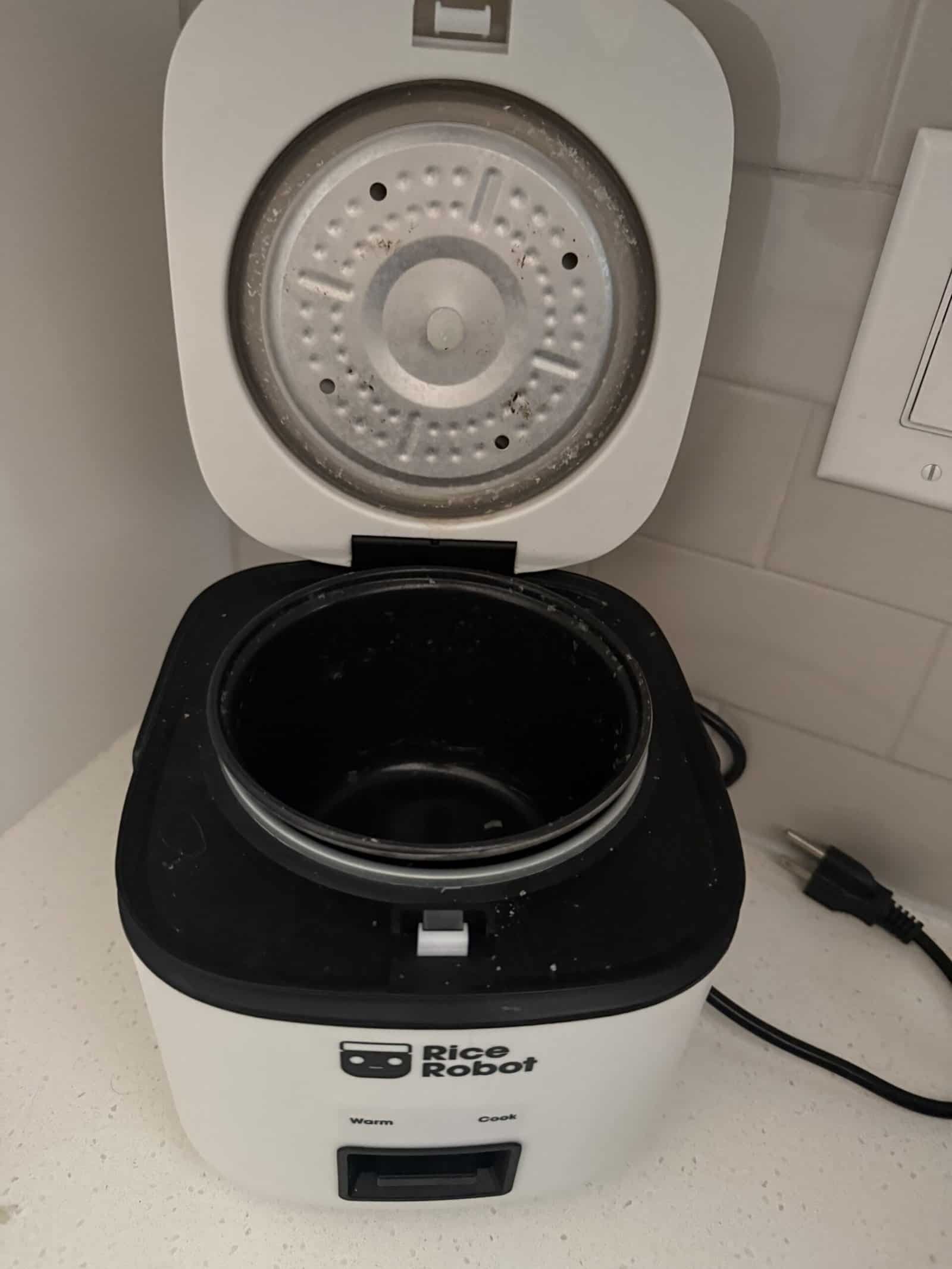
To clean a rice cooker, unplug it and let it cool completely, remove the inner pot and wash it (many nonstick pots are dishwasher safe), soak off any stuck-on rice, wipe the lid and interior, and avoid abrasive scrubbers that damage the nonstick coating; waiting for it to cool before removing the pot is the main thing to plan for. Cleaning a rice cooker is simple once it has cooled. Here is the routine I use, with buying tips in our guide on how to choose a rice cooker.
Quick Answer
Unplug the cooker and let it cool fully, then remove the inner pot and wash it, either by hand or in the dishwasher if it is dishwasher safe. Soak off any rice stuck to the bottom rather than scraping. Wipe the lid, steam vent, and interior housing with a damp cloth, keeping water away from the electrical parts. Avoid steel wool and abrasives on the nonstick pot.
Key Takeaways
- Unplug and let the cooker cool fully before cleaning.
- Remove the inner pot; many are dishwasher safe.
- Soak off stuck-on rice instead of scraping.
- Wipe the lid and interior; keep water off electrical parts.
- Avoid abrasive scrubbers on the nonstick coating.
Let It Cool First
The first step is patience, and honestly it is the main hassle of cleaning a rice cooker. You need to let it cool before removing the inner pot, both for safety and because the pot and cooker are hot right after use. In my experience this is the one mildly annoying part, since you have to wait until it is no longer hot to take the pot out and clean it, and that can take a while. Planning around it helps: start the cool-down when you serve, and clean once you have eaten. Never try to remove a hot pot or clean the cooker while it is plugged in or still warm to the point of being unsafe to handle.
Remove and Wash the Inner Pot
Once cool, lift out the removable inner pot, which is the main thing to clean. If it is nonstick and dishwasher safe, as many are, you can simply run it through the dishwasher, which is what I do. For hand washing, use warm soapy water and a soft sponge or cloth. The removable pot is the biggest advantage for cleaning, since you can wash it separately from the electrical base. Check that your specific pot is dishwasher safe before relying on the dishwasher, but for most nonstick inner pots, this makes cleanup genuinely easy once the cool-down wait is over.
Deal With Stuck-On Rice
Rice sticking to the bottom of the pot is common, even with nonstick, and mine does it sometimes. Do not scrape it off with anything hard or metal, which would damage the coating. Instead, fill the pot with warm water and let it soak for a while to loosen the stuck rice, then wipe it away easily with a soft sponge. A soak handles even stubborn stuck-on rice without any scrubbing. This gentle approach protects the nonstick surface while still getting the pot clean, and it is far more effective than attacking dried rice with force, which risks scratching the coating you want to preserve.
Wipe the Lid and Interior
Beyond the pot, a few other parts need attention. Wipe the underside of the lid, where condensation and starch collect, and clean the steam vent if your cooker has a removable one, since it can trap residue. Wipe the interior housing where the pot sits with a damp cloth to remove any spilled water or rice, but keep water away from the heating element and electrical components; a damp, not wet, cloth is the rule. These areas are quick to clean but easy to forget, and keeping them clean prevents buildup, odors, and residue from affecting future batches of rice.
Protect the Nonstick Coating
Caring for the nonstick pot keeps your cooker working well for years. Always avoid steel wool, abrasive pads, and harsh scouring powders, which scratch and wear down the coating, leading to more sticking over time. Use soft sponges or cloths and gentle dish soap, and rely on soaking rather than scraping for stuck-on rice. Also use plastic, wood, or silicone utensils when serving from the pot rather than metal. Treating the nonstick surface gently is the single biggest factor in how long the pot lasts, and a well-maintained pot keeps rice releasing cleanly batch after batch.
My Cleaning Routine
My routine is straightforward once I account for the cool-down. After eating, once the cooker has cooled enough to handle the pot safely, I lift out the removable nonstick pot and run it through the dishwasher, soaking it first if rice has stuck to the bottom. I wipe the lid and interior with a damp cloth, and that is it. The only real inconvenience is waiting for it to cool before I can remove the pot, but the removable dishwasher-safe design makes the actual cleaning easy. It is a small trade-off for how simple and reliable the cooker is to use.
Keeping Your Cooker in Good Shape
Regular gentle cleaning is what keeps a rice cooker working well for years. Washing the removable pot after each use, soaking rather than scraping stuck rice, and protecting the nonstick coating from abrasives all extend its life, and using the right cooker for your needs starts with our guide on choosing a rice cooker. Keeping the lid and steam vent clean also prevents residue from affecting future batches, so good rice depends partly on a clean cooker, which ties back to the routine in our guide on using a rice cooker. A little upkeep after each use keeps the cooker reliable and the rice tasting fresh.
Recommended Reading
- choosing a rice cooker, easy-clean models.
- using a rice cooker, the routine.
- what to cook in a rice cooker, beyond rice.
- rice cookers under fifty dollars, for picks.
- why rice turns out mushy, troubleshooting.
- stainless pots and how they clean
How to Clean a Rice Cooker FAQ
Can you put a rice cooker pot in the dishwasher?
Many removable nonstick inner pots are dishwasher safe, making cleanup easy, and I run mine through the dishwasher. Check your specific model, since not all pots are dishwasher safe. Never put the electrical base or housing in the dishwasher, only the removable inner pot if it is rated for it.
How do you get stuck rice off a rice cooker pot?
Soak it rather than scrape it. Fill the pot with warm water and let it sit for a while to loosen the stuck rice, then wipe it away with a soft sponge. Avoid metal utensils and abrasive pads, which damage the nonstick coating. Soaking handles even stubborn stuck-on rice.
Why do you have to wait for a rice cooker to cool before cleaning?
The pot and cooker are hot right after use, so waiting is both safer and easier for handling the pot. It is the main minor inconvenience of cleaning a rice cooker. Planning around it, starting the cool-down when you serve and cleaning after eating, makes it manageable.
How do you clean the lid and interior of a rice cooker?
Wipe the underside of the lid and the steam vent, where starch and condensation collect, and clean the interior housing with a damp cloth. Keep water away from the heating element and electrical parts. A damp, not wet, cloth removes residue without risking the electrical components.
What should you not use to clean a rice cooker?
Avoid steel wool, abrasive pads, and harsh scouring powders on the nonstick pot, since they scratch the coating and cause more sticking over time. Also keep water away from electrical parts. Use soft sponges, gentle soap, and soaking instead, and plastic or wood utensils when serving.
How often should you clean a rice cooker?
Clean the inner pot after every use, and wipe the lid and interior regularly. Rice residue and starch build up quickly, so cleaning the pot each time keeps the cooker hygienic and prevents odors. The steam vent and lid benefit from regular attention to avoid trapped residue.
Can you wash a rice cooker lid?
If the lid is removable, wash it separately, and wipe a fixed lid’s underside with a damp cloth. The lid collects condensation and starch, so it needs regular cleaning. Check whether your lid detaches; many do for easier washing. Keep water away from any electrical parts.
How do you get the smell out of a rice cooker?
Clean the pot, lid, and steam vent thoroughly, since trapped starch and residue cause odors. Wiping the interior and airing the cooker out helps. For lingering smells, a wipe with a little diluted vinegar on the removable parts, then a rinse, freshens it. Keep the vent clear.
More in this guide: how to choose the right stand mixer.
