
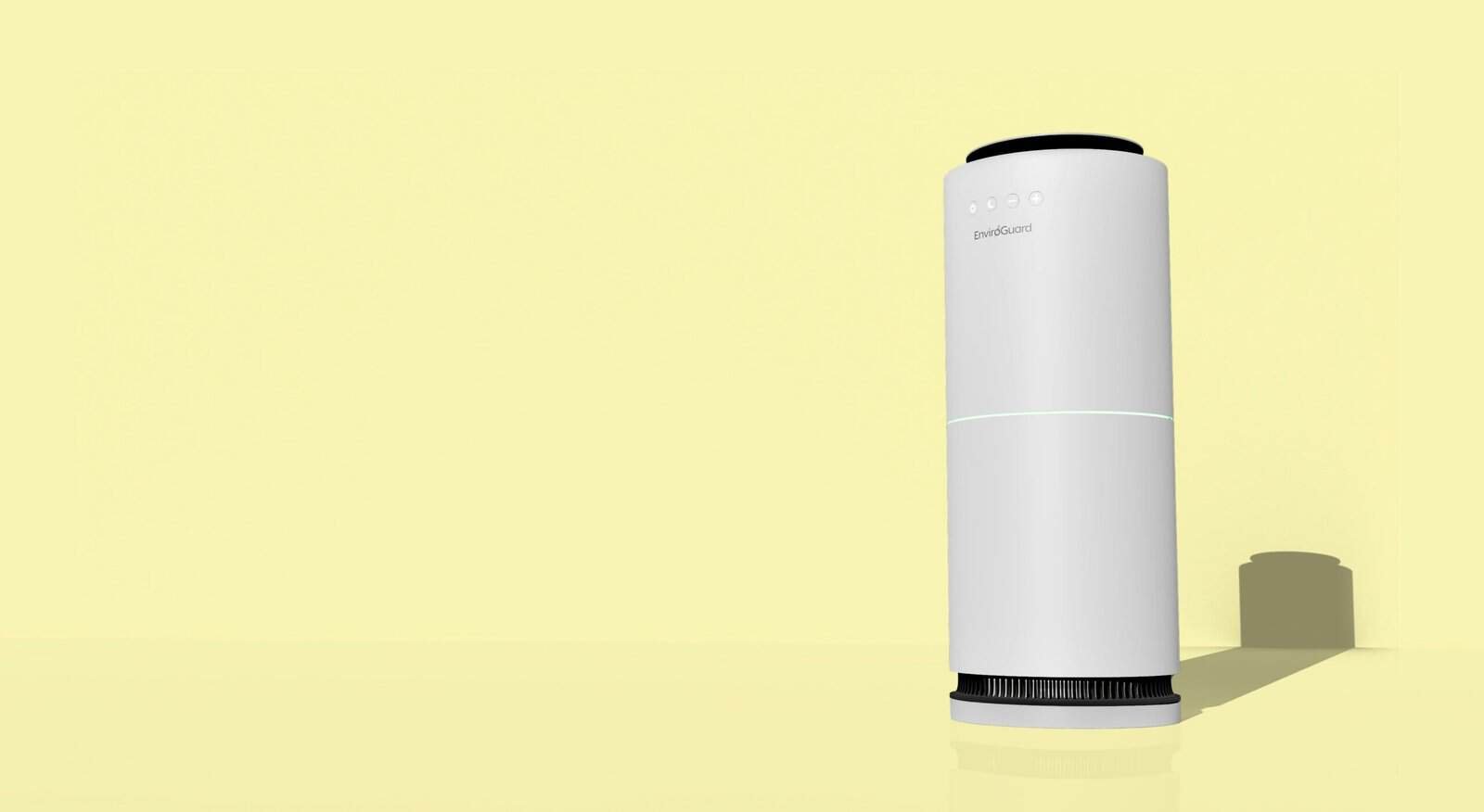
Match the humidifier to the room square footage first, then pick the type, because an undersized unit runs constantly without moving the number and an oversized one pushes a room past the point where mold and dust mites do well. The best humidifiers for most homes are evaporative or ultrasonic units sized to a single room, with a built in humidistat that shuts the unit off at a set level. Our roundup of smart air quality monitors covers the device that tells you whether you need one at all.
Dry air shows up as static, chapped lips, a dry cough at night and gaps opening in wood furniture. Heating season causes most of it, and running air conditioning does the same thing in summer. Dry winter air usually arrives with a cold room, and our space heater guide covers that half.
The category splits by how the water leaves the tank. That single difference drives noise, maintenance, running cost and how the room feels.
Quick Verdict
For a bedroom, an ultrasonic cool mist unit is quiet enough to sleep beside and cheap to run. For a living room or an open plan floor, an evaporative unit moves more moisture and cannot over humidify. Warm mist suits a small room during illness. Anything covering a whole floor needs a console unit rather than a bigger tabletop.
Key Takeaways
- Room size decides the unit, not tank size.
- Target forty to fifty percent relative humidity.
- Ultrasonic units are quiet and need distilled water.
- Evaporative units self limit and cannot overshoot.
- Every type needs weekly cleaning during use.
How We Picked
Capacity to room match came first, since it is the specification that decides whether a humidifier works at all. A unit rated well below the room will run at full output and still leave the air dry.
Maintenance load came second. A humidifier that needs a filter every month and a full teardown weekly gets abandoned by March, and an abandoned humidifier grows biofilm in its tank.
Noise mattered for anything meant for a bedroom. Fan driven units are audible by design, and that rules some of them out for light sleepers.
Running cost and consumables finished the list. Wick filters, cartridges and distilled water all add up across a heating season.
Ultrasonic Cool Mist for a Bedroom
Why It Stands Out
Ultrasonic units use a vibrating plate to break water into a fine mist, so there is no fan pushing air through a wet filter. That makes them the quietest option by a clear margin.
They also draw very little power, since nothing needs heating. A tabletop ultrasonic unit running overnight costs almost nothing to operate.
Worth Knowing
Whatever is dissolved in the water leaves the tank with the mist. Tap water in a hard water area produces a fine white mineral dust that settles on furniture nearby.
Distilled water solves it and adds an ongoing cost. Demineralization cartridges reduce it without eliminating it.
Ultrasonic units also have no natural ceiling, so a unit left running in a small room can push humidity too high. Choose one with a humidistat rather than a simple timer.
This suits bedrooms, nurseries and any room where noise matters. Skip it if your water is hard and buying distilled water regularly sounds unappealing.
Evaporative Units for Living Rooms
Why It Stands Out
Evaporative humidifiers pull air through a wet wick with a fan, so water enters the room as true vapor rather than as visible mist. Minerals stay behind in the wick instead of landing on your shelves.
They also self regulate. Humid air absorbs less water, so output falls automatically as the room approaches saturation and the unit cannot overshoot.
Worth Knowing
The fan is audible. Most models run acceptably on low and get noticeably loud at the top setting, which is where they need to run in a large room.
Wicks are a recurring cost and a recurring chore. A wick left in past its life stiffens with mineral deposit, output collapses, and the unit starts to smell.
Check the wick price before buying, since some units cost more in filters over two years than the humidifier cost.
This suits living rooms, open kitchens and anyone in a hard water area. Skip it if the room needs silence.
Warm Mist for a Sick Room
Why It Stands Out
Warm mist units boil water and release steam, which means the water is sterilized on its way out. Nothing from the tank reaches the room alive.
They are also quiet, since boiling needs no fan. The only sound is an occasional gurgle from the reservoir.
Worth Knowing
They use considerably more electricity than any other type, because boiling water is energy intensive. That shows up on a bill if one runs nightly all winter.
The heating element scales up in hard water and needs descaling. Neglect that and output drops steadily.
The unit holds hot water, so placement matters in a house with small children or pets. Keep it out of reach and off the floor.
This suits a small bedroom during a cold, and anyone who wants steam without mineral dust. Skip it for continuous seasonal use, where running cost adds up fast.
Console Units for Whole Floor Coverage
Why It Stands Out
Console humidifiers are large evaporative units with multi gallon tanks and a fan sized to move air through a whole floor. They handle square footage a tabletop unit cannot touch.
Refilling once a day rather than three times is the practical benefit. Several tabletop units scattered around a house cost more and need more attention than one console.
Worth Knowing
They are furniture sized and they look it. Most sit in a corner and stay there through the season.
They are also the loudest category. A console on high is a background roar rather than a hum, which rules them out for bedrooms.
Filling means either carrying water to the unit or moving the unit to a tap. Check whether the tanks lift out and whether you can carry them full.
This suits open plan floors and dry climates. Skip it in an apartment or anywhere the noise and footprint matter.
Smart Humidifiers With App Control
Why It Stands Out
A connected humidifier holds a humidity target rather than a fan speed. It reads the room, runs to the set level and stops, which is the behavior you actually want overnight.
App control also gives you history. Seeing that a room sat at twenty five percent all week is more useful than guessing from how your throat feels.
Worth Knowing
The onboard sensor sits inside the unit, so it reads the air immediately around itself. A humidifier in a corner can report a satisfied room while the far side stays dry.
A separate sensor elsewhere in the room fixes that if the unit supports pairing. Our roundup of smart air quality monitors covers standalone options.
Connected units also depend on an app that must keep working. A cloud service shutting down turns some of them into ordinary humidifiers.
This suits anyone already running a connected home, and our guide on setting up a smart home covers integration. Skip it if you want a dial and nothing else.
Replacement Wicks and Cleaning Supplies
Why It Stands Out
Consumables decide whether a humidifier still works in year two. A fresh wick restores output that owners often mistake for a failing unit.
Descaling solution and a tank brush handle the rest. Both cost little and take minutes.
Worth Knowing
Generic wicks vary in fit and density. A wick that sits loose in the frame lets air bypass it entirely, and output drops without any obvious cause.
Buy the season’s filters at once. Running an old wick because a replacement has not arrived is how people end up with a smell they blame on the humidifier itself.
Plain white vinegar handles most scale. Dedicated descaler works faster on heavy mineral buildup.
This suits anyone who already owns a unit. Skip it only if your humidifier is filterless and you already keep vinegar in the house.
Humidifiers at a Glance
| Type | Noise | Running cost | Mineral dust | Best room |
|---|---|---|---|---|
| Ultrasonic cool mist | Very low | Very low | Yes, with tap water | Bedroom, nursery |
| Evaporative | Moderate to high | Low plus wicks | No | Living room |
| Warm mist | Low | High | No | Small room, short term |
| Console evaporative | High | Low plus wicks | No | Whole floor |
| Smart ultrasonic | Very low | Very low | Yes, with tap water | Bedroom, office |
How to Choose a Humidifier
Measure the room before anything else
Length times width gives you square footage, and every unit lists a coverage figure. Buy for the actual room rather than the room you wish you were treating.
Insist on a humidistat
A humidistat holds a target and shuts off. A timer or a fan speed dial leaves the room’s humidity entirely to chance overnight.
Check the fill opening
Top fill units take water from a jug without moving anything. Bottom fill tanks have to be carried to a sink and inverted, which is the reason many humidifiers stop getting used.
Price the consumables
Add up wicks or cartridges for two seasons before comparing units. That figure often reverses the ranking you had based on purchase price.
Cool Mist or Warm Mist
When cool mist wins
For continuous seasonal use, cool mist costs far less to run and carries no hot water. It is also the safer choice in a child’s room.
When warm mist wins
For short term use in a small room, warm mist delivers sterile steam with no mineral dust and very little noise. It suits a week of illness rather than a whole winter.
What Trips People Up
Buying by tank size instead of coverage
A large tank on an underpowered unit just means it runs dry less often while still failing to move the humidity in the room.
Running it without measuring the result
Without a reading you cannot tell whether the room sits at thirty percent or fifty five. A cheap hygrometer answers the question the humidifier is meant to solve.
Leaving water in the tank between uses
Standing water grows biofilm within days. Empty and dry the tank whenever the unit will sit idle, rather than topping it up later.
Aiming for maximum humidity
Above roughly fifty percent, condensation forms on windows and dust mites do better. Our piece on whether throw pillows attract dust mites covers that side.
Recommended Reading
- Air purifiers for the bedroom
- Smart air purifiers
- Smart thermostats
- Countertop water filters
- Smart window air conditioners
- Smart home devices for renters
Humidifier FAQ
What humidity level should a humidifier hold?
Between forty and fifty percent relative humidity suits most homes. Below thirty feels dry and produces static, while above fifty encourages condensation on windows and lets dust mites and mold do better. A hygrometer or an air quality monitor gives you the actual number.
How do I know what size humidifier I need?
Multiply room length by width for square footage, then match that against the coverage figure on the unit. Buying above the room size is safer than buying below it, provided the unit has a humidistat that shuts it off at your target.
Why is there white dust around my humidifier?
Minerals from tap water leaving the tank with the mist. Ultrasonic units cause this because they atomize water directly, minerals included. Distilled water eliminates it, a demineralization cartridge reduces it, and evaporative or warm mist units avoid it entirely.
Do I have to use distilled water?
For ultrasonic units in a hard water area, effectively yes, unless white dust on nearby surfaces does not bother you. Evaporative units trap minerals in the wick and warm mist units leave them as scale in the boiler, so both run fine on tap water.
How often should a humidifier be cleaned?
Rinse the tank and refill with fresh water daily during active use, and do a full clean weekly with vinegar or descaler. Standing water grows biofilm quickly, and a neglected tank sends whatever grows in it into the room.
Can a room get too humid?
Yes, and it is the common failure with ultrasonic units left running unattended. Above roughly fifty percent you get condensation on cold windows, damp patches on exterior walls and better conditions for mold and dust mites. A humidistat prevents it.
Are cool mist and warm mist different in effect?
They add the same water to the same air, so the humidity result is equivalent. The differences are practical: running cost, noise, mineral dust, and whether the unit holds hot water. Cool mist wins for seasonal use, warm mist for a short stretch in one room.
Why does my humidifier smell?
Usually a wick past its life or a tank that has held standing water. Replace the wick, run a vinegar cycle through the tank and base, and empty the reservoir whenever the unit will sit unused for more than a day.
