
Most couches never need steam. Vacuuming thoroughly, spot treating marks as they happen, and washing removable covers handles the majority of what a sofa collects, and on leather steam is actively the wrong tool.
The method depends entirely on the material, and getting that wrong is how people damage furniture trying to clean it. Fabric tolerates moisture that leather does not, and the cleaning code on the label decides more than any technique.
Quick Answer
Vacuum the surface and seams first, since most of what looks like dirt is loose debris. Check the cleaning code on the label before applying anything wet. Spot treat marks rather than cleaning the whole piece, and on leather use a dedicated conditioner rather than water or steam. Upholstery work is a common cause of a musty machine, as our guide explains.
Key Points
- Vacuuming removes most of what makes a couch look dirty
- The cleaning code on the label determines what is safe
- Leather should not be steamed or soaked
- Spot treating beats cleaning an entire piece
- Removable covers do most of the work if you have them
- Over-wetting fabric causes more problems than it solves
Start With the Cleaning Code
| Code | Meaning | Safe approach |
|---|---|---|
| W | Water-based cleaners | Damp cloth, mild soap solution |
| S | Solvent only | Dry solvent cleaner, no water |
| WS or SW | Either | Water or solvent, test first |
| X | Vacuum only | No liquid of any kind |
| Leather | Not coded like fabric | Leather cleaner and conditioner |
The code is usually on a tag under a cushion or beneath the frame. Applying water to an S-coded fabric causes rings and shrinkage, and it is the most common way people make a sofa look worse.
Vacuuming Does Most of the Work
What reads as a dirty couch is often loose debris sitting on and in the fabric rather than anything bonded to it. Removing that changes the appearance more than any cleaning solution.
Seams matter more than surfaces, since debris migrates into the gaps where cushions meet the frame and stays there. Lifting cushions and working the crevice tool along each seam is the part people skip.
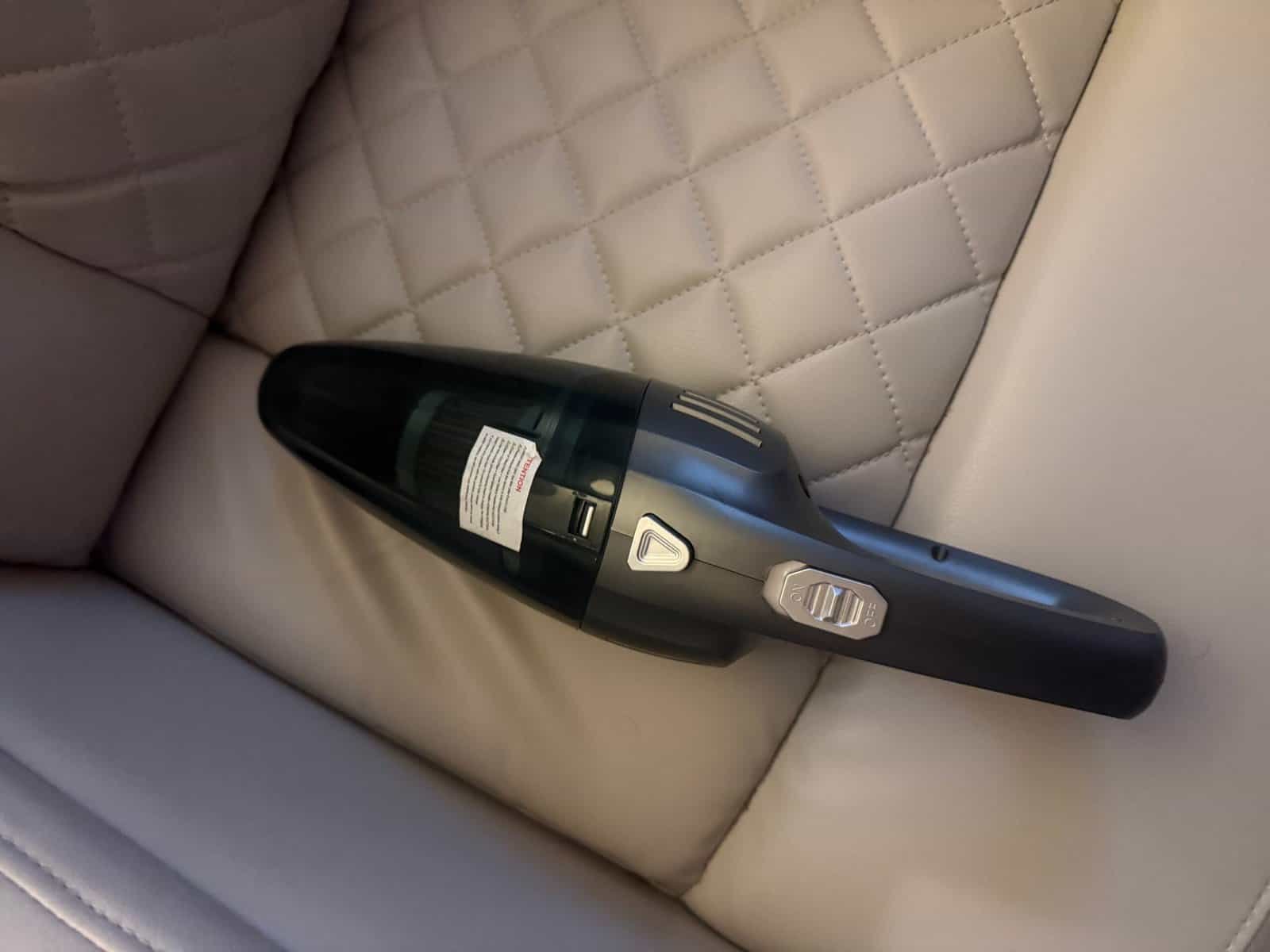
A handheld with an upholstery brush and a crevice tool suits this better than a floor vacuum, and cordless options cover what to look for.
Spot Treating Rather Than Whole Cleaning
Cleaning one patch of a sofa often leaves that patch visibly cleaner than everything around it, which looks worse than the original mark. Working outward from a stain and feathering the edges avoids the ring.
Blot rather than rub. Rubbing spreads a stain and works it deeper into the fibers, and blotting lifts material out.
Test any product on a hidden section first, underneath or behind, and let it dry fully before judging. Some fabrics change color when wet and return to normal, and some do not.
How I Handle Mine
My couch is black leather with a cover over it. The cover takes the wear and goes in the machine, and it stops stains reaching the leather in the first place, which is most of why the leather stays in good condition.
The couch still gets vacuumed and cleaned underneath the cover. That surprises people who assume a cover means the sofa itself needs nothing, and dust and crumbs work their way under it regardless.
Every so often I use a spray to help the leather. Not on a schedule, just when it seems like it needs it, and that is the extent of the leather-specific maintenance I do.
A steam cleaner has never come into it, and on leather it should not. Steam drives moisture and heat into a material that responds badly to both, so the absence of one is not a compromise here.
My experience covers one black leather couch under a washable cover in an apartment. It does not cover fabric upholstery, suede, or light-colored leather, where staining behaves differently and the margin for error is smaller.
Fabric Couches
Baking soda for odor
Sprinkle across the surface, leave for fifteen minutes to an hour, then vacuum thoroughly. It absorbs smells without adding moisture, which suits fabrics that cannot take water.
Mild soap solution on W-coded fabric
A small amount of dish soap in warm water, applied with a barely damp cloth. The mistake is using too much water rather than too little soap.
Solvent cleaner on S-coded fabric
Dry cleaning solvent applied sparingly with a cloth. Ventilation matters, and these should never be combined with water.
A stiff brush for matted pile
Velvet and chenille flatten with use, and brushing along the nap restores appearance without cleaning anything.
Leather Couches
Leather needs dusting and occasional conditioning rather than washing. The finish on most modern furniture leather is a protective coating, and aggressive cleaning strips it.
Water is not a friend here. A barely damp cloth for surface marks is the limit, followed by drying immediately, and soaking causes staining and stiffness that does not reverse.
Conditioner replaces oils that leave over time, which is what keeps leather from cracking. Frequency depends on use and on how dry the room is, and more is not better since excess sits on the surface and attracts dust.
Heat sources matter too. Leather next to a radiator or in direct sun dries and cracks faster regardless of what you put on it.
Order of Operations
Doing these in the wrong sequence creates work rather than saving it.
Vacuum before anything wet touches the fabric. Applying moisture to loose dust turns it into a paste that then needs removing, and that is how a clean attempt makes a sofa look worse than when it started.
Lift and vacuum under the cushions next, since debris that falls back out later undoes the work above it.
Spot treat after both, working one mark at a time and letting each dry before judging whether it needed a second pass. Wet fabric looks darker than dry fabric, so assessing while damp leads to over-treating.
Covers Change the Whole Job
A removable washable cover moves most of the cleaning into the washing machine, which is a different proposition from cleaning upholstery in place.
It also protects against the stains that are hardest to remove. Prevention costs less effort than any cleaning method, and options sit in couch covers.
The catch is that a cover hides rather than eliminates. Debris still gets underneath, and the furniture beneath still needs occasional attention, which people forget precisely because the cover looks clean.
When a Steam Cleaner Would Be Right
Steam suits W-coded fabric upholstery with ground-in soiling that vacuuming and spot treatment have not shifted. That is a real situation and a narrower one than the machines are marketed for.
It is wrong for leather, wrong for S-coded fabric, wrong for X-coded fabric, and wrong for anything you have not identified. Where a couch is genuinely soiled through and the code allows water, professional cleaning is worth pricing before buying a machine you use once. Ongoing maintenance sits closer to routine household upkeep than to deep cleaning.
Related Reading
- covers that take the wear
- vacuums for upholstery work
- keeping the floor around it clean
- storing cleaning supplies
- organizing what you use rarely
- the wider upkeep routine
Frequently Asked Questions
Can you clean a couch without a steam cleaner?
Yes, and most couches never need one. Thorough vacuuming, spot treatment, and washing removable covers handles the majority of soiling. On leather, steam is the wrong tool entirely.
What does the cleaning code on my couch mean?
W allows water-based cleaners, S requires solvent only, WS allows either, and X means vacuum only with no liquid. The tag is usually under a cushion or beneath the frame, and it decides what is safe.
Can you steam clean a leather couch?
No. Steam drives heat and moisture into leather, which causes staining, stiffness, and damage to the finish. Leather needs dusting and occasional conditioning rather than wet cleaning.
How do I get rid of couch smell?
Baking soda sprinkled across the surface, left for fifteen minutes to an hour, then vacuumed thoroughly. It absorbs odors without adding moisture, which suits fabrics that cannot take water.
Does a couch cover mean I never clean the couch?
No. Covers stop stains reaching the furniture and dust and crumbs still work underneath. The couch beneath needs occasional vacuuming, which people skip because the cover looks clean.
How often should leather be conditioned?
It depends on use and how dry the room is, so judging by how the leather looks and feels beats following a schedule. More is not better, since excess conditioner sits on the surface and collects dust.
Why did cleaning leave a ring on my couch?
Usually too much water, or cleaning one patch without feathering the edges outward. Working from the center of a mark toward the edges and drying evenly avoids the visible boundary.
