
Rugs slide for a simple reason: there is nothing holding them down and the floor underneath offers no grip at all. Hard flooring is where it happens most often, since hardwood, tile, and vinyl are all considerably smoother than anything a rug backing can hold onto.
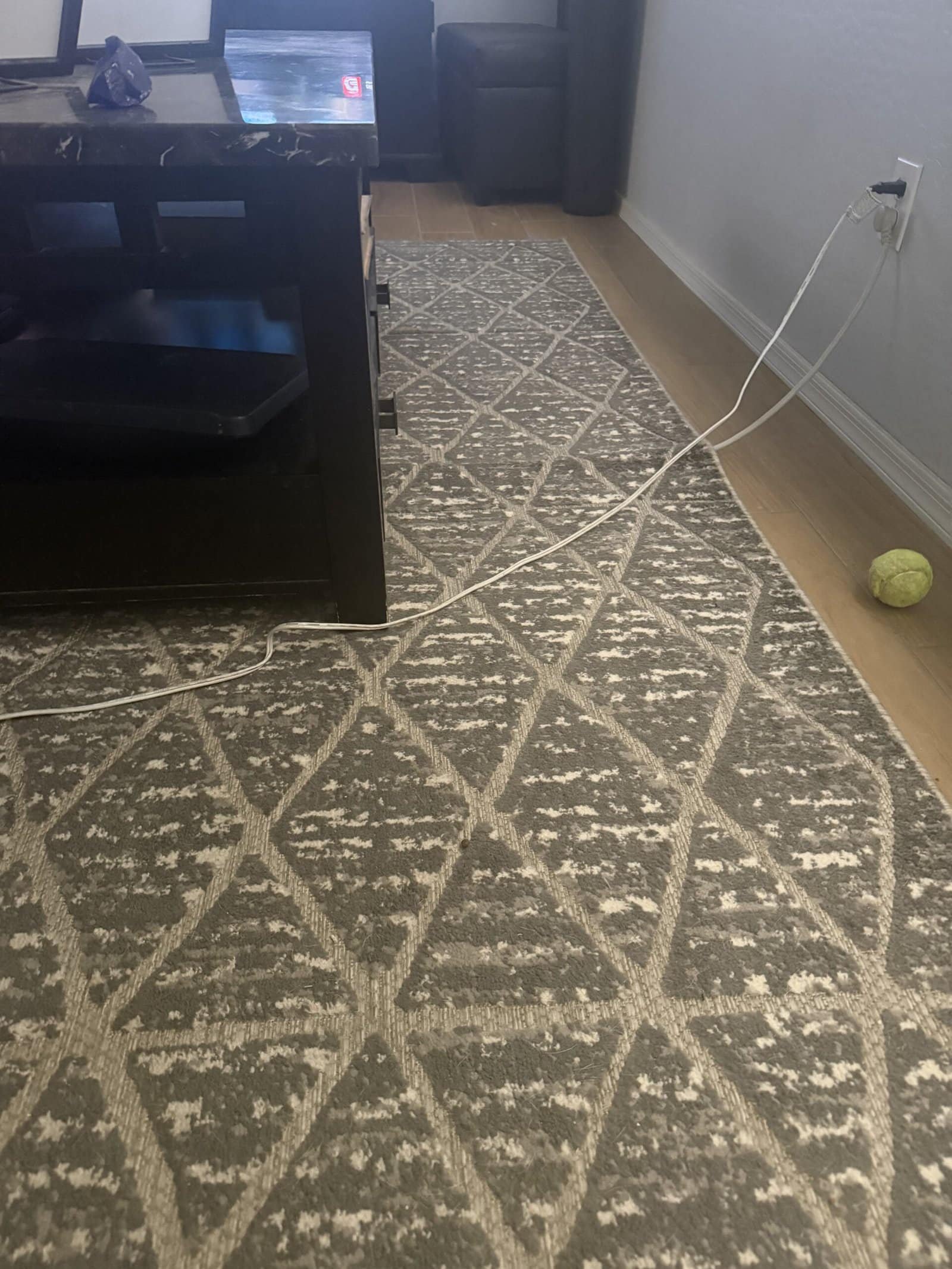
Mine never slides at all, and the reason is weight sitting on it rather than anything I actually bought to prevent it. It is a large rug laid over hardwood with the coffee table sitting on top of it, and that combination pins the whole thing in place. Our note on whether furniture should sit on a rug covers that arrangement. Pile height affects more than grip, and our roundup of low pile rugs covers what survives being walked on.
Quick Answer
Furniture on the rug is the most effective fix and costs nothing. Where that is not possible, a proper rug pad matched to your floor type does the job.
Options Compared
| Method | Effectiveness | Watch for |
|---|---|---|
| Furniture on the rug | Highest, and free | Needs a rug large enough |
| Felt and rubber pad | High, adds cushioning | Cost, and thickness under doors |
| Thin rubber mesh pad | Moderate | Can degrade and mark floors |
| Rug grippers at corners | Stops curling, not sliding | Adhesive residue |
| Double-sided tape | Effective and permanent-ish | Can damage floor finish |
| Silicone caulk beads | Cheap improvisation | Uneven, hard to remove |
Furniture Is the Best Fix
Weight sitting on a rug stops it moving, and no pad on the market matches what a loaded coffee table or a full sofa does.
The more contact points, the better. All legs of the seating on the rug means it is pinned at six or eight places and physically cannot travel.
Mine has only the coffee table on it and has never moved, which suggests one substantial piece is enough on a rug this size.
Where a rug is too small for furniture to sit on, that is frequently the underlying problem rather than the sliding itself.
Going up a size solves both at once, which is worth considering before buying a pad for an undersized rug. Our note on what size rug to buy covers sizing.
Rug Pads Are Not All the Same
Felt and rubber
Felt for cushioning, natural rubber underneath for grip. The best combination.
Thin rubber mesh
Cheap and grips reasonably, with no cushioning.
Memory foam
Comfortable underfoot and generally poor at gripping.
PVC and synthetic
Can react with floor finishes over time.
Your Floor Type Decides the Pad
Hardwood is where most sliding happens and also where the wrong pad does damage, since some synthetic backings react with polyurethane finishes and leave marks that do not come off.
Natural rubber is the standard recommendation for hardwood specifically, and pads sold as safe for hardwood generally say so on the packaging.
Tile and vinyl are slicker again and less vulnerable to finish damage, so material choice matters less there and grip matters more.
Carpet is a different problem entirely, since a rug over carpet slides on the pile rather than the floor and needs a pad designed for that rather than for hard surfaces. Size is the other half of the problem, and rugs sized for a living room covers the dimensions that sit right under furniture. The same friction problem shows up on furniture, where a soundbar creeping forward on a glossy shelf needs a similar fix.
Mine sits on hardwood, which is the situation where the pad question matters most and where furniture weight is doing the work instead. Our roundup of vacuum and mop combos covers hard floors.
Curling Corners Are a Separate Problem
A corner that lifts is not the same as a rug that slides, and the fixes are different.
Curling usually comes from the rug having been rolled or folded for storage, and the memory in the backing takes time to release.
Reverse rolling the affected corner and leaving it weighted for a few days resolves most cases without any product.
Corner grippers exist specifically for this and address the lifting rather than the sliding, which is why people who buy them for a sliding rug are disappointed.
A lifted corner is also the main trip hazard a rug presents, which makes it worth fixing promptly rather than living with.
Methods to Approach Carefully
Double-sided carpet tape holds well and can pull finish off hardwood or leave adhesive that requires solvent to remove.
Silicone caulk applied in beads to the rug backing is a common improvised fix, and it dries uneven and is difficult to remove later.
Hot glue on the backing has the same issues and adds stiffness that changes how the rug lies.
Velcro strips work and require adhering something to the floor, which is a problem in a rental.
All of these solve the immediate problem and create a future one, which is why a pad or furniture weight is the better answer. Our roundup of cordless vacuums covers keeping the rug itself clean.
Rug Backing Makes a Difference
Rugs are not equally slippery, and the backing on the underside decides how much grip the rug has before you add anything.
Woven rugs with a jute or cotton backing have some natural texture and grip modestly on hard floors, which is better than nothing.
Machine-made rugs with a smooth latex or synthetic backing offer almost no grip at all, and those are the ones that travel across a room over a week.
Weight matters alongside backing. A heavy wool rug stays put through inertia in a way a lightweight synthetic one never will.
That is why two rugs in identical rooms behave completely differently, and why advice that works for one person does nothing for another. Our note on console tables with storage covers what else to weigh up.
Sizing and Fitting a Pad
A pad should sit slightly smaller than the rug, usually about an inch in from each edge, so it does not show around the perimeter.
Most pads cut with scissors or a utility knife, and cutting from the underside gives a cleaner edge.
Thickness affects door clearance, which is worth checking before buying since a thick felt pad plus a rug can stop a door opening.
Vacuuming the floor before laying the pad matters more than it sounds, because grit trapped underneath grinds against the finish every time someone walks across.
Lifting and airing both rug and pad occasionally prevents moisture accumulating against the floor, particularly in humid conditions.
What to Check
Whether furniture could sit on it
The free fix, and the most effective one.
Which floor type you have
Hardwood needs a pad rated for it. Some backings mark finishes.
Sliding versus curling corners
Different problems with different fixes.
Door clearance with a pad
Thickness adds up faster than expected.
Common Mistakes to Avoid
Buying a pad for an undersized rug
Going up a size fixes the sliding and the appearance together.
Using the wrong pad on hardwood
Some synthetic backings react with floor finishes and leave permanent marks.
Corner grippers for a sliding rug
Those address curling. They do very little about a rug that travels.
Tape or caulk as a first resort
Both solve it now and create a removal problem later.
Recommended Reading
See our roundup of robot vacuums, our note on organizing an entryway, our roundup of entryway mats, and a roundup of couch covers.
Rug Sliding FAQ
How do I stop an area rug from sliding?
Put furniture on it if the rug is large enough. Otherwise a felt and rubber pad matched to your floor type.
Does yours slide?
Never. It is a large rug on hardwood with the coffee table sitting on it, and that weight pins it in place.
What pad should I use on hardwood?
Natural rubber, and one specifically rated as safe for hardwood. Some synthetic backings react with floor finishes and leave marks.
Do corner grippers work?
For curling corners, yes. For a rug that slides across the floor, not really. Those are different problems.
Can I use double-sided tape?
It works and it can pull finish off hardwood or leave adhesive behind. A pad avoids that entirely.
What about a rug over carpet?
Different problem. It slides on the pile rather than the floor and needs a pad designed for carpet rather than hard surfaces.
How big should the pad be?
Slightly smaller than the rug, about an inch in from each edge so it does not show around the perimeter.
Why is one corner lifting?
Usually memory from being rolled or folded in storage. Reverse rolling that corner and weighting it for a few days generally resolves it.
