
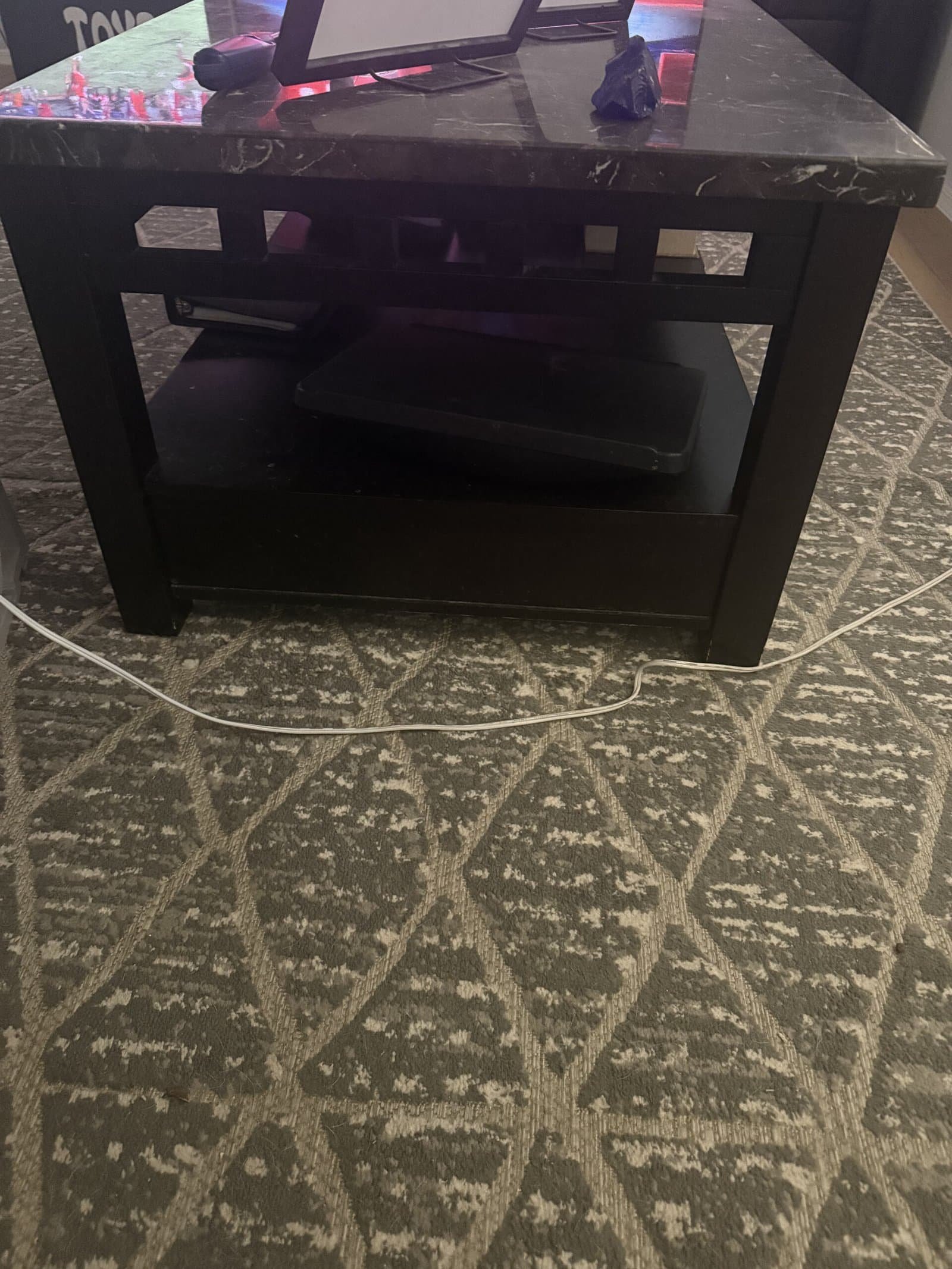
Yes, and the reason is structural as much as visual. Furniture on a rug anchors it, defines the seating area as one thing, and stops the whole arrangement reading as separate pieces on bare floor.
Mine has the coffee table on it and nothing else, and the rug has never slid. That combination works in a room where the rug is large enough that the seating sits around it rather than off it. Our note on what size rug for a living room covers the sizing.
Quick Answer
At minimum the front legs of seating. All legs on looks best and needs a bigger rug. Coffee table only works when the rug is large enough to fill the room.
The Three Arrangements
| Arrangement | Effect | Rug size needed |
|---|---|---|
| All legs on | Most cohesive, fully anchored | Largest |
| Front legs on | Connects seating to the rug | Medium |
| Coffee table only | Works if the rug fills the room | Varies |
| Nothing on it | Rug floats, reads as a mat | Any, and rarely looks right |
| Mixed rules | Looks unintentional | Avoid |
| Heavy pieces on | Anchors well, leaves dents | Any |
Furniture Holds the Rug Still
A rug with weight on it does not travel, and that is the simplest solution to the sliding problem there is.
Mine has the coffee table sitting on it over hardwood, and it has never moved. A hard floor is exactly the surface where rugs slide most, so that weight is doing real work. Where furniture cannot hold it, our roundup of rug pads for hardwood floors covers which materials are safe against a finish.
The effect scales with how much furniture is on the rug. All legs on means the rug is pinned at multiple points and physically cannot shift.
Front legs on gives you less anchoring, and a rug with only front legs on a hard floor may still need a pad underneath.
A rug with nothing on it slides freely, which is why the floating arrangement causes the most complaints. Our note on keeping a rug from sliding covers the rest.
Why All Legs On Looks Best
Everything reads as one group
The rug becomes the floor of the seating area rather than an object in it.
No visual break under furniture
Legs on different surfaces divide the arrangement.
Maximum anchoring
Pinned at several points, it cannot travel.
It needs the largest rug
Which is the reason people choose something else.
Front Legs On Is the Practical Middle
Front legs on the rug is the most common arrangement in real rooms because it connects the furniture to the rug without requiring the largest size available.
The visual effect is close to all legs on, since the eye reads the front of the seating meeting the rug and does not track what is happening behind it.
Applying it consistently is what matters. Every piece in the seating group wants the same treatment, and one chair with all legs on among pieces with front legs on looks like a mistake.
Depth matters too. Seating should sit far enough onto the rug that the front legs are clearly on rather than balanced at the edge.
A leg half on and half off is worse than either, and it also rocks. Our roundup of couch covers covers the seating.
The Coffee Table Only Arrangement
Putting only the coffee table on the rug gets criticized, and it works fine when the rug is large enough that the seating sits around it on floor rather than being stranded away from it.
That is what I have. The rug covers most of the room, the coffee table sits on it, and the arrangement reads as intentional rather than undersized.
Where it fails is when the rug is small and the seating is pushed back from it, which produces the island effect that makes a room look unfinished.
The test is whether the rug relates to the walls or only to the coffee table. A rug reaching toward the edges of the room works. A rug sized to the table does not.
So the arrangement is not the problem. Undersized rugs are, and the coffee table version simply makes that more obvious.
Dents and Marks
Furniture legs compress rug fibers, and heavy pieces leave dents that stay after the furniture moves.
Low pile rugs show this far less than thick ones, since there is less fiber to crush in the first place.
Dents in most rugs recover over time, and steam or a damp cloth with gentle brushing speeds it considerably.
Furniture coasters spread the load over a wider area and are worth using under heavy pieces on any rug you care about.
Rotating a rug periodically also evens out both dents and wear, which matters more in a room with a consistent traffic path. Our roundup of cordless vacuums covers upkeep.
Weight and Stability
A coffee table on a thick rug sits unevenly, because the legs sink at different rates depending on how the fibers compress underneath each one.
That produces a table that rocks slightly and never quite settles, which is a daily annoyance rather than a cosmetic one.
Low pile avoids it entirely, and mine is not thick, which is part of why the coffee table sits stably.
Anything with wheels is worse again, since casters designed for hard floors dig into pile rather than rolling on it.
For a room where furniture sits on the rug, pile height matters more than almost any other specification. Our roundup of console tables covers heavier pieces.
Rugs Under Dining Tables Are Different
The leg rules above are written for seating groups, and a dining table changes the requirement because chairs move.
A dining rug needs to extend far enough past the table that a chair stays on the rug when pulled out, not just when pushed in.
Getting that wrong produces chairs that catch on the rug edge every time someone sits down or stands up, which is more irritating than any visual problem.
Low pile matters even more here, since chair legs dragging across thick pile is both harder to do and harder on the rug.
Spills are the other consideration, and a rug under a dining table wants to be something you can clean rather than something you protect. Our roundup of vacuum and mop combos covers cleaning both surfaces.
What to Decide First
Which leg rule the room allows
That determines the rug size rather than the other way around.
Whether the rug reaches the walls
The coffee table arrangement needs it to.
Pile height against your furniture
Thick pile means unstable legs and lasting dents.
Whether you need a pad
Less anchoring means more sliding on hard floors.
Common Mistakes to Avoid
Mixing leg rules in one group
Every piece in the seating arrangement wants the same treatment.
Legs balanced on the edge
Half on and half off rocks and looks unintentional.
Heavy furniture on high pile
Legs sink unevenly, the piece rocks, and the dents last.
Coffee table only on an undersized rug
That is what creates the island effect people criticize.
Recommended Reading
See our note on organizing an entryway, our roundup of robot vacuums, our roundup of entryway lighting, and a roundup of coat racks and hooks for entryways.
Furniture on Area Rugs FAQ
Should furniture sit on an area rug?
Yes. Front legs of seating at minimum, all legs if the rug is large enough. Furniture anchors the rug and ties the arrangement together.
What do you have on yours?
Just the coffee table. The rug covers most of the room, so the seating sits around it rather than being stranded away from it.
Is coffee table only wrong?
Not if the rug is large enough to relate to the room rather than just to the table. Undersized is the actual problem people are criticizing.
Does furniture stop a rug sliding?
Considerably. Weight pins it in place, and mine has never moved with the coffee table on it over hardwood.
Will furniture leave dents?
Yes, and low pile shows it far less. Most dents recover with time, and steam with gentle brushing speeds it up.
Can I mix leg arrangements?
Not within one seating group. One chair with all legs on among pieces with front legs on reads as a mistake.
What about heavy pieces?
Coasters spread the load and reduce denting. On thick pile, heavy legs sink unevenly and the piece rocks.
Does pile height matter here?
More than almost anything else. Low pile holds furniture level. High pile lets legs sink at different rates.
