
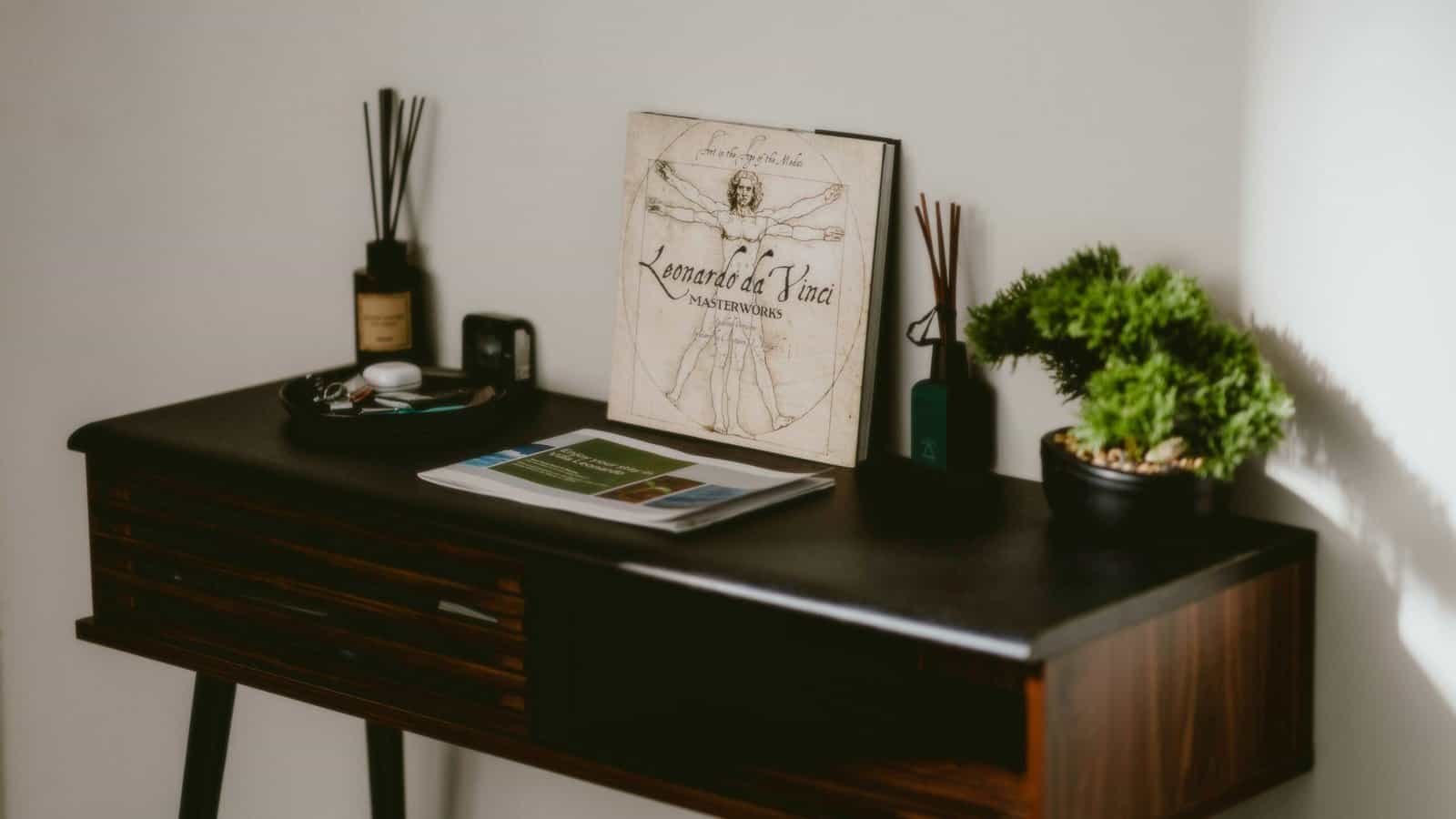
A console table in a hallway lives or dies on one measurement. Anything deeper than about twelve inches starts catching shoulders in a corridor, and the ones that look best in photographs are usually sixteen or more.
The second thing that decides it is whether the storage closes. A console with an open shelf becomes a display of everything you own within a fortnight.
Quick Verdict
Measure your hallway width before anything else, and keep the table under twelve inches deep in a corridor. Drawers beat open shelves for keeping surfaces clear. Wall-anchor anything tall, since a narrow table tips forward when a loaded drawer is pulled out.
Key Takeaways
- Depth matters more than length in a hallway
- Closed storage keeps the surface clear, open storage fills
- Narrow tables tip when a loaded drawer opens
- Height should suit dropping things, around thirty inches
- A tray on top contains what the drawers do not
- Lower shelves take baskets or shoes
How We Picked
Depth came first, since a corridor has to stay passable with a bag in each hand and every inch of table depth comes off the walking width.
Storage type ranked next. Drawers hide clutter and open shelves display it, which changes how the hallway reads within weeks of buying.
Stability mattered because narrow deep-drawered furniture tips forward, and an entryway is exactly where someone yanks a drawer while holding something else.
Surface durability counted, since keys, wet umbrellas, and dropped bags all land on it daily.
Slim Drawer Consoles
Why It Stands Out
A table under twelve inches deep with two or three drawers handles keys, post, gloves, and chargers without projecting into the walking space.
Drawers close, which is what stops the surface accumulating. An open shelf holds the same volume and shows all of it.
Full-extension runners let you reach the back, where a cheap runner stops halfway and the rear third goes unused.
Most sit around thirty inches tall, which suits dropping things without bending.
Worth Knowing
Shallow drawers hold less than they look, and anything deeper than a few inches in a slim table becomes a place things get lost.
Narrow tables tip forward when a loaded drawer opens, so wall anchoring is worth doing rather than optional.
Good for corridors and small entryways. Skip tables over twelve inches deep in a hallway, and wider planning sits in entryway organizers and mudroom storage.
Consoles With Lower Shelves
Why It Stands Out
A shelf underneath takes baskets or shoes, which uses the volume between the tabletop and the floor that would otherwise be empty.
Baskets on that shelf give you closed storage without buying a table with drawers, and they cost far less.
Two tiers roughly double capacity in the same footprint, which matters when the footprint is the constraint.
Worth Knowing
Open shelves are visible from the whole hallway, so what sits there needs to look reasonable or be in a basket.
Shoes underneath bring in dirt that collects around the legs, which makes cleaning harder rather than easier.
Good where baskets do the containing. Skip leaving the shelf uncovered, and shoe storage sits in shoe racks and storage.
Console Cabinets With Doors
Why It Stands Out
Doors hide everything, which suits an entryway visible from a living room or one that visitors see immediately.
Cabinet space takes bulkier items than drawers, including bags, cleaning supplies, and shoes.
A closed front also reads as furniture rather than storage, which changes how a small hallway feels.
Worth Knowing
Doors need clearance to swing, which a narrow corridor may not have. Sliding doors solve that at higher cost.
Closed cabinets accumulate things nobody uses, since nothing prompts a clear-out the way visible clutter does.
Good for visible entryways and bulkier storage. Skip hinged doors in a tight corridor.
Wall-Mounted Floating Consoles
Why It Stands Out
A floating console has no legs, so the floor underneath stays clear for cleaning and for a shoe rack or basket.
It also cannot tip, which removes the stability problem entirely.
Mounting height is yours to choose, which suits households where a standard thirty inches is wrong.
Worth Knowing
Weight goes entirely into the wall, so studs matter here more than for anything else in an entryway.
This is permanent and needs drilling, which rules it out for many renters.
Good for owners wanting the floor clear. Skip drywall-only mounting, and wall systems sit in pegboards and wall organizers.
Console Tables With Charging Built In
Why It Stands Out
Phones and keys travel together, so a console with USB ports handles both in one stop on the way in and out.
Built-in charging removes the cable tangle that otherwise sits on the surface and defeats the point of keeping it clear.
Some include a drawer with internal charging, which keeps devices out of sight while they charge.
Worth Knowing
These need an outlet nearby, which many hallways lack, and trailing an extension across a corridor is worse than the problem.
Built-in USB standards date faster than furniture does, and a table with older ports outlives its usefulness.
Good where an outlet exists. Skip if it means running a cable, and key storage sits in key and mail organizers.
Narrow Benches With Storage
Why It Stands Out
A bench at console height with a lift-up lid or lower cubbies gives you somewhere to sit while removing shoes, which is what gets shoes off at the door.
Seating is the function a console table cannot provide, and in an entryway it changes behavior more than storage does.
Lower profile also suits hallways where a taller console would feel imposing.
Worth Knowing
Bench height is lower than console height, so it does not work as a drop surface for keys and post.
Lift-up lids need clearing before opening, which makes them suit seasonal items over daily ones.
Good where seating matters more than a surface. Skip as your only drop point, and bench options sit in cabinet and shelf organizers.
Console Options at a Glance
| Type | Typical depth | Storage | Suits narrow halls |
|---|---|---|---|
| Slim drawer console | 10 to 12 in | Closed, small items | Yes |
| Lower shelf console | 12 to 14 in | Open, baskets | Sometimes |
| Console cabinet | 14 to 16 in | Closed, bulky | No |
| Floating console | 8 to 12 in | Closed, small | Yes |
| Charging console | 12 to 14 in | Closed plus power | Sometimes |
| Storage bench | 14 to 16 in | Closed, seating | No |
What to Look For
Measure the corridor first
Subtract the table depth from your hallway width and see what is left. Under about thirty-six inches of clear path gets annoying daily.
Prefer closed storage
Drawers and doors keep the surface clear. Open shelves hold the same volume and display all of it, which makes a hallway read as cluttered.
Check the drawer runners
Full extension means the back of the drawer is usable. Partial runners waste the rear third, which on a shallow drawer is most of it.
Anchor anything narrow
A slim table with a loaded drawer pulled out is unstable by design. Most ship with hardware that goes unused.
Getting the Height Right
Around thirty inches suits most people
That is standard table height and works for dropping keys without bending or reaching.
Lower if it doubles as seating
Bench height sits considerably lower, and using one as a drop surface means bending every time.
Higher for a floating console
Mounting a wall console slightly higher clears space for baskets or shoes underneath, which a legged table cannot offer.
Consider who else uses it
Children reaching their own hooks and drop spot is what makes them use them, and a standard-height surface is above that.
What Actually Goes in a Hallway Console
Deciding what the table is for before buying prevents the common outcome of drawers full of things that belong elsewhere.
The top drawer should hold what you reach for daily. Keys, sunglasses, a spare charging cable, and whatever you carry out every morning.
The second drawer takes the weekly items: dog leads, spare gloves, a torch, and the things you need occasionally but not on the way out.
Anything below that fills with what nobody sorts. A console with three drawers usually has one useful drawer, one occasional one, and one nobody opens.
The lower shelf works best with baskets rather than loose items, since loose things on an open shelf look like clutter regardless of what they are. Shoes belong there only if the floor gets swept, because a shelf above shoes collects the dirt they bring in, covered in cordless vacuums for apartments.
Post is the item that causes the most trouble. It arrives daily and most of it needs no action, which is why a console drawer becomes an unsorted pile within a month unless something separates it.
Drawers Against Open Shelves
Drawers
Hide clutter, keep the surface clear, and cost more. They limit item size and accumulate things nobody sorts because nothing prompts it.
Open shelves
Cheaper, take bulkier items, and access is faster with nothing to open. Everything is visible, which for most entryways means it looks messier.
Common Mistakes to Avoid
Buying on looks rather than depth
The consoles that photograph well are usually deep. In a corridor that depth comes directly off the space you walk through.
Choosing open storage in a visible hallway
Open shelves display whatever lands there. A closed drawer holds the same things and the hallway stops looking cluttered.
Skipping the anchor
A narrow table with a loaded drawer open tips forward, and an entryway is where someone pulls one while holding something else.
Leaving the top bare
A flat surface with no tray becomes a pile. A tray gives small items a boundary, and things outside it read as needing putting away, covered in key and mail organizers.
Recommended Reading
- entryway storage
- coat storage
- keys and mail
- shoe racks
- boot trays
- shelf organizers
- organizing your kitchen
Part of our guide to organizing an entryway.
Frequently Asked Questions
How deep should a hallway console table be?
Under twelve inches in a corridor. Anything deeper starts catching shoulders, and the depth comes directly off the width you walk through.
Drawers or open shelves?
Drawers for a visible hallway, since they keep the surface clear and hide what accumulates. Open shelves cost less and display everything on them.
What height should a console table be?
Around thirty inches suits most people for dropping keys without bending. Bench-height furniture is considerably lower and works badly as a drop surface.
Do I need to anchor it?
For anything narrow with drawers, yes. Pulling a loaded drawer out tips a slim table forward, and most ship with hardware that goes unused.
What works if I have no hallway?
A floating wall-mounted console takes no floor space and leaves room underneath for baskets or shoes. It needs studs and permission to drill.
Are charging consoles worth it?
Only if an outlet is nearby. Trailing an extension across a hallway is worse than the cable tangle it was meant to solve.
How do I stop the top getting cluttered?
A tray. It gives small items a boundary, and anything outside it looks like it needs putting away, which prompts you to do it.
