
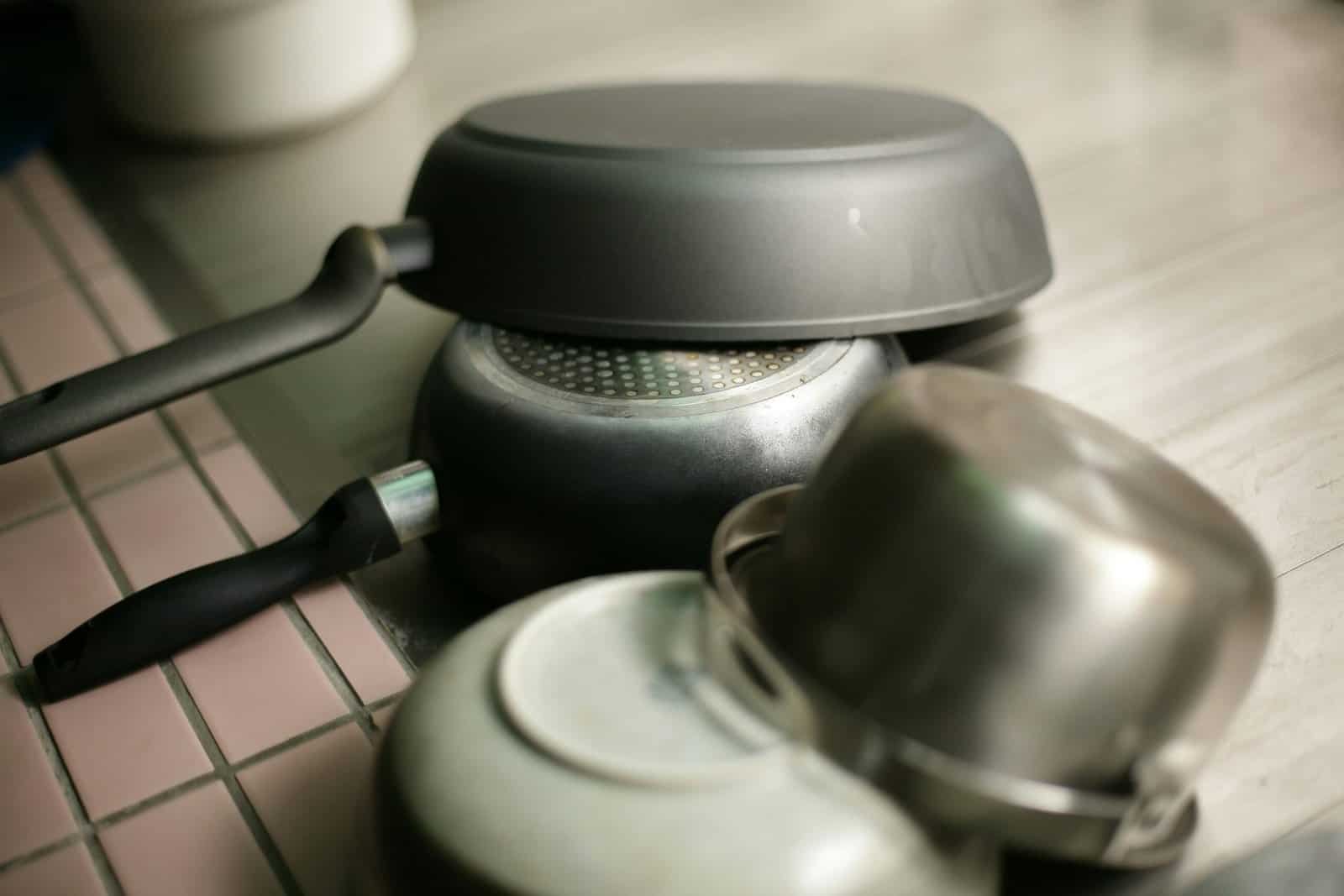
If you tracked which pan you reach for during a typical week, the saucepan would win by a wide margin. Boiling pasta water. Heating leftover soup. Reducing sauce. Cooking rice. Melting butter for something else. The skillet gets the glamour shots, but the saucepan is doing the actual daily work in most kitchens. Not sure what size you need? You can our quick cookware size tool to get a quick starting point.
Which makes the saucepan you own surprisingly important. A thin pan with hot spots burns the bottom of your reductions before the sauce thickens. A pan too small for the family’s needs requires double-batches every time. A pan with a handle that conducts heat means oven mitts for every single use. None of these are dealbreakers individually, but they add up to a kitchen where the pan you use most produces the least satisfying cooking.
The picks below cover the working tiers and sizes, from a budget tri-ply that handles most home cooking to premium options that last decades.
Quick Verdict
- Best for: home cooks who use a saucepan multiple times per week, anyone replacing a worn or warped saucepan, kitchens building a permanent cookware lineup piece by piece.
- Skip if: your current saucepan works fine for your cooking volume (this purchase pays off across years of use, not a single dinner).
Disclosure: SmartLifeItems is reader-supported. As an Amazon Associate, we earn from qualifying purchases made through links on this page, at no extra cost to you.
How We Chose These Saucepans
Four selection criteria drove the picks:
Even heat distribution. Saucepans with thin bases develop hot spots that scorch sauces and burn the bottom of liquids before the rest of the pan is hot. Picks selected for construction (tri-ply or heavy-gauge) that handles temperature evenly.
Handle design that stays cool and grips well. A saucepan’s handle gets gripped constantly during pouring, stirring, and transferring. Handles that heat up, slip, or feel awkward make the pan harder to use daily. Picks selected for stay-cool, comfortable handles with good control.
Lid included and well-fitting. A saucepan without a lid is half a saucepan. The lid needs to seal well to handle simmering and rice cooking without losing moisture or pressure inappropriately. Picks selected for lid inclusion and fit quality.
Right capacity for typical use. Most home cooks need around 2 to 3 quarts for daily use. Larger saucepans (4+ quarts) are useful but redundant if you also own a stockpot. Picks selected for the daily-use size range.
The saucepan is part of a broader cookware system. Our coverage of the complete material-science framework for choosing cookware covers the trade-offs across materials and types. For broader cookware-set context, see the best stainless steel cookware sets and the best nonstick cookware sets.
Decision Matrix: Which Saucepan for Which Kitchen
| Your Situation | Premium Tri-Ply | Mid-Range Tri-Ply | Budget Tri-Ply | Hard-Anodized Nonstick | Enameled Cast Iron |
|---|---|---|---|---|---|
| Daily cook, multiple uses per week | Best fit | Best fit | Workable | Workable | Workable |
| First serious saucepan purchase | Workable | Best fit | Best fit | Best fit | Skip |
| Mostly cooks delicate sauces, eggs | Workable | Workable | Skip | Best fit | Skip |
| Induction cooktop | Best fit | Best fit | Best fit | Workable | Best fit |
| Premium long-term investment | Best fit | Workable | Skip | Skip | Best fit |
| Tight budget | Skip | Workable | Best fit | Workable | Skip |
1. Cuisinart MultiClad Pro Saucepan 3-Quart: Best Overall Value Pick
The MultiClad Pro is the saucepan that consistently shows up in serious cooks’ kitchens because it does the job at a price that doesn’t require justification. Tri-ply construction (stainless inside, aluminum core, stainless outside) gives even heat distribution that handles delicate sauces and high-temperature cooking equally well. Cool-grip riveted stainless handle that doesn’t heat up over moderate flames. Fitted stainless lid. Induction compatible. The 3-quart size handles most daily cooking from pasta water to family-size soup.
Best for
- Home cooks ready to invest in cookware that outlasts a kitchen renovation.
- First serious saucepan purchase replacing a worn budget pan.
- Households with induction cooktops where tri-ply compatibility matters.
Skip if
- You want premium All-Clad-tier build quality and warranty.
- You primarily cook eggs and delicate items that benefit from nonstick.
2. All-Clad D3 Stainless Saucepan 2-Quart: Best Premium Pick
All-Clad D3 is the cookware that defines the premium tier of saucepans. The construction (three bonded layers of stainless and aluminum across the entire pan body, not just the base) produces heat distribution that’s noticeably better than budget tri-ply on side-by-side use. The handle stays cool over much higher heat than budget pans. Made in the USA with the long warranty that backs it up. The price is roughly double the Cuisinart for similar function; the difference shows in build quality and longevity rather than dramatically different cooking results.
Best for
- Heavy daily cooks who want the best long-term tool.
- Buyers who treat cookware as a lifetime purchase.
- Existing All-Clad owners completing a matched set.
Skip if
- Budget is tight and the Cuisinart would do the job.
- You don’t cook frequently enough to justify the premium.
3. Tramontina Tri-Ply Clad Saucepan 3-Quart: Best All-Clad Alternative
Tramontina has built a quiet reputation for producing All-Clad-equivalent tri-ply cookware at significantly lower prices. The 3-quart saucepan has full-clad construction (not just clad base), riveted stainless handle, and cooking performance that’s hard to distinguish from All-Clad in typical home use. Manufactured in Brazil with a lifetime warranty. The trade-off versus All-Clad is brand cachet and (slightly) the country of manufacture; the function is comparable.
Best for
- Buyers who want All-Clad-equivalent performance at value-tier pricing.
- Cooks who don’t need US-made cookware or premium brand recognition.
- Home kitchens upgrading from cheap stainless to a credible long-term solution.
Skip if
- You specifically want US-made cookware.
- You prefer to buy from a single dominant brand for kitchen continuity.
4. T-fal Ultimate Hard Anodized Saucepan 3-Quart: Best Nonstick Option
Some cooking really does benefit from nonstick: eggs, rice, sticky reductions, anything that’s hard to keep from grabbing the pan. The T-fal Ultimate is the value-tier nonstick saucepan that handles those situations without the heavy investment of premium nonstick. Hard-anodized exterior for durability, PFOA-free nonstick interior, and the heat-indicator dot that shows when the pan is ready for food. The trade-off with any nonstick is coating lifespan; budget pans need replacement every few years even with careful use, while tri-ply stainless saucepans last decades.
Best for
- Cooks who primarily make eggs, rice, or other sticky foods in the saucepan.
- Buyers who want a nonstick option without paying premium nonstick prices.
- Secondary saucepans alongside a primary tri-ply pan for the sticky-food use case.
Skip if
- You want long-term durability and don’t want to replace pans every few years.
- You cook at high heat (nonstick coatings degrade above moderate temperatures).
5. Lodge Enameled Cast Iron Saucepan: Best for Slow Cooking and Sauces
Cast iron saucepans take a different approach. The heavy mass holds heat steadily, which makes them excellent for long simmering, sauce reductions, and anything that benefits from slow even cooking. The enamel coating eliminates the seasoning maintenance of bare cast iron and handles acidic foods (tomato sauces) without issue. The Lodge enameled cast iron saucepan delivers the cast iron benefits at a reasonable price compared to French enameled brands. Heavy for a saucepan, which matters for daily handling, but the cooking performance for slow work is hard to match.
Best for
- Cooks who make slow-simmered sauces, reductions, or stews regularly.
- Buyers who already own cast iron skillets and want matching saucepans.
- Heavy-duty cooking where the pan’s mass works in your favor.
Skip if
- The weight is a problem (cast iron is significantly heavier than stainless).
- You want a single saucepan to handle all situations (cast iron is specialized).
What Size to Buy
The 2-to-3-quart range covers most daily home cooking. A 2-quart saucepan handles small jobs (warming soup, melting butter, making sauce for one or two people) without wasted heat from a too-large pan. A 3-quart saucepan covers family-size cooking (boiling pasta for four, family-size rice, larger soup batches). A 1-quart saucepan is useful but specialized; if you’ll only own one, the 2-quart is more flexible.
Some households benefit from owning two saucepans in different sizes. The 2-quart and 3-quart pair handles essentially all home cooking. A 4-quart adds capacity but overlaps with a stockpot if you also own one.
The saucepan is one piece of a broader cookware lineup. The picks here pair well with the cast iron and stainless options covered in our complete cookware coverage. See the best cast iron skillets for the heavy-duty searing pan, the best non-stick pans that actually last for eggs and delicate items, and the best Dutch ovens for braising and one-pot meals.
Common Mistakes With Saucepans
Cooking on too-high heat from a cold pan. Stainless saucepans need to preheat before food goes in. A drop of water dropped into a properly preheated pan beads up; that’s the right temperature for adding oil and food. Cooking from cold causes sticking that gets blamed on the pan.
Using metal utensils on nonstick coatings. Metal scratches nonstick finishes. Wooden or silicone utensils preserve the coating for years longer.
Skipping the lid for things that need it. Many recipes specify “cover and simmer” for good reason; the lid traps moisture and heat for proper cooking. Skipping it produces dry, overcooked results.
Washing a hot pan in cold water. The sudden temperature change can warp the pan’s base. Let the pan cool to near-room-temperature before washing. For burnt residue specifically, see our guide on how to clean burnt pots, pans.
Frequently Asked Questions
How long do quality saucepans last?
Tri-ply stainless saucepans last decades with normal use. Nonstick saucepans last several years depending on use intensity; the coating eventually degrades regardless of care. Enameled cast iron lasts essentially forever unless the enamel cracks from rough use.
Can I use a saucepan in the oven?
Most stainless saucepans are oven-safe to high temperatures (often 500 degrees or higher). Nonstick saucepans have lower oven-safe temperatures (often 350-400 degrees) due to coating limits. Check the specific manufacturer’s rating; handle materials may be the limiting factor.
Why does food stick to my new stainless saucepan?
Usually because the pan wasn’t preheated enough, not enough oil was used, or food was moved too soon. Properly preheated stainless with adequate oil releases food when it’s ready. Our coverage of why stainless steel cookware sticks covers this in detail.
Are saucepans with copper bottoms worth the price?
Copper conducts heat exceptionally well and provides excellent temperature control. The cost is significant, the maintenance (polishing) is real, and the cooking benefit is modest for most home cooking. Specialty cookware for serious cooks; not necessary for general home use.
Can I use my stainless saucepan on induction?
Yes, if it has a ferromagnetic base. All tri-ply stainless cookware (including the picks here except certain pure-aluminum lines) works on induction. Test by checking if a magnet sticks to the pan bottom.
What size lid do I need?
The lid that came with the saucepan. Saucepan lids are sized to the specific pan; mismatched lids don’t seal properly. If you’ve lost the lid, buy a replacement specifically for that pan model.
Should I buy a saucier or saucepan?
Sauciers have curved sides that make whisking easier and handle reductions better; saucepans have straight sides and are more general-purpose. For a single saucepan, the standard straight-sided design is more flexible. Sauciers are nice additions for cooks who make reductions and emulsions regularly.
Can I put my saucepan in the dishwasher?
Most stainless saucepans are dishwasher-safe per manufacturer specs, but hand-washing preserves the appearance and protects the surface from gradual dulling. Nonstick saucepans should generally be hand-washed to protect the coating.
Recommended Reading
Related: our portable induction cooktops guide and our why your rice turns out mushy guide. See also our guides to woks for home cooking.
Related Reading
Explore more: woks for home cooking. Also explore: stockpots.
