
Temperature on a charcoal smoker is controlled by airflow, not by fuel. The vents decide how much oxygen reaches the coals, and the coals respond to oxygen far faster than they respond to anything else you do.
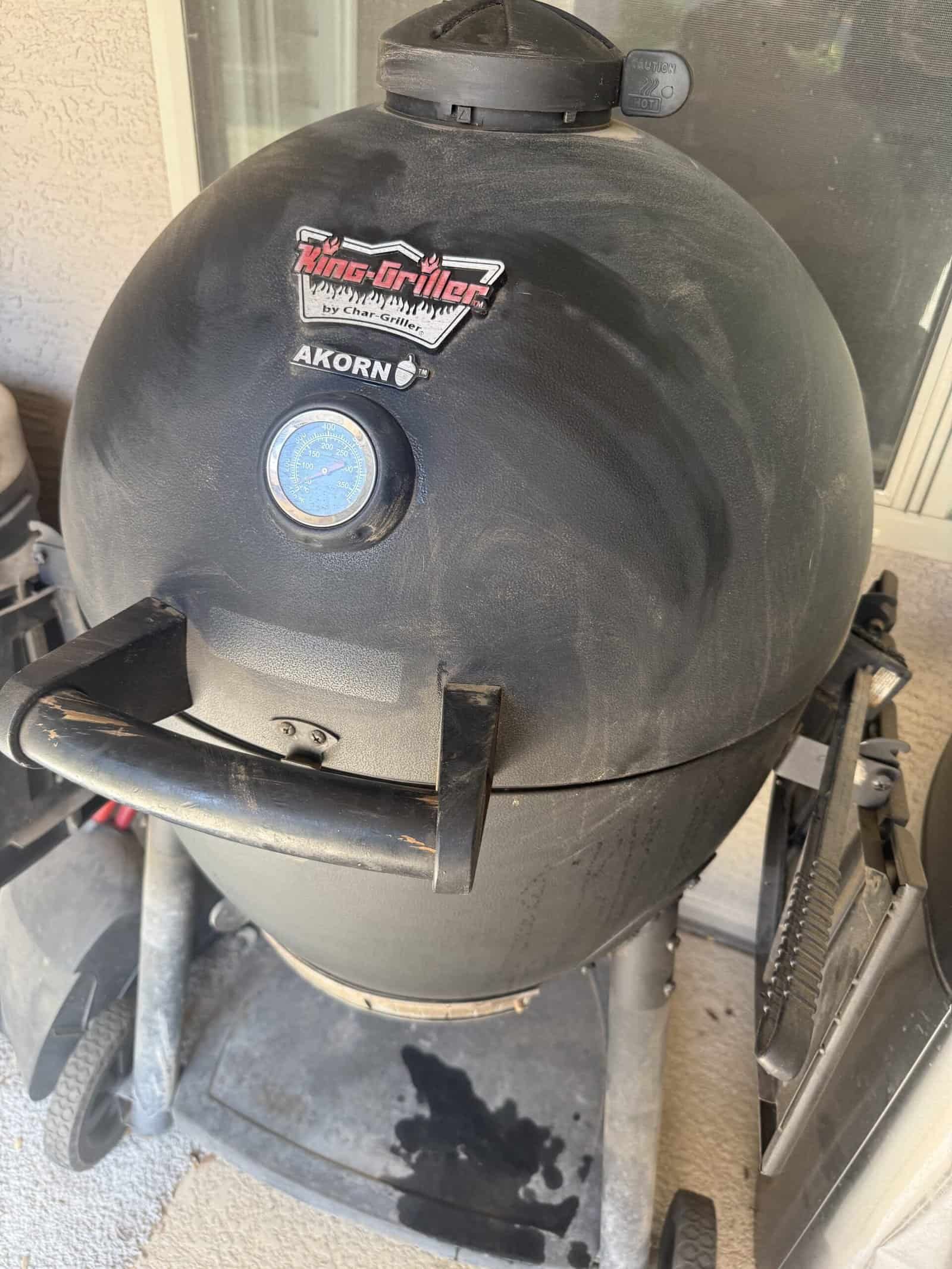
This is the part of mine I find most frustrating. I have had a Char-Griller Akorn, a kamado-style charcoal grill and smoker, for over three years, and temperature control is still the thing that asks the most attention rather than the thing I have solved.
Quick Answer
Set the bottom vent for the general range and use the top vent for fine adjustment. Make small changes and wait fifteen to twenty minutes before judging them. Coming down from too hot is far slower than going up, so approach your target from below.
What the Vents Actually Do
| Control | Function | Adjustment |
|---|---|---|
| Bottom vent | Oxygen supply to the coals | Coarse, sets the range |
| Top vent | Exhaust and draw | Fine, tunes within the range |
| Lid opening | Dumps heat and feeds oxygen | Avoid where possible |
| Fuel quantity | Duration, not temperature | Set once at the start |
More fuel does not mean hotter. A full firebox burning with restricted airflow runs low and long, and a small amount of charcoal wide open runs hot and briefly.
That is the mental shift that makes this easier. You are managing air, and the charcoal is just the thing that responds to it.
Approach the Target From Below
Overshooting is the most common mistake and the hardest to fix. Ceramic and heavy steel cookers hold heat, so a cooker that has climbed too high takes a long time to come back down.
Bringing it up slowly and closing vents before you reach your target is the technique that works, since the temperature continues rising after you adjust.
Coming down means closing vents and waiting, and impatience here produces the cycle of overcorrecting in both directions that makes a cook exhausting.
Opening the lid to check makes it worse, since it feeds oxygen and dumps heat at the same time, and the recovery afterward is unpredictable.
Three Years and Still Adjusting
My cooks run one to two hours, mostly chicken, and I check in occasionally rather than watching it constantly.
That balance took time. Early on I was either hovering over it or ignoring it entirely, and neither produced consistent results.
Temperature control is the thing I would still call frustrating rather than mastered. It is manageable now and it has never become automatic.
What changed was learning that adjustments take effect slowly, so making one and walking away beats making one and immediately making another, and the wider question sits in whether a kamado grill is worth it.
Anyone starting should expect a genuine learning curve. This is a craft skill rather than a setting you find once, and that is worth knowing before the first cook goes badly.
Making Adjustments That Work
Change one thing at a time
Moving both vents simultaneously makes it impossible to know which did what. Bottom for range, top for tuning, one at a time.
Wait before judging
Fifteen to twenty minutes is realistic on a heavy cooker. Judging after two minutes and adjusting again is how the oscillation starts.
Make small moves
Vent adjustments of a few millimeters change things more than people expect, particularly on the top vent where the range is narrow.
Keep the lid closed
Every opening costs recovery time and disrupts the airflow balance you set, and it matters more on longer cooks than short ones.
Insulated Steel Against Ceramic
Kamado-style cookers come in two constructions and they behave differently enough to matter for temperature control.
Traditional kamados are thick ceramic. The mass is enormous, which means they hold temperature exceptionally well and take a long time to change in either direction.
Insulated steel versions like mine use a double wall with insulation between. They weigh far less, cost less, and respond to vent changes faster than ceramic does.
Faster response cuts both ways. Adjustments take effect sooner, which is convenient, and the cooker is also less forgiving of an overshoot because it does not have the same thermal buffer smoothing things out.
Steel also loses more heat in cold or windy weather, where ceramic mass keeps working. That shows up as a cooker that held perfectly in July drifting in January.
Neither is better in general. Ceramic suits people who want set-and-forget on long cooks, and steel suits shorter cooks where you want the cooker to reach temperature quickly and respond when you ask it to. Options generally sit in indoor grill alternatives for anyone who decides outdoor charcoal is not for them.
What Else Affects It
Weather does more than most people credit. Wind feeds the intake and cold air makes the cooker work harder to hold temperature.
Charcoal type matters. Lump burns hotter and less predictably than briquettes, which burn more evenly and produce more ash, and ash is what eventually restricts your airflow, covered in cleaning a kamado grill.
Ash buildup restricts airflow at the bottom over a long cook, which is one reason temperature drifts down late in a session with no other explanation.
Meat going on cold drops the temperature immediately, and a large cold load takes real time to recover from, covered in how long it takes to smoke chicken.
Trusting Your Thermometer
Built-in lid thermometers measure air at the dome rather than at grate level, and the difference can be significant.
A separate probe at grate height gives you the number that actually matters for cooking, and a second probe in the meat removes the guesswork about doneness.
Lid thermometers also drift with age, and one that has always read high becomes a systematic error you compensate for without realizing.
Checking it in boiling water is the simple calibration test, and a thermometer that cannot be trusted makes every other technique in this article useless.
Common Mistakes
Adding fuel to raise temperature
Fuel controls duration and airflow controls temperature. Adding charcoal to a cooker running cool usually just means more fuel burning slowly.
Opening vents wide to recover
This overshoots, and then you are fighting a cooker that has climbed past target with a lot of stored heat.
Chasing the number constantly
A cooker sitting fifteen degrees off target is fine. The oscillation from correcting every small deviation causes more trouble than the deviation would.
Lighting too much charcoal
Starting with a large lit area makes low temperatures difficult to reach, and it is easier to add heat than to remove it.
Ignoring how the cooker was left
A cooker with old ash and partly burnt fuel from last time behaves unpredictably, and the fix is a clean start rather than better vent technique.
Related Reading
- is a kamado grill worth it
- smoking chicken
- cleaning a kamado grill
- how long one lasts
- meat thermometers
- indoor grill options
Frequently Asked Questions
How do you control temperature on a charcoal smoker?
Through airflow rather than fuel. The bottom vent sets the general range and the top vent tunes within it, with small adjustments and time to settle between them. Anyone tired of chasing vents can move to a pellet grill, which holds a set temperature with a controller.
Why is my smoker running too hot?
Usually too much airflow or too much lit charcoal at the start. Close the bottom vent first and wait, since heavy cookers come down slowly.
How long should I wait after adjusting a vent?
Fifteen to twenty minutes on a heavy cooker. Judging sooner and adjusting again is what produces the oscillation that makes cooks frustrating.
Does adding charcoal make it hotter?
No. Fuel quantity controls how long it burns, and airflow controls how hot. Adding charcoal to a cool cooker usually just adds unlit fuel.
Should I trust the lid thermometer?
Not entirely. It measures dome air rather than grate level, and it drifts with age. A separate probe at grate height is more reliable.
Why does temperature drift down late in a cook?
Ash buildup restricting airflow at the bottom is a common cause, along with fuel burning down and weather changing through the session.
Is steel or ceramic easier to control?
Ceramic holds temperature better and responds slowly. Insulated steel reaches temperature faster and reacts to vent changes sooner, which is convenient and less forgiving of an overshoot.
How long does it take to get good at this?
Longer than most people expect. It is a craft skill with a real learning curve, and consistency comes from repetition rather than from finding a setting.
