
Crispness comes from moisture leaving the surface faster than it arrives from inside. A batter high in liquid and low in fat keeps supplying moisture, and a waffle stacked straight onto a plate traps steam against its own crust within a minute.
Most home waffle makers cook a soft waffle by default. Getting a crisp one out of an ordinary machine means changing the batter and how you handle the waffle after it comes out, rather than expecting the appliance to do it.
Quick Answer
Add fat and reduce liquid in the batter, cook longer than the indicator suggests, and rest the waffle on a wire rack rather than a plate. Cornstarch in place of some flour helps considerably. Stacking waffles is what turns a crisp one soft.
Key Points
- Fat crisps and liquid softens, so the ratio decides the outcome
- Cornstarch produces a crisper crust than flour alone
- Indicator lights signal temperature rather than doneness
- Stacking traps steam and softens waffles within a minute
- A wire rack keeps them crisp while the batch finishes
- Belgian machines produce fluffier, less crisp waffles by design
What Controls Crispness
| Factor | Effect | Adjustment |
|---|---|---|
| Fat in batter | Crisps the surface | Increase oil or butter |
| Liquid in batter | Keeps supplying moisture | Reduce slightly |
| Cornstarch | Produces a crisper crust | Replace some flour |
| Cook time | Drives off surface moisture | Go past the indicator |
| Resting method | Traps or releases steam | Wire rack, never stacked |
| Machine type | Belgian is fluffier by design | Classic irons crisp better |
The Batter Does Most of It
Fat is what produces a crisp surface, and lean batters cannot crisp regardless of cooking time. A recipe with a few tablespoons of oil or melted butter behaves entirely differently from one with almost none.
Liquid works against you. A thinner batter keeps releasing steam through the whole cook, which prevents the surface drying out enough to set hard.
Cornstarch is the single most effective substitution. Replacing roughly a quarter of the flour with cornstarch reduces gluten development and produces a noticeably crisper crust, and it is the change most home recipes are missing.
What Mine Produces
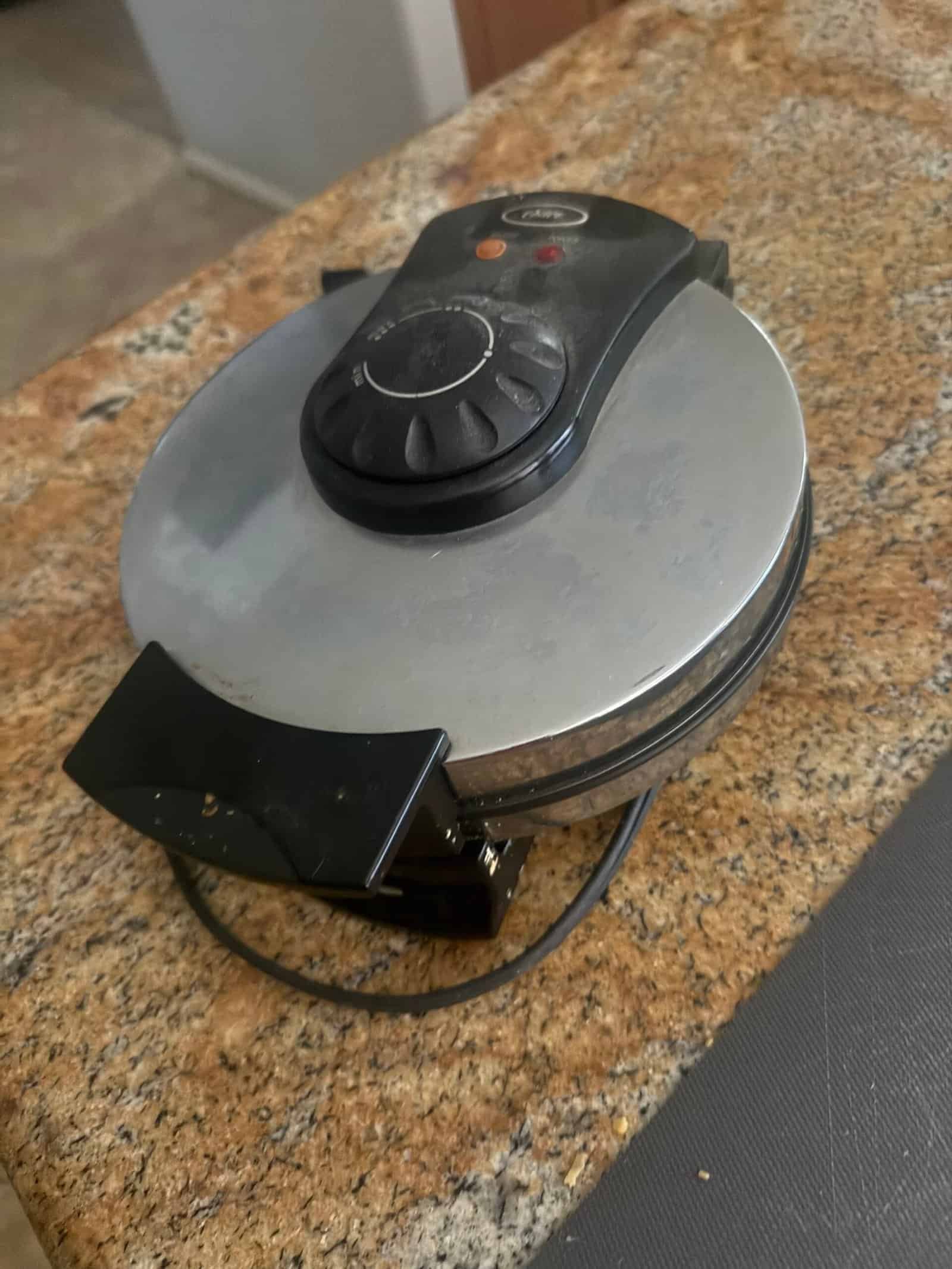
My waffles come out on the softer side, and I have accepted what the machine gives me rather than chasing crisp ones.
That is worth saying because plenty of articles imply any waffle maker produces restaurant results with the right technique. Mine does not, and I have not found it worth the effort of fighting it.
My Oster is a good product and easy to use, and soft waffles are what it makes. If crisp waffles were the priority I would be adjusting the batter rather than expecting the appliance to change.
So the honest position is that this article describes what works rather than what I do. I make soft waffles and I am fine with them.
My experience covers one Oster in ordinary home use with standard batter. It does not cover cast iron waffle irons or high-end machines with adjustable browning, both of which crisp considerably better.
Cook Longer Than the Light Suggests
Indicator lights on most machines signal that the plates have returned to temperature rather than that the waffle is done. Following the light produces an undercooked waffle on a lot of appliances.
Steam is the more reliable signal. Heavy steam means moisture is still leaving, and when it slows to nearly nothing the surface has dried enough to crisp.
Another thirty to sixty seconds past that point makes a real difference, and the cost of overcooking slightly is far smaller than the cost of a soft waffle. Sticking during that wait is a separate issue, covered in why waffles stick.
Never Stack Them
This undoes more crisp waffles than anything in the batter. A waffle straight off the iron is still releasing steam, and stacking traps that steam against the crust of the one below.
A minute under another waffle is enough to soften a crust that was crisp coming out. Plates do the same thing more slowly, since the underside has nowhere to breathe.
A wire rack solves it completely. Air circulates underneath, steam escapes rather than condensing, and waffles hold their texture while the rest of the batch cooks.
Holding a Batch
For a batch, a wire rack in a low oven around 200 degrees Fahrenheit keeps waffles hot and crisp for a considerable time. The rack matters more than the oven does.
Covering them with foil defeats it entirely, since the foil traps exactly the steam the rack is releasing.
Reheating a soft waffle works better than people expect. A toaster or a hot oven drives off moisture and restores crispness, and it works on frozen waffles too. A microwave does the opposite.
Why Restaurant Waffles Are Different
Commercial waffle irons run hotter than domestic ones and hold that heat far better, because they are built from heavier metal and stay on all service rather than cycling.
That thermal mass is most of the difference. A home machine loses temperature the moment cold batter hits it and spends part of the cook recovering, while a commercial plate barely drops.
Many kitchens also use yeasted or overnight batters, which develop differently from a quick baking powder mix and produce a distinct crust. That is a recipe difference rather than equipment.
None of which means a home machine cannot produce a good waffle. It means matching a restaurant result exactly is a hardware problem as much as a technique one, and knowing that saves a lot of frustration.
Machine Type Sets a Ceiling
Belgian makers
Deep pockets and a thicker waffle mean more interior moisture, which produces a fluffy result rather than a crisp one. That is the design intent rather than a fault.
Classic thin irons
Shallower grids cook a thinner waffle with more surface area relative to volume, which crisps far more readily.
Adjustable browning
Machines with a dial let you push past the default, which is often set conservatively. Options sit in waffle makers worth buying.
Cast iron irons
Hold heat far better than electric plates, which is the physical reason they crisp best. They need seasoning and stovetop attention rather than a switch.
Adjustments Ranked by Effect
Rest on a wire rack rather than a plate. Costs nothing, requires no recipe change, and prevents the most common cause of soft waffles.
Cook thirty to sixty seconds longer than the indicator. Also free, and it addresses the second most common cause.
Swap a quarter of the flour for cornstarch. The single most effective batter change and it needs one ingredient most kitchens have.
Add a tablespoon or two of oil and reduce the milk slightly. Shifts the fat-to-liquid ratio toward crisping.
Separate the eggs and fold in whipped whites. More work, and it produces a lighter interior with a crisper shell.
Soft Against Fixable
Fixable looks like waffles that start crisp and soften on the plate, or come out pale and underdone. Both respond to resting on a rack and cooking longer, with no recipe change needed.
Harder to fix is a Belgian machine producing thick fluffy waffles, which is what that design does. Batter adjustments help at the margin and the machine sets the ceiling, and getting more from any model sits in keeping the plates in good condition.
Related Reading
- machines compared
- the sticking problem
- maintaining the plates
- storing it between uses
- the stovetop alternative
- bowls for batter prep
Frequently Asked Questions
How do I make waffles crispier?
Add fat and reduce liquid in the batter, replace a quarter of the flour with cornstarch, cook longer than the indicator suggests, and rest them on a wire rack rather than a plate.
Why do my waffles go soft after cooking?
Trapped steam. A waffle straight off the iron is still releasing moisture, and a plate or another waffle on top traps it against the crust within a minute. A wire rack prevents it.
Does cornstarch really make waffles crispier?
Yes, and it is the most effective single change. Replacing about a quarter of the flour reduces gluten development and produces a noticeably crisper crust with no other adjustment.
Should I trust the indicator light?
Not for doneness. Most lights signal that the plates have returned to temperature rather than that the waffle is cooked. Watch for the steam slowing instead, then give it another half minute.
Why are Belgian waffles less crispy?
Deeper pockets make a thicker waffle with more interior moisture, which produces a fluffy result by design. Classic thin irons crisp better because there is more surface relative to volume.
Can I reheat waffles and get them crispy?
A toaster or hot oven drives off moisture and restores crispness well, including on frozen waffles. A microwave softens them further and should be avoided for this.
Does more fat in the batter help?
Yes. Fat crisps the surface while liquid keeps supplying moisture, so shifting the ratio toward fat is one of the more reliable batter changes for texture.
Batter choice affects texture before technique does. pancake batter in a waffle iron covers why it comes out soft.
Equipment sets a ceiling on results. choosing appliances that perform covers what to look for.
