
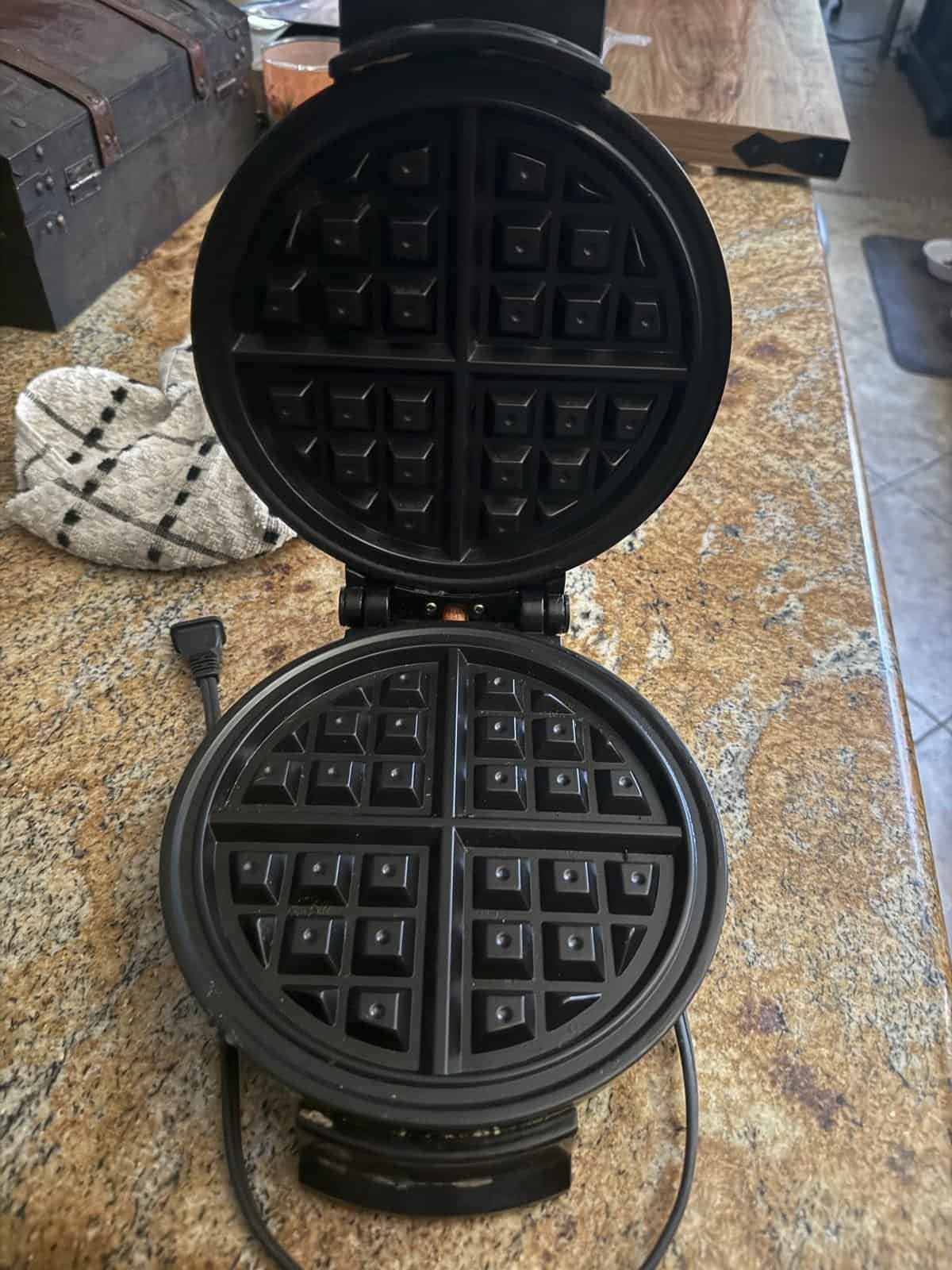
A good waffle maker is one of those appliances that quietly delivers for years without asking for much. It does not need a dozen settings or a digital screen to turn out a crisp, golden waffle on a slow weekend morning. This guide covers the best waffle makers in 2026, written mostly in a research voice, with one honest exception: the simple Oster I have used at home for years and still reach for whenever waffles are on the menu.
Disclosure: SmartLifeItems is reader-supported. As an Amazon Associate, we earn from qualifying purchases made through links on this page, at no extra cost to you.
Quick Verdict: Waffle Makers Worth Buying
For the best all-around results and the ability to feed a crowd, the Cuisinart Double Flip Belgian leads the pack. If you would rather keep things simple and durable, a basic Oster is the no-frills option I keep coming back to. The Presto FlipSide saves space and cooks evenly, the Black+Decker rotating model is the budget workhorse, the Dash Mini is perfect for one, and the Hamilton Beach flip lands in the dependable middle. Pick based on how many waffles you make and how much counter space you can spare.
| Waffle Maker | Style | Capacity | Best for |
|---|---|---|---|
| Cuisinart Double Flip | Belgian, flip | 2 at once | Families and crowds |
| Oster (what I use) | Round | 1 at a time | Simple, durable everyday use |
| Presto FlipSide | Belgian, flip | 1 at a time | Even cooking, small storage |
| Black+Decker Rotating | Belgian, rotating | 1 at a time | Budget rotating |
| Dash Mini | Compact, 4 in | 1 mini | Single servings |
| Hamilton Beach Flip | Belgian, flip | 1 at a time | Dependable mid-range |
1. Cuisinart Double Flip Belgian: Best Overall
The Cuisinart Double Flip Belgian is the pick for households where one waffle at a time is not enough. Its rotary flip design borrows from the breakfast bars of hotels and cafeterias, distributing batter evenly so the inside stays fluffy while the outside crisps, and it turns out two deep-pocketed Belgian waffles at once. A browning-control slider lets you dial in doneness. It is larger and heavier than the basics, but for even results and speed when feeding a crowd, it earns the top spot.
Who it suits: families and weekend brunch hosts who want consistency and volume. To round out the breakfast spread, see our picks for single-serve coffee makers.
2. What I Use: An Oster Waffle Maker
This is the one I actually own. It is a simple round Oster, and it has quietly become a fixture in our kitchen. There is nothing complicated about it, which is exactly the point: you heat it up, pour the batter, and it makes a quality waffle every time with deep pockets that hold syrup well. It has lasted years of regular use, it is genuinely easy to use, and it just gets the job done without fuss or a learning curve. For anyone who does not want to think about browning dials and flip mechanisms, a basic machine like this is all you really need.
The honest case for a simple waffle maker is durability and ease. Fewer parts and features mean fewer things to break, which is one reason a no-frills model can outlast fancier ones. Oster makes round and Belgian-style options in this straightforward vein, so the button below points to Oster waffle makers if you want the same uncomplicated approach I have stuck with.
3. Presto FlipSide Belgian: Best for Even Cooking
The Presto FlipSide is a favorite for two reasons: it flips a full one hundred eighty degrees for even batter distribution, and it locks upright to store on its side, taking up very little cabinet space. That combination of consistent cooking and compact storage makes it one of the most practical Belgian makers around, and it is reasonably priced for what it does. The timer is more of a guideline than a precise tool, so go by the look of the waffle, but the results are reliably crisp.
Who it suits: small kitchens that still want even, Belgian-style waffles. If counter space is tight across the board, our guide to toasters covers another compact breakfast staple.
4. Black+Decker Rotating Belgian: Best Budget Rotating
The Black+Decker rotating Belgian brings the even-cooking benefit of a flip design down to a budget price. Rotating the plates helps the batter spread and cook more uniformly than a fixed clamshell, and while the underside can run a touch lighter than premium models, the value is hard to argue with. For a first waffle maker or an occasional-use machine, it delivers thick, fluffy waffles without a big spend. A smoking machine is the common complaint afterward, and our note on why a waffle maker smokes covers the causes.
Who it suits: budget shoppers who still want a rotating design. For more affordable countertop cooking, see our roundup of electric griddles under seventy-five dollars.
5. Dash Mini Waffle Maker: Best for Single Servings
The Dash Mini is the little machine that became a phenomenon, and for good reason. It makes one small waffle at a time, heats up fast, stores in a drawer, and is forgiving enough that it rarely burns anything even if you forget it for a minute. It is not the pick for feeding a family, but for one person, a dorm, or making fun-sized waffles with kids, the price and simplicity are tough to beat.
Who it suits: solo cooks, small spaces, and anyone who wants a cheap, cheerful breakfast tool. It pairs well with the kind of quick morning setup in our coffee maker under seventy-five dollars guide.
6. Hamilton Beach Flip Belgian: Best Mid-Range
The Hamilton Beach flip Belgian sits in the comfortable middle, offering the even cooking of a flip design and a build a step up from the budget tier, often with removable plates that make cleanup easier. It does not have the bells and whistles of premium machines, but it reliably turns out good Belgian waffles and bridges the gap between cheap and high-end. For most households that want a solid daily driver without overspending, it is a sensible choice.
Who it suits: people who want dependable performance at a fair price. If you make your own batter, our roundup of hand mixers and our stand mixers under two hundred dollars guide will help.
What to Look For in a Waffle Maker
Belgian or classic style
Belgian makers produce thick waffles with deep pockets that hold syrup and toppings, while classic round makers turn out thinner, crispier waffles. Neither is better; it comes down to the texture you prefer at the table.
Flip, rotating, or fixed plates
Flip and rotating designs spread batter more evenly for consistent results, which is their main advantage. Fixed clamshell models are simpler and often more compact, and a good one still makes an excellent waffle, as years with a basic machine will tell you.
Capacity and size
If you cook for a family, a double maker saves real time, since waiting on one waffle at a time gets cold fast. Solo cooks and small kitchens are better served by a compact single or mini model that stores easily.
Browning control and cleanup
Adjustable browning lets you match the waffle to your taste, and a nonstick surface is essential. Removable, dishwasher-safe plates make cleanup far easier, though a simple wipe-down works fine on basic machines.
Getting Great Waffles From Any Maker
A few habits help no matter which machine you own. Let the maker fully preheat before the first pour, since a cold plate is the top cause of sticking and pale waffles. Use the right amount of batter; overfilling causes overflow and underfilling leaves thin, dry waffles, so find your machine’s sweet spot in the first batch or two. Resist the urge to open the lid early, as cracking it before the steam slows will tear the waffle in half. And let the maker reheat for a moment between waffles so each one cooks as well as the first. These basics matter as much as the appliance itself, which is why a simple, well-made machine can outperform a fancy one in the wrong hands. For more weekend-breakfast cooking, our guides to indoor grills, blenders for smoothies, and coffee mugs round out the table.
Frequently Asked Questions
Belgian or classic waffle maker, which should I buy?
Choose Belgian for thick waffles with deep pockets that hold lots of syrup, and classic for thinner, crispier waffles. It is a matter of personal taste rather than quality, so picture how you like to eat them.
Are simple waffle makers as good as fancy ones?
For everyday waffles, often yes. A basic machine with fewer features tends to be durable and easy to use, and with good technique it makes excellent waffles. Premium models add capacity, even cooking, and browning control, not necessarily a better basic waffle.
Why are my waffles sticking to the waffle maker?
The usual causes are not preheating fully, a worn nonstick surface, or batter low in fat. Let the maker heat completely, lightly grease it if needed, and make sure your recipe has enough oil or butter.
How much batter should I use?
Enough to cover the center and most of the plate without overflowing when closed. Start a little conservative on the first waffle, then adjust, since the right amount varies by machine size and waffle depth.
Can I make waffle batter the night before?
You can, though baking-powder batters lose some lift overnight. For best results, refrigerate it covered and give it a gentle stir before using, or mix the dry and wet ingredients separately and combine in the morning.
Do I need to grease the waffle maker every time?
On a good nonstick surface, often only the first waffle needs a light grease. If you find waffles sticking over time, a thin coat of oil or spray before each batch helps, but avoid heavy aerosol sprays that can build up and gum the surface.
How long do waffle makers last?
A quality machine can last many years with regular use, especially simpler models with fewer parts to fail. Keeping the plates clean and avoiding metal utensils that scratch the nonstick goes a long way.
How do I clean a waffle maker?
Let it cool, then wipe the plates with a damp cloth, or wash removable plates if your model has them. Avoid submerging the base or using abrasive scrubbers that damage the nonstick coating.
Related Reading
Explore more: popcorn makers, ice cream makers, smart coffee makers, pasta makers, keurig vs nespresso coffee makers, countertop ice makers, and cold brew coffee makers. Also explore: why pressure cookers work faster.
Recommended Reading
See also our guides to pasta makers, and popcorn makers.
Pancake mix works with adjustments. using pancake batter in a waffle maker covers the fat and liquid changes.
