
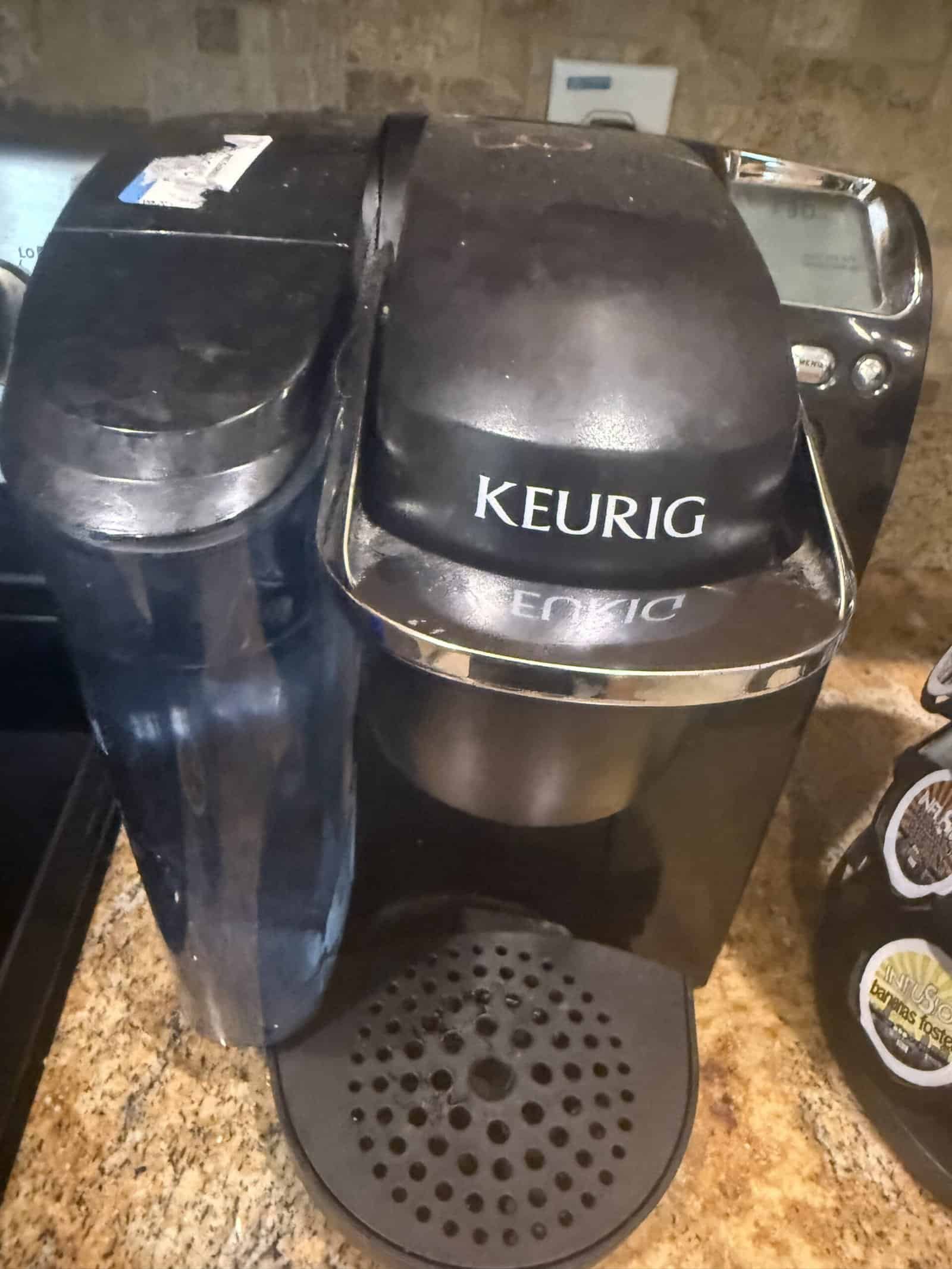
The thing most people miss about brew size is that the pod does not change. A six-ounce cup and a twelve-ounce cup use the same amount of coffee, so the larger setting is not making more coffee, it is making the same coffee weaker.
That single fact answers most questions about which button to press, and it explains why people who always choose the largest size wonder why their coffee tastes thin. Our roundup of single-serve coffee makers covers the machines.
Quick Answer
Smaller settings produce stronger coffee from the same pod. Choose the size that matches your mug, then adjust strength by pod choice or a strong-brew setting rather than by adding water you did not want.
Key Points
- Every size uses one pod, so larger means weaker.
- Match the size to the mug, not to how awake you feel.
- Strong-brew settings slow the water rather than adding coffee.
- Two small brews into one mug is stronger than one large.
- Over-extraction is a real limit on very large settings.
Why Larger Means Weaker
Brewing pushes hot water through a fixed quantity of grounds. More water through the same grounds means each ounce carries less dissolved coffee, which is dilution rather than a bigger drink.
Pods are generally formulated around a middle setting, so the smaller options concentrate the result and the larger ones thin it out relative to what the roaster actually intended you to taste.
Push it far enough and you also start pulling bitter compounds that a shorter contact time leaves behind, so a very large brew can be simultaneously weak and slightly harsh. That combination confuses people, because weak and bitter sound like opposite problems. Our note on weak coffee covers the mechanism.
What Each Size Suits
The smallest setting
Strongest result from a given pod. Suits a small cup, or a base you intend to add milk to without the whole thing tasting like milk. Anyone making a latte-style drink at home should be starting here.
The middle settings
Where most pods are designed to land, and where the roaster’s intended balance shows up. The default worth starting from if you are unsure what you like.
The largest setting
Fills a big mug or a travel tumbler in one pass without brewing twice. Weakest per ounce, and the right choice when volume matters more than intensity.
Strong or bold buttons
These slow the water through the grounds rather than using more coffee, which increases extraction. Useful, and not the same as adding coffee.
What I Use
I always use the biggest setting. That is not a considered strength decision, it is that it fits the mugs I actually drink from, including the travel mug I brew straight into.
The mug came first and the button followed. If I used the smaller settings I would be looking at a half-empty mug, and topping it up with hot water would land me in the same place with an extra step.
That is probably the honest reason most people settle where they do. The machine offers a strength decision and the mug on the counter makes it for you.
What I would say to anyone bothered by weak coffee is that the size button is the wrong lever if your mug is large. Changing pods or using a bold setting addresses strength without leaving you with less coffee than you wanted.
What I cannot compare is how the smaller settings taste from the same pods, since I have not run that comparison deliberately.
Getting a Stronger Cup Without Going Smaller
Use the strong or bold setting if your machine has one, since it extracts more from the same grounds rather than reducing the volume. Not every model has one, and on those that do it is the first thing to try.
Buy pods labeled extra bold or dark roast, which either contain more coffee or use a more intense roast profile. This is the most direct fix available and it requires nothing from you at brew time beyond buying a different box.
Brew two small cups into one mug. It uses two pods and produces a full mug at genuine strength, which is expensive and works. Whether doubling the cost per cup is worth it depends on how much the weak version bothers you. Our comparison of coffee scales covers controlling the dose yourself.
Why the Sizes Exist at All
Pod machines were designed around a single-serving format, and the size buttons were added because people wanted travel mugs and large cups filled without brewing twice.
That is a volume feature rather than a strength feature, and the marketing rarely says so. A machine offering four sizes looks like it offers four strengths, and it offers one dose in four dilutions.
Understanding that changes how you use the machine. The size button answers how much, and the pod answers how strong, and treating them as one control is where most disappointment comes from. Our note on choosing a coffee maker covers what these machines are built for.
Matching Size to the Mug
Measure what your usual mug actually holds, since mugs vary considerably and the numbers on the machine are ounces rather than mug-fulls. A mug that looks standard can be several ounces off what you assumed.
A travel mug brewed straight into generally needs the largest setting, and even then may not fill it to the top. That is normal rather than a fault, since travel mugs hold considerably more than the machine was designed to deliver in one pass.
Leaving headroom matters too, particularly with a lidded travel mug where a full brew plus milk overflows the moment you screw the lid on. Our roundup of travel coffee mugs covers sizing.
Common Mistakes to Avoid
Using the largest setting and expecting strength
More water through the same grounds is dilution. If the coffee tastes thin, the size button is where it happened.
Topping up a small brew with hot water
This produces exactly the same result as brewing large, with an extra step and a kettle to boil.
Assuming bold uses more coffee
Strong settings slow the flow to extract more from the same pod. Helpful, and not the same as a bigger dose.
Ignoring the pod’s intended size
Many pods state a recommended brew size on the box, which is the manufacturer telling you where their blend tastes right. Our note on bitter coffee covers over-extraction.
Keurig Brew Size FAQ
Does brew size change the strength?
Yes, considerably. Every size uses one pod, so a larger setting pushes more water through the same grounds and produces a weaker cup. The pod does not scale with the button.
Which size should I use?
Whichever matches your mug, then adjust strength separately. Choosing a smaller size to get stronger coffee leaves you with less coffee, which most people find is the wrong trade.
What does the strong or bold button do?
It slows the water through the grounds, increasing extraction from the same pod. That produces a more intense cup without changing the volume, which is usually what people actually want.
Is it better to brew two small cups?
For strength, yes. Two pods into one mug gives a full mug at genuine strength, and it doubles your cost per cup. Extra-bold pods achieve something similar for less.
Why does my coffee taste weak?
Usually the brew size relative to the pod. A large setting dilutes, and scale buildup in the machine can also slow water flow in ways that affect the result. Trying a smaller size once tells you which it is.
Can I use the largest setting with any pod?
Mechanically yes, and some pods are formulated for smaller volumes and taste noticeably thin stretched that far. Boxes often state a recommended size, which is worth checking if the result disappoints.
Does size affect how long brewing takes?
Larger settings take longer, since more water has to heat and pass through. A brew that has become much slower than it used to be is a different problem, usually related to mineral buildup in the water path.
Should I use a different size for iced coffee?
The smallest setting generally suits iced coffee, since melting ice dilutes it further. Brewing large over ice gives you something closer to cold water with a coffee flavor.
Recommended Reading
See our note on whether any pod fits a Keurig, and choosing the right coffee grinder.
